Unfortunately I had one very similar case on cantina today lol, an unfixed critical marked duplicate and it shows the original report was rejected and I can't see the details.... Again I am very confused but that's the norm of beg bounty now, moving on to next target
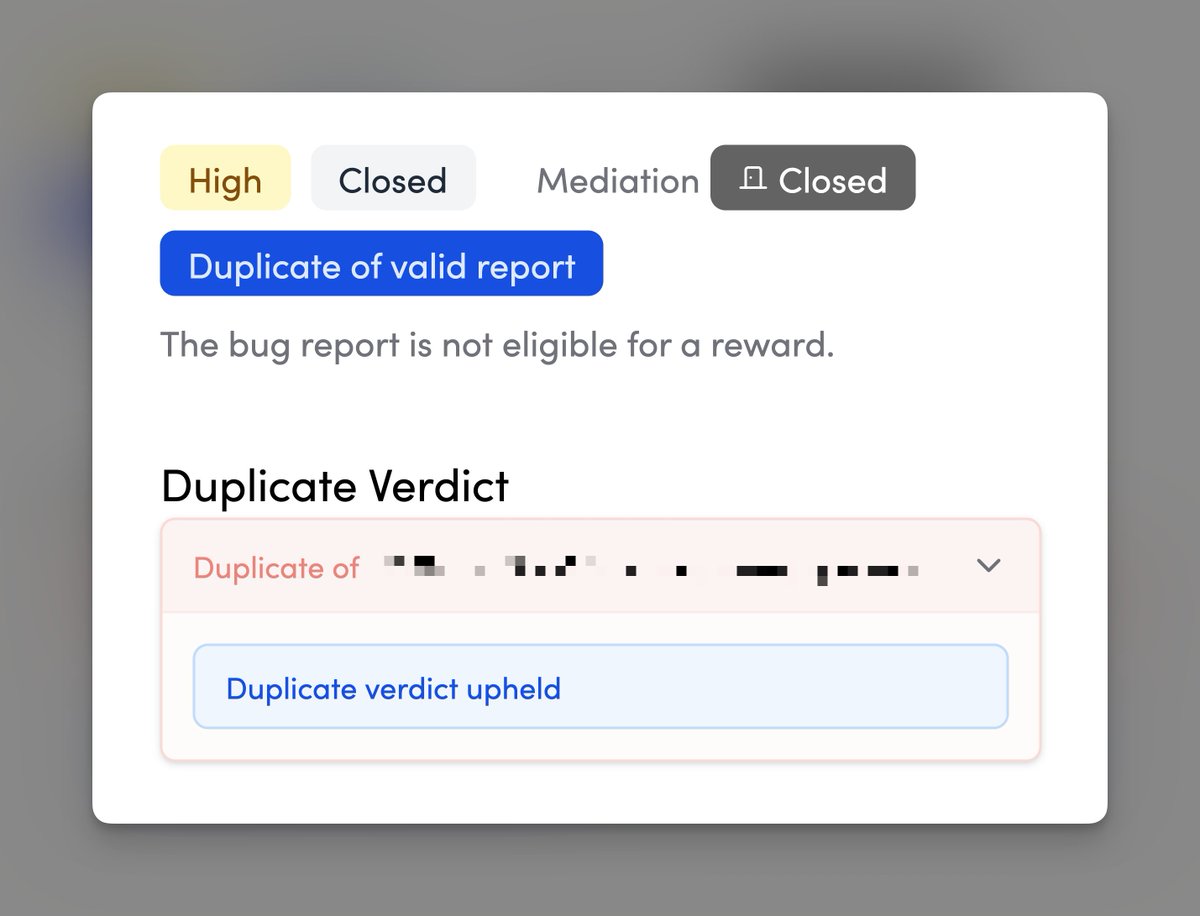
Update: Immunefi upheld the duplicate closure.
Their own fix-bypass policy says a bug that wasn't effectively fixed should be reported.
That's exactly what I did. The PoC in my report still works after the attempted fix.
Yet their mediation response didn't even mention the fix-bypass policy.
So what's the point of having it?
Why would any whitehat spend time checking whether a fix actually works if the answer is still "duplicate, no reward"?
I thought Immunefi was supposed to keep this fair.
Instead, they're keeping their clients happy.
@0zSchnack Private known issue means you reported so they know it now, if you disagree just pay another 250 bucks and Mr.J will run prompt "find an execuse to close this mediation" and respond to you within 30 minutes
@MartinMarchev In my experience only one specific mediator is fair and others just use pure ai and the prompt is "find an excuse to close this mediation"