Not a urologist but I study urology: prostate cancer screening, biopsy, treatment & harm reduction. Also dabble in regulatory affairs. Opinions are my own.
@wheatbuster@VickersBiostats@DongNguyeb I believe if you find any cribriform on biopsy it would trump all (including mm P4) as a negative prognostic indicator - but have no data to prove that
mm pattern 4 on biopsy far superior predictor of prostate cancer outcome than stage, grade, PSA, cores. We show using mm criteria rather than "favorable intermediate risk" would increase the number of US men eligible for active surveillance by >50,000. https://t.co/twt6InibQ2
I was a PGY3 coming back from @UroOnc meeting, @wandering_gu told me to get Twitter to stay current about urology
Boy, I do not like the state of CaP discourse on this app right now. work (and life) is hard enough, can’t we all just be professional and reasonable?
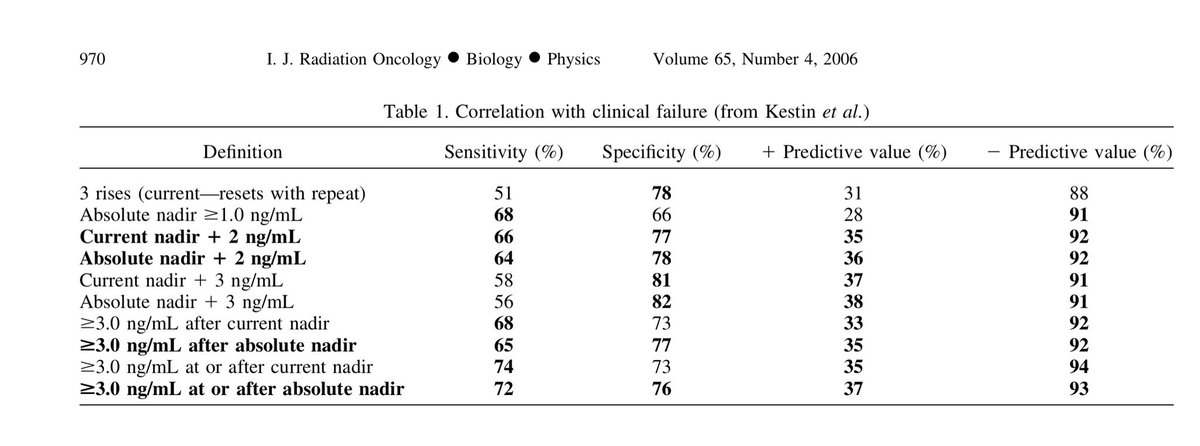
The Phoenix (nadir+2) BDFS definition is no longer relevant and should not be used clinically or in the literature. In Roach et al, the Kestin validation data was 78% GG1 and salvage ADT ≠ clinical failure. The high NPV is a result of a low event rate and relevant events ignored.
I have 2 foundational issues with this paper and its ability to show a difference: Phoenix has a sensitivity of ~65% (see Roach et al table) meaning it has a high false negative rate. Failures are missed! Four years is early to be looking at Mets free. There is little interpretable here.
I have 2 foundational issues with this paper and its ability to show a difference: Phoenix has a sensitivity of ~65% (see Roach et al table) meaning it has a high false negative rate. Failures are missed! Four years is early to be looking at Mets free. There is little interpretable here.