We have just read a Letter to the Editor from @nickva1, @alison_tree, @piet_ost that carries an implication of dishonesty, and unfaith, deliberately distorting the facts in order to criticize and mislead readers to truly understand the article .
“Oncological Outcomes Following Focal HIFU and Cryotherapy for Treatment of Nonmetastatic Prostate Cancer in the United Kingdom: An Updated Analysis of 3477 Patients from the Prospective HEAT and ICE Registries”
We firmly oppose their behavior. Our forthcoming analysis will clarify the actual content and specifically identify how they have twisted the information.
@LondonProstate1 ,@AJWLight@IP_London
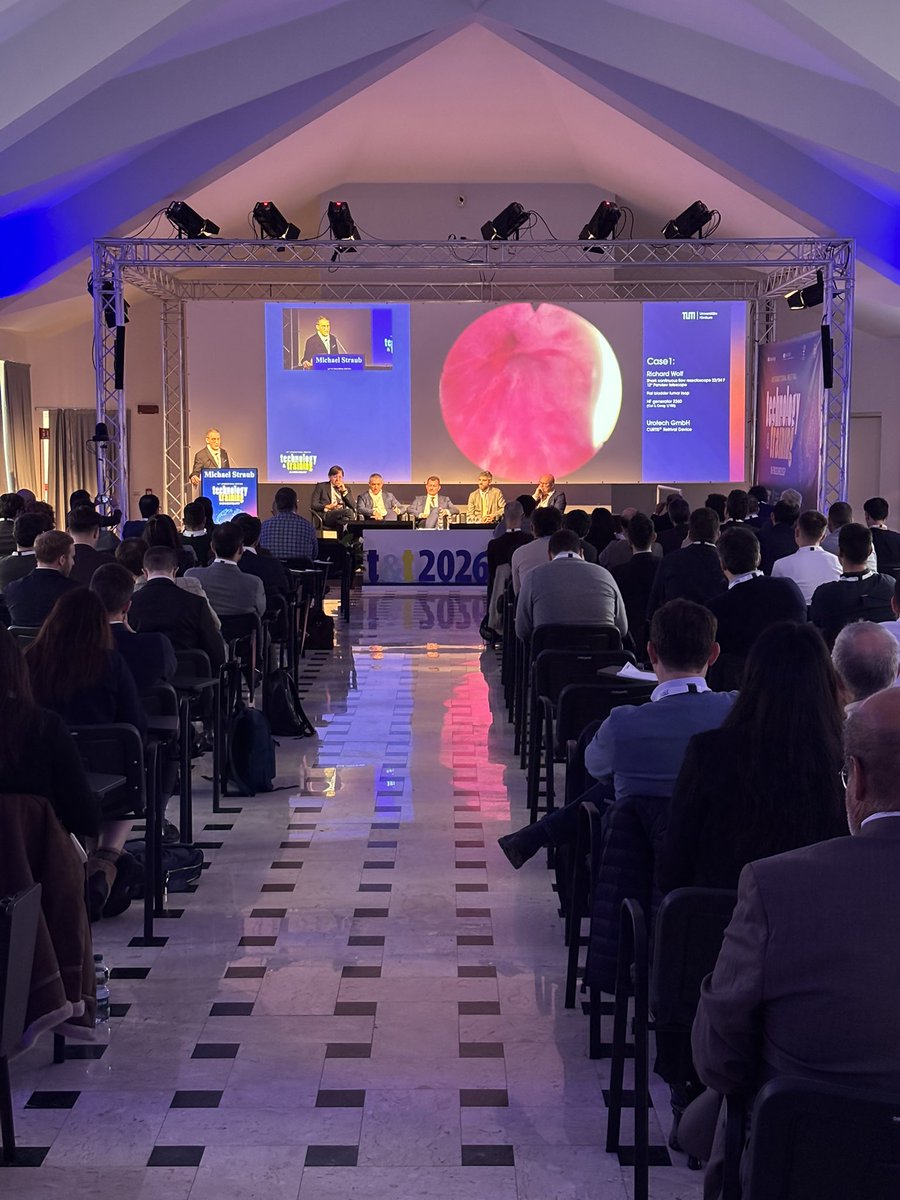
It’s a pleasure to share the stage with friends and leading experts in the field!
#T&T26.
We discussed the most relevant topics in NMIBC management.
One of the main takeaways is that en bloc RBT continues to gain popularity 🌎and its widespread adoption is only a matter of time.
Day 1 is started!
Three days of innovation, knowledge
sharing and scientific discussion are ahead.
📅 Explore the programme: https://t.co/A9BHYiDed5
📝 Register to watch online: https://t.co/3ERW3SmeO6
@Uroweb@ESRUrology@SIU_Italia@SIU_urology@scoffonecesare
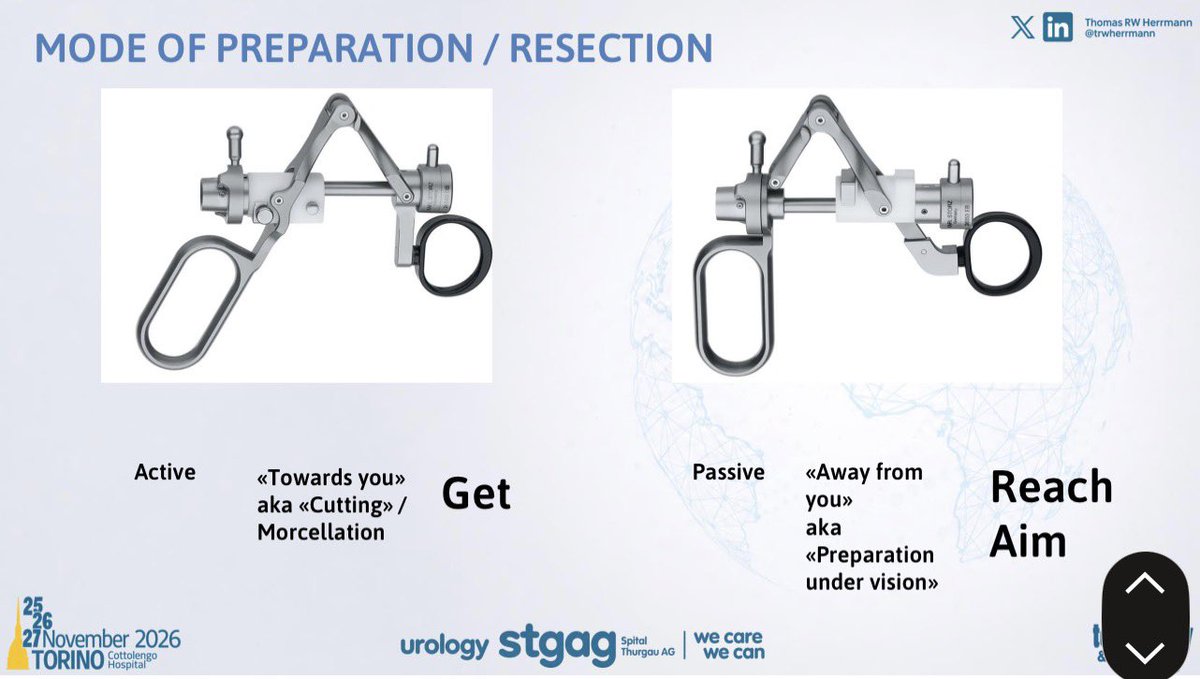
@EndourologyT#TNT26 my conclusions. Do #ERBT or aim with #TURB in what is better in #ERBT. Change use of instrument into aiming and preparing rather than cutting tool. For all interested #EAUEndourol provides a database project #EBRUCPrevail for #ERBT Get involved
#SIUFlorence2026 is not only cutting-edge urology but also a matter of meeting friends from all over the 🌎🌍🌏
Missing some friends but meeting new ones
Thank you all for coming and the wonderful evening @SIU_urology
Clay still lists the $1 million Navier–Stokes problem as Active.
For nearly a century, mathematicians struggled with a question hidden inside the equations governing water, air and turbulence.
Can a smooth three-dimensional fluid flow develop a singularity in finite time?
In September 2026, OpenAI announced that an AI system had constructed such a breakdown under smooth external forcing, with the proof also formalized in Lean.
On 11 September, the Clay Mathematics Institute acknowledged the apparent breakthrough.
But mathematical acceptance requires scrutiny. As of November 2026, Clay still lists the $1 million Navier–Stokes problem as Active.
① FDA grants De Novo authorization to Virtuoso Robotic System for bladder tumor resection
② Reconstructed-data analysis: newer BCG-unresponsive NMIBC drugs do not outperform gem/doce
Today's urology Top 5, Nov 11: https://t.co/UQYtlKusVz
Such an honour for me and my team @CUHKMedicine to lead this important study! From FIH trial to Breakthrough Device Designation, & now the FDA De Novo Authorisation — it’s a testament to the world-class clinical research, surgical excellence, and pioneering innovation in urology!
Urologists, we need your help to characterize real-world practice patterns among urologists who evaluate and treat LUTS in men with small prostates (30cc). Please complete the survey. @sbuoficial@AmerUrological@Endo_Society@smumexico@colmexuro https://t.co/c85ZTKe4Zz
This is absolutely nonsense.
If the only reason to consider surgery the SOCis simply that it came first, then according to the rule of Burden of Proof this responsibility must fall to the newer method, that is SBRT.
You cannot expect a method (surgery) that has cured millions of people over decades to prove its efficacy all over again just because a new method (SBRT) has emerged.
And, in the context where a high-quality head-to-head RCT directly comparing Surgery and SBRT is currently extremely difficult to conduct, any caveats regarding the certainty of the evidence or level of evidence as well as caution in widespread adoption, must be heavily placed on SBRT not in surgery.
@SprakerMDPhD@jryckman3@BrendonStilesMD I believe the evidence for surgery against SBRT is very slim. The best reason surgery to say surgery is SOC is that it was there first. We can always play these same games and say the best data is ⭐️✨🌟 so SBRT is SOC and surgery needs to prove
Itself https://t.co/zU0bQtI1dK
This is absolutely nonsense.
If the only reason to consider surgery the SOCis simply that it came first, then according to the rule of Burden of Proof this responsibility must fall to the newer method, that is SBRT.
You cannot expect a method (surgery) that has cured millions of people over decades to prove its efficacy all over again just because a new method (SBRT) has emerged.
And, in the context where a high-quality head-to-head RCT directly comparing Surgery and SBRT is currently extremely difficult to conduct, any caveats regarding the certainty of the evidence or level of evidence as well as caution in widespread adoption, must be heavily placed on SBRT not in surgery.
Can SABR replace surgery for operable stage I NSCLC?
New @JCO_ASCO study by Kagenaar et al. uses England's national cancer data (2015–2020) to compare outcomes in 12,546 patients:
🔹 Surgery: 10,247
🔹 SABR: 2,299
Study: https://t.co/fv55nQlwqI
🧵
When Practice Outpaces Evidence: Comparative Evidence for Stereotactic Ablative Radiotherapy Versus Surgical Resection for Stage I Non‑Small Cell Lung Cancer. Co-authored by @BrendonStilesMD.
Read the full article. https://t.co/LPskna5wEx
#NSCLC
Introducing my En bloc HoLEP Video Library.
Real cases, searchable by technique, prostate size and documented challenges. Free access, with an interface in 8 languages. Save the link below!
I hope it helps with your learning curve!
https://t.co/TXmJuj5qYs
#HoLEP#Urology
Yes, this could be considered a limitation. However, I have a different view from yours.
That the control group received surgery alone was reasonable at the time of the trial design (2021), when no neoadjuvant therapy had yet been proven effective for patients ineligible for cisplatin.
The use of EV+P (if not adequate) after recurrence reflects local practice, rather than the protocol forcing patients to be disadvantaged.
I personally see no ethical issue here.
I agree that we compared with current standards, the control group was treated suboptimally after recurrence.
However, if you judged against the SOC at the time the trial was conducted, the management of the control group was entirely reasonable.
If anything, this would only affect the secondary outcome, the OS, or the feasibility of implementing the study under ideal conditions but it does not affect EFS, the primary outcome that determines the success of the trial.
For me, this is mainly an ethical issue. If you know EV-P is better than chemotherapy in the advanced setting, the sponsor should, imo, pursue every option to give control-arm patients the best evidence-based treatment, regardless of accessibility.
Moving your trial to less-developed countries, in which access to subsequent therapy is limited, is a known strategy to inflate your endpoint.