1/Time is brain! But what time is it?
If you don’t know the time of stroke onset, are you able to deduce it from imaging?
Here’s a thread to help you date a stroke on MRI!
🧠Mortality & functional outcome in patients with large cerebellar infarctions treated with neurosurgery
Systematic review & meta-analysis showed:
📍18% mortality
📍64% favourable functional outcome among survivors
Read more below!👇
https://t.co/9JPHxSsLRM @BarbaraCasolla
#MondayTip
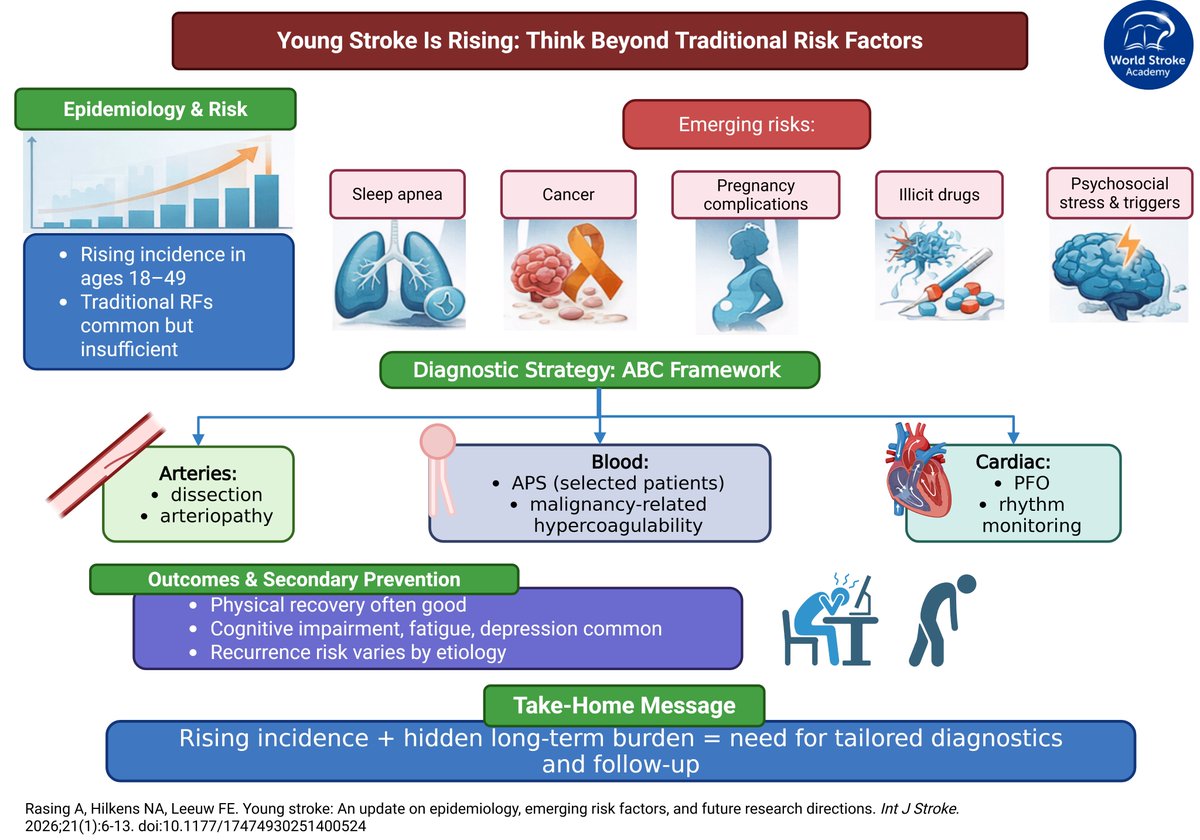
Young Stroke: an update
☝️Stroke isn’t just an older-person disease
📈Ischemic stroke in 18–49y is⬆️,often driven by non-traditional risks
🔤Think ABC diagnostics
🎯Tailor 2ry prevention
🛑Don’t ignore long-term cognitive & psychosocial burden🧠
https://t.co/f98oOdvXL0
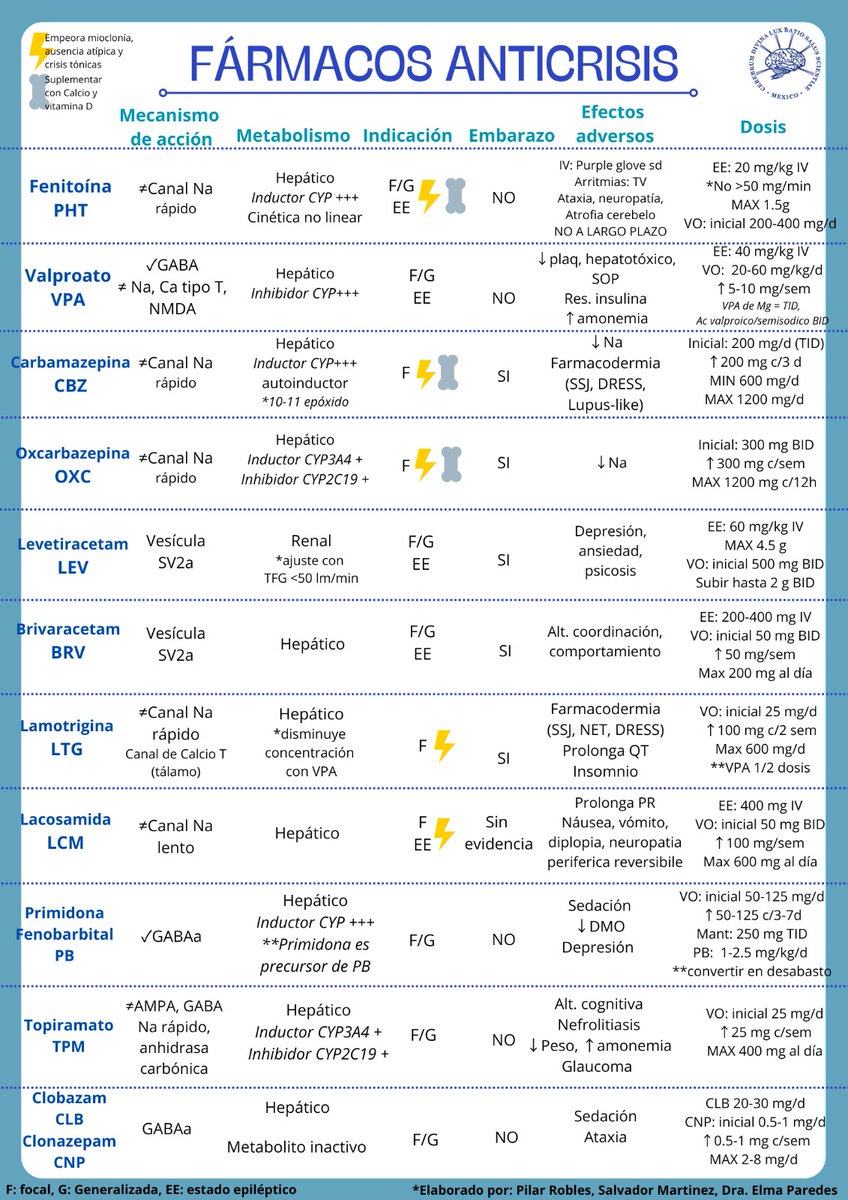
Aprovechando el mes de hacer consciencia de epilepsia, les comparto este póster que resume los principales fármacos anticrisis e información útil de ellos en la práctica diaria. Fue realizado en conjunto con nuestros residentes en especial la Dra. Pilar Robles @INNNMVS 🧠🧠⚡️
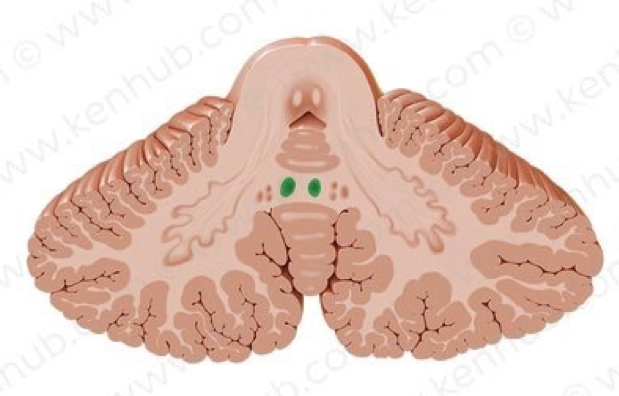
1/Is remembering cerebellar anatomy making you dizzy?
Need help telling your flocculus from your nodule?
How much cerebellar anatomy do YOU know?
Here’s some help w/an anatomy thread on the 9 lobules of the vermis!
A confocal microscopy image of Your Majesty, the neuron, the king of the brain jungle 🧠🔬! This one is the classical pyramidal cell, the most common neuronal type in the mammalian cerebral cortex. In blue, staining for PSD95, a major protein in excitatory synapses that helps concentrate and organize neurotransmitter receptors in the synaptic cleft. Each little dark blue puncta shows an excitatory synapse happening between two neurons!
Reduction or dysfunction in the PSD95 expression is related to impaired learning and working memory and is observed in diseases such as Alzheimer's and Parkinson's. Staining: 🟠SMI32🔵PSD95 #SynapticSunday @zeiss_micro
@ruthmapo@RincnCuriosoo Muchas gracias, también estoy de acuerdo, aunque en todo el primer enunciado el único sujeto podría interpretarse como el hermano.
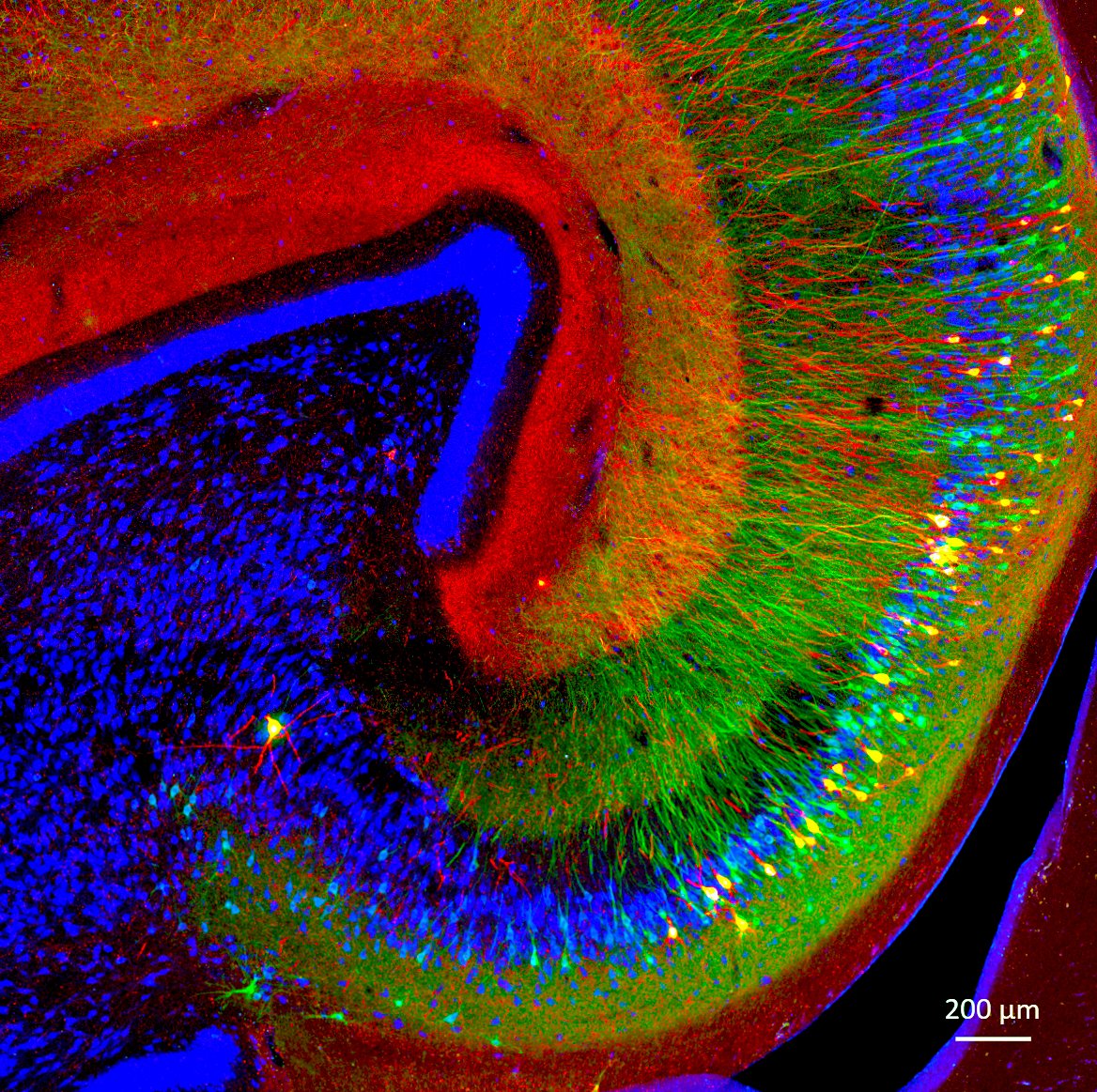
Happy #MicroscopyMonday! The photo below is from our Tau monkey model of Alzheimer's disease! Tau is a protein that gets misfolded and accumulates inside neurons in #Alzheimer's and other neurodegenerative diseases. The photo below shows two tau phosphorylations observed in the disease in red (AT8) and green (pS422). Healthy neurons in blue only. Everything in red and green are dying neurons and its projections. A colorful death.
Confocal image taken with @zeiss_micro
@SinResquemor@RincnCuriosoo De acuerdo 😁, aunque también es conjugada de la tercera persona del singular, pretérito imperfecto del indicativo del verbo tener. No es exclusivo de primera persona de ahí mi confusión. Muchas gracias