FroM Superstring to Indexing: a space-efficient index for unconstrained k-mer sets using the Masked Burrows-Wheeler Transform (MBWT) https://t.co/YagAm5YBz3 #biorxiv_bioinfo
@msikic Would be cool :-) In my experience some well-established deep learning tools (for variant calling) spectacularly failed when I tried on highly heterozygous organisms
Soon, we will see more long and ultra-long read technologies that combine sequencing, sequence alignment and AI for error correction. I am proud that our lab has contributed to this by https://t.co/hHFbezdGeJ https://t.co/MjKazNVExU and https://t.co/KyR3LPx5rT,
@ZaminIqbal Very interesting! I've been wondering how overfitted to human these variant callers actually are. Part of the answer here is they work on bacterial genomes. Could be interesting to investigate further genomes with high divergence/heterozygosity
[1/11] Thrilled to announce our latest preprint on function-assigned masked superstrings (shortly, f-masked superstrings or f-MS), which transform masked superstrings into an operationally complete data type for k-mer sets. w/@sladky_on and @VeselyPavel_mff
Very happy to receive the best student's paper award at the Bioinformatics part of BIOSTEC2024 conference 🥳! Work on using ILP to improve metagenomic assembly. Soon on biorXiv. With Rumen Andonov and Tam Truong in the @GenscaleTeam.
Could this be useful in genomics? Two reasons to hope 1) When divergence is low the alignment is near-optimal 2) O(n) in time and O(1) in space => probably very fast if well-implemented 🧵6/6
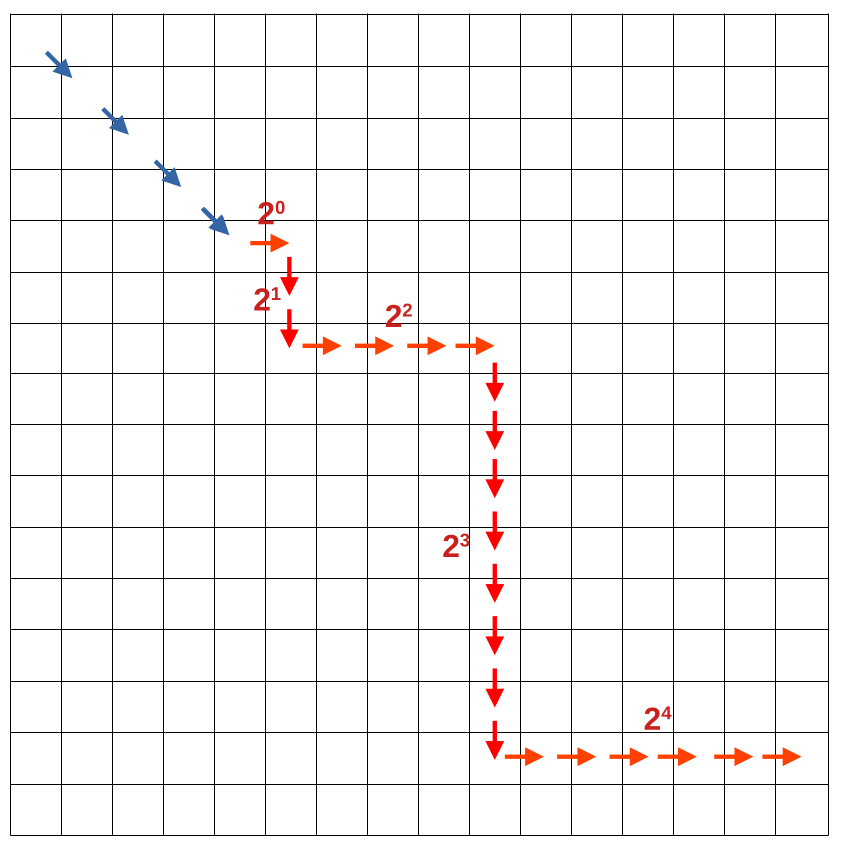
Just discovered CGK embedding by @KoudyMK lab. Very fun paper: aligning two sequences in O(n) time and O(1) space 😯 sacrificing a bounded amount of precision. https://t.co/gMlwdzybMj Summary of the journal club in @GenscaleTeam 🧵1/6
Switched from random walk to methodic exploration of the matrix: overestimation comes down to O(s)! (but this cannot be formalized as an embedding anymore) 🧵5/6
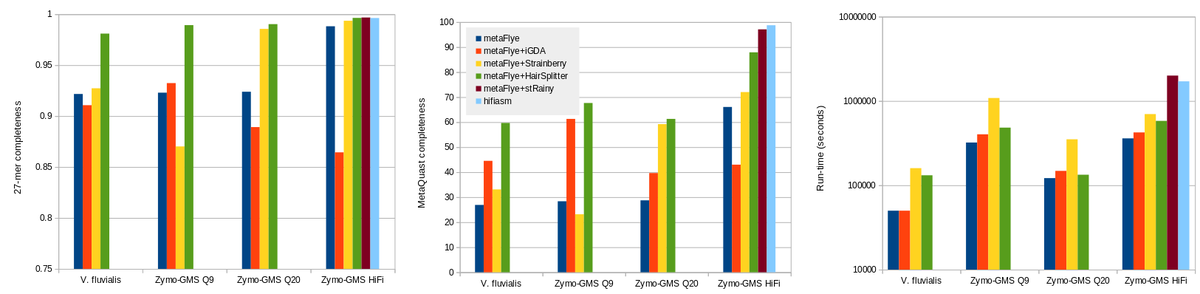
General purpose long-read assemblers like metaFlye generally collapse close strains. The methods available for now to recover the strains were Strainberry, from @r_vicedomini and @RayanChikhi, and iGDA, but worked only for simple metagenomes 🧵2/3