HERRO has been published in @Nature !!
https://t.co/zZFSuYvXq7
This achievement is a result of the great work by @domstanojevic, with contributions from @DehuiLin, @sergeynurk, and @PaolaFlorezdeS
We are entering the era of high-quality genome assemblies supported by AI. This is just the beginning.
Seeing another millennium prize problem solved, I think it's time for academic hiring to pivot completely from math & cs to bio. Bio is data limited & the right AI architecture for the genome is yet to be discovered. i.e the frontier is open in both hardware and software.
Given Claude Fable 5.2 can predict protein sequence, I was curious if it can predict structure.
I gave it a relatively simple prompt: "predict contacts, 2ndary struct, use dynamic prog. and linear alg. to predict structure"
It was able to predict fold of ubiquitin correctly 🤯
@try_litefold "Since the advent of AlphaFold, homology search has been an integral part of structure prediction"
What do you mean? MSA has been an integral part of structure prediction since 1990s. 🤪
Really excited to share! In this day and age the hype might suggest we’ve “solved” protein biophysics, but all the models we tested are far from predicting simple N chemical shifts. Hoping releasing our cleaned / curated data and models can help all protein ML space better learn biologically-relevant chemistry and dynamics!
Update: I will be starting in Fall 2027 as an Assistant Professor at UNC Chapel Hill in the CS department.
My lab will build algorithms for large-scale microbial and meta-omics sequence analysis. I'll be recruiting PhD students. More info at https://t.co/WXTuNHH7dX 1/2
We'll be spending a lot more time trying to understand the outputs of language models. A few thoughts, tips & tricks:
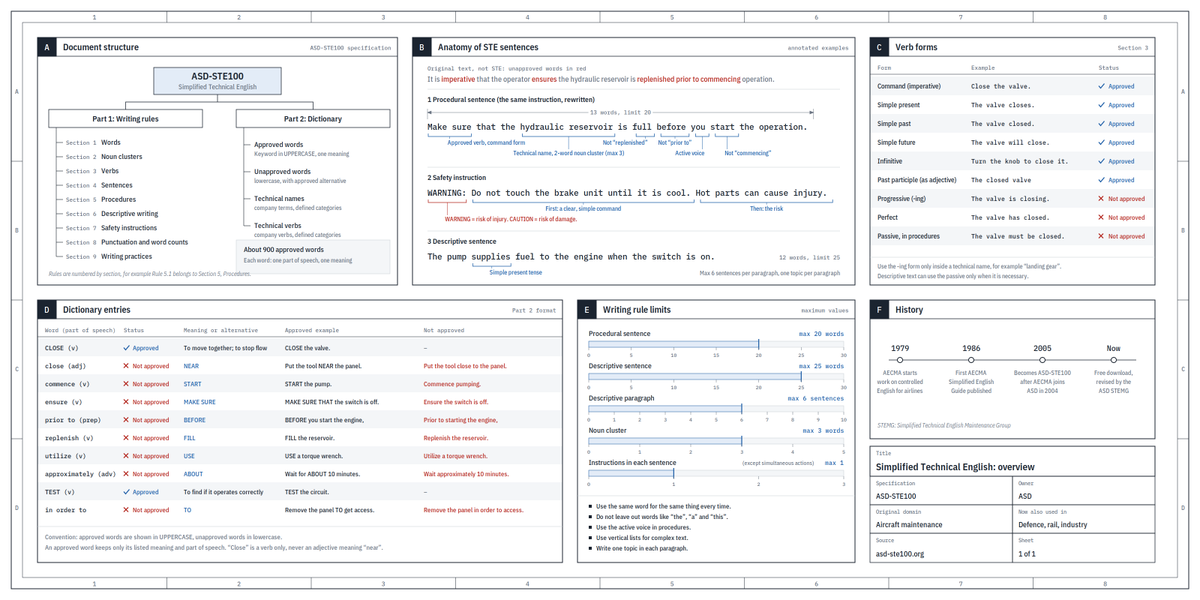
Writing. Something I've had success with: Ask your LLM to explain something in ASD-STE100, it's a controlled language specification originally developed for aerospace maintenance documentation. LLMs well-versed in this language and it comes with heavy constraints on clean writing style that I often find a lot more readable. Sometimes I've tried to soften it a bit e.g. ask for "80% of the way to ASD-STE100" because the spec is quite stringent. But even better:
Diagrams / images. Instead of writing, ask your LLM to create a diagram. These can be a lot easier to process, parse, and understand. But even better:
Web pages. Ask for output "in HTML" to get a beautiful, interactive webpage. LLMs are getting really good at frontend and can create beautiful experiences, animations, etc. But even better:
Explainer videos. The output format I am most bullish on is fully custom / bespoke explainer videos generated on any arbitrary topic. Experiment with things like "Create a 3b1b style video explainer on X. Use my ElevenLabs API key for audio narration". (you'd need an API key for the latter or you can ask your LLM to find you decent free alternatives that use your local compute). This is actually starting to work!
In summary:
- As LLMs get better, they will do more and more of the legwork autonomously, and a lot more of our work will rise up the abstractions into oversight and understanding.
- Luckily, LLMs can help here too because as intelligence and code are increasingly abundant, you can ask for large, custom, discardable software artifacts (e.g. web apps, video explainers) that would have never made sense to create before. Push the boundaries here and you'll be surprised.
1/ Most genes and variants matter somewhere but look silent in any one cell model. Can we build conditions that reveal phenotypes? With @kanishkadey, we engineer cell states to expose hidden disease biology and trace how genetic risk reaches disease genes. https://t.co/pUHPPjxTkX
Just a few quick things.
1. Nice rigorous study of the importance of being careful with performance metrics and taking into account data issues.
2. This should be done BEFOFE one fits big models & make lots of big claims. Nevertheless better late than never. 2/
Don't be like these guys. Don't try to secretly scoop others when u hear about their potential success especially those with far less resources & power. Learn to give credit where it is due. Collaboration & healthy competition is the best way forward for science. Not this.
RNASSTR is out! Check out this article on our RNA secondary structure dataset, which leverages Rfam to build a larger corpus with structure-aware train/test splits for RNA secondary structure prediction models.
https://t.co/AEZJ1NmVqU
I am really not sure what Anthropic is trying to achieve here. Showing us great benchmark scores for Fable 5/5.1 for bio applications in their internal evals but making the model essentially unusable. Absolutely ridiculous strategy. Not even a trusted users option?!?
An underappreciated impact of AI on biology is that an enormous, I mean ENORMOUS, number of skeletons buried in genomics papers are all about to burst out of their Supplementary Materials.
Are there robust associations between the gut microbiome and obesity?
We explored this extensively with populations-scale metagenomic data for >800 South-East Asians in the HELIOS cohort @macadology
https://t.co/srPOeHB7Qz
@ginaelnesr and I are excited to release makeshift -- a lightweight package to lower the barrier for using NMR dynamics data in ML. We hope this can pave the way for more NMR-based models like Dyna-1!
Preprint: https://t.co/QsiqPtNirk
Docs: https://t.co/AVBTNgnpp9