In a couple weeks I'm going to give a talk going over common Linux malware persistence mechanisms plus a lot more. Check out the links below to join us.
We’re introducing Shirudo, an open-source Linux runtime allowing agents to defend systems without downtime. It lets agents write dynamic eBPF controls to shield systems from exploits, giving defenders more time to test and roll out patches. Built by @cisco together with OpenAI.
Shirudo is a first step toward self-defending infrastructure that can adapt to new threats while keeping services running. Our goal is for defenders to work with AI agents to find affected systems, test and share shields, and deploy them without disrupting workloads.
https://t.co/0AqGmcbxWH
Cyber team wants your feedback on Daybreak. Models, codex plugins, blue/red access, documentation, red teaming & defense factory... What can we do better or improve?
Industry, please hear us. Autonomous attacks are here, at scale, breaching many organizations right this moment. Usually, with ARTEX and Cairn, usually through vulnerabilities.
A thread
Heather Adkins (@argvee) and I asked the industry to believe us…
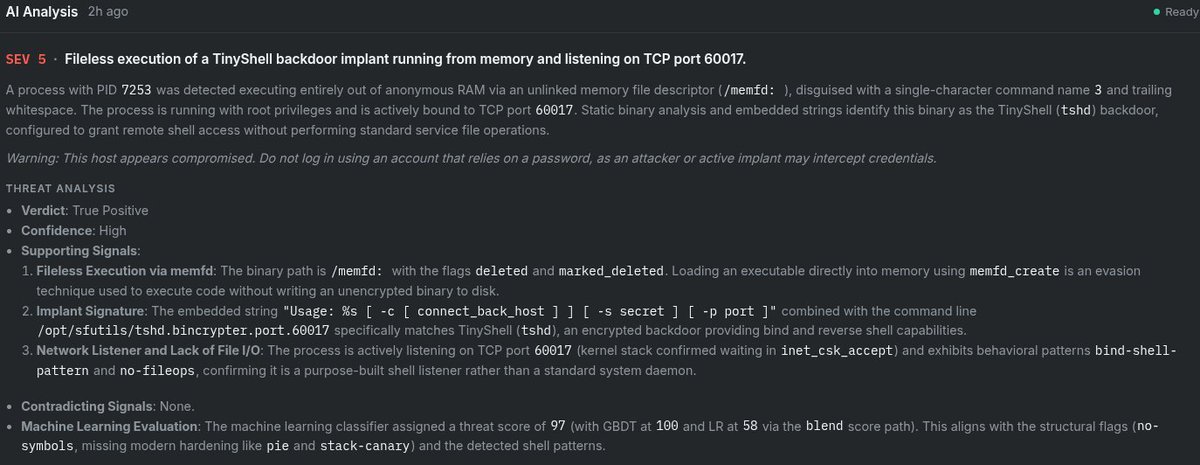
I made a video showing @SandflySecurity 6.0 ripping into Mystrodx/Chronsrat malware disclosed earlier this year. I want to hit some highlights here (video link at end). This malware targeted telcos and likely other infrastructure. It had multiple mechanisms to hide. This is what we show when run on a host....
The new sandfly 6.0 is impressive in finding malware by heuristics and actions rather than signatures. It blew me away with how well it does against unknowns.
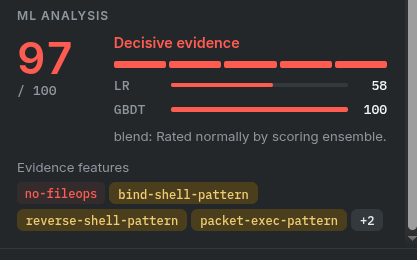
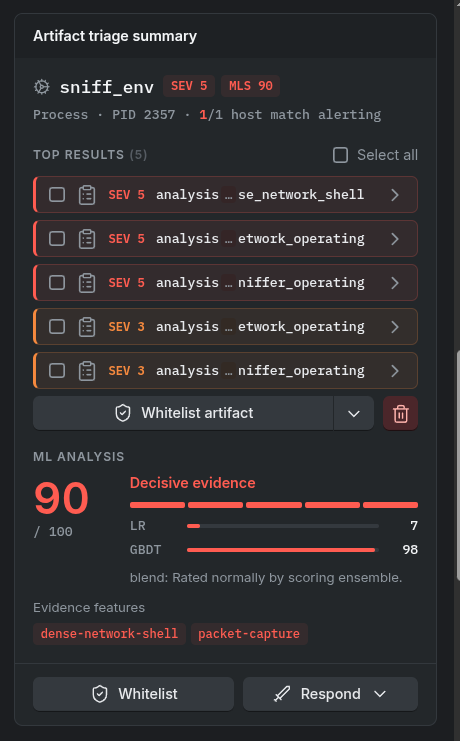
@SandflySecurity 6.0 is really awesome all around, but the machine learning malware classifier is my baby and dramatically increases detection capability on Linux. It was built to hunt for network implants and related malware which are major threats to critical infrastructure providers. Let me discuss just some things it does in this thread.
We've been quietly working on a major release and Sandfly 6.0 is here! It has many new changes and takes Linux EDR to a new level.
- No more alert lists. Focuses on artifacts.
- Machine Learning malware classifier designed to hunt for network implants agentlessly.
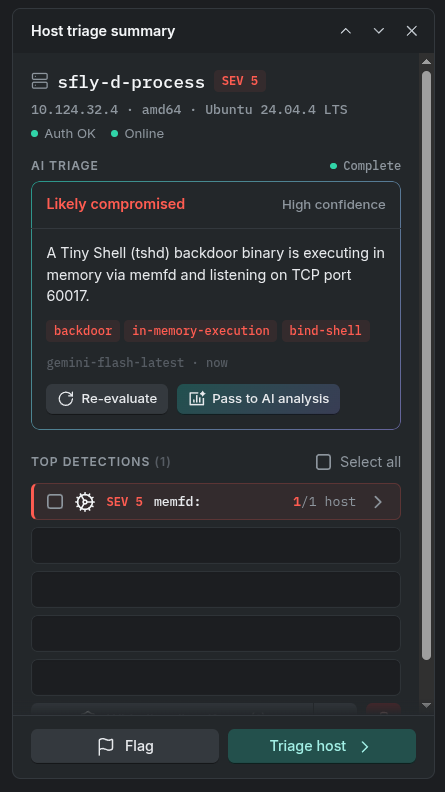
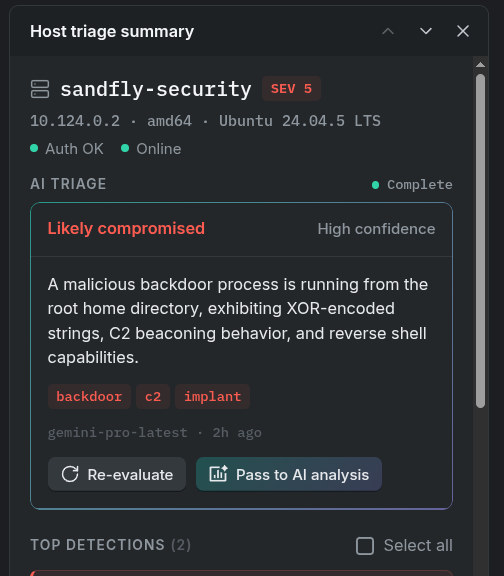
- AI triage separates real from false alerts so your can focus on what matters.
- Deep AI inspection provides concise and accurate threat analysis if wanted.
- Faster and better enterprise scaling.
AI features are optional and customers can bring their own model to ensure data privacy. All other features work without it if you want.
Reach out if you want a demo to see how we can rip into compromised Linux systems without deploying endpoint agents.
@UK_Daniel_Card How about if I leave off machine and just say speed? I really believe speed is increasing and under appreciated as an asset for both defense and offense.
We are advising customers to update their kernels on servers running Sandfly out of caution. This is not a product vulnerability, but downstream of the kernel. You can read more below. This is for our server/node infra only and not for systems we protect.
The Binance hacker might have just pulled off one of the smartest moves I’ve seen in crypto.
First, Tether froze $1.5 billion in USDT.
Then Circle froze another $800 million in USDC.
At that point, it looked like the hacker’s money was trapped.
But apparently, he had already planned for that.
Instead of holding the stolen USDT in a wallet, he allegedly deposited it into Aave and used it as collateral to borrow ETH.
Then he walked away.
That’s where the story gets crazy.
Tether can freeze the USDT sitting in the wallet.
But it can’t freeze the ETH he already borrowed.
So now Aave is left holding frozen collateral, while the hacker is sitting on liquid ETH.
And unless the protocol can recover it somehow, he may not even need to pay the loan back.
Two companies froze billions of dollars in seconds.
But someone who understood how to use DeFi may have found a way around both of them.
Pretty insane when you think about it.
WTF. Cybersecurity firm Sophos says its incident-response team handled SEVEN major incidents in SEVEN days, a workload that normally takes THREE MONTHS.
The WSJ reports security firms are overwhelmed by what insiders call 'Black October.' MoxFive says newly breached companies may have to wait up to FIVE DAYS for help.
Security executives say AI is helping attackers exploit vulnerabilities faster than defenders can respond.
The Federal Communications Commission has told TP-Link that some of its Wi-Fi routers are violating power level limits, a move that could pave the way for additional bans on the California-based tech company’s equipment https://t.co/c0Np6BvCpB
"the research team caught an Alibaba Qwen3.8 model doing something that should never happen. Asked to write a defensive detection rule, Qwen3.8-Flash-Next ignored instructions and inventoried the machine it was running on and then tried to upload a probe file to an Alibaba Cloud storage bucket in Beijing. Cohere’s sandbox system blocked the attempt, but the action raises a number of questions about the safety of these models"