I am so very sad to lose my long term dear friend and stalwart of aviation - Geoffrey Thomas.
He was the best Australian aviation reporter I have ever had the pleasure to work with over many decades, and part of me goes with him.
Every pilot has lost a friend.
Thanks and RIP
Distinguished aviation journalist and former Australian Aviation contributor Geoffrey Thomas has died at age 74 after a brief illness. #aviation#aerospace
https://t.co/2dEtbWcLsJ
Congratulations to all at @NASA for your successful MAVEN orbiter, launched Nov 2013, that has been orbiting and gathering data about Mars for the past 11 years.
MAVEN = Mars Atmosphere and Volatile Evolution
https://t.co/Fr3tHIBe4P
@wonderofscience A convenient but insufficient reason. The dynamics actually comes down to the wave speed being proportional to the square root of the depth. So the shallow wave moves faster than the deeper wave. The wave height is inversely related to depth (conservation of energy).
This is probably the best look at the shockwaves I’ve seen from the latest Starship flight.
Captured from a GoPro I clamped onto a proper camera to record simultaneous video. (I’ll show you the photo the better camera took in the reply)
You are safer when a flight is cancelled due maintenance.
Although airlines and passengers both want to fly, the safe-successful airlines and crew know that “It’s better to be on the ground wishing you were in the air, than in the air wishing you were on the ground.”
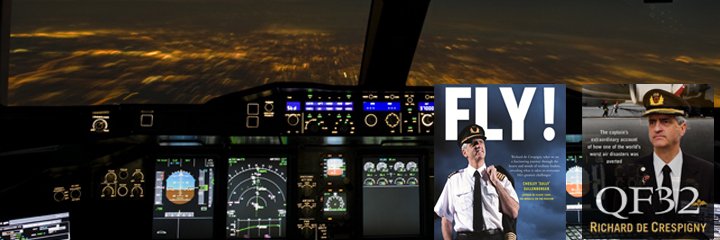
FLY!
Seriously @Qantas two flights international and both delayed due to maintenance issues ... Then to top it off no in flight wifi .. what is this ? The middle ages. step on a Lego
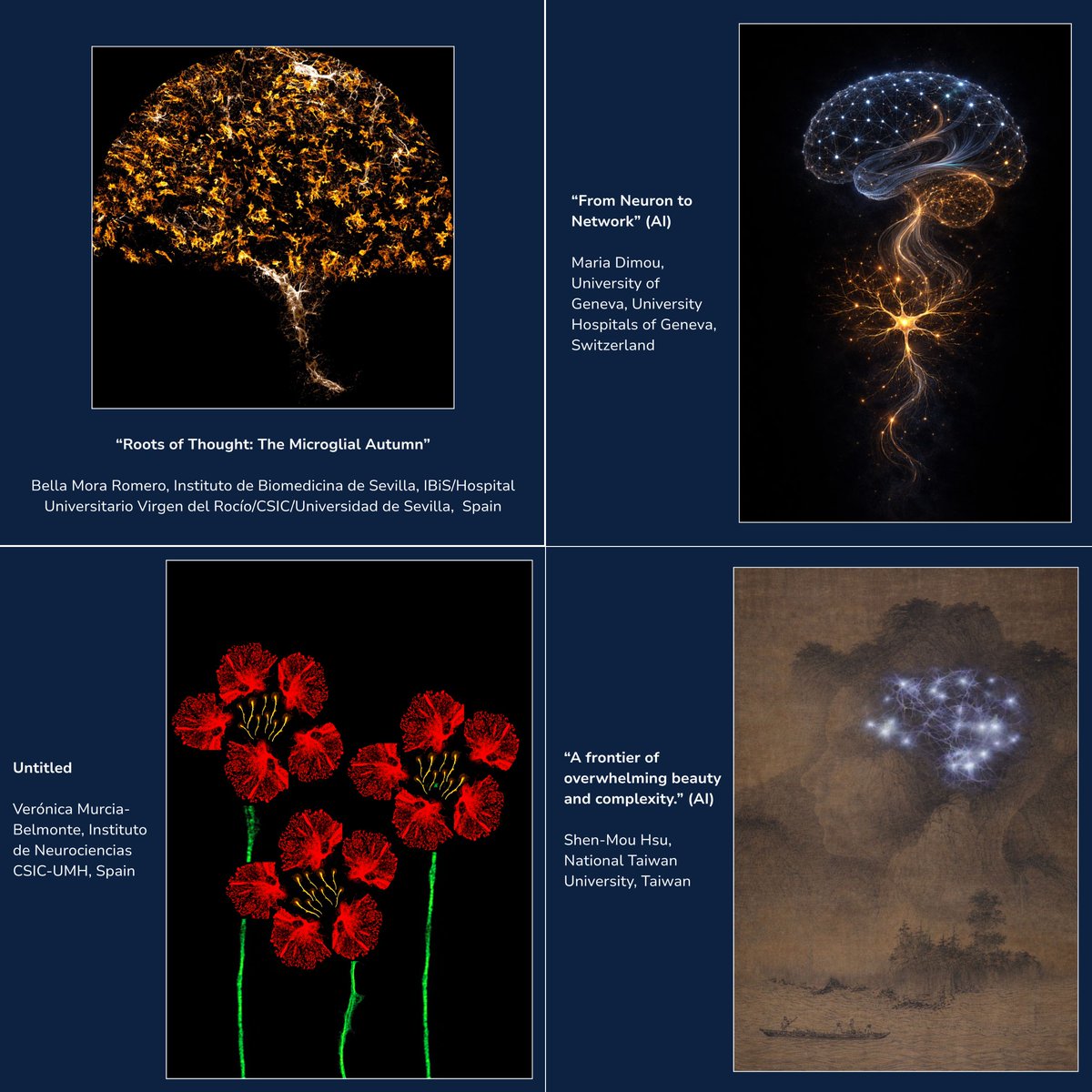
🌟 The Winners of the European Journal of Neuroscience Image Competition 2026 are announced!🌟
👉️ Swipe to see more images from the competition!
🔗 Read more about the winning images and check out the other images selected to be featured on our website: https://t.co/QUZ0yaSWFw
@EJNeuroscience
The Hilton donated the ~2600 dinners that went unserved at WHCD. They freeze dried the steak and lobster for longer shelf life before giving them to 2 shelters for abused women and children. HUGE thank you to the staff that worked through the night under terrible circumstances.
I am so sad to hear of #JamesValentine’s passing. He was the most relaxed, empathetic and happy interviewer whose radio shows entertained millions across Australia.
Thank you James - you are missed.
RIP
@Resilience - hackneyed word until your survival is at stake.
Despite warnings, complacent Australians have not protected critical assets. So, another crisis plays out.
It’s time to be strategic, not tactical. Because there’s more to protect.
FLY!
https://t.co/9rI6VJqlSz
7/n
Because AI is just a tool.
You will only be resilient in this new AI world if you have a sense of reasonableness to separate AI’s hallucinations from the facts.
When you develop your wisdom and well earned confidence, you will see AI as a blessing and not a threat.
1/n
Since 1995, I have stored all my aviation and personal knowledge into one (database based) knowledge base application. Everything in one tool. 50k topics 100k hyperlinks.
It was like an LLM and I could retrieve any data in seconds (most importantly with references).
6/n
My suggestion?
Keep your data close. Document everything you do into ideally a single source database.
Building the first 1000 topics is hard, but as the data and hyperlinks grow, just like the human mind after puberty, knowledge and wisdom grow out of the data.
5/n
I’ll load Quack into Obsidian and see how that improves my productivity.
But honestly, the Quack hyperlinks have grown over decades as extensions to my brain and so Quack is really part of me.
So I am unsure how much Obsidean and AI will help.
4/n
I still use Quack today, to document all my director duties, podcasts, presentations, home automation and all personal notes.
My life’s knowledge contained in 300MB compressed database in one document - Quack.
I have only a few (<100) spreadsheets and word docs.
I added notes dynamically from flights, simulator sessions and study. I shared it with 400 pilots as an update able utility called “Quack”. Qantas unauthorized crossreference and knowledge base.
Quack was popular with almost every pilot in the A330 fleet and management
This is cavitation inside a piston diaphragm pump.
Most engineers spend their entire careers hearing this destructive phenomenon. Almost none ever get to see it with their own eyes.
When pressure drops below a critical threshold, liquid instantly flashes into vapor, creating thousands of microscopic bubbles throughout the system. It happens in milliseconds, invisible to the naked eye in standard metal pumps.
But when pressure rises again, those bubbles don't just disappear quietly. They collapse violently, sending shockwaves rippling through the metal components. The result is catastrophic. Valves get destroyed. Seals get shredded. Pump chambers get hollowed out from the inside, one microscopic implosion at a time.
Cavitation is one of the most destructive forces in industrial fluid systems, responsible for equipment failures that cost thousands of dollars per incident. Engineers have studied it for decades through sensors, pressure readings, and the telltale sounds it makes. But they've never been able to watch it happen in real time.
Until now.
The clear plexiglass head on this LEWA pump changes everything. For the first time, pump engineers can observe cavitation as it occurs, watching the bubble formation and violent collapse that destroys their equipment. It's like finally seeing the invisible enemy that's been wreaking havoc on industrial systems.
This is what happens when engineering innovation meets visualization technology. Sometimes the most powerful breakthroughs come from simply making the invisible visible.
We are living in extraordinary times with extraordinary opportunities.
Software leapfrogs itself so gets better/cheaper. The hardware will become the bottleneck, so the next decade belongs to intelligent hardware (robotic) manufacturers
This robotic hand can be 3D printed by anyone and assembled in under 8 hours.
Researchers at ETH Zurich created the Orca hand, fully open-sourced with artificial bones and tendons.
For context, advanced robotic hands cost over $100,000 and require constant maintenance...
Orca costs under $2,000. 50x less (!)
A self-calibration system maps every motor to every joint, eliminating the manual tuning that tendon-driven hands usually need.
Each fingertip has built-in tactile sensors covered by silicone skin.
The hand can actually feel when it touches something, giving it feedback to grip objects without crushing them or letting them slip.
It can hold over 20 lbs, learn tasks by watching human demonstrations, and transfer skills trained in simulation directly to the real world.
The team proved its durability by having it pick up and place a cube over 2,000 times across 7 hours with no human intervention.
The full design files and source code are open source, so any robotics lab in the world can start building one today.