Can AI help identify AFib sooner? Researchers at UCSF are evaluating whether AI-enabled detection technology integrated into home BP monitoring can confirm A-Fib faster than conventional monitoring. https://t.co/ZCEHpnYBF2
#AFib#DigitalHealth#HeartHealth
BREAKING: Elon Musk was sitting next to President Trump at the White House Super Intelligence luncheon. Here is President Trump’s full address:
• Praised the technology leaders as some of the world’s most brilliant people
• Said President Xi also acknowledged their brilliance
• Declared that America has a major lead in AI and will keep it
• Said the industry could become bigger than the Industrial Revolution
• Announced a document officially renaming “artificial intelligence” as “superintelligence”
• Emphasized self-regulation alongside government oversight
• Said data center companies will support local communities through energy, education and financial assistance
• Highlighted the wealth, lower taxes and other benefits data centers can bring
• Said the leaders in the room love America and want to do the right thing
Flag submissions are open for 2027! 💙
Submit a flag honoring someone living with ALS, a familial ALS gene carrier, or someone who has passed from ALS.
Don’t wait. Request your flag today: https://t.co/WbZbOs7wet
Your nervous system is wired to relax near water—and most of us ignore it.
A controlled study showed that simply looking at water for under two minutes reliably lowered blood pressure and heart rate compared with viewing trees or urban scenes.
Researchers call this “blue mind”, a rapid shift into a calmer physiological state with slower breathing and reduced sympathetic drive.
Miss this input for weeks and the opposite builds: higher baseline stress, poorer sleep, and more inflammation.
Even 10–15 minutes by a lake, river, or ocean counts. No special equipment required.
Where’s your closest “blue” spot you can actually get to this week?
Source:
Keller et al., Journal of Environmental Psychology, 2022
Tumbleweeds start out as tiny seedlings; by summer the plant has a round shape. They grow flowers and fruits. By fall they dry and detach from their roots, so they spread their seeds.
Permanent DST avoids acute harms from clock changes (heart attack/stroke spikes, accidents) but creates chronic issues.
Key consequences supported by evidence:
- Darker winter mornings cause later sunrises, delaying circadian rhythms and increasing social jetlag/sleep loss.
- Higher risks vs permanent standard time of obesity, cardiovascular disease, stroke, diabetes, and depression from reduced morning light (critical for entrainment and mood).
- More morning traffic fatalities from darkness during commutes.
- Long-term metabolic, immune, and potential cancer risks from sustained misalignment (similar to shift work).
Stanford models show permanent standard time prevents far more obesity (~2.6M cases) and strokes (~300k) than permanent DST. AASM and sleep experts overwhelmingly recommend permanent standard time as it best matches human biology. Russia reversed permanent DST after health complaints.
No exhaustive list exists, but consensus is clear: permanent standard time is healthier.
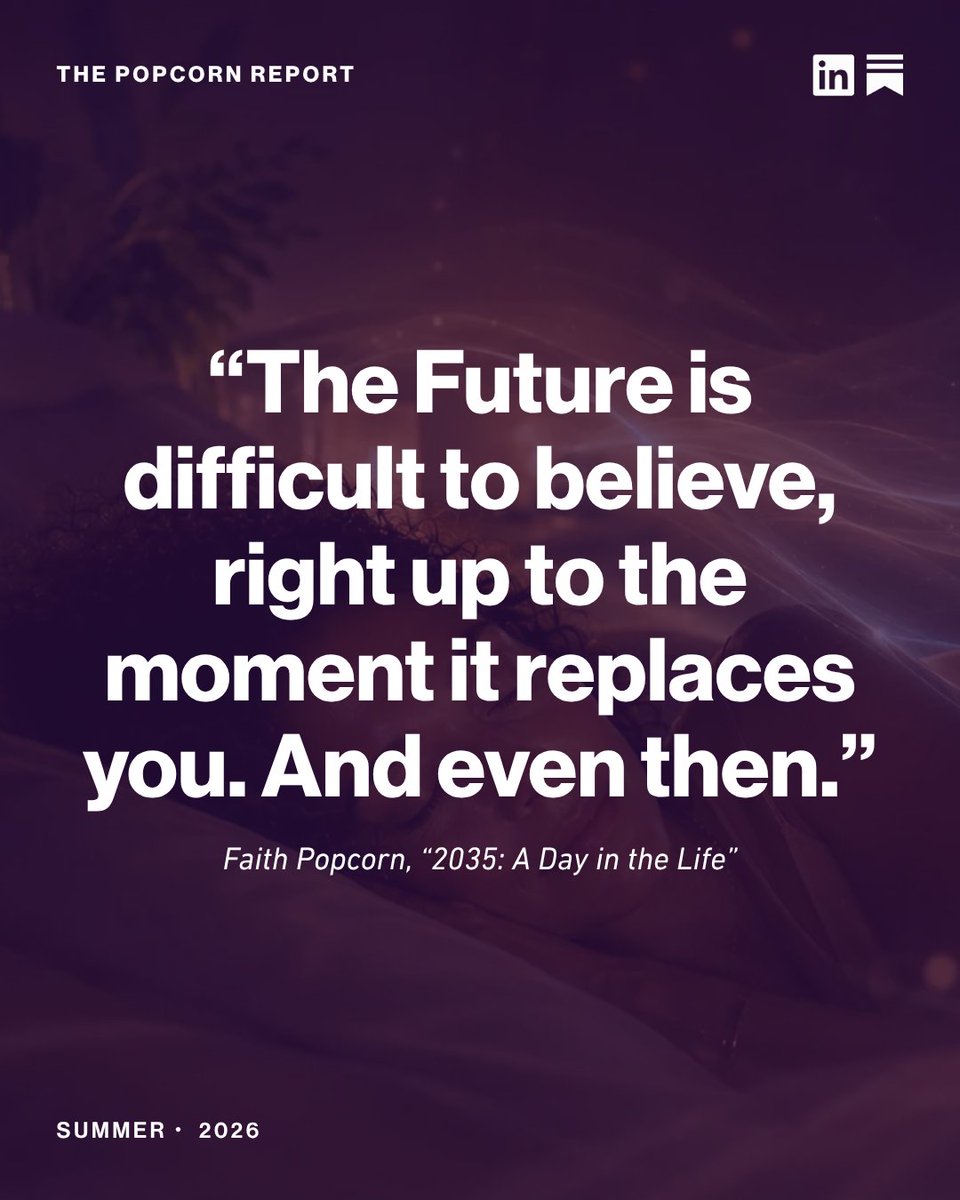
My latest Popcorn Report is set in 2035. Sable has a chip behind her ear, a talking dog, and a grandmother who died in 2028 and still beats her at Scrabble every Tuesday. None of this is as far away as you think.
Linkedin: https://t.co/LrFRCXlhU6
Substack: https://t.co/IIVdANmYsr
Puffins of Westray at Castle O’Burrian, soaking up the warm breeze.
I zoomed in from a respectful distance so I wouldn’t disturb them.
There were literally hundreds scattered around. It was absolutely magical seeing them thriving in their natural habitat.
#puffins#Orkney
What if you could see the entire sky -- all at once -- for an entire year?
That, very nearly, is what is pictured here.
Every 15 seconds during 2025, an all-sky camera took an image of the sky over the Netherlands.
Central columns from these images were then aligned and combined to create the featured keogram, with January at the top, December at the bottom, and the middle of the night running vertically just left of center.
What do we see? Most obviously, the daytime sky is mostly blue, while the nighttime sky is mostly black.
The twelve light bands crossing the night sky are caused by the glow of the Moon.
The thinnest part of the black hourglass shape occurs during the summer solstice, like today, when days are the longest, while the thickest part occurs at the winter solstice.
Equinoxes can also be located in the keogram, for example the northern-spring equinox from one year ago is about three-quarters of the way up.
Image Credit & License: Cees Bassa (Netherlands Institute for Radio Astronomy)
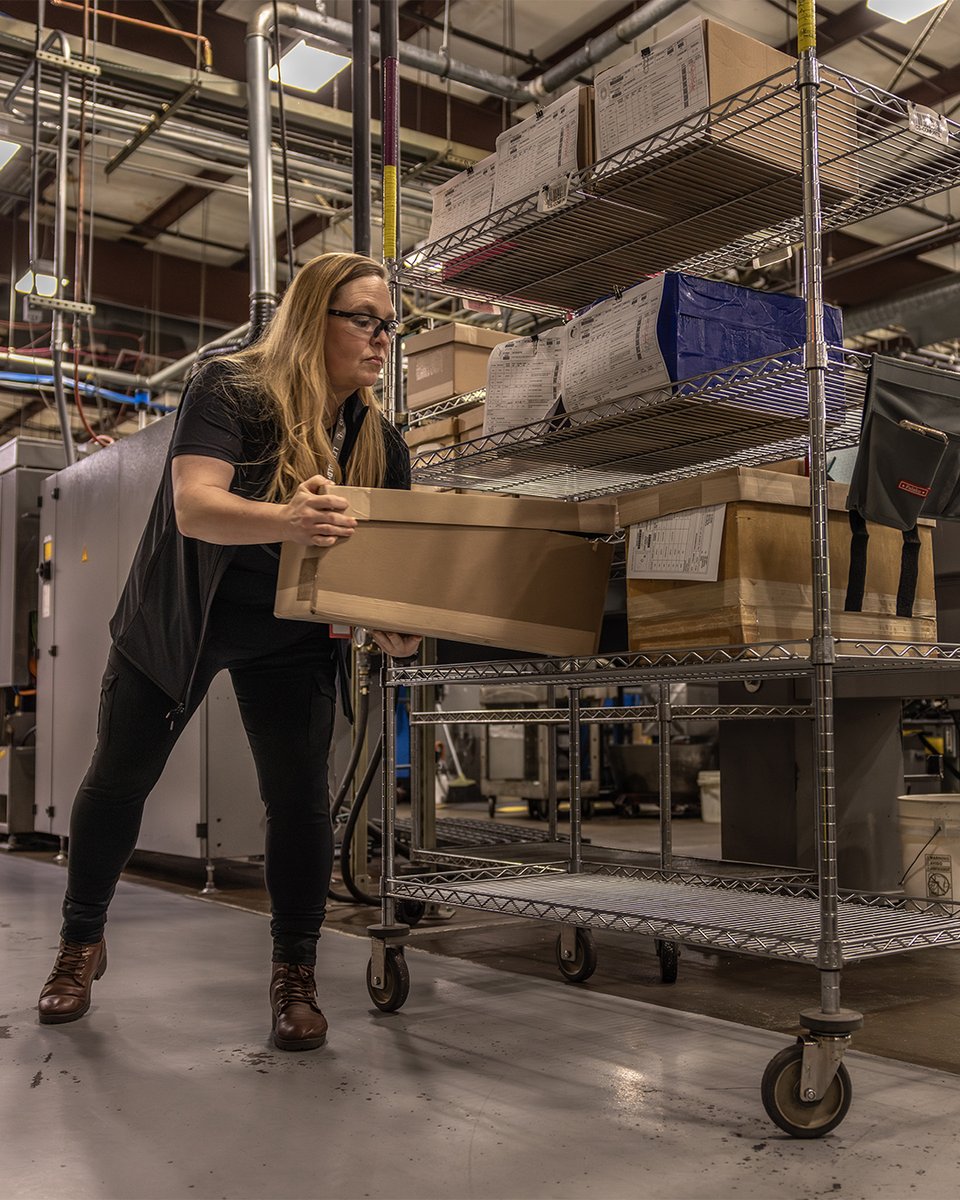
“I make things move, from beginning to end. There’s a rhythm to the factory and my job is keeping that rhythm going.”
Every optic depends on thousands of parts arriving at exactly the right place, at exactly the right time. Logistics Specialist Michelle Vestal helps orchestrate that movement across the factory floor, coordinating the flow of components through machining, finishing, inspection, and assembly with absolute precision.
Read the full story here: https://t.co/cJ4OLu4kU0