The aviation community may be global, but it is tight-knit. Help us rally around Brazilian aviation’s @avioesemusicas who has been diagnosed with Creutzfeldt-Jakob disease. A pilot in Texas paid Lito this honor.
To learn more about Lito’s situation: https://t.co/ACKN4UHgBr
🚨 Para ajudar o querido Lito Sousa, compartilhe o reel do link abaixo em suas redes sociais.
🔗 https://t.co/p5sArlTs0B
Além disso, marque as instituições abaixo nas publicações:
📌 @ionis_pharma — Ionis Pharmaceuticals — ION717 trial
📌 @broadinstitute — PRiSM trial (NCT07444580) 📌 @harvard
📌 @mayoclinic
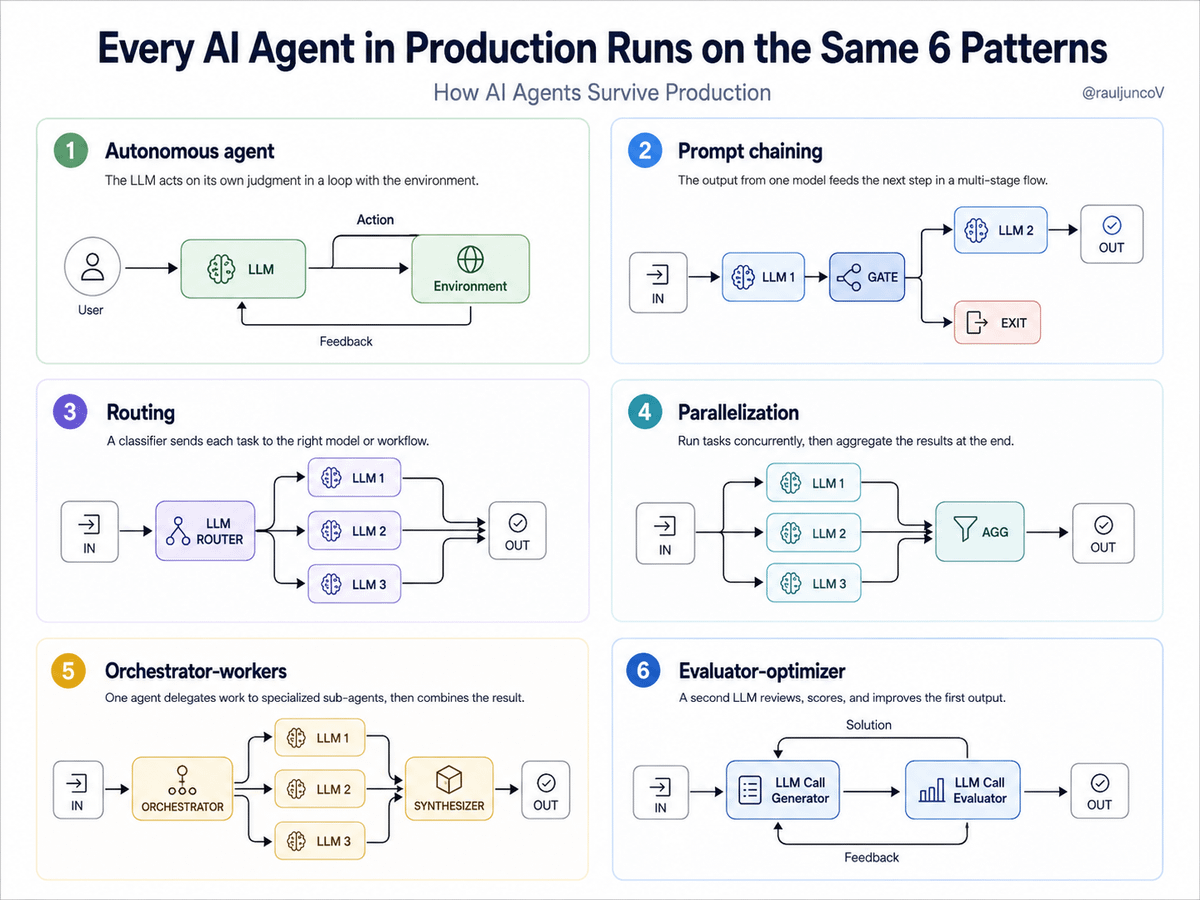
Every AI agent in production runs on the same 6 patterns.
Real systems mix them:
1. Autonomous agent → the LLM acts in a feedback loop
2. Prompt chaining → one model output feeds the next step
3. Routing → each task gets sent to the right model or workflow
4. Parallelization → multiple tasks run at the same time, then aggregate
5. Orchestrator-workers → one coordinator delegates to specialized agents
6. Evaluator-optimizer → another model reviews, scores, and improves the output
You mix these depending on latency, cost, reliability, and failure recovery. Sometimes in the same workflow.
The best place I've found to learn all 6 is 'Trigger. dev'
It's open source, TypeScript-native, and built for this: long-running agents with retries, queues, and real observability baked in.
The repo has working examples for all six. Start there.
You can learn more here https://t.co/jTeVM4UcEz
I'm partnering with @triggerdotdev for this post.
FastAPI Cloud is in PUBLIC BETAAA 🚀
We’ve been working hard on this, and I’m so excited we can finally invite you all to try it.
Go try @FastAPIcloud 😎
Introducing Clips - 100% free, open source, agent-native alternative to Loom
Unlike Loom, agent's can fully understand Clips just from a URL. Every Clip comes with APIs and metadata for agents to explore their contents.
Agents can "see and hear" anything in a Clip - not just transcripts, but everything visually in the video at any timestamp.
Easily share bug reports, feedback, analyses, or anything else in a way that you can easily pass to agents to use to improve products, reports, or more.
Also unlike Loom, you own the software, so no one can jack up prices on you suddenly like Loom did to us.
Clips is made to be customized. The built-in agent can customize its own code, so you can personalize the app to your needs and workflows.
This, in my opinion, is the future of software. Open-source, forkable, customizable with agents, to make your own personal version of anything.
You can also import Looms just from a URL and upload videos as well.
I got so sick of telling people "don't send me feedback as looms, I can't pass those to agents, I need text and images" that I had to just solve this once and for all.
There's a free hosted version you can use too, or fork and self host yourself. Will link to both in the replies.
Caching bugs rarely come from Redis.
They come from caching the wrong thing, too soon, for no clear reason.
Slap a .get() around a slow query, throw in a .set(), ship it. Feels like a win.
Until no one remembers why that key exists.
Until stale data costs you a user's trust.
Until "is this bug from the DB or the cache?" becomes a coin toss on every incident call.
Caching has a cost, and most engineers never run the math before reaching for it.
Every key you cache is either earning its place or quietly rotting in your architecture. There's no third option.
I wrote down the exact questions that tell you which one you're looking at.
Full breakdown here: https://t.co/Wmi9zqA1Fb
What's the worst caching bug you've had to debug in production?
I want to say a final thing about my Fable first reaction: I dedicated my life to programming and I'll use every innovation in the field, also to extract value and bring it to the local inference world, to Redis, and so forth. But:
Remember Dan Price...that CEO who took a pay cut so he could pay all his employees a minimum annual wage of $70,000? Here’s what happened next:
“Six years later after the decision that others said would destroy his business, Dan reports that revenue has tripled, the customer base has doubled, 70% of his employees have paid down debt, many bought homes for the first time, 401(k) contributions grew by 155% and turnover dropped in half. His business is now a Harvard Business School case study.”
In his own words:
“6 years ago today I raised my company's min annual salary to $70k. Fox News called me a socialist whose employees would be on bread lines.
Since then our revenue tripled, we're a Harvard Business School case study & our employees had a 10x boom in homes bought.
Always invest in people.”
Courtesy of Craig Henley
@kentcdodds Can you blog about your workflow for new projeta using Cursor? It would be pretty helpful
Right now, I’m also using Claude Code and Cursor only for small changes
til; If you ssh into OS X, you don't have access to your login keychain, so a lot of apps that normally just work now require auth. You can fix that using:
security unlock-keychain ~/Library/Keychains/login.keychain-db
As someone who experienced the “warmth of collectivism” firsthand as a child, because Russian colonisers brought communism and collectivism to my very individualistic country, let’s dig into what that “warmth” actually looked like.
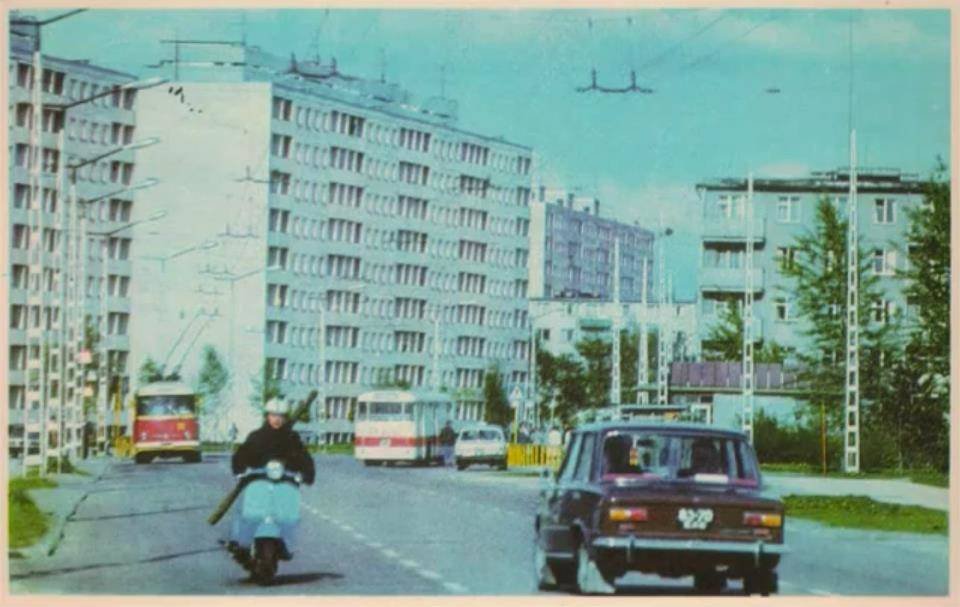
1. A flat or house to live in. You literally couldn’t buy one. That simply wasn’t an option. You waited for years to get housing assigned by the state. And you can already imagine the quality: quickly built blocks, or the confiscated apartments of “enemies of the people” who were shot or sent to the Gulag. The party elite got the good places. Ordinary people got a cheap Khrushchyovka with a tiny kitchen and no lift after 5–10 years of waiting. No other option.
2. Your job “for life” (whether you wanted it or not). Officially, everyone had work. In practice, you didn’t choose a career so much as you were placed into one. Want to switch? Good luck. Want to start a business? Cute. Private enterprise was either illegal, punished, or pushed into shady “don’t ask, don’t tell” territory.
3. Travel? Not for you. You couldn’t just decide to go somewhere, even within the “friendly” socialist world, without permissions. The border wasn’t a line on a map, it was a wall in your head. Want to see the West? That wasn’t a holiday plan, that was a crime plot.
4. Information was “collective” too. One TV truth, one newspaper truth, one approved version of reality. If your eyes disagreed, your eyes were “wrong.” And if you repeated what you saw out loud, you could become a “problem.”
5. The “warmth” came with a price: fear. You learned early what not to say, to whom, and where. You learned that walls had ears, and sometimes so did classmates. Collectivism works best when everyone self-censors.
6. Queues: the national sport. Food, shoes, furniture, books, washing machines, a decent winter coat. You stood in line because “they might bring something.” Planning your life around rumours about deliveries isn’t community. It’s scarcity management.
7. Quality didn’t matter, because choice didn’t exist. When there’s only one type of sausage, it doesn’t have to be good. When there’s only one brand of anything, the producer doesn’t compete for you. You compete for the product.
8. Equality was a slogan, not a reality. Officially, everyone was equal. Unofficially, some were “more equal,” and their equality came with better housing, better shops, better doctors, and better futures.
9. Collective responsibility meant individual guilt. One person messes up, everyone gets punished. One person speaks out, everyone gets threatened. It trains people to police each other, not support each other.
And the punchline: they still called it “care.” Not because it was caring, but because calling it care made it harder to argue with.
Tallinn occupied buy Societs.