Them-You owe me reparations because something bad
happened to my ancestors 200 years ago.
Me-Ok, well you owe me reparations because l've been paying for your welfare since I was 13.
My mom always made meatloaf with ketchup baked right on top. I remember eating dinner at a friend's house and being served meatloaf covered in brown gravy. It was like an entirely different meal.
Meatloaf with ketchup or brown gravy?
On the night of March 29, 1993, Jack Palance opened the envelope for Best Supporting Actress and read the name out loud.
Marisa Tomei.
There was a gasp in the room. Not the usual intake of breath that follows a surprising announcement — something more confused than that, more searching. People in the audience turned to each other. The camera found her face. She walked to the stage.
She gave her speech. She held the Oscar. She went home.
The rumour started almost immediately.
She hadn’t really won. Jack Palance had read the wrong name. He was old. He was confused. He was reading from the teleprompter instead of the envelope. The wrong woman had walked away with the statue, and the Academy — too embarrassed to admit it — had simply let it happen.
The story spread. Film critics printed it. Dinner parties repeated it. It became one of those facts that lived in the space between rumour and certainty, repeated with enough confidence that no one stopped to check.
The Academy issued statements. The accountants who count the ballots issued statements. It had all been correct, they said. She had won. The name on the card was hers.
None of this stopped anyone.
Here is what had actually happened, and why it unsettled people enough to invent an explanation.
She had grown up in Brooklyn, the daughter of a teacher and a lawyer. She went to high school in the same neighbourhood where she was born, then to Boston University, which she left before finishing to do what she had always wanted to do. Soap operas first — a recurring role on As the World Turns. Then television, a part on A Different World. Then smaller film roles, the kind that don’t change careers.
My Cousin Vinny arrived in 1992. It was a courtroom comedy about a New York lawyer defending his cousin on a murder charge in rural Alabama. Marisa Tomei played Mona Lisa Vito — Vinny’s fiancée from Brooklyn, all manicured nails and borrowed confidence and the iron certainty that the people around her were simply not keeping up.
The film had a courtroom scene near the end. Vinny calls Mona Lisa as an expert witness on automotive mechanics. She proceeds, in a cocktail dress, to dismantle the prosecution’s theory of the crime with detailed, specific, entirely accurate expertise about the 1964 Buick Skylark. The scene turns on the gap between how she looks and what she knows — and on the audience realising, along with the defence attorney, that she has known it all along.
It was a perfect scene. It remains a perfect scene.
The Academy gave her the Oscar for it.
And this, apparently, was the problem. She had played a funny woman from Brooklyn. The other nominees had appeared in Howards End and Damage and Enchanted April — serious films, serious roles, the kind the Academy was supposed to reward. Film critic Rex Reed suggested publicly that a mistake had been made. The Hollywood Reporter ran the rumour. The story found legs because it already fit something people believed: that a comedic performance couldn’t really be that good, that an unknown from Brooklyn couldn’t really have beaten Vanessa Redgrave, that something must have gone wrong.
What actually went wrong was that the room had decided what she was before she opened her mouth.
The years that followed were not simple. Her Oscar win did not immediately open the doors people assumed it would. She worked — film after film, some good, many forgettable, a career that continued without quite becoming what the award had implied it might. The industry had a talent for doing exactly that.
For conferring the highest recognition and then not quite following through.
Then, in 2001, Todd Field made a film called In the Bedroom. It was quiet and devastating — a drama about grief and the specific violence of loss in a small Maine town. Marisa Tomei played Natalie Strout, a woman at the centre of an unravelling. It was nothing like Mona Lisa Vito. There was no courtroom, no comedy, no cocktail dress.
She was nominated for the Academy Award for Best Supporting Actress.
It was her second nomination. The first had not been a mistake.
Then, in 2008, Darren Aronofsky made The Wrestler.
He cast Mickey Rourke as a washed-up professional wrestler trying to find his way back. He cast Marisa Tomei as Cassidy — a stripper navigating the particular arithmetic of that work, the performance of warmth with the wall behind it, the loneliness underneath. The performance was raw and precise and completely different again from anything she had done before.
She was nominated for the Academy Award for Best Supporting Actress.
Her third nomination.
Three films. Three completely different registers.
Three times the Academy looked at the work and said: this was exceptional.
The rumour about Jack Palance never died entirely. It still circulates, still told with confidence by people who are certain it happened. The certificate from March 29, 1993 says otherwise. So does everything that came after.
She didn’t win it by accident.
She won it because she was that good.
The gasp in the room was the only thing that got it wrong.
Remember when you'd ask an adult where they were going and they'd say, "To see a man about a horse"? As a kid, I genuinely wondered what the hell these people were doing with all these horses.
Do you know what that phrase means?
50,000 Followers. THANK YOU.
My goal is to tell stories from American history.
Entertaining. Inspiring. Or maybe just interesting.
Stories that get you to stop scrolling.
Onwards and upwards, my friends!
I am very grateful for the Christian conservatives who have reached out and stood up for me in the face of vile attacks— you know who you are and your decency speaks for itself.
THANK YOU 🙏🏽
A Religious Sister of the Dominican Sisters of Mary Immaculate Province (Tỉnh Dòng ĐỨC MARIA VÔ NHIỄM) in Houston, Texas piping cream puff dough onto a baking sheet. Photo from the Province's website at https://t.co/Il9AhcTuT2.
I'm sick and tired of our ancestors being compared to the migrants of today. They settled an undeveloped land and built a civilization. They were not brought here for the votes and sign up for welfare. We are not the same
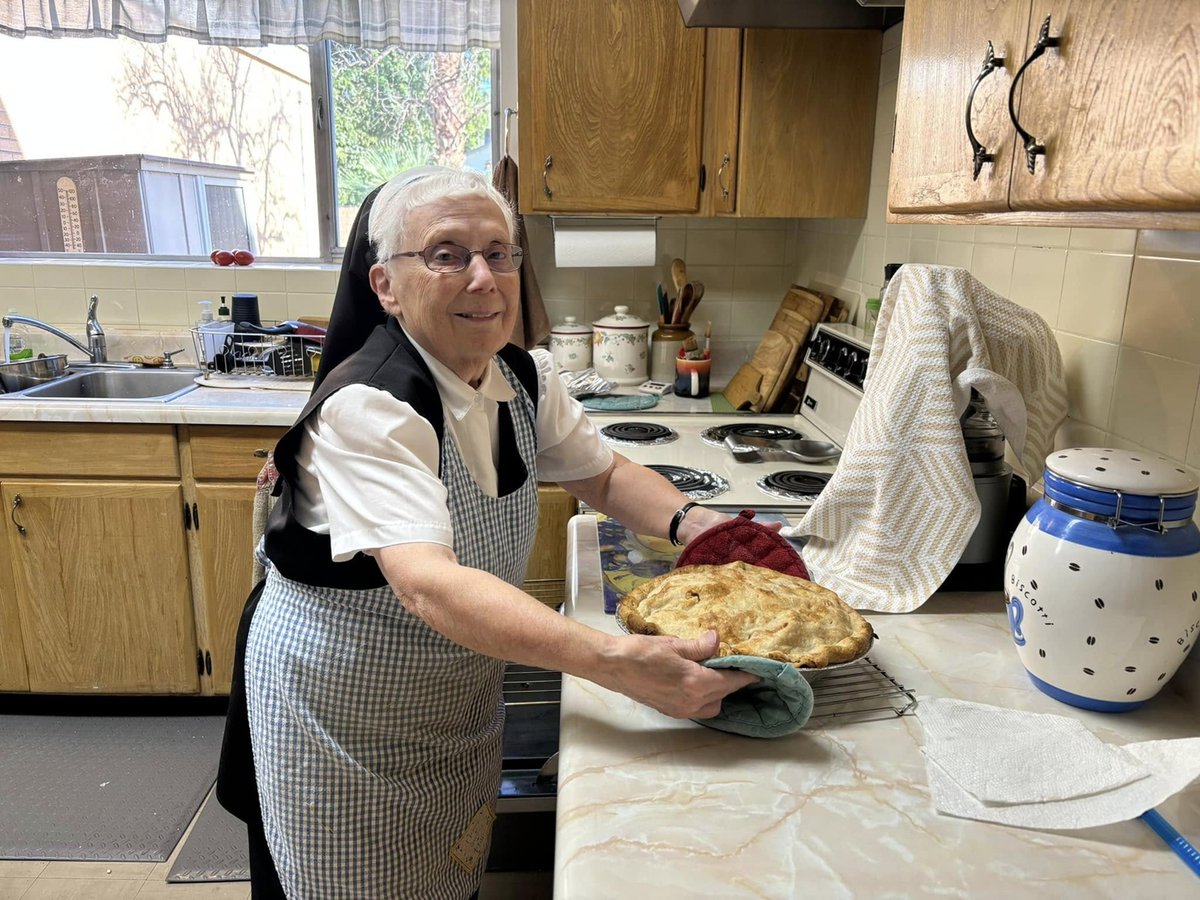
A Religious Sister of the Franciscan Sisters of Christian Charity in Yuma, Arizona @calledtobefscc placing a freshly-baked apple pie on a cooling rack. Photo from the Sisters' Facebook page at https://t.co/gOEHI7ZGKS.