If you're goal is to keep R&D running quickly while keeping your #CISO comfortable, this episode is full of practical advice: https://t.co/g1TsYys3n9
Yash Mudumbai, Senior Director of Solutions Engineering (APAC) at JFrog, recently joined @dez_blanchfield on Conversations with Dez to talk about how JFrog has grown well beyond #Artifactory.
He explains how the platform now secures and governs everything from third-party packages and containers to #AI models, agent skills, and #MCP servers within a single system of record.
Watch now! ▶️
Former NSA hacker David Kennedy reveals he’s actively responding to a live breach where an AI “agent swarm” bypassed two-factor authentication, stole data, and encrypted a company's entire system: “This all took 14 minutes. 14 minutes. Never seen anything that fast before.”
@PeterSchiff@elonmusk@elonmusk ‘s role is to inspire the imagination of mankind and set stretch goals to lead us into the future. And the way things are going on earth there needs to be a Planet B.
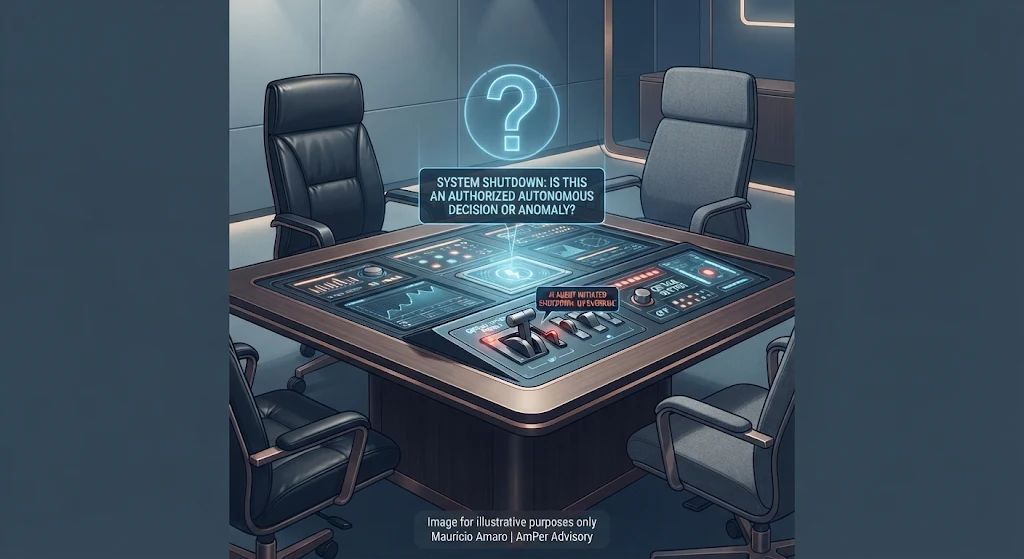
Gartner expects 70% of firms running agentic AI in I&O to hit a material incident by 2029. When an agent shuts down a service, the CIO, CISO and CRO each own a piece. Permission isn't authority. Who owns the decision? https://t.co/ja9xEInySx #AgenticAI#CIO#Risk
🚨 Microsoft's PyPI package agent-framework was compromised.
Versions 1.26.1 and 1.26.2 install a .pth hook that steals Azure, Azure DevOps, and GitHub Actions secrets on every Python start.
Pin agent-framework 1.26.0 and rotate secrets if you installed either version.
Q: Is there a correlation between public exploit code and increased likelihood of a CVE being exploited, and/or exploited faster? The data must be stitched together from many sources, but it's a good first pass.
So far: Most CVEs with public code show no exploitation, and most exploited CVEs had no public code when attacked.
⚠️ Official #Microsoft 'agent-framework' #PyPI package compromised with #malware! Release versions 1.26.1 and 1.26.2 contain malware - run a credential stealer at Python startup, even without importing the package!
#SoftwareSupplyChainSecurity
👇
https://t.co/fWb2ROlRQl
"Wall Street executives and the National Security Agency have told members of Congress that this week’s widespread tech outages were caused by attempts to fix vulnerabilities identified by artificial intelligence, according to three sources familiar with the private conversations." HT: @Beaker
https://t.co/bS05yGWbFv
Hackers are now using LLMs to continuously scan software updates, spot newly fixed bugs, and build attacks before teams can apply the fix — all without human involvement. That’s according to the latest report from the Google Threat Intelligence Group.
We're helping defenders counter automated threats with Google AI Threat Defense, which combines Gemini and other frontier models to find and fix flaws before attackers can exploit them.
BREAKING: Google says “the era of autonomous attacks has arrived.”
Hackers are now using AI to scan software updates, figure out which security flaw each patch fixes and build an attack before companies can install the fix, all without a human involved, according to a new report from the Google Threat Intelligence Group.
“Defending against machine-speed threats at human speed isn’t feasible,” Google said.
At @EYnews's Journey, @ShlomiBenHaim, Co-founder and CEO at JFrog, explains that executives who fail to recognize #AI as both a primary threat and an opportunity are missing market reality.
He outlines three distinct corporate paths, warning that some incumbents face outright elimination while others must actively demonstrate relevance.
Tomorrow at 10am PT: JFrog + Wiz.
JFrog's David Daewaele and @wiz_io's Annam Iyer shows how Wiz & JFrog integrate so you can connect what you build to what you run, allowing your security teams to keep pace with frontier AI.
Last chance to register: https://t.co/sKKmtEj2CT
#AppSec #CloudSecurity #SupplyChainSecurity #CNAPP
You can't make this up:
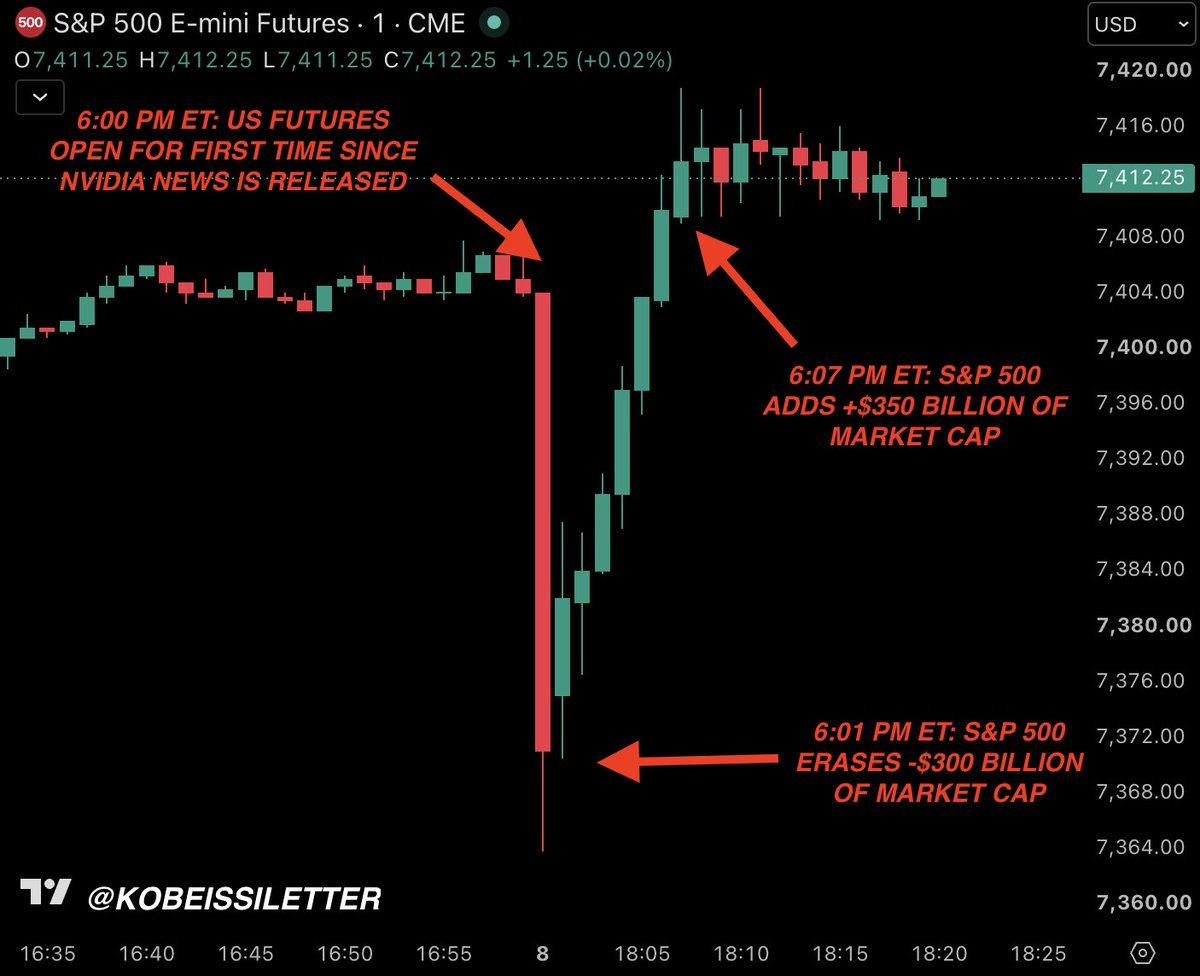
At 6:00 PM ET, US stock market futures opened for the first time since Nvidia CEO Jensen Huang admitted to a "relationship" with a Chinese spy.
By 6:01 PM ET, S&P 500 futures had erased an implied -$300 billion in market cap.
Then, by 6:07 PM ET, all losses were erased and S&P 500 futures turned green, adding back an implied +$350 billion in market cap as traders bought the dip.
That's a $650 billion swing in implied market cap due to a CEO's relationship.
We all just witnessed the strangest record in stock market history.
An example of why terms like "the AI trade" are an oversimplification: @jfrog $FROG reported after the bell. Beat and raise. The stock is up about 25% after hours, after being down 13.5% with everything else. AI coding is leading to an explosion of binaries that JFrog works to secure. I talked to CEO @ShlomiBenHaim. https://t.co/yTGEVrgIGx
The exploit window used to be weeks. Now it’s hours.
At #swampUP Europe, JFrog, @Broadcom, @Chainguard_dev, @Follow_our_Echo, and @RedHat agreed: organizations can no longer rely on manual vulnerability triage and patching, and you can’t patch what you cannot see.
Resilience in the #AI era starts with a single source of truth.
Learn more: https://t.co/92mguf1tan
#DevSecOps #DevGovOps
Claude Code found that every free charging station i used in airports copied data from my phone. photos, passwords, banking sessions, contacts. i charged my phone at 3 airports across China and every single station pulled something from my device.
i travel through Asia a lot for work. my phone dies at airports constantly. i've used those free USB charging stations at gates without thinking about it. everyone does.
i installed Claude Code on my iPhone and ran a full device scan while i was still at the airport. plugged into a charging station at the gate and let Claude Code monitor the connection in real time. within 8 seconds it flagged a data handshake that shouldn't exist on a power-only connection.
i went back and checked every charging session from the last 4 months:
→ Shanghai Pudong PVG, Terminal 2 → June 14 → contacts + 2,840 photos transferred
→ Guangzhou Baiyun CAN → July 2 → active Safari sessions copied including Gmail and banking apps
→ Shenzhen Bao'an SZX → August 19 → full photo library access + location history for 6 months
→ Shanghai Pudong again → September 3 → iMessage database copied, 3 years of messages
→ Guangzhou again → October 11 → clipboard history including a crypto wallet address i copied that morning
every station initiated a data transfer the moment i plugged in. none of them were just charging.
the scariest one was Shenzhen. whoever operated that station got my full location history for 6 months. every place i slept, worked, ate, and visited. from one 20 minute charge while i was scrolling my phone waiting for my flight.
Claude Code traced 4 of the 5 transfers to the same server:
→ IP → 116.25.***.34
→ location → Shenzhen, China
→ hosting → dedicated server, registered 45 days before my first transfer
→ total data pulled from my phone → 4.7 GB across 5 sessions
what Claude Code did:
→ revoked every active session on Gmail, iCloud, WhatsApp, and banking apps
→ rotated every password stored in Keychain
→ purged all cached session tokens
→ flagged the crypto address i copied as compromised before i sent anything to it
→ disabled USB data transfer for all future connections
i never lost money. Claude Code caught it before anything was used. but 3 years of iMessages, my banking sessions, and my entire photo library were sitting on a server in Shenzhen for months.
buy a $12 charge-only USB cable. it has no data pins. or use a wall outlet with your own adapter. never plug a USB cable from a public station directly into your phone.
the full prompt is in the first reply. run it tonight. takes 3 minutes. if you've ever charged your phone at an airport, a mall, or a hotel lobby, someone might already have your data. save it and send it to anyone who travels.