modelling agentic learning in individuals with psychological disorders | computational psychopathology lab | phd student at @UniofOxford, funded by @helloVERSES
AI today follows the scaling paradigm: more data + more compute = better model. This works in controlled settings but breaks down in the unpredictable real worlds robots operate in.
We need adaptive intelligence for physical AI. Tim talks about it here: https://t.co/T0pFp0ZBYm
pymdp 1.0.0 is here: batched, autodifferentiable, JIT-compiled active inference in JAX: https://t.co/Hhzsh1wOv5
This release brings:
GPU/TPU-ready active inference
autodiff through inference, planning and learning
easy parallelization and batching with vmap()
Great report by @avaskham on evolution of reward prediction error theory of dopamine. Balanced perspectives. Wish it covered dopamine's role in reducing uncertainty (re: rewards, navigation, etc), which accounts of "rethink[ing of] what the brain cares about reinforcing."
The neuroscience field is grappling with whether to modify the long-standing theory of reward prediction error—or abandon it entirely.
By @avaskham
https://t.co/aaqxBxTpEs
#IWAI2024 family. 🧠🧠🧠🧠
Thanks so much for your research and your presence! Full house.
thanks @oxford, thanks Prof. Friston!
Thanks organizers :) / and sponsors!
I'm speechless.
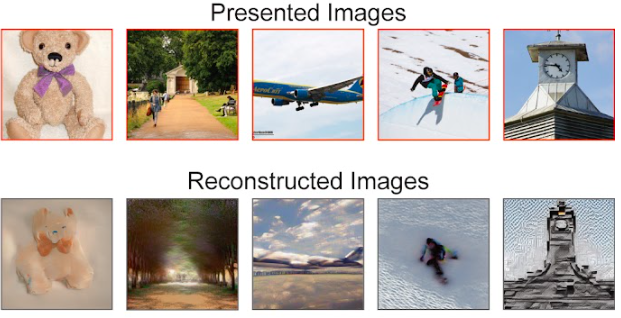
Not peer-reviewed yet but a submitted paper.
The 'presented images' were shown to a group of humans. The 'reconstructed images' were the result of an fMRI output to Stable Diffusion.
In other words, #stablediffusion literally read people's minds.
Source 👇
🚀🚨🤖 Introducing the VERSES Research AI white paper 🚀🚨🤖
Short thread on "Designing Ecosystems of Intelligence from First Principles" 🧵 1/13
https://t.co/5yV3uc0z7v
My book **The Entangled Brain** by MIT Press is out and provides an introduction to the brain to non-specialists while embracing the complexity of how brains help bring about behaviors. I'll be posting 𝘀𝗵𝗼𝗿𝘁 𝘁𝗵𝗿𝗲𝗮𝗱𝘀 𝗼𝗻 𝘁𝗵𝗲 𝗰𝗵𝗮𝗽𝘁𝗲𝗿𝘀 in the coming 1-2 weeks
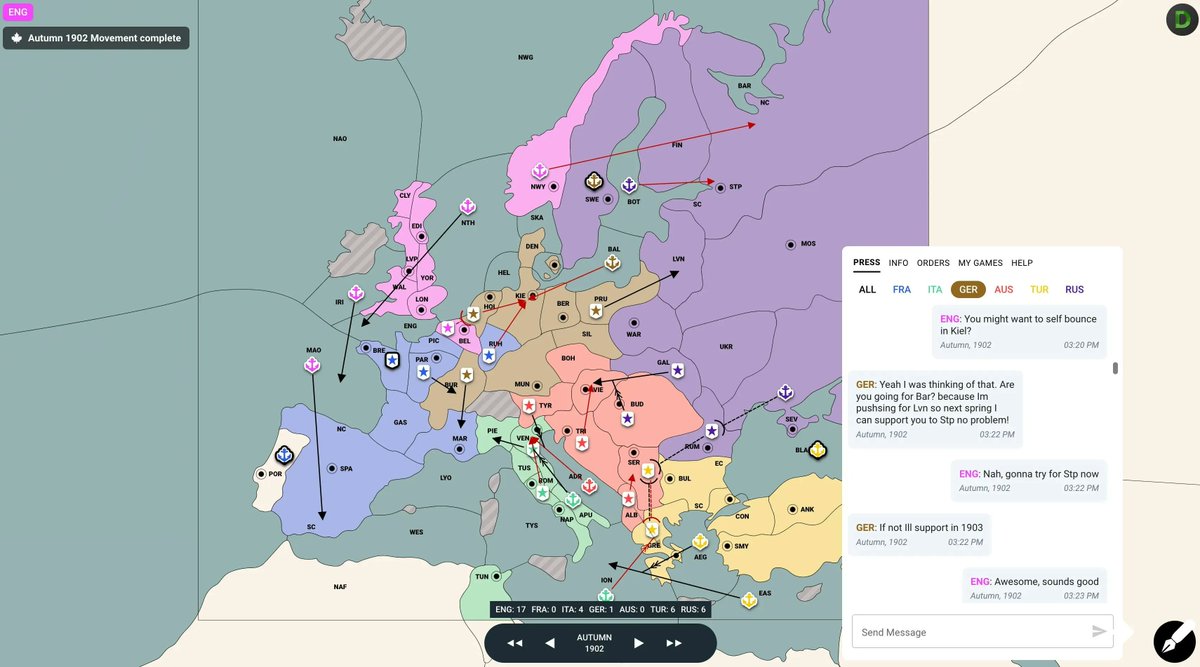
New paper in Science today on playing the classic negotiation game "Diplomacy" at a human level, by connecting language models with strategic reasoning! Our agent engages in intense and lengthy dialogues to persuade other players to follow its plans. This was really hard! 1/5
One of the most convincing and attention attracting opening to a math lesson
—Thomas Garrity Williams, «On mathematical maturity»
[full video: https://t.co/ocBcn2NTKo]
🚨Preprint alert🚨 Formalizing resilience with active inference.
A 🧵 on our new paper, “Resilience and active inference” by @PredictiveLife, @RiddhiJP, @exilefaker, @JonasHMago, Claire Gorman, Karl Friston and @mjdramstead. https://t.co/7LQAOJlUjY
1/6
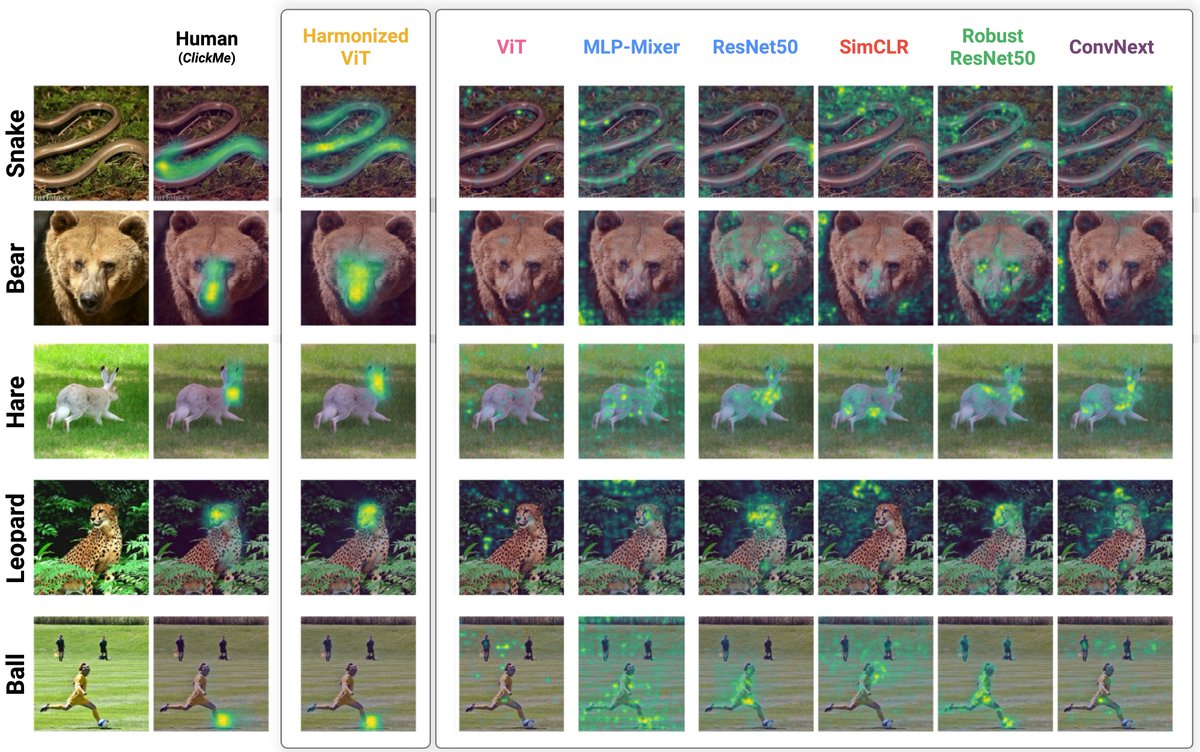
Check out our new paper, to appear at NeurIPS. We show that DNNs are becoming progressively *less* aligned with human perception as their ImageNet accuracy increases. Ignore the elections, Elon, and FTX for a moment — this is important!
https://t.co/w3HJFpzxIt
@speakerjohnash@MattPirkowski@algekalipso@gnomicperfect Good question. Prediction errors are unsigned divergences between predictions and outcomes: one can be more or less wrong, but that doesn't track goodness or badness per se. But we've argued hierarchical active inference models can account for valence:
https://t.co/rlkiRSW1Pt 1/2
🚨 New preprint 🚨 “Path integrals, particular kinds, and strange things,” on the path integral formulation of the FEP, and kinds of particles—written with Karl Friston, @lancelotdacosta, @DaltonSakthi, @conorheins, Grigorios Pavliotis, Thomas Parr
https://t.co/uG2AbXSEWR 1/18
🚨 Preprint alert 🚨 Phenomenology meets computational modelling in the active inference tradition: “Mapping Husserlian phenomenology onto active inference” by Mahault Albarracin, @RiddhiJP, @JeffYoshimi, and yours truly
https://t.co/JGwf24DVVt 1/5
🚨 Preprint alert 🚨 “On the Map-Territory Fallacy Fallacy,” by @DaltonSakthi, Karl Friston, and yours truly (that’s right—you read the title correctly) 1/10
https://t.co/BDVk34FdVe
Yesterday was my last day of working at Google. Perhaps this comes as surprise to you twitter folks, as I haven't widely announced that I left academia to try something new. Here's what I learned in 9 months as a Data Analyst who (temporarily) left Astronomy for Big Tech. 1/n