Meet Kimi K2.6: Advancing Open-Source Coding
🔹Open-source SOTA on HLE w/ tools (54.0), SWE-Bench Pro (58.6), SWE-bench Multilingual (76.7), BrowseComp (83.2), Toolathlon (50.0), Charxiv w/ python(86.7), Math Vision w/ python (93.2)
What's new:
🔹Long-horizon coding - 4,000+ tool calls, over 12 hours of continuous execution, with generalization across languages (Rust, Go, Python) and tasks (frontend, devops, perf optimization).
🔹Motion-rich frontend - Videos in hero sections, WebGL shaders, GSAP + Framer Motion, Three.js 3D.
🔹Agent Swarms, elevated - 300 parallel sub-agents × 4,000 steps per run (up from K2.5's 100 / 1,500). One prompt, 100+ files.
🔹Proactive Agents - K2.6 model powers OpenClaw, Hermes Agent, etc for 24/7 autonomous ops.
🔹Claw Groups (research preview) - bring your own agents, command your friends', bots & humans in the loop.
-
K2.6 is now live on https://t.co/YutVbwktG0 in chat mode and agent mode.
For production-grade coding, pair K2.6 with Kimi Code: https://t.co/uvoSJKyGCY
-
🔗 API: https://t.co/EOZkbOwCN4
🔗 Tech blog: https://t.co/9wWvgIQSS3
🔗 Weights & code: https://t.co/Be0hjs2RTP
NEW 🚨: As part of Project Crypto, the Division of Trading and Markets issued a staff statement providing its views on broker-dealer registration requirements in connection with certain interfaces used to prepare transactions in crypto asset securities.
https://t.co/8jCwFOJZcw
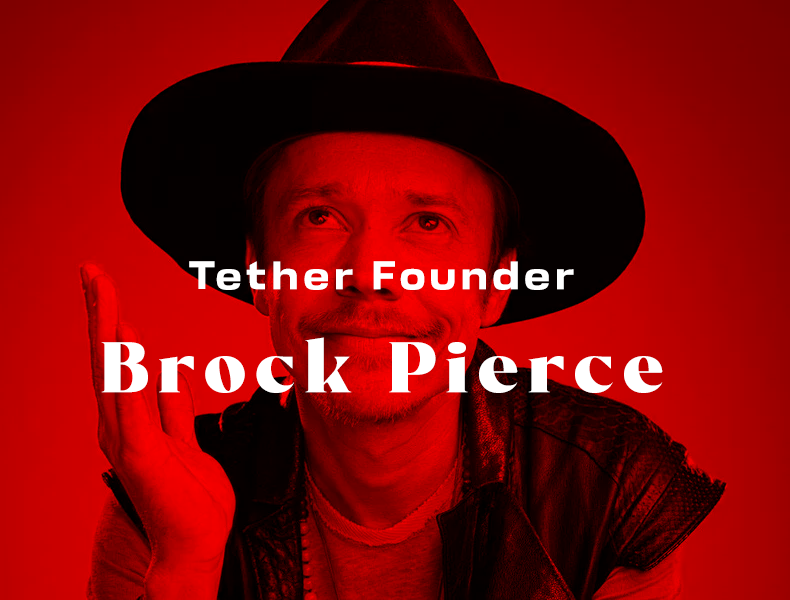
The Founder of Tether is probably one of the most fucked-up, perverted, and disgusting people in the crypto space. Potentially even worse than Epstein.
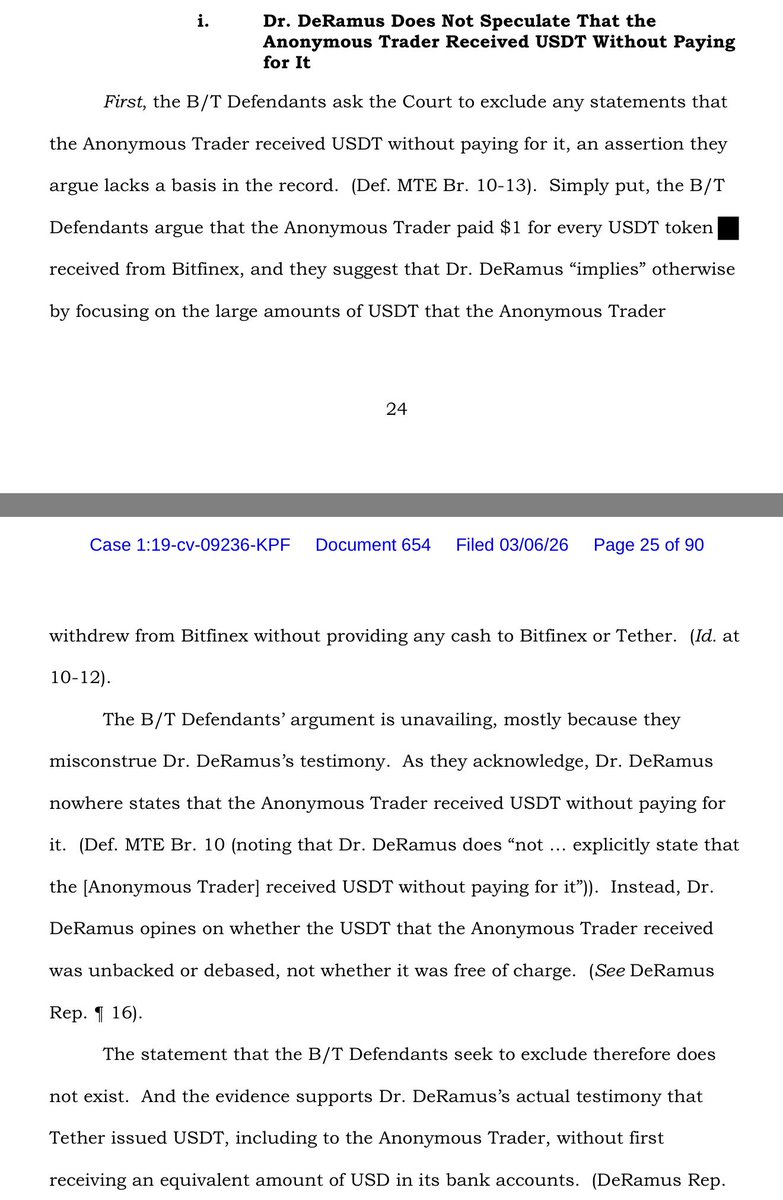
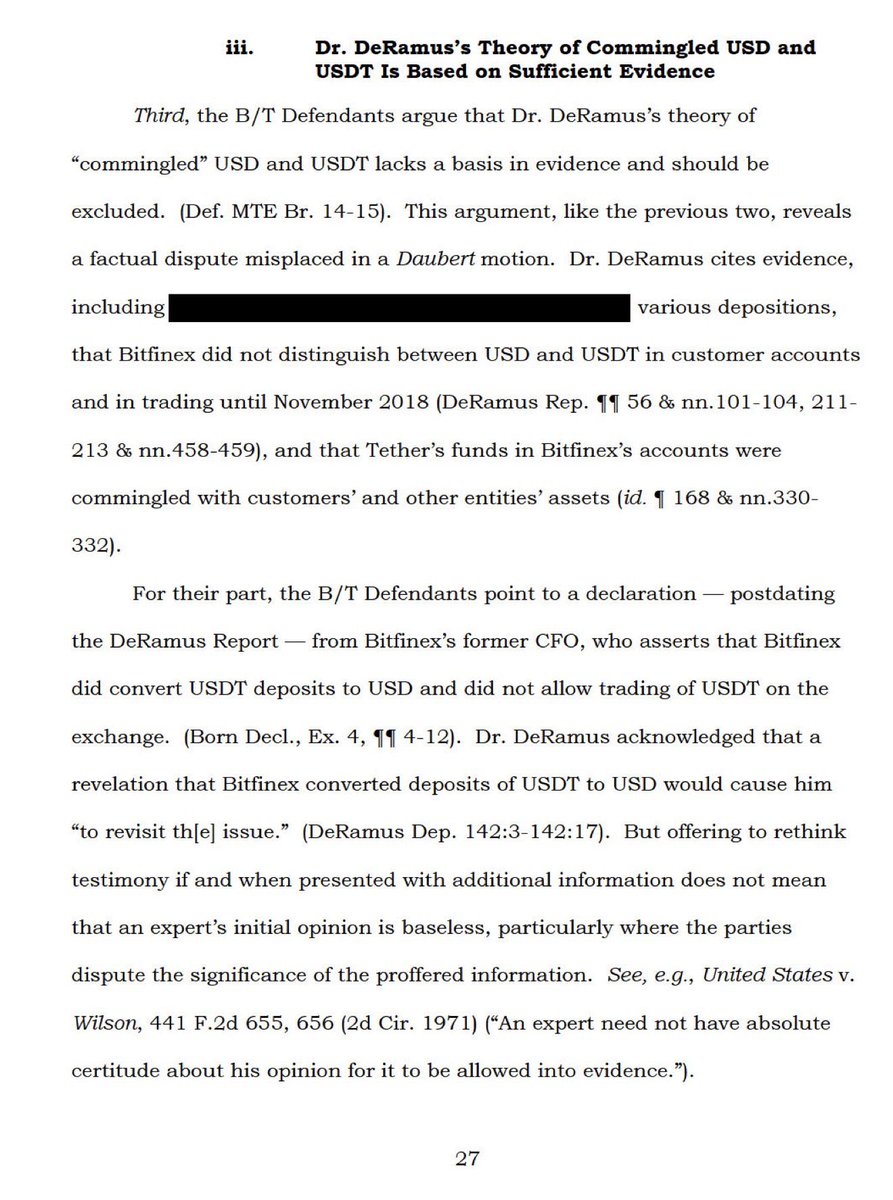
- Primary creator of Tether, the largest scam in history, which is a unbacked stablecoin that effectively prints money out of thin air and uses it to manipulate the price of Bitcoin.
- In 2000, 3 boys under age 16 accused DEN employees, including Pierce, of brutally raping them, sexually assaulting them, drugging them, physically abusing them, and making threats.
- Accused of sexually abusing former actor Michael Egan, who was 16–17 years old at the time.
- He and his friend Marc Collins-Rector were caught molesting a 13-year-old boy they met online in California.
- In 2001, he faced a $4.5 million default judgment after fleeing the U.S. to avoid prosecution.
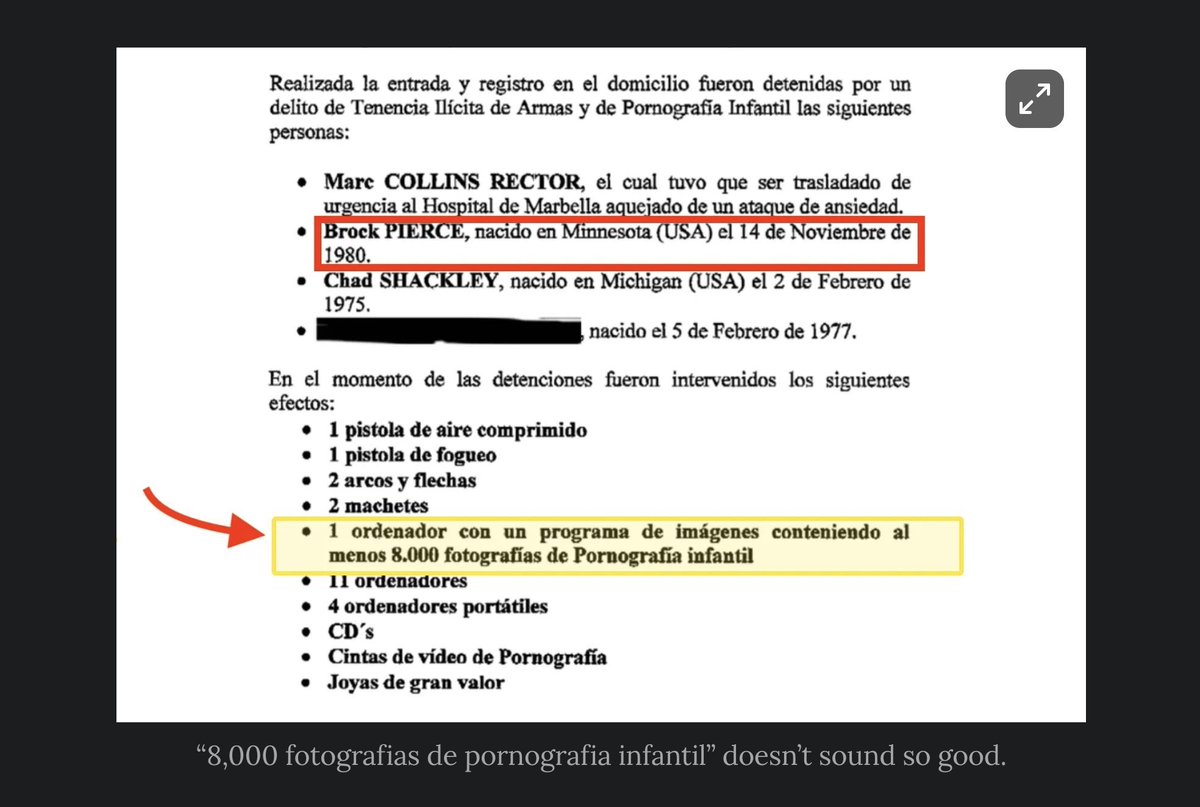
- In 2002, Pierce was arrested in Spain by Interpol, where authorities found guns, machetes, and 8,000+ images of child pornography.
- In 2007, Pierce was sued for defrauding IGE and stealing several millions from the firm.
- Bribed multiple judges to avoid harsh sentences and was connected to the failed $30M scheme involving the U.S. president to secure pardons for himself and allies.
- In 2012, Epstein emailed Pierce asking him to "take photos" in Moscow, Kiev, and Odessa and to "find me a present," aka underage girls.
- Pierce responded in separate email thread thanking Epstein for "a great time with the girls."
- Visited Jeffrey Epstein’s properties dozens of times, including his NY estate and his infamous private island where Epstein was known to rape, sexually assault, children/young girls.
- In 2020, he was involved in a $4.1 billion securities fraud lawsuit related to the EOS scam, the largest crypto fraud at the time.
- Discussed with Epstein the purchase of Mt. Gox, which later was rug pulled and scammed everyone for $750M. Also involved him with early investment in Tether, Coinbase, and several other top crypto firms.
- Dozens of civil lawsuits in Puerto Rico, where he fled to avoid criminal charges involving his hotel/resort developments, partnerships, and real estate.
- Crypto dev Nikolai Mushegian was mysteriously found dead on a beach minutes from Brock Pierce's house. His final X post warned that an elite pedo ring in Puerto Rico and nearby islands was planning to torture him to death.
- Pierce tells the media that his "friends" / co-workers death was not suspicious at all, was not the result of foul play, and that he died by suicide while under the influence of drugs.
Tether founder Brock Pierce acts like he's above the law, but eventually his crimes will catch up to him. And keep in mind, this is only what’s public, imagine all the fucked-up things we’ll never know about.
Please Like and RT to spread the word.
IT’S TIME TO ACKNOWLEDGE AND ADMIT THE CRYPTO MARKET IS BROKEN!
At some point we need to admit that something is structurally broken in the crypto market!
2025 was a year with all the necessities for a bull market.
We had liquidity,
We had a pro-crypto US government.
We had ETFS.
We had Saylor buying $1bn a week.
We had DATs.
We came off a low base (Biden and Harris)
We had nation states and sovereign funds buying.
We achieved scale.
We have Gold, Silver, Nasdaq and Russell 2000 all at all-time highs.
Even with all the above, we are ending 2025 lower and only 20% where we were with Biden.
I’ve seen many theories, the “IPO moment”, “the trapped liquidity” , “the 4-year cycle” - but all of these seem like desperate attempts to justify a market that doesn’t make sense.
So, what happens next?
There are 2 options;
1. We discover what’s actually broken and who is selling. When we do, in hindsight it will be obvious!
2. We have the mother of all catch up trades! Because that’s how markets work. They can separate from where they are supposed to be for short periods but they always come back to equilibrium!
My hope is for the latter. My bet is that we will soon find out what actually broke!
Happy 2026!
As I told @MariaBartiromo last week, U.S. financial markets are poised to move on-chain. Under my leadership, @SECGov is prioritizing innovation and embracing new technologies to enable this on-chain future, while continuing to protect investors.
Token incentives already proved that a Web3 economy can work.
They enabled global collection of multilingual voice data for AI training.
In the AI era, hardware, models, and data matter most, and incentives still shape how data gets created.
You may call the token economy a failed model, but someone will eventually prove it out. The world ultimately runs on incentive alignment anyway.
Fetuses Already Have a Dominant Hemisphere — Long Before Learning Begins.
Research across multiple scientific domains demonstrates that handedness and cerebral asymmetry begin long before birth and continue to shape cognitive development throughout childhood. By ten weeks of gestation, most fetuses already move their right arm more than their left,¹ and by fifteen weeks they preferentially suck the right thumb—behaviors strongly predictive of later right-handedness.² Fetal neuroimaging further reveals early anatomical asymmetries, such as a leftward enlargement of the choroid plexus during the first trimester³ and a larger left planum temporale, part of Wernicke’s area, by thirty-one weeks of gestation.⁴ Approximately two-thirds of fetuses, infants, and adults show this same leftward bias,⁵ a proportion that also appears in great apes, which display comparable rates of right-handedness and a similar hemispheric torque.⁶ These parallels suggest an evolutionarily ancient, inborn asymmetry of roughly 65–70 percent—an ancestral organizational template that human cultural practices, including literacy, language training, and skilled tool use, later intensify to the familiar ~90 percent pattern of right-handedness and left-hemisphere language dominance.⁷
Over the past century, researchers have debated whether deviations from this typical pattern contribute to developmental difficulties. In the early twentieth century, Samuel Torrey Orton proposed that reading disability and stuttering arose from a failure to establish clear cerebral dominance,⁸ although his ideas eventually fell out of favor due to his speculative theories of interhemispheric reversal⁹ and the rise of behaviorist explanations. Contemporary scholarship has revived aspects of Orton’s insight: Dorothy Bishop argues that weak cerebral lateralization may not cause language impairment but may instead reflect disrupted language learning itself.¹⁰ Modern studies now show that ambidexterity—or a lack of strong handedness and weak lateralization—is associated with stuttering,¹¹ reduced academic performance,¹² certain mental-health challenges,¹³ and a heightened risk of schizophrenia.¹⁴ Importantly, it is the absence of asymmetry, rather than the reversal of asymmetry, that appears most strongly linked to such difficulties. Despite long-standing cultural prejudice, left-handed individuals are not biologically disadvantaged; many have reached the highest levels of achievement, including multiple U.S. presidents, elite athletes such as Rafael Nadal and Babe Ruth, and the Renaissance polymath Leonardo da Vinci.
Large-scale pediatric neuroimaging results reinforce this view of asymmetry as a foundational feature of human neurobiology. A major ENIGMA consortium study of 4,265 MRI scans from children and adolescents found that left–right asymmetry is already present early in life and represents a core organizational principle of the developing brain.¹⁵ Although the direction and magnitude of asymmetry vary across regions—depending on whether researchers measure cortical volume, cortical thickness, surface area, or subcortical structure—these patterns follow predictable developmental trajectories.¹⁶ From ages 1 to 18, some asymmetries strengthen, others weaken, and some even reverse direction, reflecting region-specific maturation rather than random variation.¹⁷ Small sex differences exist, with females showing asymmetry in more brain regions and males exhibiting slightly stronger asymmetry where it occurs, though the effect sizes are modest.¹⁸
Overall, findings across fetal, developmental, clinical, and neuroimaging research converge on the conclusion that cerebral asymmetry is biologically rooted, evolutionarily ancient, and relatively stable throughout childhood and adolescence. These asymmetries emerge before birth, reflect deeply conserved organizational principles shared with other primates, and continue to shape how the developing brain supports language, motor skill, perception, and cognition. At the same time, the form and strength of these asymmetries vary across different brain regions, developmental stages, and individuals, demonstrating that hemispheric specialization is a complex, multidimensional phenomenon rather than a simple dichotomy.
---------------------
1. Hepper, McCartney, and Shannon, “Lateralised Behaviour in First Trimester Human Fetuses,” Neuropsychologia 36, no. 5 (1998): 533.
2. Hepper, Shahidullah, and White, “Handedness in the Fetus,” Neuropsychologia 29, no. 12 (1991): 1107–1111.
3. Gilmore et al., “Early Brain Development,” AJNR 28, no. 2 (2007): 229–235.
4. Chi, Dooling, and Gilles, “Gyral Development of the Human Cerebral Cortex,” Journal of Neuropathology & Experimental Neurology 36, no. 6 (1977): 981–982.
5. Witelson and Pallie, “Left Hemisphere Specialization for Language in the Newborn,” Brain 96, no. 3 (1973): 641–646.
6. Hopkins and Cantalupo, “Handedness in Chimpanzees,” Psychological Bulletin 131, no. 4 (2005): 477–489.
7. Corballis, “Left Brain, Right Brain: Facts and Fantasies,” PLoS Biology 12, no. 1 (2014): e1001767.
8. Orton, Reading, Writing and Speech Problems in Children (London: Chapman & Hall, 1937).
9. Ibid., 42.
10. Bishop, “Which Neurodevelopmental Disorders Get Researched and Why?,” PLoS ONE 5, no.
11 (2010): e15112. 11. Jokela et al., “Handedness and Stuttering,” Journal of Communication Disorders 42, no. 5 (2009): 333–342.
12. Thiebaut de Schotten et al., “Ambidexterity and Academic Performance,” Neuropsychologia 48, no. 10 (2010): 3163–3167.
13. Munafò et al., “Handedness and Mental Health,” Psychological Bulletin 132, no. 4 (2006): 412–427.
14. Annett, “Handedness and Cerebral Dominance in Schizophrenia,” British Journal of Psychiatry 178, no. 1 (2001): 1–7.
15. Hofer et al., “Structural Brain Asymmetries in Children and Adolescents,” Human Brain Mapping 41, no. 11 (2020): 3133–3153.
16. Ibid., 3140–3145.
17. Ibid., 3145–3147.
18. Ibid., 3147–3149.
So….
Berachain is dead
Sonic Labs is dead
Aptos is dying
Sui Network seems like it is also dying
Plasma looks like it might be starting to dye
Stable, Monad are dead on arrival.
We are now at a turning point…
It's ironic that Bitcoin and Ethereum are dropping just as the future of tokenized securities and stablecoins is taking shape.
In seven years in this industry, I have never seen fundamentals and price drift this far apart. The ex-BlackRock IBIT team is building a tokenized-stock DEX (@hellotradeapp), the Robinhood founder is doubling down on tokenized securities, and @saylor is laying the foundation for a Bitcoin bank and digital credit.
I have always believed in this technology, but part of me still felt crypto lacked real fundamentals. Now, as TradFi and crypto converge, it is clear that far more is being built than most traders realize. Bitcoin and Ethereum sit at the center, and top fintech and TradFi talent is flowing in.
If you still think crypto is following classic cycle theory, imagine buying Tesla stock on a DEX three years from now and ask what Bitcoin and Ethereum would be worth in that world. These are no longer assets for quick gains.
My top narratives with real strength that are still early despite initial hype:
- Prediction markets
- RWAs/Tokenization
- Low-risk DeFi
- ZK/Privacy
- Crypto x AI merge
- Global payments