this is what the Meaning Economy looks like
weekly community yoga, meditation, workshops, movie nights, crafts, random retreats to give feedback, nature hikes
it's sharing culture, sharing knowledge, sharing the bonds between people.
Introducing Ideogram 4.0: the best open image model in the world.
Think it. Make it. Own it.
Download the weights, fine-tune on your own data, and run it on your hardware. Live on every Ideogram plan and the API today.
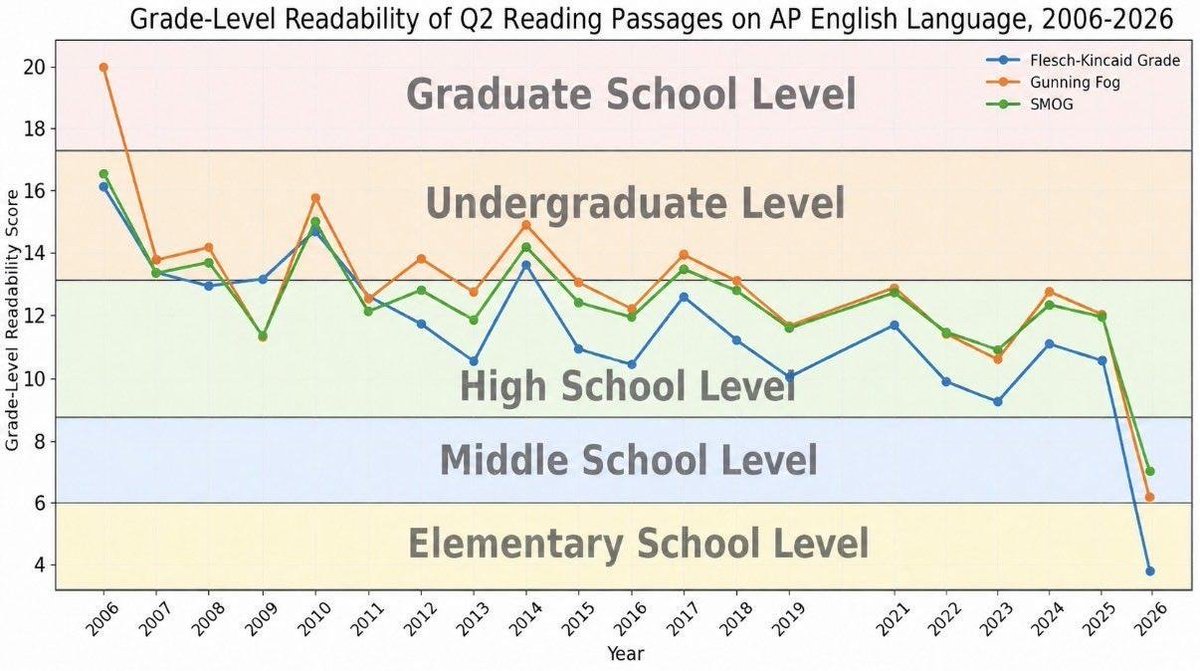
“The students who cannot read a 20-page article today are the voters who will not be able to read a bill, or the jurors who cannot follow a closing argument, tomorrow.”
@FDavidsonT Make this actually work for every single city in the world and you've got something useful. Not just the cities most visited. The hard-to-reach places, the ones not yet in the training data. Put local guides and a community of adventure-seekers at the front.
It is astounding how much and how fast you can learn anything with LLMs. On one hand, you could devalue intelligence / sulk or you can just be some guy in a small room learning the absolute frontier of your field at any given hour. Self-teaching has never been so diffuse.
Super excited to announce seven new world-class MAI models today. They represent what we consider a new era in AI designed to keep you in control and on the frontier.
First is our text foundation model, MAI-Thinking-1, exceptionally strong on reasoning and SWE tasks.
- It’s a 35B active parameter MoE with a 256K context window. Independent human raters on Surge prefer it for overall quality in blind side-by-sides versus Sonnet 4.6, and it’s achieved 97% on AIME 2025, the key measure of its general-purpose reasoning abilities.
- It's at 53% on SWE Bench Pro, placing it right alongside Opus 4.6 on one of the toughest coding benchmarks.
- And since we co-designed our models with our own silicon, MAI-Thinking-1 is optimized on our MAIA 200 chip. Benchmarking head-to-head against the GB200, we see 30% better performance per dollar as well as a 1.4x performance-per-watt gain when running our MAI models on the MAIA 200 end-to-end.
Next is MAI-Image-2.5 and its Flash variant. Two super strong models now at #2 on the leaderboards, surpassing the score of Nano Banana 2 on image editing.
Last for now is MAI-Code-1-Flash, our new inference efficient coding model, especially tuned for VS Code and GitHub Copilot CLI.
- Code-1-Flash achieves 51% on SWE Bench Pro, despite having just 5B parameters, putting it closer to Haiku in size but cheaper in cost.
All of this is the foundation for Microsoft Frontier Tuning. It lets you customize our models to create custom, company-specific agents that only you control. You can make our model, your model. Your data. Your agents. Your moat.
Early adopters are already seeing a difference. When we tuned our models for McKinsey’s tasks, MAI delivered the highest win rate, outperforming GPT-5.5 on quality, while being 10x lower on cost.
Also really excited to be collaborating with the amazing team at Mayo Clinic to jointly train a new frontier AI model for healthcare.
Our announcements today mark another milestone on the road to humanist superintelligence. You can learn more and about our other new models in our latest blog: https://t.co/v65eop5Ixq
My full talk on the future of AI & media is up!
I used @alexolegimas's prompt of "What will be scarce?" to propose 4 ways that media is changing, and how writers can still win in the AI age:
1) Secrets > summaries
Reporting is the act of taking private knowledge and making it public: when you get a source to tell you about corporate malfeasance, or venture to a remote town that few people have been to, or sneak your way into an underground party, you are working in a space where there is no training data.
2) Live interaction > static content
We’re not far from a world where AI can replicate any prose style. But readers want to know there's a real person generating the text—not just the final presentation, but the proof of work behind it. For creators, doing live events, podcasts, and meetups reveal the life behind the voice. And if I care about my ideas, I want people to know about them, no matter the format.
3) Founders > bureaucracies
AI is already allowing startups to run leaner by helping founders act as their own marketer, data scientist, engineer, etc. It's the same in media — AI is a boon to jacks-of-all-trades. There’s a lot of stuff AI does that I don't want to: verifying cites, reading contracts, negotiating speaking fees. It's an amazing time for independent creatives who want to direct their own vision.
4) Personal style > polish
The house style in most newsrooms is extremely LLMable. What stands out (besides reporting) is a distinct and authentic first-person voice, even if that means the occasional typo / provocation / admitting "I'm not really sure." After all, trust isn't about the perfect sentence: it’s about the track record of who says it. And the stronger your brand, the more trusted you’ll be.
I spend a lot of time covering the real disruptions AI brings. But I also believe, for those with the gumption to seize the opportunity, there's never been a better time to be a writer 🧡
Introducing - Surface RTX Spark Dev Box.
All the power developers need, right out of the box.
Sign up to learn more: https://t.co/DF0DvEvhOz
Surface RTX Spark Dev Box. Built for more.
The next evolution of Hermes Agent is here!
Introducing Hermes Desktop: everything you love about Hermes, now native on your machine.
First demoed in Jensen's GTC keynote, it's now in public preview.
I sincerely believe AI acceleration is going to create a lot of new jobs while, yes, rendering many existing jobs functionally obsolete. There’s a reshuffling needed around education and careers but *there will be new work.* Still not enough people talking about the NEW.
the frontier labs don’t have “comms problems”. reality right now has a comms problem. what is happening is a little scary and there’s no nice words anyone could say, especially not those profiting from it, that’ll make it feel that much better