A Book of Life.
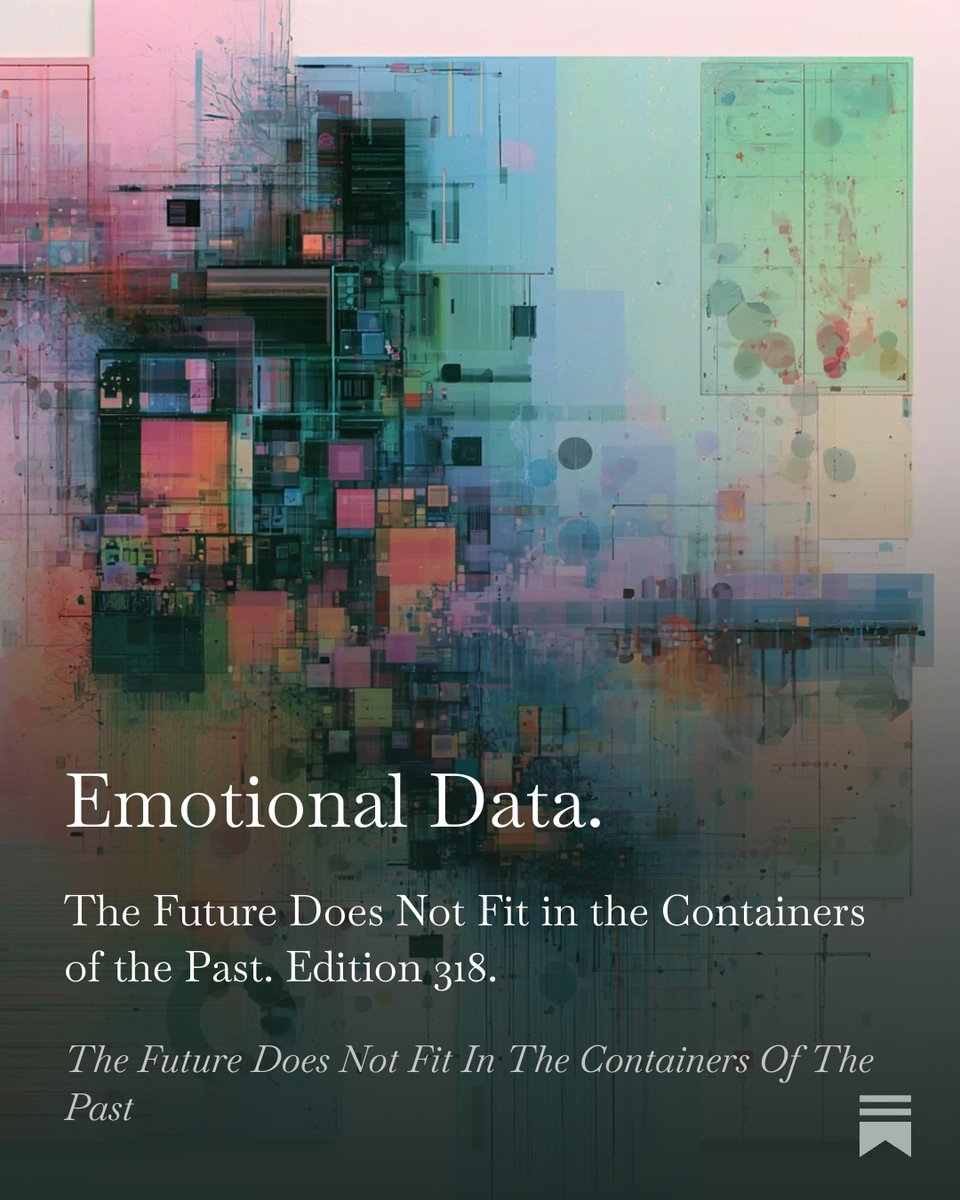
This week "The Future Does Not Fit in the Containers of the Past" my weekly thought letter features a moving piece by my friend Thomas Stat
In this fast moving, look everywhere but see nothing, AI this and monetize that world we grapple with, take 5 minutes to read this fine writing.
It will move you.
https://t.co/h2mVV9qQF6
Emotional Data
Between the data and the reality falls the shadow.
The shadow is the emotion, the stories, the messiness that humans have contained within us.
Today in the idolatry age of data and ai, those who rely on only on numbers and computation get it wrong and wrong and wrong.
People do not compute.
We choose with our hearts and then use numbers to justify what we just did.
https://t.co/VfomGaNblU
Ready to up your #marketing#career chops or enter the field? This is a can't-miss interview with @Rishad and @LouPas Here's just a snippet of the brilliance https://t.co/LOFRH2rAfV via @YouTube
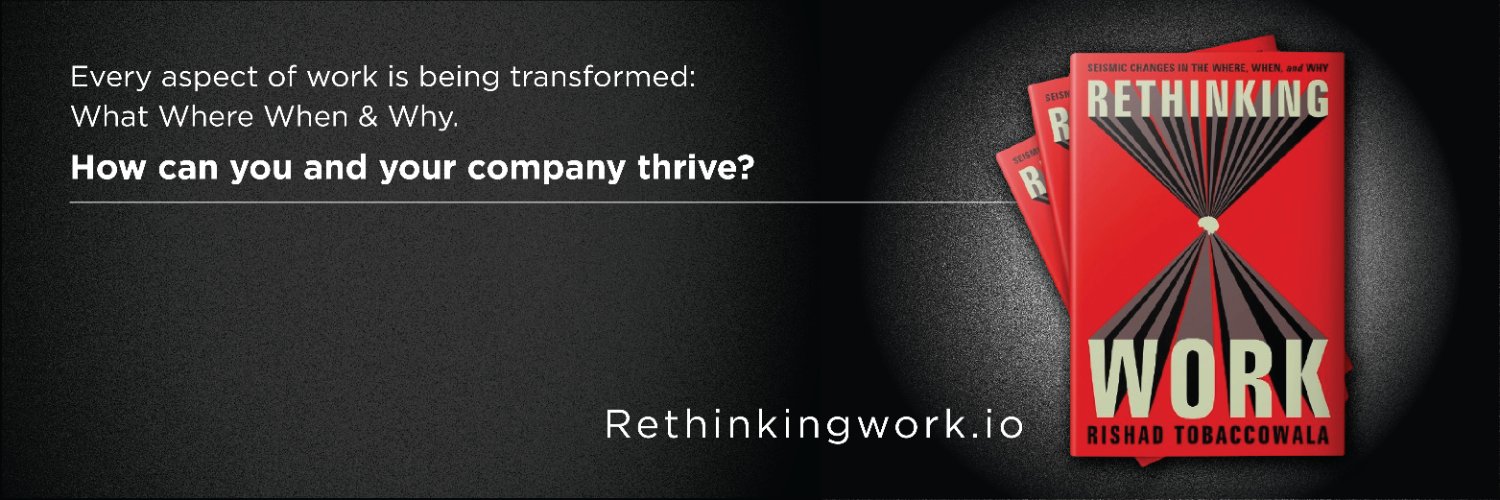
Today's Substack post revisits book Rethinking Work, 18 months after publication.
A book that originally was rejected by HarperCollins three years ago ( they changed their mind and decided to publish it after McGraw-Hill bought it) because they believed it was a work of "science fiction" has now proven to be more prescient than anything written on the future of work. More importantly it is filled with actionable insights.
The post shares the five forces changing work ( AI is just one) including societal change, new mindsets, the rise of a new type of worker and a plethora of marketplaces.
Read why
1) Jobs are a silly phase work is going through
2) Covid was not about where we work but why we work
3) How the age of debossification is here and challenging leadership
4) Why most employees will not be full-time before the end of the decade
5) How we are moving to a company eco-system of whales and plankton
6) Why many of the financial metrics of a firm need to be changed
The handbook for your company's future but more importantly for yours
Work will change more this decade than it has in the past 50 years
Also a SXSW video of my interview with Fortune whose first five minutes will change your perspectives.
https://t.co/UCAtxGT6BA
Change sucks. Irrelevance is worse. 👎
I sat down with @rishad to talk about marketing, AI, work, and how to thrive across it all.
Read our full newsletter and pod, it will be the smartest thing you do all week, promise!
#FrontierCMO@ThinkwithGoogle
https://t.co/uvm803eLW5
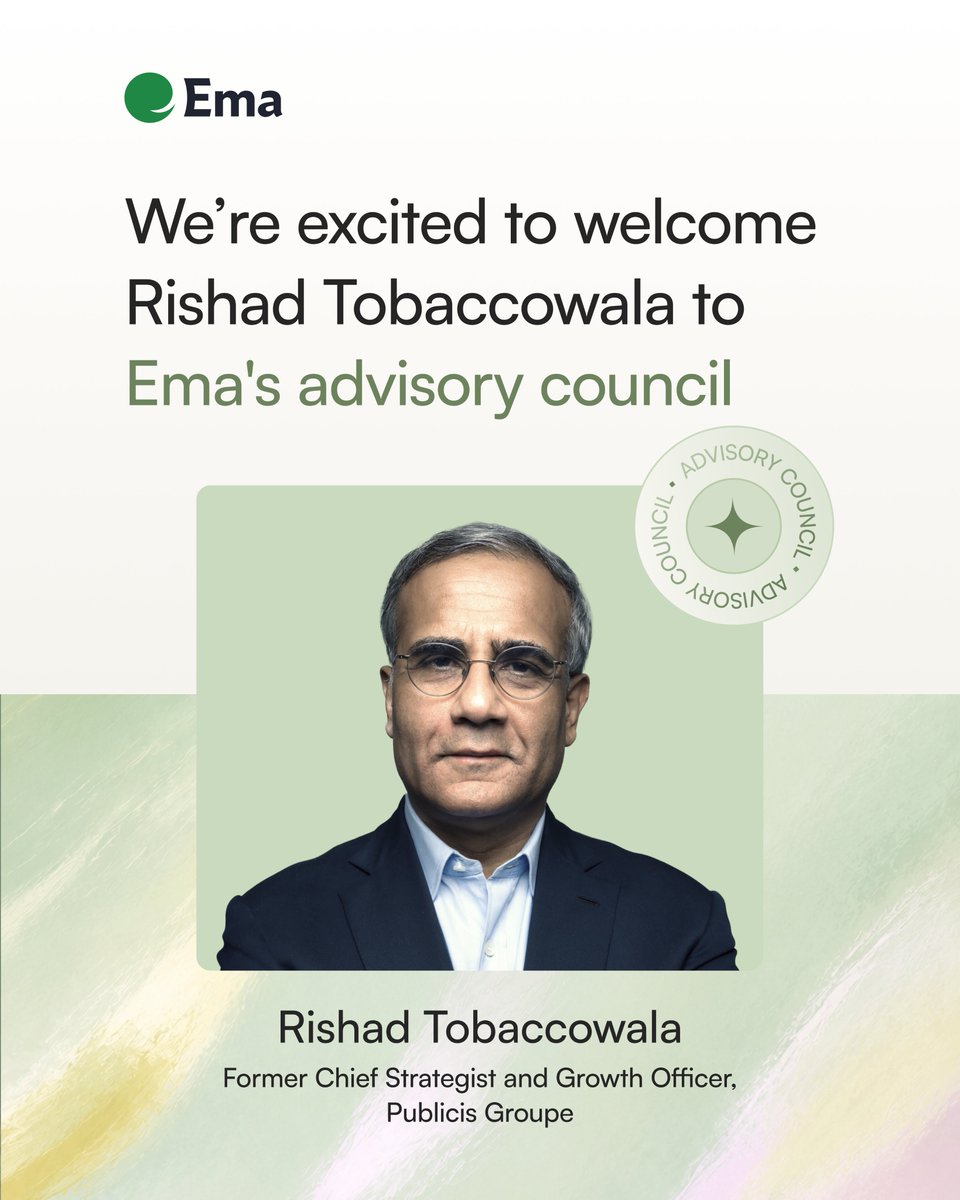
We're thrilled to welcome Rishad Tobaccowala to Ema's EX advisory council.
@rishad has spent four decades helping people, organizations, and teams reinvent themselves to remain relevant in changing times. His argument has stayed consistent: AI is the tool, never the strategy. Talent is the differentiator.
He believes work will change more between 2020 and 2029 than it did in the previous fifty years.
That is the bet Ema is making. Our AI Employees for HR, IT, and finance take on the grind, so the people inside a company can do the work that actually needs them.
Rishad spent nearly four decades at @publicisgroupe as its Global Chief Strategist and Growth Officer, and remains a Senior Advisor to the firm. A pioneer of digital marketing, he was Chairman of Digitas and Razorfish.
He leads The Rethinking Work Platform, has written two books for HarperCollins, "Restoring the Soul of Business" and "Rethinking Work," and writes a weekly thought-letter read by more than 30,000 leaders. He is one of only 300 people selected to the Advertising Hall of Fame in 75 years.
Rishad's belief in the category, and in Ema's approach, means the world to us.
Welcome, Rishad, to Ema's advisory board!
An honor and privilege to share my journey with the great @rishad on his Rethinking Work Pod. I hope our talk inspires experienced marketers to see there’s life after corporate; the experience is fulfilling, lucrative and feels a bit like defying gravity.
https://t.co/MMAMaNNp5N
From caterpillar to butterfly.
Learnings.
1. The future does not fit in the containers of the past.
2. Change Sucks. Irrelevance is even worse.
3. Companies do not transform. People do.
4. The Turd on the Table must be addressed
5. Upgrade our mental operating system.
6. Think like an immigrant.
Read the entire post here. Its free:
https://t.co/VLVzfo4Htd
Change sucks. But irrelevance is even worse.
In our latest #FrontierCMO newsletter, @JoshuaSpanier sits down with futurist, CMO advisor and former @PublicisGroupe Chief Growth Officer @rishad to discuss how to navigate the AI transformation age without losing your soul — or your strategy: https://t.co/0WC3rm87Hu
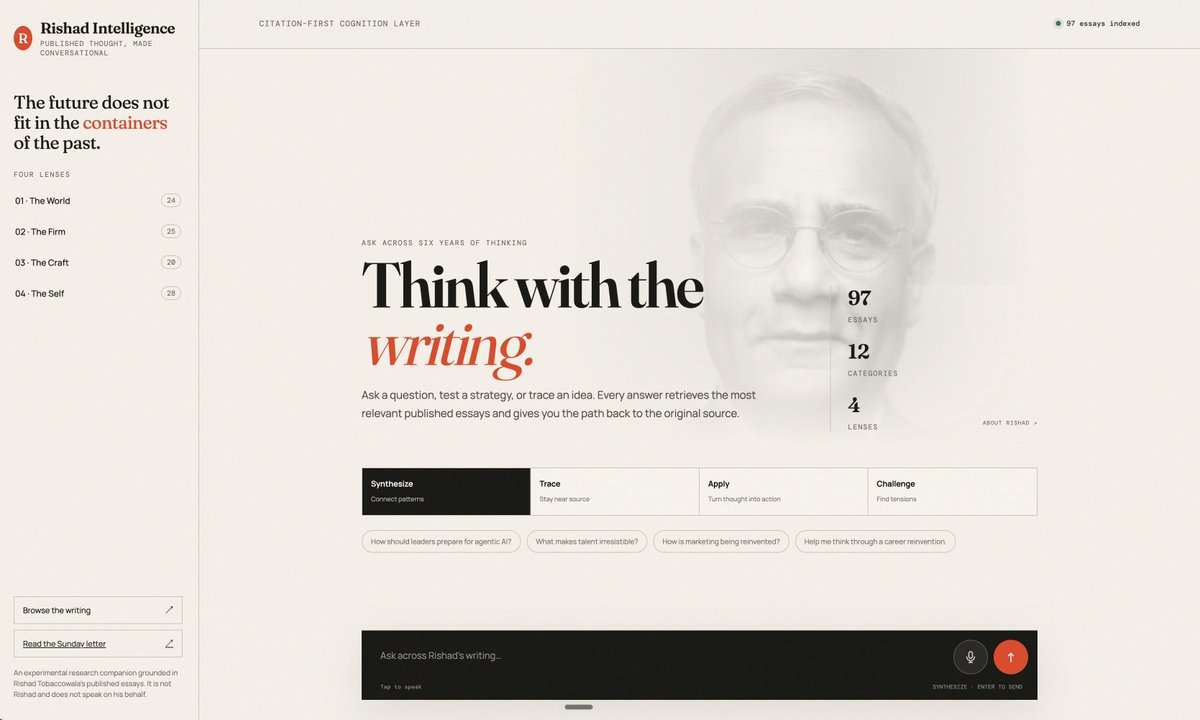
Introducing https://t.co/Y9afYPZVZo
https://t.co/3Oo3dZlF99
Four decades of knowledge and six years of writing made easy to access through a variety of filters.
Topics include
Managing Change So It Sucks Less.
How To Upgrade Ones Mental Operating System
Career Advice including how to operate like a "Company of One"
The Five Tectonic Shifts.
Rethinking Strategy.
On Fear.
Leading in an age of Debossification.
And much more.
All completely free.
Take a look at what 32,000 readers read each week
https://t.co/3Oo3dZlF99
Read this week's post called " Gifting" here: https://t.co/AQttst4828
Perfection is a disease
A conversation with Ann Mukherjee. Ann served as Chairman and CEO, Pernod Ricard NA. Prior to Pernod Ricard, Ann was Global Chief Commercial and Marketing Officer SC Johnson, overseeing businesses in over 90 countries. Ann has also served as President, PepsiCo Global Snacks and served as CMO for Frito-Lay NA.
https://t.co/pj357UVIuu