“Cinematic” is the new default.
- Center the face.
- Blur the background.
- Slow camera push-in.
- High-contrast lighting.
A Director starts with questions instead:
- Whose scene is it?
- What's the conflict?
- Is the audience a participant or a witness?
- How should they feel about the character?
The defaults make a frame look expensive. A bunch of expensive frames next to each other lose meaning.
The story questions make it mean something.
DAY 9/30: HITCHCOCK’S BOMB
Who knows more?
The characters, the audience, or both.
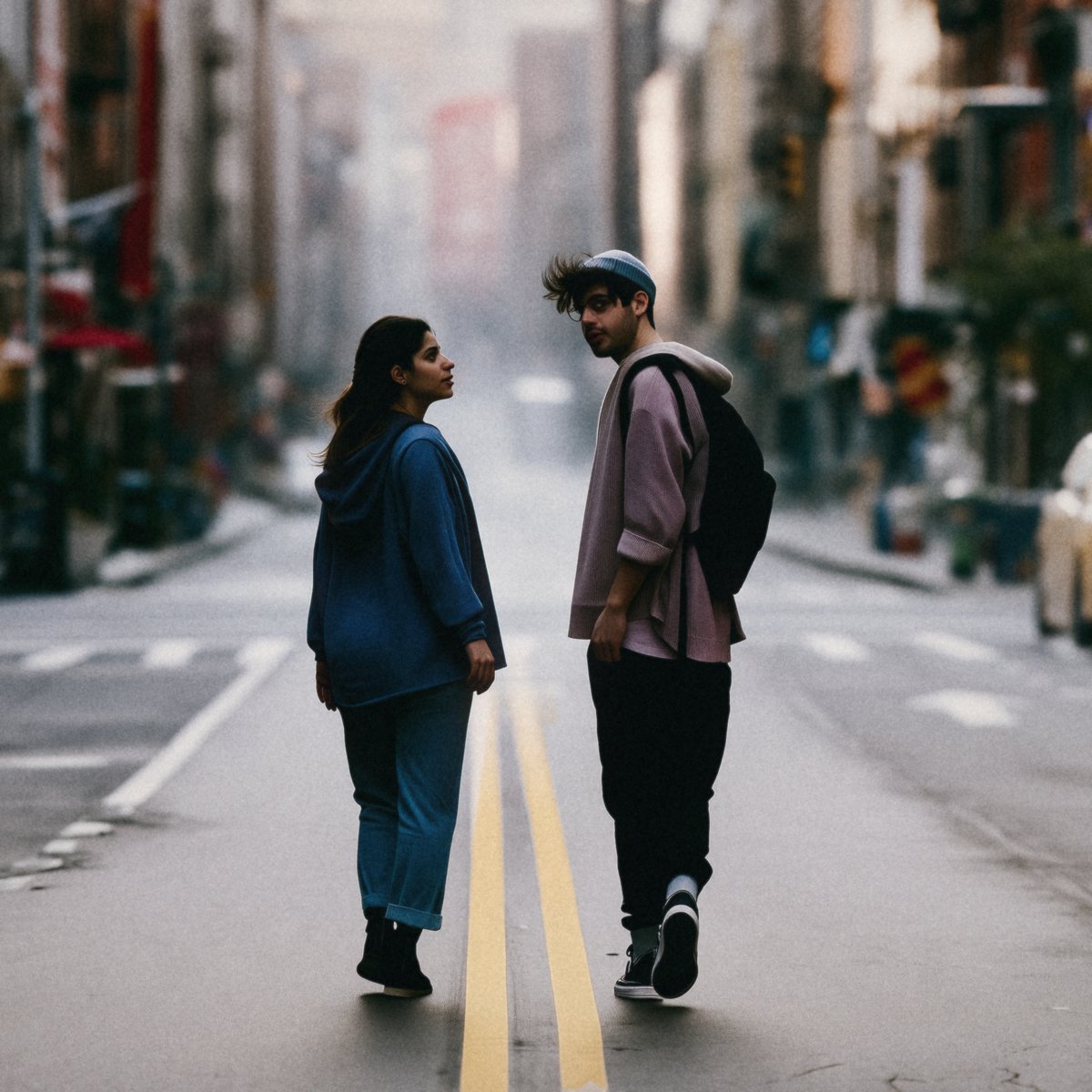
1: They’ve seen something. We haven’t. What made them turn?
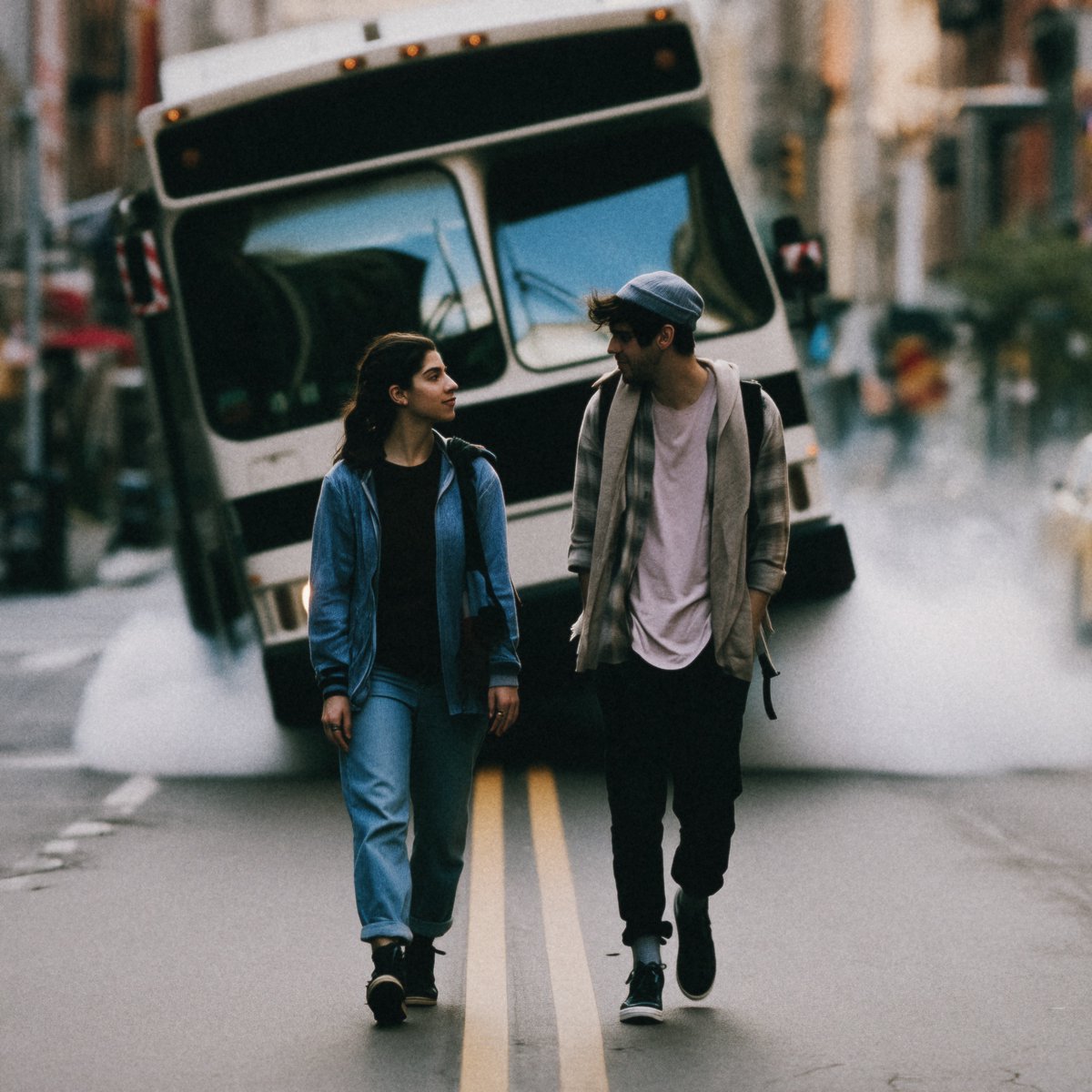
2: We see the bus. They don’t. We want to shout at the screen.
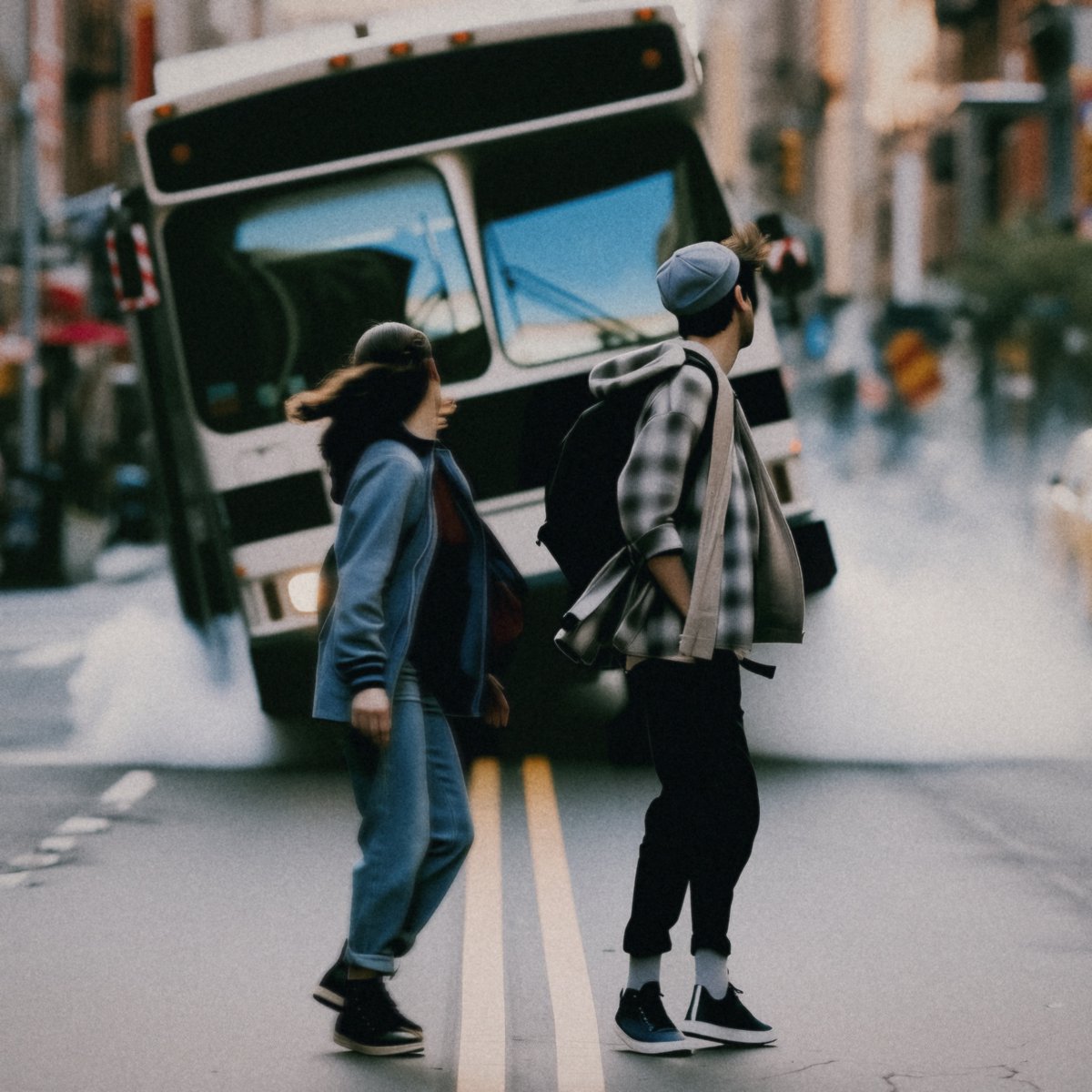
3: We see it. They see it. Can they get out of the way?
Hitchcock chose the second one whenever he could. He explained it with a bomb under a table: if it goes off without warning, the audience gets fifteen seconds of shock. Show them the bomb first, and the same dull conversation holds them for fifteen minutes.
The bus is the bomb. Their conversation becomes a delay. We want them to stop talking and turn around.
Tension lives in the gap between what we know and what they know.
Sequences are "cinematic" when each frame controls what the audience knows, and when.
Try this:
- Pause a scene. Do you know more than the character, the same, or less?
- Keep watching. Find the shot that changes the answer.
- Notice how what you’re waiting for changes with it.
Day 10 tomorrow. Follow along for all 30 days of The War On “Cinematic.”
AI filmmaking is too cinematic.
Dramatic lighting. Epic camera movements. Perfect compositions.
We can generate shots that look like they belong in a $100 million blockbuster, but it still feels like something is missing.
If every shot is spectacular, none of them are.
The most important thing I learned in film school wasn't how to make a beautiful shot.
It was visual structure.
Why one shot follows another. Why you hold on a face. Why you choose not to move the camera.
The deliberate choices a director makes with their collaborators to make an audience feel something.
As AI makes creating beautiful images frictionless, understanding these choices becomes more important than ever.
So for the next 30 days, I'm breaking down the principles of visual storytelling and exploring how they apply to AI filmmaking.
One concept. One visual experiment. Every day.
THE WAR ON "CINEMATIC."
Day 1 drops today: Affinity vs. Contrast.
Follow along for all 30.
@LCPrompt Thanks! Yeah music videos fit the current consumption style well (short form, video, clip-able). Still blown away by the STORM video by Gener8ion!
I shot this music video alone in 6 hours.
$200 in locations. Four lights. Seven seconds of AI transitions.
I directed, shot, lit, and edited everything myself.
Here’s the hybrid production workflow behind it, plus an old-school music video trick worth stealing.
1. Start with the story, not the tools.
Same Old Things, satirizes the desire to be cool.
So I built the video around two worlds: his mundane day job and the glamorous life he imagines.
Every transition takes us between them.
2. Plan the transitions BEFORE shooting.
I opened Kling before I picked up a camera.
I studied the transitions it could create, chose the start and end frames, then designed my shots around those frames.
Rather than asking AI to shoot for me or fix what I'd shot, I shot for what I knew it could do well.
3. Spend money on what's in front of the camera.
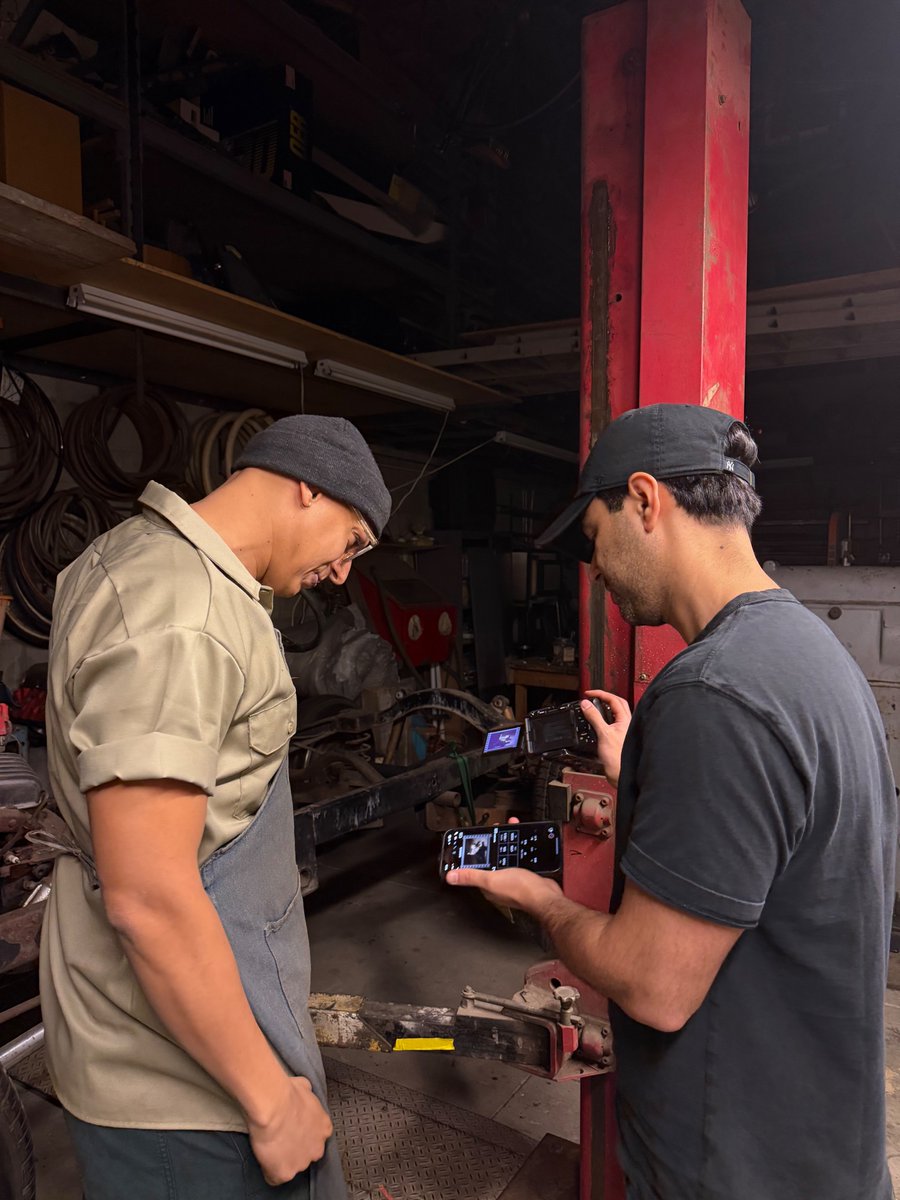
Two LA locations: a garage for his day job and a multi-set photo studio for his fantasy. 3 hours each.
Total location cost: $200.
The studio gave me several distinct looks without traveling between locations.
4. Make the lighting and camera work for you.
I controlled four Amaran RGB tube lights from my phone, changing color and intensity without running between stands.
Not quite a gaffer, but close enough when you’re alone.
The FX3’s higher base ISO helped in the darker setups.
5. Lean into the post tools.
Final Cut Pro for the edit.
@Kling_ai for transitions beginning at 00:42.
Nano Banana for the ending.
Each Kling transition connects two real frames I shot. Planning those endpoints gave me something specific to build in post.
6. BONUS: The slow-motion lip-sync trick.
Ever wonder how musicians sing perfectly in sync while everything moves in slow motion?
Here's one way it's done:
- Play the song at 2x speed on set.
- Have the performer lip-sync to that faster playback.
- Shoot at 48 fps.
- Play the footage back at 24 fps against the original song.
The lips sync at normal speed, while the movement has that dreamy, slowed-down quality.
This is what excites me about hybrid production.
The shoot is still the foundation.
The tools expand what one filmmaker can pull off.
Music: Same Old Things by Sid Kara.
https://t.co/eiENBvJDe3
AI filmmaking is too cinematic.
Dramatic lighting. Epic camera movements. Perfect compositions.
We can generate shots that look like they belong in a $100 million blockbuster, but it still feels like something is missing.
If every shot is spectacular, none of them are.
The most important thing I learned in film school wasn't how to make a beautiful shot.
It was visual structure.
Why one shot follows another. Why you hold on a face. Why you choose not to move the camera.
The deliberate choices a director makes with their collaborators to make an audience feel something.
As AI makes creating beautiful images frictionless, understanding these choices becomes more important than ever.
So for the next 30 days, I'm breaking down the principles of visual storytelling and exploring how they apply to AI filmmaking.
One concept. One visual experiment. Every day.
THE WAR ON "CINEMATIC."
Day 1 drops today: Affinity vs. Contrast.
Follow along for all 30.
this is my fear, editors won't need to watch all the footage now to organize clips or create an assembly, which means those unexpected moments, outtakes, and unrelated reactions shots that save an edit won't be found.
The trade-off in efficiency means we won't stumble onto something great.
@kaveri_g thanks! I definitely missed a gaffer the most. the surprise was how much simpler the shoot got once i'd planned the transitions. i knew exactly which frames I needed so almost nothing ended up on the cutting room floor.
@aworthystory@grok@dustinhollywood wow, credits for IP is worse than the current studio model and the opposite of democratizing storytelling. gatekeepers find new ways to create control.
@cosimo_dauve yes! you go from being an insider on cutting edge work and sharing it with your audience to becoming a lifestyle influencer generalizing on everything in order to keep expanding your audience for monetization.
Yes! A winding road changes how we perceive depth. The curves and overlapping landscape can reveal distance while concealing what's around the bend.
Fog works differently. A little creates depth by reducing detail and contrast in the distance. Too much obscures the depth cues entirely.
He’s the same distance behind her in both frames.
DAY 10/30: AMBIGUOUS SPACE
An empty road. A man behind.
Depth helps the audience judge where things are in relation to each other.
Top: the road narrows, the fence posts shrink. We can place him in the landscape.
Bottom: fog hides the road, the fence, and the ground beneath his feet. His silhouette remains. The distance becomes harder to judge.
Same road. Same two people. Only the air changes.
The converging edges, shrinking fence posts, and his contact with the ground are depth cues.
On a 2D screen they create the illusion of depth and allow the audience to understand the space, distance and size.
The fog takes away those cues. We can still see him. We’ve lost our bearings around him.
The uncertainty adds tension before he does anything.
Keep the threat visible. Take away the audience’s ability to place it.
Try this:
- Next time you want to raise tension in a scene, look at the space.
- Obscure a depth cue through something happening in the scene: fog rolling in, a light going out, smoke filling a room.
Day 11 tomorrow. Follow along for a daily note on visual structure through 30 days of The War On “Cinematic.”
I went from a career in tech to film school and now it finally feels like my two disparate worlds are converging. You said it right, the creative possibilities are endless, the worlds have expanded, the gatekeepers are no longer the only path to create meaningful work. Inspired and excited to follow along!
@benjaminluk That's quite the range! Curious whether the Marvel-scale productions changed how you approach the $14k indies, or whether the lessons flowed the other way.
@benjaminluk Yeah a lot smoke and mirrors.
Tarkovsky had a point and his fortitude in his work was admirable but art & commerce have combined to create some great pieces of cinema. I guess the downside of the medium is also what makes it the most unique.
the struggle of distribution has been passed onto the worker. earlier it was enough to be skilled, media and the gatekeepers would provide distribution. it was a flawed model but if you were skilled enough it would work. now everything is disintermediated, the floodgates are open and everyone goes direct to audience. so the wildlife photographer, the singer, the chef all need to find their own audience.
@EZheng66099 this is amazing!
how detailed did you have to get with directing the characters? was it focused on intentions or did you get granular like "cry on this line"? wondering which aspects you had to be more specific than you would need to with a real cast/crew.