“Respect your elders” is a phrase used for young people to give respect because they’re young and learning.
Elders should already know how to respect you.
They shouldn’t have to be told “respect your kids.”
A woman was diagnosed with endometrial cancer due to a lab error.
The diagnosis was rechecked and they found she did not have cancer but doctors allegedly did not tell her and insisted on proceeding with a hysterectomy anyway.
She was told “have the surgery or die and leave your kids motherless.”
Here’s an example:
A Philadelphia jury reached a guilty verdict in November 2025 due to a cancer misdiagnosis that led to an unnecessary total hysterectomy.
Here’s the details:
Who was involved: patient, Main Line Health, Penn Medicine, physician
What happened: a woman underwent a major surgery that was allegedly unnecessary after being incorrectly told she had aggressive endometrial cancer
Why did it happen: apparently biopsy slides were mixed up or contaminated, leading to a false-positive cancer diagnosis
When: surgery in 2021; verdict reported in November 2025
Where: Pennsylvania, United States
How did the error happen: an outside biopsy showed aggressive cancer, a second biopsy at Penn was negative, but she was still encouraged to undergo surgery. Postoperative analysis later found no cancer was even present
@SmartScience@NextScience To my understanding, this is in part due to the fact that kids can’t associate what’s on their screen with real life.
This causes them to not develop transferable knowledge, emotions, skills etc to a real life situation, resultantly delaying their development (including speech)!
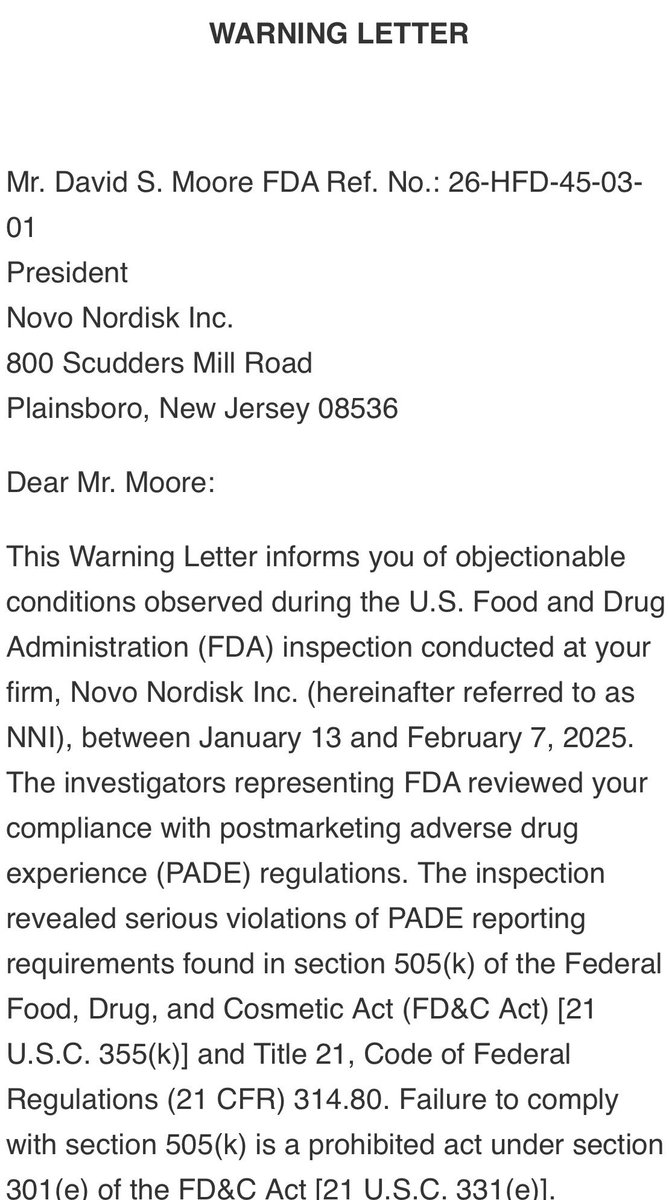
FDA WARNS NOVO NORDISK:
Unreported Deaths Linked to Ozempic
——
Novo Nordisk received an FDA warning letter after a 2025 inspection found it failed to properly report and investigate serious adverse events tied to its semaglutide (Ozempic/Wegovy) drugs.
These events, that were not reported or investigated, included two deaths and one suicide. They were not reported within required timelines or adequately followed up with, violating FDA safety reporting rules.
The issue isn’t necessarily that this proved harm by the drug but that these cases weren’t properly investigated or were dismissed. This entirely limited the ability to figure out what actually happened here as some cases were misclassified or closed without an actual and full assessment.
——
More details coming.
@DrJesseMorse One of the deaths was actually suicide. Since the medication acts on the brain, they need to consider mental health.
There’s no evidence it was related but they didn’t investigate it properly at all.
They’re trying to race to be on top of the market. 🤦🏽♀️
@TheMomoftheHour@icope That’s true. HER2-positive cancers have more targeted therapy options, which can have far better outcomes compared with triple-negative breast cancer.
Wishing you the best as you finish your last treatments! 🩵
🗞️ Here’s an example of how INCREDIBLE this medicine is:
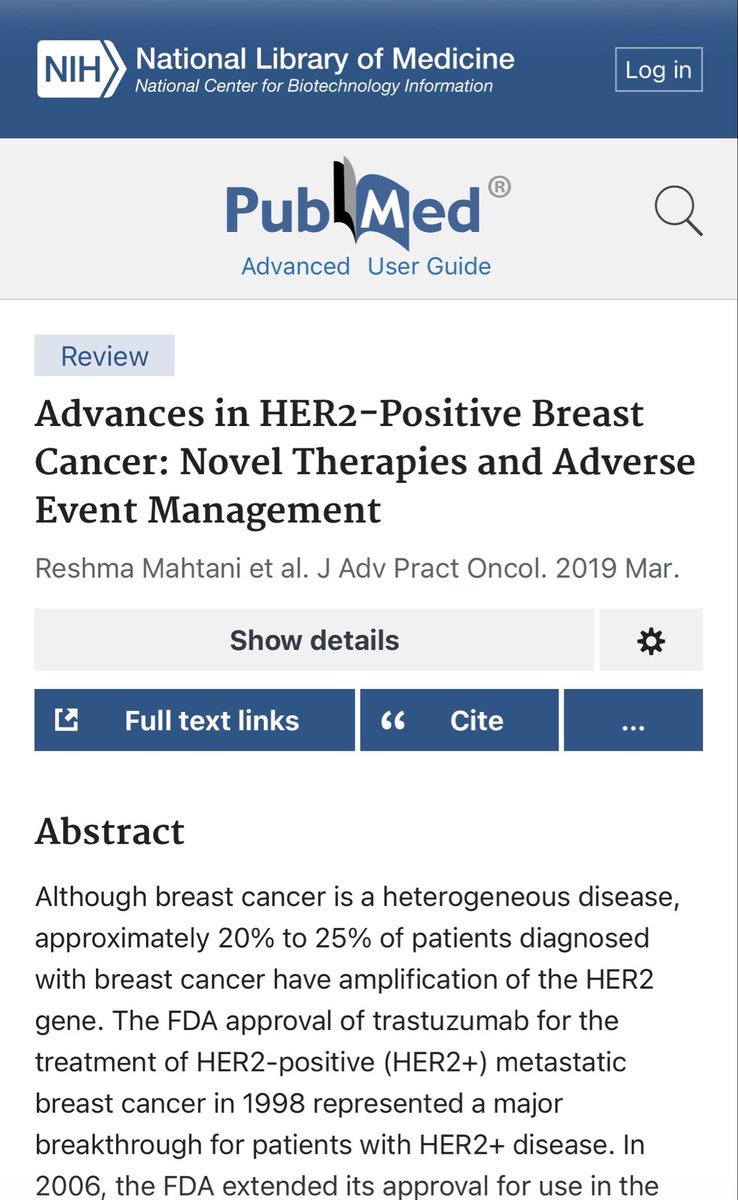
Before HER2-targeted therapy (with Herceptin), women with this aggressive breast cancer endured a desperately worse fate. Treatments like Herceptin completely changed that destiny.
—
A 35 years old woman named Kate Watson was diagnosed with stage IV breast cancer.
Her cancer was HER2-positive, the aggressive type mentioned.
She was also notified that the cancer had already spread to several parts of her body, including her spine, pelvis and femur.
She said in a report, “I remember thinking, this can’t possibly be happening.”
Kate had two small daughters at home.
Her doctors started systemic treatment that included chemotherapy and the HER-2 targeted therapy, Herceptin. For months, the outcome was incredibly uncertain, as scans tracked whether the tumors would respond.
Over time, many scans later, something remarkable happened.
Her tumors stopped growing, and she eventually reached complete remission.
This was historically rare for metastatic breast cancer, especially before the development of HER2-targeted therapies.
—
Patient responses like this helped doctors clearly see that HER2-targeted therapy could dramatically change the future for patients with a cancer that once had very poor survival outcomes.
💊 In 1998, Genentech made a bold bet:
Treat one aggressive type of breast cancer by targeting only the specific protein causing it.
The drug Herceptin made that idea work!
Who did it: Genentech
What is it: Herceptin, an antibody drug designed to target HER2-positive breast cancer
When did it happen: It was approved for the metastatic disease in 1998; later using it for earlier stages of the cancer
Where did it happen: United States
Why did they do it: HER2-positive breast cancer is linked to faster growth, higher recurrence and worse survival than many other breast cancer subtypes
How did they do it: They proved Herceptin step by step. First in metastatic HER2-positive breast cancer, then in earlier-stages of the disease, where it helped lower the risk that the cancer would come back after initial treatment.
*Now newer HER2-targeted treatments have expanded what doctors can do, including in some HER2-low cancers.
💊 In 1998, Genentech made a bold bet:
Treat one aggressive type of breast cancer by targeting only the specific protein causing it.
The drug Herceptin made that idea work!
Who did it: Genentech
What is it: Herceptin, an antibody drug designed to target HER2-positive breast cancer
When did it happen: It was approved for the metastatic disease in 1998; later using it for earlier stages of the cancer
Where did it happen: United States
Why did they do it: HER2-positive breast cancer is linked to faster growth, higher recurrence and worse survival than many other breast cancer subtypes
How did they do it: They proved Herceptin step by step. First in metastatic HER2-positive breast cancer, then in earlier-stages of the disease, where it helped lower the risk that the cancer would come back after initial treatment.
*Now newer HER2-targeted treatments have expanded what doctors can do, including in some HER2-low cancers.
@ItsGoneAwry Is there anyway you can pursue a second opinion?
Are there financial restrictions?
Sometimes physicians/hospitals/healthcare teams do this due to financial or legal considerations and it’s absolutely wrong.
I’m sorry for what you’re going through. 🩵
Here’s an example:
A Philadelphia jury reached a guilty verdict in November 2025 due to a cancer misdiagnosis that led to an unnecessary total hysterectomy.
Here’s the details:
Who was involved: patient, Main Line Health, Penn Medicine, physician
What happened: a woman underwent a major surgery that was allegedly unnecessary after being incorrectly told she had aggressive endometrial cancer
Why did it happen: apparently biopsy slides were mixed up or contaminated, leading to a false-positive cancer diagnosis
When: surgery in 2021; verdict reported in November 2025
Where: Pennsylvania, United States
How did the error happen: an outside biopsy showed aggressive cancer, a second biopsy at Penn was negative, but she was still encouraged to undergo surgery. Postoperative analysis later found no cancer was even present
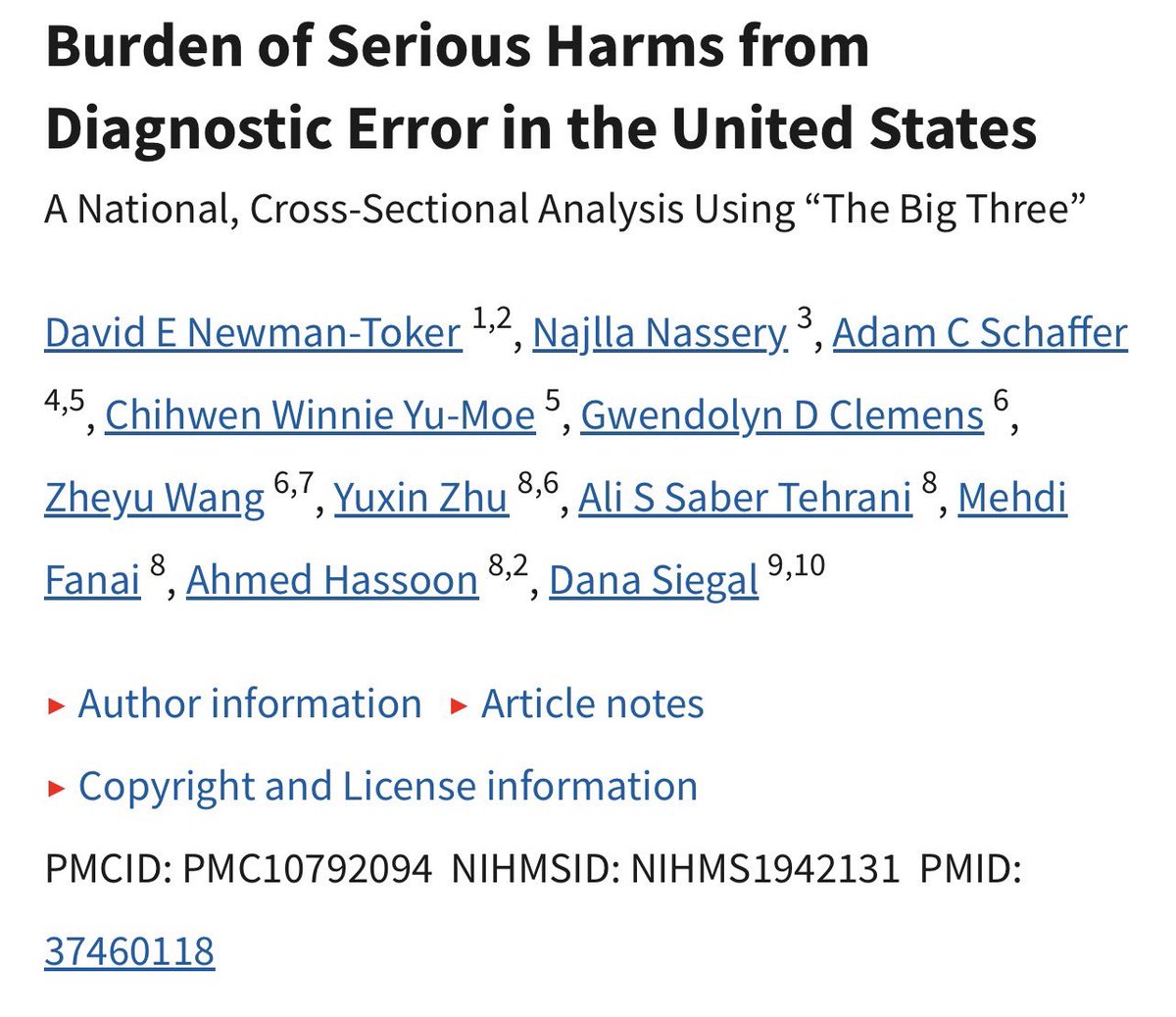
In the United States alone, diagnostic errors impact 12M+ people a year, with 795,000 cases of permanent disability or death annually.
Doctors are highly trained and deserve respect.
But if something feels off, ask questions and seek a second opinion from another qualified professional.
In the United States alone, diagnostic errors impact 12M+ people a year, with 795,000 cases of permanent disability or death annually.
Doctors are highly trained and deserve respect.
But if something feels off, ask questions and seek a second opinion from another qualified professional.
@SternDrewCrypto@bouttimeto This note doesn’t imply what you think.
It just means that Epstein is a very high profile case and they didn’t want the media following them so they staged a fake body so they could move the real one safely.
Celebrities do this, I believe, to avoid paparazzi.