Something I have been thinking about: in the past, the best engineers I knew spent a lot of time automating their work in various ways. Better vim/emacs automations, writing lint rules to catch repeat code issues, building up a suite of e2e tests so they don't need to smoke test the app manually. These kinds of things were the highest leverage activities an engineer could do, because it multiplied their own output, which in turn meant they could build more things.
I think many of these automations have become even more important now. This is true for a number of reasons.
First, infra and DevX automation speeds you up. And if you are running an army of agents, each of those agents will be sped up also. More automation == more output per unit of time.
Second, moving things to code improves efficiency. Your agent could fix an issue every time it sees that issue happen, but that uses tokens and might miss cases. If Claude instead writes a lint rule, CI step, or routine, that class of issue can be fully automated forever. This is really what people are talking about when they talk about loops -- it's about automating entire types of busywork rather than solving them one off. This isn't a new idea at all. Engineers have been doing this for a long time!
Third and most importantly, automation makes it possible for others to contribute to the codebase more easily. Increasingly what I am seeing is engineers are contributing to codebases on day one because Claude can navigate the codebase for them, and that non-engineers are able to contribute to a codebase as effectively as engineers can. What gets in the way of both of these is domain knowledge that lives in peoples' heads rather than in automation -- the stuff you used to have to learn when ramping up. What has changed thanks to agents is the domain knowledge that can be encoded as infrastructure is no longer limited to what is expressible in lint rules and types and tests; it can now capture nearly all domain knowledge, encoded as code comments and skills and CLAUDE.md rules and memories. If I put up a PR for an iOS codebase I don't know and a code reviewer rejects it because it doesn't use the right framework, or if a designer builds a new feature and it gets rejected because it doesn't follow the right architectural patterns, these are failures of automation.
Every team should be writing the CLAUDE.md's, REVIEW.md's, skills, and docs that enable agents to productively work in their codebase with zero additional context from the prompter. This sounds crazy, and at the same time is a natural extension of the stuff engineers have always done: automate, and encode domain knowledge as infrastructure. As the model gets smarter and as the harness matures, this task becomes easier. In the meantime, it is on every team to look for ways to convert their domain knowledge to infra so that Claude can write code better, so that code review catches issues automatically, and so the next person working on your codebase can contribute more easily.
Marc Andreessen: “The best entrepreneurs of the future will be quite skilled at 6-8 things”
Marc is asked how being a founder changes in the age of AI, to which he responds:
“I think there are two ways to have a differentiated edge in general — go deep or go broad.”
Going deep means becoming a specialized expert in your domain.
“There are domains where that really matters,” Marc explains. “In biotech and working on AI foundation models, the deeper you are the better.”
But as AI gets more powerful, Marc would bet that “going broad” will be the winning strategy for most fields. He recommends knowing a lot about many different fields and how the world works — then use AI tools to go deep whenever you need to.
“If you talk to any of the great CEOs, you see this.” Mark explains. “The really great CEOs are great at product, sales, and marketing people, they’re great legal thinkers, and they’re great at finance and with investors and the press. It’s a multidisciplinary kind of approach.”
He continues:
“The best entrepreneurs of the future will probably be quite skilled at 6 or 8 things and then will be able to cross-pollinate and combine them.”
Source: @tbpn (May 2025)
As engineering, product, design, DS, etc. melt into a new kind of role, I was reflecting on what roles might look like in the future. For example, when I look at the Claude Code team I see what I think is five archetypes:
1. Prototyper: comes up with brand new ideas; churns out many ideas, most of which don't ship
2. Builder: quickly turns a prototype/idea into production-grade product/infra
3. Sweeper: cleans up the UI, simplifies the code and system, unships, optimizes performance
4. Grower: takes a product that has been built and iterates on it to improve Product-Market Fit
5. Maintainer: owns a mature system to make it secure, reliable, fast, and efficient as it scales
Many people span across 2 roles, and sometimes 3 roles. I also notice that these roles are not really tied to job function -- eg. across Anthropic, some designers match category 1, some 2, some 3; same for engineers, PM, DS.
A healthy team needs a mix of these, depending on the product:
- A product that is new and pre-PMF needs people that are strong at 1+2+3
- A product that is growing and has found PMF needs 2+3+4 and some 5
- A product that has strong PMF needs 3+4+5 and some 2
Maybe product roles of the future will look more like this, and less like the domain-specific roles of today?
Christian Catalini on PostAGI. Verification is the only scarce resource.
Many people think it’s taste, agency or judgment. But these are just aesthetic descriptions of an underlying mathematical quantity: verifiability, the ability to verify whether an outcome meets a certain bar or improves on previous outcomes. Because what’s verifiable becomes optimizable by AGI.
In this 2nd episode of the PostAGI podcast, @soubhikdeb and I sit down with @ccatalini, founder of the @MIT Cryptoeconomics Lab, to discuss what happens to labor, capital and markets as AI scales.
We also get into:
02:41 The hollow economy, and why Amazon called an emergency meeting over AI slop
13:32 If it can be measured, it can be automated
16:55 Why AI hands you something that sounds right and is completely wrong
26:20 Why crypto built the infrastructure AI now needs
43:58 The missing junior problem, and why CS grads stopped getting jobs
59:12 The four zones that decide which jobs survive AI
Full episode below. @postagixyz is also on Spotify and YouTube.
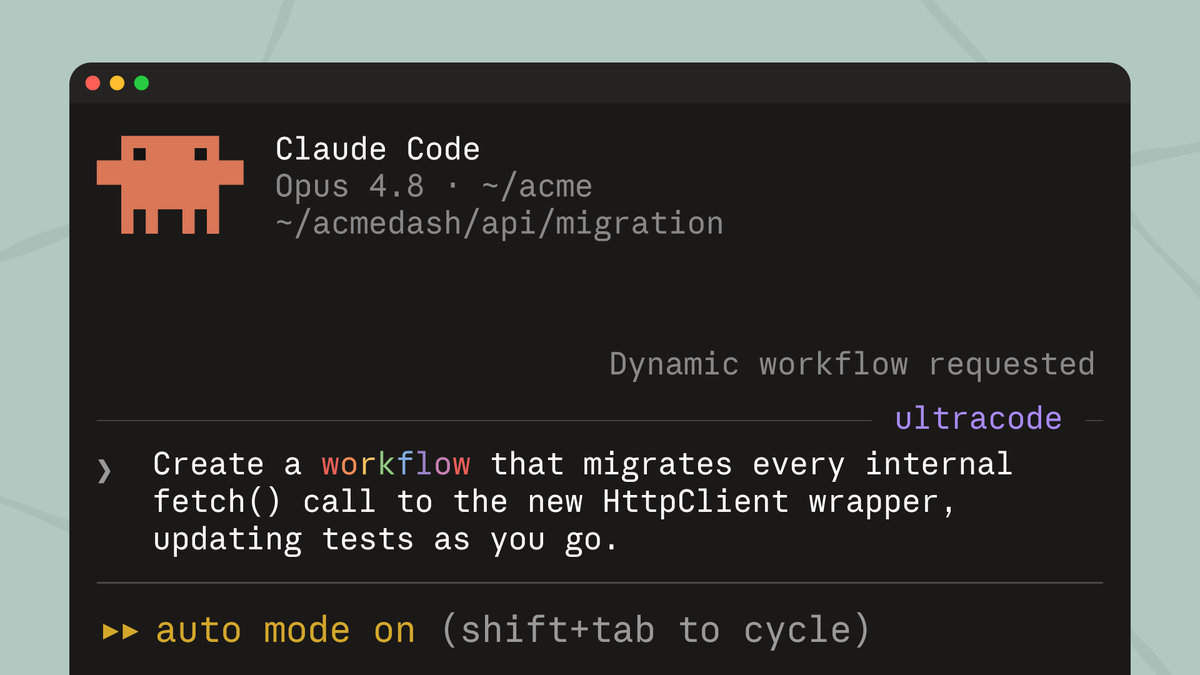
New in Claude Code (research preview): dynamic workflows.
Claude writes an orchestration script on the fly, then spins up a large fleet of coordinated subagents in parallel to take on your most complex tasks.
Use the word "workflow" in a prompt to get started.
My biggest takeaways from @danshipper:
1. The future of work will happen inside Codex or Claude Code. Instead of putting AI into your SaaS tool, you’ll use your SaaS tools inside your favorite AI agents' in-app browser. Dan spends all his time in Codex now—writing documents, managing email, doing research, everything. He's using Google Docs, PostHog, and everything he needs within the agent's in-app browser. The agent can see what he’s doing, and has all of his context, so he and his agent collaborate quickly and super effectively.
2. Automation is a lie—every automation needs a human. Dan's company doubled in size this year despite being incredibly AI-forward. Why? Because in order to make automation work well, you need humans making sure everything keeps working. This is why benchmarks are misleading—they measure AI on problems we’ve already framed and can score, but there’s always a higher frame.
3. PMs will win the AI era. Marcus, a former PM who previously ran Axios’s writing product, joined Every after getting super AI-pilled. Now he runs their product Spiral, and ships faster than anyone on the team. He pairs technical knowledge with spiky product sense, deep user empathy, and an eye for what matters. Dan thinks any PM who gets really AI-native will be incredibly dangerous because the building is done for you—what matters is figuring out what to build and if it’s great.
4. Full-stack designers are becoming superheroes. Designers used to make beautiful interactions that engineers didn’t want to build or couldn’t execute properly. Now designers don’t need to hand things off; they can build it themselves. Designers are naturally creative people, and AI is the perfect tool for them because it lets them bring their vision to life without the traditional bottlenecks.
5. SaaS is not dead. In fact, Dan is bullish on SaaS stocks. When users bring their own AI (via Codex or Claude Code) to use SaaS products, the user—not the SaaS company—pays for tokens. This saves SaaS company’s margins. Since the agents need their own seats, Dan predicts that agents will create massive new demand for SaaS because there will be tons of agents using these products at high volume.
6. Every company will have one “super-agent” inside their Slack that every employee will use. Dan initially thought every employee would have their personal work agent, like a shadow AI org chart, but he’s completely flipped his view. He realized agents need humans who care about them. When someone gets tired of maintaining their personal agent, it becomes useless. The winning model is one forward-deployed engineer or AI-savvy person who maintains a company-wide agent (like Shopify’s River or Viktor), and then it trickles down to more specialized team agents as models improve and become less fiddly.
7. The AI job apocalypse is not happening, but you do need to evolve to stay relevant. Models make yesterday’s human competence cheap. But because everyone uses the same models, it all looks the same if you use it the default way; it becomes commoditized slop. Humans then take that frozen competence and use it to make something new and interesting for their specific situation. The key: “ride the models”—use them for everything you do, try new models when they drop, keep turning over rocks.
8. We will read way more AI-generated writing, and we will like it. Human writing is incredibly important for things that matter, but for internal docs, planning, and email, AI-generated is often better because most people are bad at writing strategy documents.
9. Build software for humans and agents to use together. The current model is building a CLI that an agent uses independently. Instead, you and your agent should be using the app together. This creates new design challenges—agents can make a billion requests in three seconds, so you need approval flows, inboxes that summarize what happened, logs, and easy rollback.
10. Forward-deployed engineers are the new most essential role. The big model companies have teams of people managing their internal agents, and those teams aren’t going away. It’s different from traditional software building, and certain engineers love it. As models get better, this role will evolve—you’ll be managing more agents doing more things.
karpathy's CLAUDE.md hit #1 on github trending.
220,000 stars. most devs still haven't read it.
it's 65 lines.
it took AI coding accuracy from 65% to 94%.
the 4 rules inside:
→ think before coding
state your assumptions. ask when unsure. never guess.
→ simplicity first
write the minimum code that solves the problem.
no abstractions nobody asked for.
→ surgical changes
don't touch code unrelated to the request.
every changed line must trace back to what was asked.
→ goal-driven execution
turn vague instructions into verifiable success criteria
before writing a single line.
that's it.
65 lines. 4 rules. 94% accuracy.
save this before everyone else does.
3,000 AI agents. 1,300 humans. A 3:1 ratio.
Fortune went inside ClickUp to see how we're rebuilding every workflow around AI agents, and what it actually looks like when employees become managers of agents.
Read the full piece here: https://t.co/jofLIWg8Um
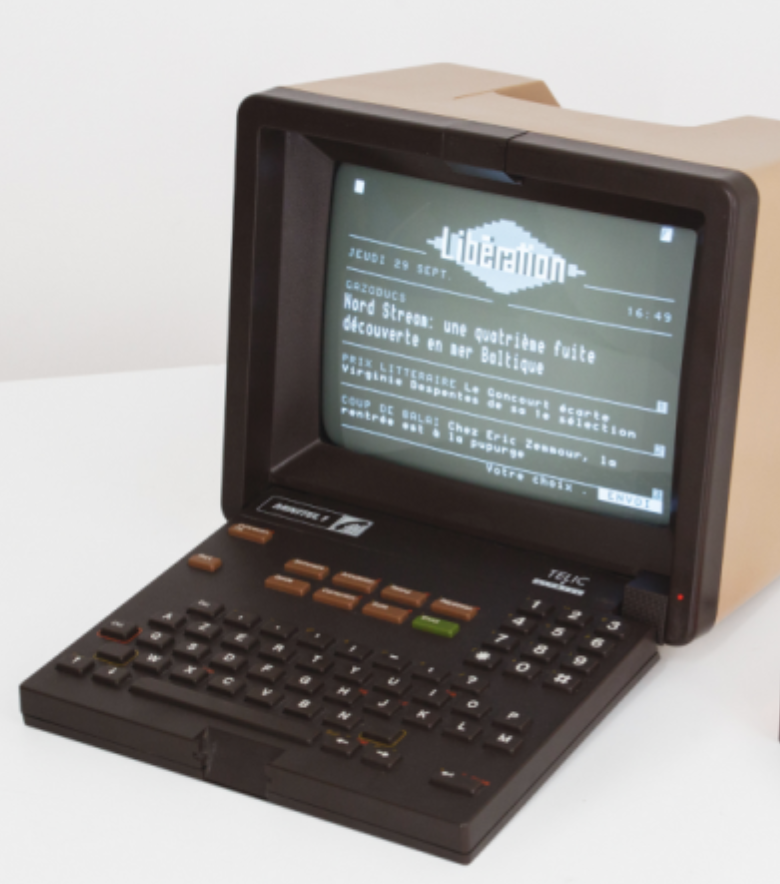
Bullish Minitel: @Lagarde looked at dollar stablecoins and decided what Europe really needs is a publicly-built interoperable settlement network, ready in 2028.
It amazes me how often entrepreneurs tell me their number one goal is to be rich. I find this tragic.
First, it’s highly unlikely. It’s rare enough to earn a living at this game, much less accumulate life-changing wealth.
Second, it misses the real reason entrepreneurship is so rewarding: getting to sit around a table with smart people solving interesting problems.
Usage limits are up, effective today we're:
1) Doubling Claude Code's 5-hour limits for Pro, Max, Team and seat-based Enterprise plans
2) Removing peak hours limit reduction on Claude Code for Pro and Max plans
3) Substantially raising our API rate limits for Opus models