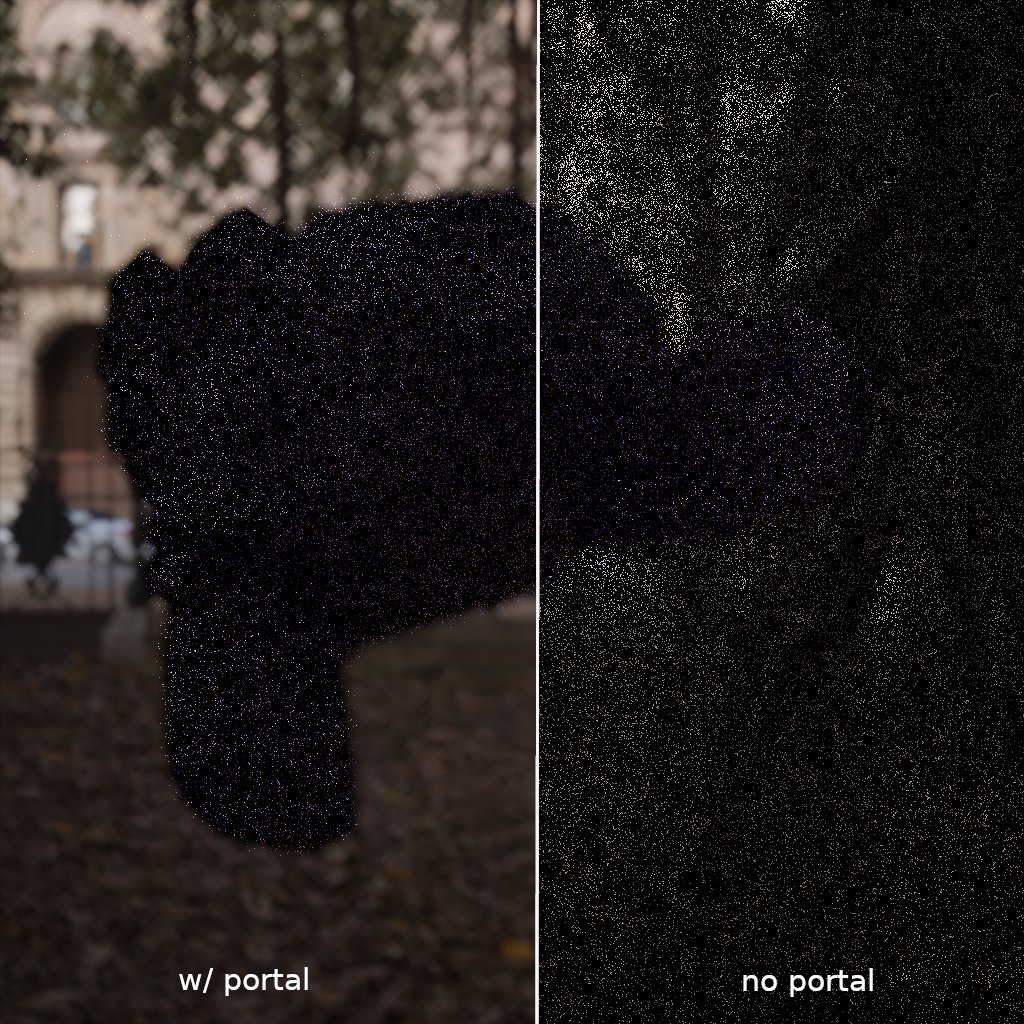
@sirrandalot Maybe an OpenSL shader for the film? If you know the angle of the ray into the film you also know the range of rays that are worthwhile to trace from the film. (But maybe that's too far beyond the spirit of the exercise.)
@sirrandalot I wonder if there's some hacky way to use light portals to speed up the render. The render time would be greatly shortened if you could tell the path tracer to not spend so much time bouncing rays off the film plane into the sides of the camera.
@SenorJuanz It's an idea! Right now Valorant doesn't have replays like CS:GO does, so I don't have a good way of collecting data on what players do in-game. I think the strategy would be to get a database of pro games and then use those to train on.
@LucidDonuts Yes, that's doable with something like Q learning! But it would be veeeeery slow if you had to play the game at 1x speed, and only took into account the score at the end of each round. I think the AI would need smaller rewards throughout the round.
New video on how, in the #Lunacrash, arbitrageurs made an easy 25x on their money. And, in doing so, accelerated the crash: https://t.co/qVioT64IIE #luna
I also have footage of @KeyJ_trbl's WorDOS running on an IBM 5150 PC with monochrome display, something not possible with most of the other Wordles featured: https://t.co/PYww7kYlN8
@bolttacle There's a limited amount of literature out there for first-person shooters specifically, but a lot has been written on reinforcement learning and similar techniques for games. OpenAI has some examples - check out the OpenAI Gym!