Remember the polar bears.
Remember the rhinos.
Remember the elephants.
Remember the orangutans.
Remember the whales.
Remember the rainforests.
Remember the coral reefs.
Remember the glaciers.
The future of each now rests in human hands.
On a hot July day, a single mature tree in your yard pumps somewhere around 100 gallons of water up from its roots and out through its leaves as water vapor. A mature elm with 150,000 leaves can clear that in a day.
As that water evaporates off the leaf surface, it carries heat away with it, the same basic physics that makes sweat work. The air around the canopy drops measurably.
The cooling effect of a single large tree transpiring 100 gallons of water is roughly equivalent to two household air conditioning units running all day. Except it runs on sunlight and groundwater, costs nothing, and has been doing it since before your house was built.
A yard with mature canopy runs 5 to 10 degrees cooler than a paved or treeless yard next door. That's not a feeling. It's a physics difference you can measure with a thermometer. The urban heat island is real, and it gets worse one removed tree at a time.
The best time to plant a tree was twenty years ago. The second best time is this weekend, before another hot ass July like this one comes around.
Ireland is building a battery that contains no lithium.
No cobalt.
No rare-earth metals.
Instead, it stores energy using carbon dioxide.
The project is designed to hold 200 megawatt-hours of electricity, making it one of Europe’s largest long-duration energy storage systems. But unlike conventional batteries, it doesn’t rely on chemical reactions.
It relies on physics.
When wind and solar farms produce more electricity than the grid needs, that extra energy is used to compress carbon dioxide into a liquid. The process releases heat, which is captured and stored.
Later, when electricity demand rises, the stored heat turns the liquid CO₂ back into a gas.
As the gas expands, it spins a turbine and generates electricity.
Then the cycle begins again.
The carbon dioxide never leaves the system.
It stays sealed inside, circulating in a continuous closed loop.
That is what makes the technology so different.
There is no lithium.
No cobalt.
No dependence on critical mineral supply chains.
Instead, the system is built mainly from steel, water, and carbon dioxide.
It is also designed to last.
Developers say the facility can deliver electricity for up to ten hours on a full charge and continue operating for more than 25 years without the gradual loss of storage capacity that affects many conventional batteries.
As more countries shift toward wind and solar power, one challenge continues to grow.
What happens when the wind stops blowing or the sun goes down?
Projects like this are trying to answer that question.
Not by replacing renewable energy.
But by finding new ways to store it until it is needed.
Sleazy anti-net-zero Farage, Tice, and Reform UK will be furious.
“We are liquidating the Earth’s natural capital. We are tearing down the biological library before we have even read the books. No amount of economic growth can compensate for the loss of a self-sustaining biosphere.”
— E.O. Wilson
Going to disappear due to the fishing of one of the smallest animals in the ocean, KRILL. Avoid omega 3 supplements or enhanced foods, if you want whales and the other animals to survive. Krill is a keystone species, without it the ecosystem collapses. We can live without omega3
On a hot July day, a single mature tree in your yard pumps somewhere around 100 gallons of water up from its roots and out through its leaves as water vapor. A mature elm with 150,000 leaves can clear that in a day.
As that water evaporates off the leaf surface, it carries heat away with it, the same basic physics that makes sweat work. The air around the canopy drops measurably.
The cooling effect of a single large tree transpiring 100 gallons of water is roughly equivalent to two household air conditioning units running all day. Except it runs on sunlight and groundwater, costs nothing, and has been doing it since before your house was built.
A yard with mature canopy runs 5 to 10 degrees cooler than a paved or treeless yard next door. That's not a feeling. It's a physics difference you can measure with a thermometer. The urban heat island is real, and it gets worse one removed tree at a time.
The best time to plant a tree was twenty years ago. The second best time is this weekend, before another hot ass July like this one comes around.
Switzerland bolted 5,000 solar panels onto a dam wall 8,000 feet up in the freezing Alps where everyone said solar made no sense, and the plant now makes three times more winter power than any farm down in the valleys https://t.co/9BeOX8hiip
In 1985, Carl Sagan told Congress that continuing to burn fossil fuels will increase global temperature, cause climate change, melt glaciers and ice sheets, and cause sea level rise. Imagine if we had listened to him them.
No time to wait. #ActOnClimate#climate
In November, COP31 leaders have a choice.
Keep giving fossil fuel interests a seat at the table, or listen to the people pushing for a clean energy future.
Help shape that decision.
Sign the digital postcard and tell leaders: choose people, not polluters.
https://t.co/eIu42nyccx
Cette animation est saisissante. Elle montre, en seulement quelques secondes, l'accélération spectaculaire de la fréquence des vagues de chaleur au cours des 126 dernières années en France.
Au cours des 10 dernières années (2017–2026), la France a connu 18 vagues de chaleur. À titre de comparaison, le siècle dernier en comptait en moyenne seulement 3 par décennie.
En un siècle, la fréquence des vagues de chaleur a donc été multipliée par 6. Et la nouvelle se prépare déjà pour la semaine prochaine !
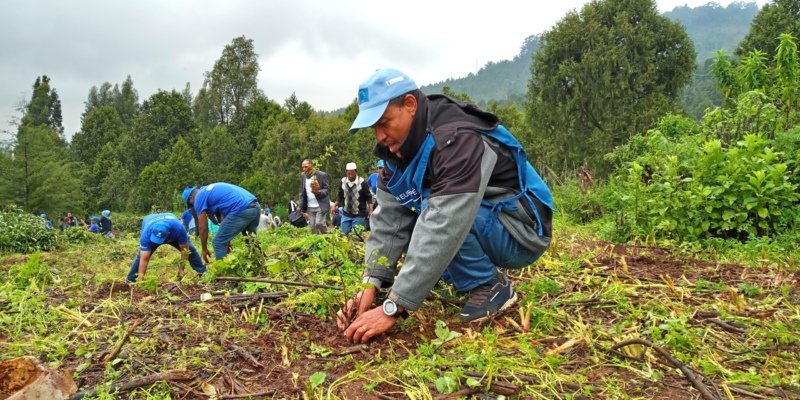
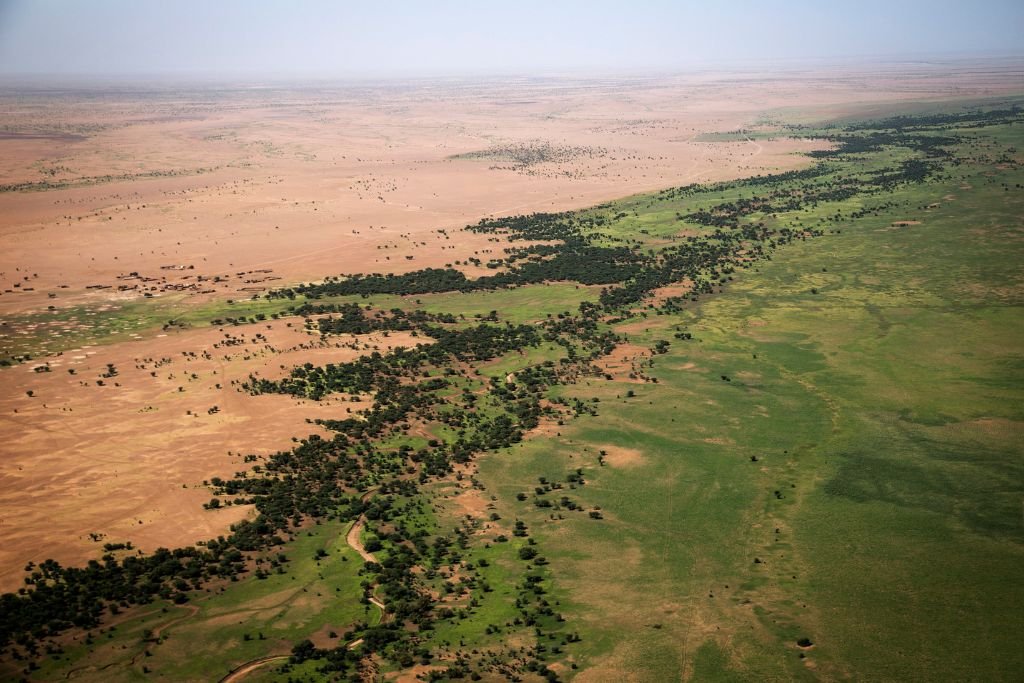
The Great Green Wall is one of the world's largest tree-planting projects
Launched in 2007, the project is an ambitious effort to restore degraded land and slow the spread of the Sahara Desert across Africa
Ethiopia has planted over 40 billion seedling since
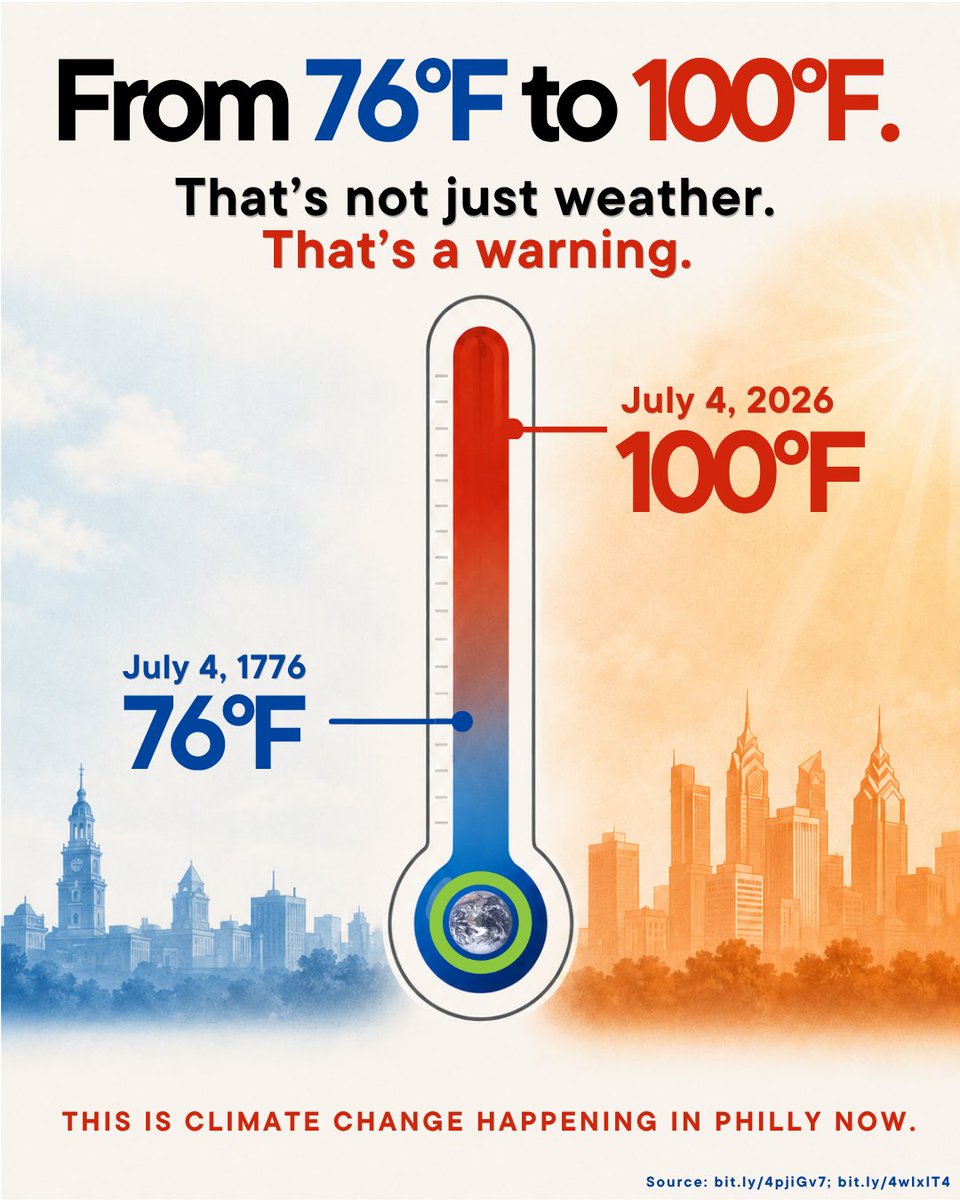
Here’s a little Fourth of July climate tea 🐸🍵 for you.
Thomas Jefferson kept detailed weather records throughout much of his life, recording thousands of observations over decades.
On July 4, 1776, he recorded the temperature in Philadelphia at 76°F at 1 PM.
This July 4, Philadelphia is forecast to hit 100°F, with dangerous humidity making it feel even hotter and unbearable.
That’s not just a shift in the forecast. That’s the climate crisis showing up in real time.
And it’s extremely uncomfortable. For our bodies, communities, and our planet!
Stay cool. Check on your people. And remember: Extreme heat is fossil fuel pollution in action in our daily lives. And freedom means we can do something about it.
This is like losing part of your soul:
'In the last 50 years, Britain has lost an astonishing 73 million wild birds from its landscape, according to the British Trust for Ornithology (BTO).
'“People engaging in nature today are going to think the numbers they are seeing are normal, particularly children. But if you go back 50 years, they would have been able to experience a much richer environment.”'
https://t.co/xEjdU3Oi4C
If we reach 1.5°C, this is what is going to happen:
‼️Every fraction of a degree matters—beyond 1.5°C, the risks and damages from extreme weather, sea-level rise, and biodiversity loss increase dramatically.
No time to wait. #ActOnClimate#climate#energy#renewables
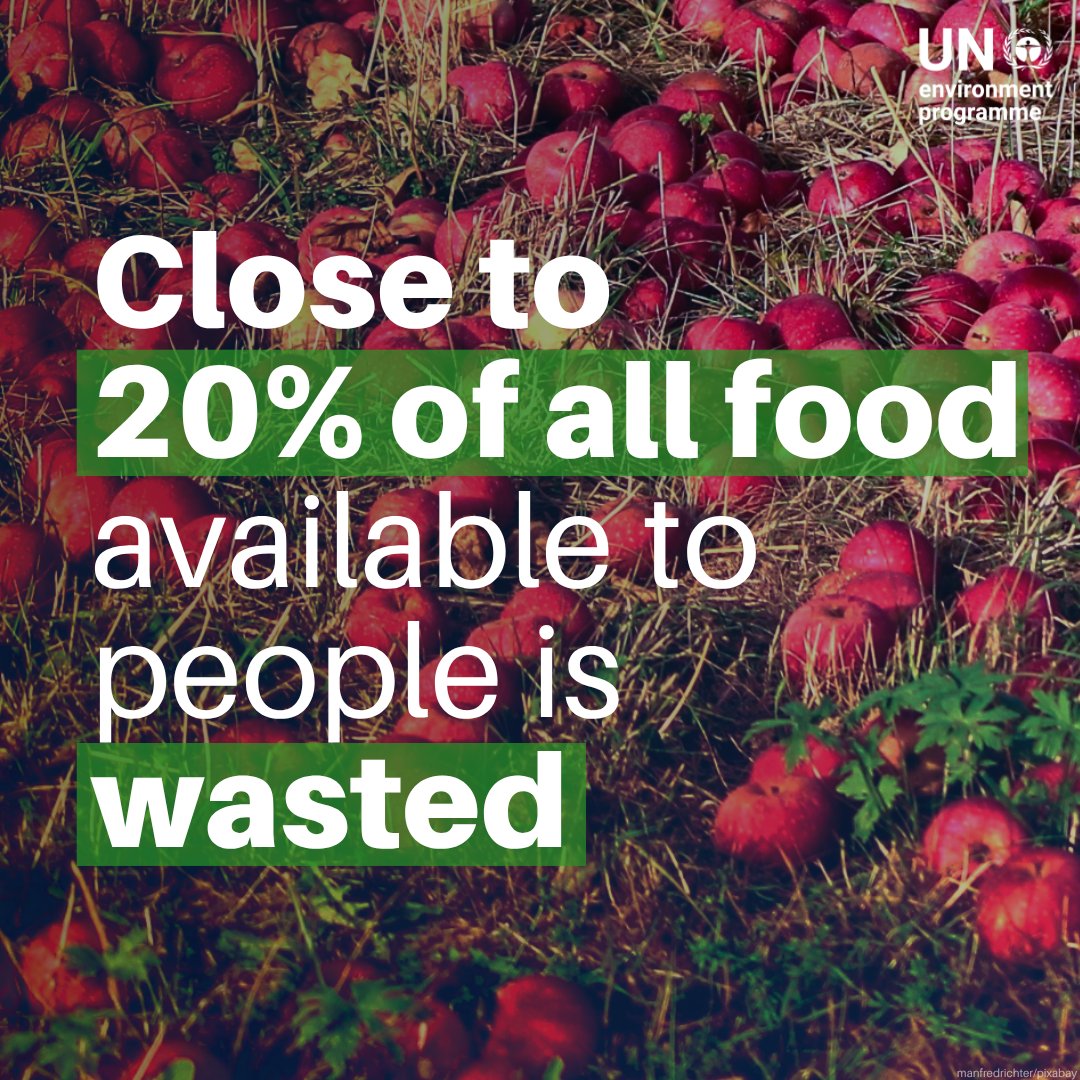
As a whole, humans throw away more than 1 billion tonnes of food every year. This is a tremendous waste of resources and a major driver of climate change.
But there is plenty that can be done to ensure that food ends up nourishing rather than polluting.
Seven ways to cut food waste: https://t.co/gm9mnUImog
Swiss farmers planted flowers between their crops and watched pest damage drop by over half. The UK is now running the same trial across 15 farms. The reason this works is embarrassingly simple.
A Swiss study on winter wheat found that fields with wildflower strips had 40 to 53% fewer leaf beetle pests than fields without. Crop damage dropped 61%.
The mechanism is simple. Wildflowers feed hoverflies, lacewings, parasitic wasps, ladybugs, and ground beetles. Those insects eat the aphids, beetle larvae, and caterpillars that farmers would otherwise spray for. A few meters of wildflowers hosts an unpaid pest control crew that would jump at the chance to whoop some aphid ass.
In apple orchards where no insecticides had been used for five years, plots with wildflower alleyways had 9.2% damaged fruit. Control plots without flowers had 32.5%.
The UK is now running a five-year trial across 15 farms placing 6-meter flower strips through the middle of fields, not just at the edges, because the beneficial insects can't reach the center of a large field otherwise.
This works the same way in a backyard vegetable garden as it does on a commercial farm. Plant native flowering species near your tomatoes, beans, and squash. The pests still show up, but the predators show up too.
Study doi: 20151369