Founder @LLEA_AI · AI email for Shopify stores that only reaches shoppers who showed intent. Fewer sends, more sales. Building in public from Bangalore.
I'm Riyaz, founder of @LLEA_AI. We write and send email for Shopify stores, but only to shoppers who've shown intent: viewed something twice, left a cart, waited for a restock. Everyone else is left alone.
Same store, same two months.
Its browse-abandonment flow emailed 6,878 shoppers. We emailed 633. Revenue was almost the same.
About 11x more revenue per recipient. The difference wasn't the copy. It was who got the email.
Most back-in-stock alerts go to everyone who ever clicked "notify me", all at once.
Better: only shoppers still showing interest, filtered by the size they buy. Same restock, fewer emails, sent to the people still likely to buy.
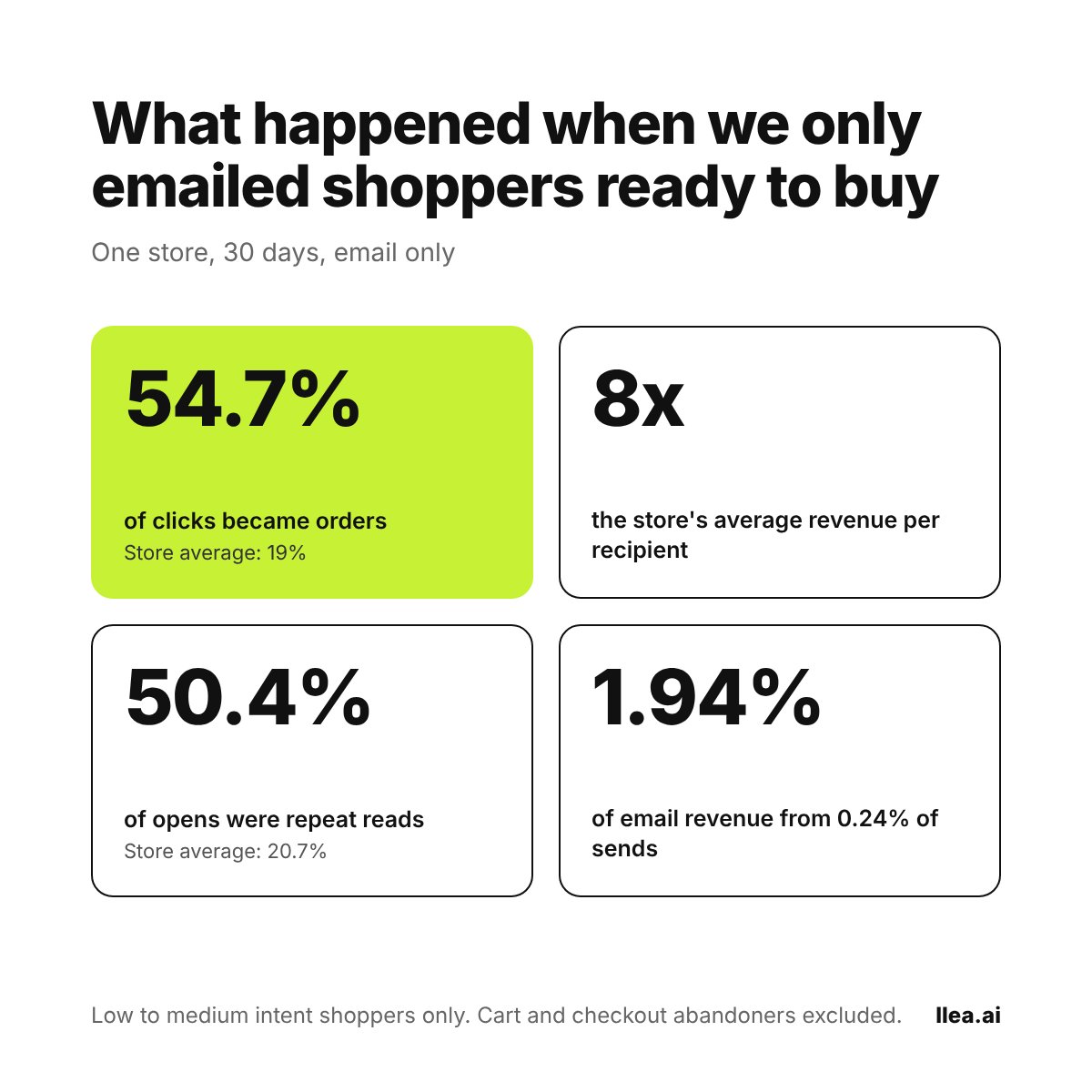
One store, 30 days, emailing only shoppers who showed intent (cart and checkout abandoners excluded):
54.7% of clicks became orders vs 19%
8x revenue per recipient
1.94% of email revenue from 0.24% of sends
That's the baseline.
@copyhackers Same thing shows up in email. Welcome flows that open with the founder story lose to ones that open with the problem the shopper was browsing for. What they viewed usually tells you what that problem is.
@EcomVictor Pop-up conversion is the easy number to sell. The one that matters is how many of those signups ever buy. A form that converts lower but brings in people who actually shop beats a giveaway magnet.
@retentiongoat Agree. RFM tells you who to focus on. I'd add recency of browsing, not just buying: a lapsed buyer who was back on the site this week is a very different winback than one who has gone quiet everywhere.
@iamnickyates The 7:09 AM timestamp is too real. The quiet damage is in the flows: welcome and cart emails still promising the old offer for days after. Do you keep a checklist for that, or just hope?
@maxwellcopy Big credit to the team for being ready to carry it. The risk when email has to pick up slack is pushing more sends to everyone. Did you lean on more campaigns, or tighten who gets them?
@markdmei The revenue per recipient line is the real story: $0.51 vs $3.66. One clear ask also means the click comes from someone who wanted that exact thing. Did the 2 button version get fewer clicks overall, or just better ones?
An early bet at llea: we built it to send fewer emails.
One weekly limit per shopper across everything, 2 by default. Emails only go out when a shopper's behaviour says they're close.
Smaller send reports. More revenue per email.
@eliweisss@mobyai@triplewhale@aryehMaxx@AY_Orbach Benchmarks help most when they're cut the way you'd judge your own: email revenue per recipient by flow vs campaign, not one blended "email % of revenue". The blended number hides whether the flows or the blasts are doing the work.
@andrew_jennings Paying Klarna twice for one order is the part brands will feel. The defence looks the same as with Amazon: get the buyer's email at checkout and make order two come direct. Do you think agents will let brands collect that first-party data at all?
@copyhackers The review step works for email too. The words customers use in reviews make better subject lines than anything brainstormed, especially in cart and browse emails where they're still deciding. Do you pull from 5-star reviews or the 3-star ones?
@markdmei Credit where due, killing the open-rate winner is the call most teams won't make. Hype lines pull curious openers, plain ones pull people who actually want the drop. Do you see the same gap on flow emails, or mostly on campaigns?
The metric I watch before open rate: what happens after the click.
One store, 30 days: 54.7% of clicks on our emails became orders. Store average: 19%.
Opens say the subject line worked. Click-to-order says the email reached someone ready.
@maxwellcopy Credit where due, "handpicked" works best when it's true. Send it to people who viewed or carted recently and the exclusivity is real. Send it to the whole list and someone screenshots it next to a friend's copy. Do you see brands actually segment these?
@retentiongoat The Plinko pop-up point is the one I'd underline. 26% sign-ups means little if most never buy, and they quietly drag down every send's numbers. Do you judge pop-ups on sign-up rate or on revenue per subscriber 60 days out?
@markdmei Credit where due, "you paid Meta for this customer and then ghosted them" is the line. I'd add: time the second-order email to when buyers of that product usually come back, not a fixed day 30. Do you set those windows per product?
@copyhackers The Tastemaker line rings true for email too. AI can write the cart email in seconds. Deciding who should get it, and who is better left alone this week, is still the judgment call. Do you see writers getting hired for that part yet?
@ecomchasedimond Credit where due, testing the pair against the single with the offer held flat is the clean way to read it. I'd also split by what they viewed before signing up. Someone who looked at both may want the pair, someone who only viewed the cleanser may not. Seen that hold up?