A Persian scholar finished a single math book in 9th century Baghdad that quietly became the foundation for every line of code running on Earth today.
I started reading about him at midnight and could not believe how many things in my daily life trace back to one man.
His name was Muhammad ibn Musa al-Khwarizmi. The book is called The Compendious Book on Calculation by Completion and Balancing.
Every time you say the word algebra, you are saying his book title. Every time someone says the word algorithm, they are saying his name. Both English words come from him. Both are Latin transliterations of Arabic and of his own identity. The man did not just contribute to mathematics. He named it.
Here is the part almost nobody tells you.
Al-Khwarizmi was born around 780 CE in Khwarazm, in what is now Uzbekistan. He moved to Baghdad and worked at a research institution called the House of Wisdom, which during the Islamic Golden Age was the single most important center of learning on the planet. The caliph al-Mamun hired the best mathematicians, astronomers, and philosophers from across three continents and put them in one building with one job. Translate, study, and produce new knowledge.
Al-Khwarizmi finished his book on algebra around 820 CE. The Arabic title contained the word al-jabr, which referred to one of the two operations he used to solve equations. When the book was translated into Latin in the 12th century, the Latin world did not have a word for what he had built. So they kept his Arabic word. Al-jabr became algebra. The discipline was named after a single Arabic word in the title of a single book by a single man.
The deeper insight is what he actually changed about how humans think.
Before al-Khwarizmi, mathematical problems were solved geometrically. You drew shapes. You measured them. You compared areas. The Greeks had built an entire mathematical tradition on visual proofs and physical constructions. It was beautiful and limited. You could not solve a problem you could not draw.
Al-Khwarizmi did something nobody had done before him at this scale. He said you could solve any problem using abstract symbols and rules. You did not need a shape. You needed a procedure. You moved terms across the equation. You cancelled like terms on both sides. You isolated the unknown. He invented the idea that mathematics is a manipulation of symbols according to rules, not a study of physical figures.
That single shift made everything that came afterward possible. Calculus. Differential equations. Linear algebra. Quantum mechanics. None of it works if math is locked inside geometry. He pulled it out.
The second thing he did is the one that changed how the world counted forever. He took the Hindu numeral system from Indian mathematics, refined it, and wrote a book introducing it to the Arab world. That system included the concept of zero as a placeholder, and a positional notation where the value of a digit depends on its location. Roman numerals could not do complex calculation. Hindu-Arabic numerals could.
When his book on numerals was translated into Latin as Algoritmi de numero Indorum, the word Algoritmi was just the Latin spelling of his own name. Europeans started calling the new method "doing algorism," then "running an algorithm." The word for the most important concept in computer science is literally his name in Latin.
The third thing he did is the part that should haunt anyone who works in tech.
His method of solving problems was systematic. Step one, do this. Step two, check that. Step three, if condition A, then do X, otherwise do Y. He wrote down procedures that could be followed by anyone, anywhere, who knew how to read. The procedure did not depend on intuition or genius. It worked because the steps worked.
That is exactly what an algorithm is. A finite, deterministic procedure for solving a problem. He did not just give us the word. He gave us the entire concept of programming a thousand years before there was anything to program.
When Alan Turing built the first abstract model of computation in 1936, when John von Neumann designed the first stored-program computer in 1945, when every engineer at Google, OpenAI, Anthropic, and DeepMind writes code in 2026, they are working in a paradigm that started with one man in Baghdad twelve centuries ago.
The strangest part is what happens when you walk into any tech office in San Francisco or Bangalore or Lahore today. Engineers say the words algebra and algorithm hundreds of times a day. They do not know whose name they are saying. Almost nobody can spell al-Khwarizmi correctly on the first try.
His original Arabic manuscript is preserved at Oxford. His book on Hindu numerals survives only in Latin translation. The Latin version was the textbook that taught medieval Europe how to count.
The man who built the foundation of the AI revolution did not live to see a calculator. He died around 850 CE, a thousand years before the first electric current was sent through a wire. The civilization he built mathematics for collapsed. The library he wrote in burned. His own grave is unmarked.
But every algorithm running on every machine on Earth right now still answers to his name.
When simulation becomes the norm, it weakens the human capacity for discernment. As a result, our social bonds close in upon themselves, forming self-referential circuits that no longer expose us to reality. We thus come to live within bubbles, impermeable to one another. Feeling threatened by anyone who is different, we grow unaccustomed to encounter and dialogue. In this way, polarization, conflict, fear and violence spread. What is at stake is not merely the risk of error, but a transformation in our very relationship with truth.
Thanks @genspect Rebellion against parental ideals is often a necessary part of development. It is one of the ways a young person comes to feel they have a mind of their own, rather than simply inheriting the values, tastes, and identifications of those around them.
Traditionally, this might take relatively symbolic forms: adopting different political views, rejecting a parent’s interests, or aligning with a contrasting peer culture. These are shifts in position, identity, and meaning, but they leave the body itself intact.
The difficulty arises when this developmental impulse toward differentiation becomes organised around the body as the site of change. In such cases, the move is no longer simply away from parental identification, but toward a concrete alteration of the self. The medical pathway can then become a way of giving physical form to what is, at root, a psychological need for separation and distinctness.
What might once have been worked through symbolically risks being enacted somatically, with far more far-reaching and irreversible consequences. @Transgendertrd@CanSG_org@segm_ebm
There can never be a helpful depression treatment algorithm because depression is not a single condition.
Depression is most helpfully understood as the psychic equivalent of fever. Fever is a NON-SPECIFIC physiological response to an enormous range of underlying conditions, from the common cold to Ebola.
Likewise, depression is a NON-SPECIFIC psychological response to an enormous range of underlying causes which may be psychological, social, biological, or a complex interaction between them.
In other words, depression is an effect, not a cause. The DSM diagnosis is merely descriptive, not explanatory—and not as basis for treatment decisions. Algorithms that incorrectly assume the diagnosis “depression” defines the problem will always lead to poor care.
P.S. love your videos
Hari ini, masih adakah spiritualitas atau rasa kebertuhanan? Jika masih, apa korelasi dan artinya bagi praktik pengurusan bangsa dan negara?
Lebih-lebih bagi para pengurus negara, spiritualitas bukan saja relevan, tapi punya harkat. Mengapa? Karena adanya mereka semata berkat restu, amanah, dan ongkos dari Rakyat! Vox populi vox Dei.
Hatta menelanjanginya melalui analogi tajam: spiritualitas gincu vs spiritualitas garam.
Ijinkan saya berbagi kerisauan dan pemikiran lewat tulisan ini. Selamat membaca…
https://t.co/xzIxugn4Hq
Fascinating article by Columbia University sociologist Musa al-Gharbi:
"The well-being gap between liberals and conservatives is one of the most robust patterns in social science research."
Read here:
https://t.co/pQmIaMR7eL
Saya ingin berbagi kabar baik, namun jg kritis, tentang peluang mengoptimalkan produksi pangan secara regeneratif. Sayangnya, pendekatan seperti ini luput dari perhatian, minim dukungan pemerintah, dan kalah oleh arus besar kebijakan yang masih bertumpu pada input kimia.
Beberapa waktu lalu saya menuliskan hasil riset Prof. Suryo Wiyono, ahli proteksi tanaman sekaligus Dekan Fakultas Pertanian IPB. Saya sudah lama mengenalnya. Sekitar sepuluh tahun lalu, saya bertemu dia dan timnya di Pantura, sedang membuka “klinik tanaman” untuk petani. Ia keliling, memberi konsultasi gratis, sebelum menjadi profesor. Pendekatannya sederhana: memahami tanaman sebagai sistem hidup.
Kini pendekatan itu berkembang dalam sistem pertanian biointensif.
Di tengah krisis hari ini, temuan ini sangat relevan. Negara menggelontorkan lebih dari Rp30 triliun subsidi pupuk setiap tahun, tapi ketergantungan pada pupuk kimia dan pestisida justru merusak tanah, memicu resistensi hama, dan meningkatkan biaya produksi. Di Pantura, petani pasi bahkan bisa menyemprot pestisida tiap dua minggu. Dampaknya bukan hanya ke lingkungan, tapi juga kesehatan, residu kimia dalam pangan yang sering luput dari perhatian.
Di sisi lain, krisis energi dan gangguan pasok pupuk global membuat sistem ini makin rapuh.
Biointensif yang dikembangkan Suryo menawarkan jalan lain. Secara teknis, pendekatannya sederhana tapi mendasar: memulihkan tanah dengan bahan organik, mengurangi pupuk kimia secara bertahap, melakukan rotasi dan diversifikasi tanaman, serta mengendalikan hama berbasis ekologi (bukan semata pestisida). Input diberikan presisi, sesuai kebutuhan tanaman.
Hasilnya: penggunaan pupuk dan pestisida bisa ditekan signifikan, biaya turun, tanah membaik, dan produksi tetap tinggi, bahkan lebih stabil.
Artinya, krisis pupuk dan energi ini bukan sekadar soal pasokan, tapi soal pilihan sistem produksi.
Masalahnya kini bukan teknis, tapi politik kebijakan. Sejauh ini minim dukungan dan berhenti di eksperimen terbatas bekerjasama dengan sejumlah petani. Pemerintah nyaris tak melirik, inovasi yg buktinya sudah teruji dan dipublikasikan sebagian di forum ilmiah.
Jadi, mengapa negara nggak mau menggeser subsidi dari input kimia ke sistem pertanian yang lebih sehat? Atau tetap mempertahankan struktur lama yang mahal dan tidak berkelanjutan?
Silakan baca laporan lengkapnya di: https://t.co/wwF5L4h1U3
I done been tellin’ y’all in 2013 the DSM expanded the definition beyond its usual concept creep to the point many well-understood mood disorders and personality styles are caught under its umbrella. Actual autism is a neurodevelopmental disorder of relating and communicating.
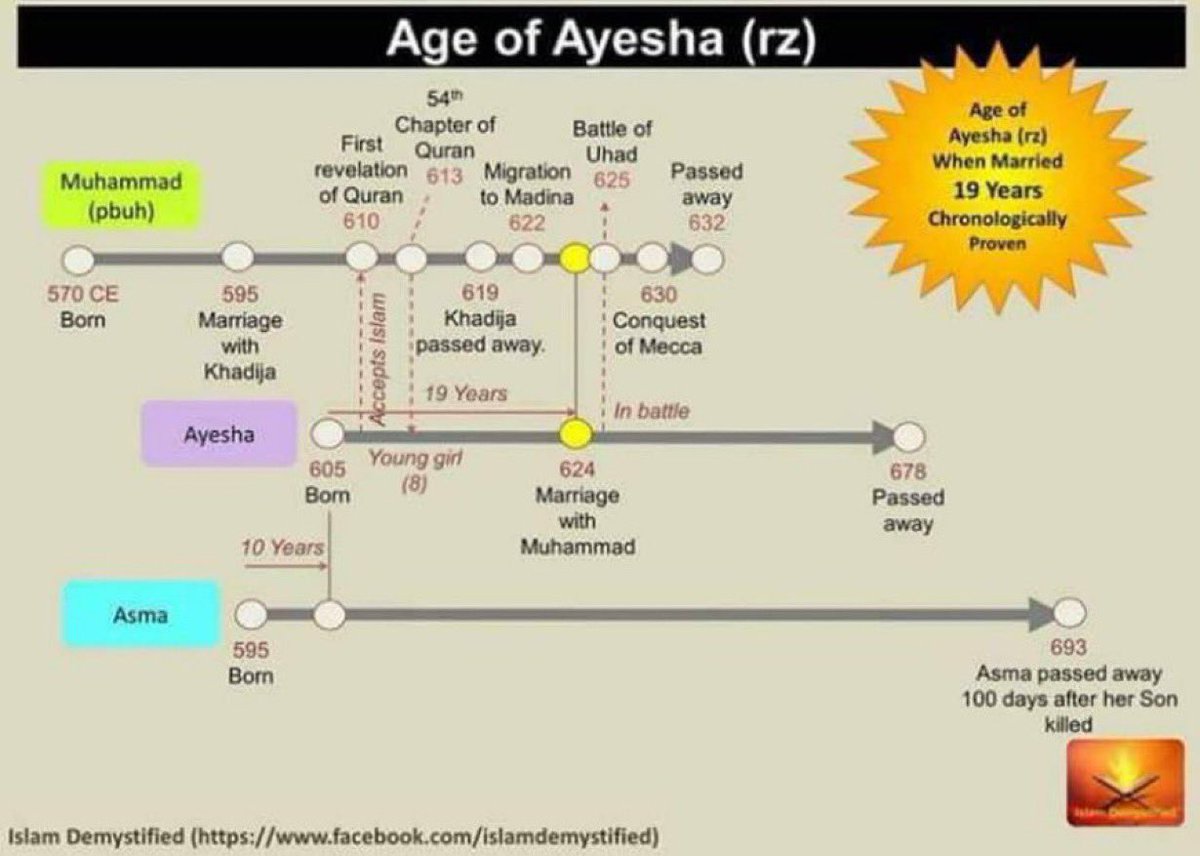
Since the Epstein class is insulting the holy Prophet and his wife Aisha in order to hide their crimes, I decided to write this. Historians list Aisha among the first two dozen people to convert to Islam, which would have required her to be at least several years old at the start of the Prophet's mission. The overwhelming consensus among Shia scholars is that she was 18-19 when she married. This is the most frequently cited range, often calculated using the age of her older sister, Asma, who was 10 years older and died at 100 years old.
Much of Europe's scientific 'renaissance' was built on knowledge from Muslim, Indian, and Chinese civilizations. They preserved, innovated, and excelled while Europe was in the Dark Ages.
So why do textbooks still frame Europe as the sole cradle of modern science?
@xkicau@wattpadmenfess_ Halooo, Caroline.
Apaa? Udah ditarik dari KK? Aku baru tau lho, dah lama ga buka KK jadi beneran gatau. Trus maaf karena aku bacanya juga di KK bbrp tahun lalu jadi aku gapunya novelnya buat di preloved. Tp barusan aku nemu ebooknya ini di KBM, bisa dicek
https://t.co/nWJMerzGLV
Here Darius the Great ruled an empire that controlled roughly 44% of the world’s population at its peak.
Persepolis — 518 BC and still breathtaking.
The Achaemenid Empire’s unmatched scale.
One of humanity’s greatest architectural legacies.
Iran.
If the American empire collapsed tomorrow, many of its citizens would not first feel guilt.
They would feel disorientation.
Because empire has not only given them material illusions.
It has given them psychological furniture.
A sense of superiority.
A sense of innocence.
A sense of protected distance from the rest of humanity.
A sense that violence is tragic when done to them and strategic when done by them.
That is why so many react with rage when the mask slips.
Because the truth does not merely accuse their government.
It destabilizes their identity.
And that identity has been carefully built on layers of comfort, confusion, and fear.
Surat yang ditulis siswa SMK ini jernih dan kalem, tapi justru menghantam tepat sasaran.
Ia menulis kepada Presiden Prabowo Subianto bukan untuk mengeluh, melainkan untuk mengoreksi arah. Ia melihat sesuatu yang justru luput dilihat Prabowo: di tengah program besar seperti Makan Bergizi Gratis, guru, yang menjadi fondasi pendidikan, masih belum sejahtera. Dan ia berani mengatakan itu, dengan jernih.
Yang membuat surat ini kuat bukan hanya kritiknya, tetapi sikapnya. Ia bahkan rela menolak haknya sendiri demi dialihkan untuk guru. Ini posisi moral. Ia menunjukkan bahwa kebijakan publik seharusnya tidak berhenti pada “terlihat baik”, tapi benar-benar tepat sasaran.
Di sini, pertanyaan penting muncul: mengapa seorang siswa harus sampai mengorbankan haknya untuk menutup kekurangan sistem? Bukankah negara seharusnya mampu memastikan keduanya berjalan gizi siswa terpenuhi, dan guru hidup layak?
Surat ini membuka celah dalam logika pembangunan kita: banyak program, tapi sering salah prioritas. Karena itu, suara seperti ini perlu dijaga, bukan dicurigai. Ini adalah bentuk kewargaan yang sehat, kritik yang lahir dari pengalaman, bukan kepentingan.
Kita patut mengapresiasi keberanian pelajar ini. Dan lebih dari itu, kita perlu menyatakan dukungan: semoga ia tidak mengalami intimidasi dalam bentuk apa pun karena menyuarakan kebenaran. Ia juga menyampaikan sikap moralnya secara baik-baik.
Sebab ketika suara jujur seperti ini ditekan, yang hilang bukan sekadar kritik tetapi masa depan anak-anak yang berani berpikir.
Ada yang ngomong keq gini...kenapa hasil panen yang terbuang tidak dijadikan kompos saja?
Jangan buru-buru menyederhanakan masalah petani, kalau belum memahami beban yang mereka hadapi.
Pertanyaan ini sering terdengar sederhana,tapi realitas di lapangan tidak sesederhana itu.
Membuat kompos bukan sekadar menumpuk lalu jadi.
Ada proses panjang yang harus dilalui, mulai dari pencacahan, pengaturan kadar air, pembalikan rutin, hingga menunggu waktu dekomposisi yang tidak sebentar.
Artinya, ada tambahan tenaga, waktu, dan biaya.
Dalam kondisi normal saja, itu sudah menjadi pekerjaan ekstra.
Apalagi saat petani sedang menghadapi :
harga panen jatuh
kelebihan produksi
atau hasil tidak terserap pasar
Di situ, posisi petani bukan sedang punya sumber daya lebih, justru sedang tertekan secara ekonomi.
Belum lagi soal keterbatasan lahan.
Tidak semua petani punya ruang khusus untuk mengelola kompos dalam jumlah besar.
Jika dipaksakan, justru bisa menimbulkan masalah baru : bau, hama, hingga gangguan lingkungan sekitar.
Dan yang paling penting adalah...
kompos bukan solusi instan.
Sementara kebutuhan petani,biaya hidup, cicilan, modal tanam berikutnya tidak bisa menunggu.
Jadi ketika ada hasil panen yang akhirnya dibuang, itu bukan karena petani tidak paham pemanfaatan,
melainkan karena sistem yang belum memberi ruang bagi mereka untuk mengelola hasil secara optimal.
Ini bukan sekadar persoalan teknis,
tapi persoalan ekosistem pertanian itu sendiri.
Sampai di sini semoga teman² paham...🙏