NEW: Our latest report shows how Canada can grow its EV charging network for a net zero future—expanding it to meet the federal government’s commitment of 90% EV market share by 2040.⚡️
🧵⬇️ on the main findings.
https://t.co/lamLKOukfH
BREAKING NEWS: Youppi! has signed an executive order to rename Washington Nationals as “Montreal Expos,” a change the mascot says would take effect immediately
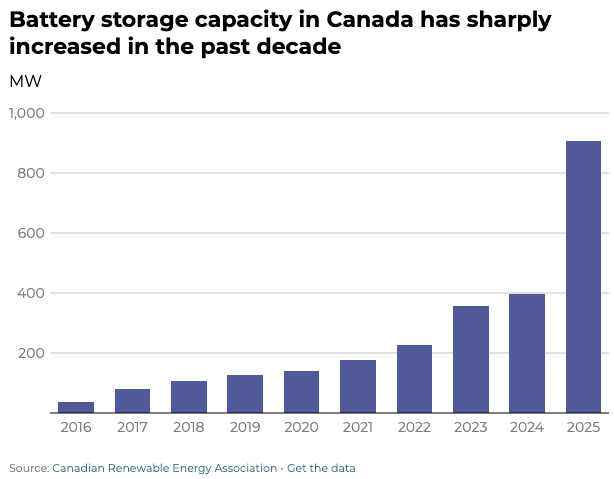
Our latest analysis shows why utility-scale batteries are starting to take off in Canada, making for a cleaner, cheaper, more flexible power grid👇
https://t.co/TrkkCvS3Fs
Good morning with good news: EV sales surge in Europe & Australia in May!
Battery-only (BEV) Share
Norway 97.8%
Denmark 78.7%
Finland 47.7%
Sweden 41%
Netherlands 41%
Belgium 37%
France 29%
Switzerland 23%
Australia 19.9%
BEV Only Numbers!
https://t.co/lhxNJDdqmt
Canada’s MOU agreement with Alberta puts the country’s commitment to net zero emissions by 2050 firmly out of reach.
Read our full statement from @rjcsmith⬇️
https://t.co/iB2kcsd4MN
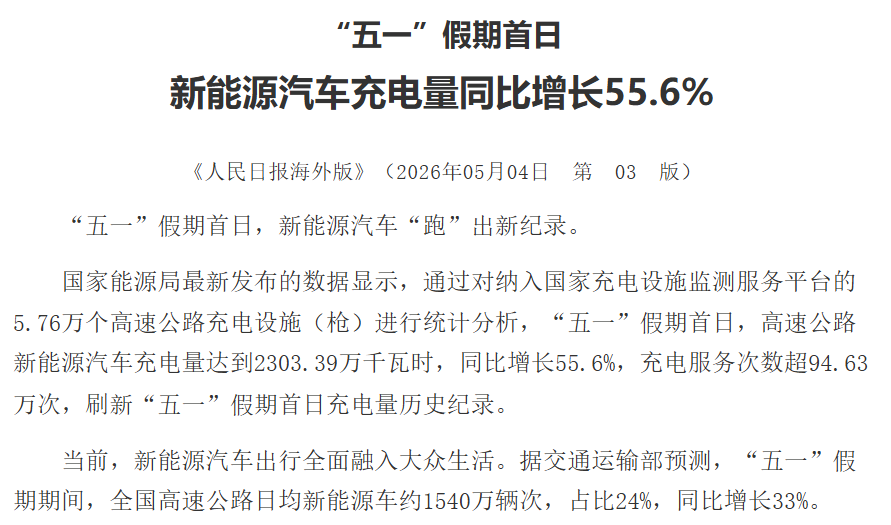
24% of trips on China's highways during the May 1 holiday were in EVs, while the share of EVs in all vehicles is 15%, highlighting how EVs are making a bigger dent in oil consumption than their share in the fleet. EV charging volumes along the highways were up 56% year on year.
Two noteworthy pieces of news today:
1) The penetration rate of new energy vehicles (NEVs) in China’s passenger vehicle market exceeded 60% for the first time in April 2026, setting a new historical record.
2) China exported more electric vehicles than traditional cars for the first time in April. In April, China exported 769,000 automobiles in total, with NEVs accounting for 52.7% of all exports.
https://t.co/SjSieTDg9X
We were thrilled to meet in person with Shianne McKay from @yourCIER this week in Winnipeg. We want to thank her and the CIER team for their long-standing partnership on the Indigenous Perspectives case studies program.
There’s a lot of fiction out there about industrial carbon pricing in Canada.
Get the facts in our latest op-ed from @rjcsmith.⬇️
https://t.co/u38Lpf2vlK
Big announcement that further underlines how critical it is that Canada makes its system of industrial carbon pricing more cohesive and effective ⬇️ https://t.co/KpixGyAgMK
The stakes are high and they are clear. The federal-AB MOU deal is make or break for Canada’s trajectory to net zero by 2050. My latest on the fact and fiction of industrial carbon pricing @ClimateInstit https://t.co/CUNk3IV3Od
The US Government (yes, the US Government) is projecting that solar, battery storage, and wind would account for 93% of all new utility-scale power generation capacity added to the grid this year
The US clean energy boom is unstoppable
Emissions from households—from personal transport to home heating—make up 20% of Canada’s emissions.
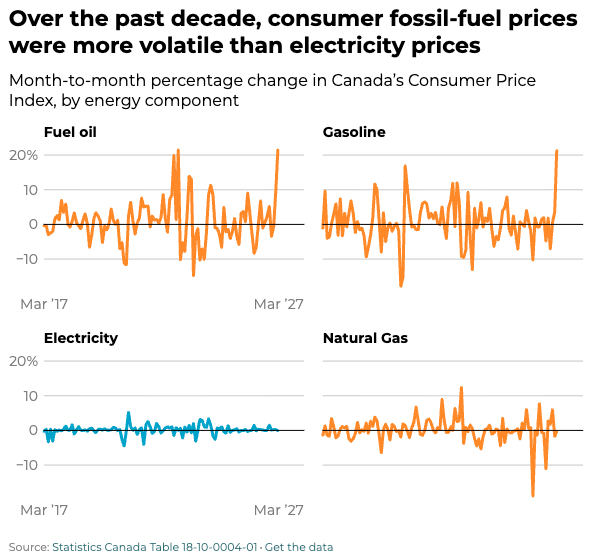
Fortunately, there’s a solution that can cut emissions and protect people from volatile fossil fuel costs: electrification.⚡️
Read our latest⬇️🧵
https://t.co/E62s9lN0JM
The rollout of solar, wind, nuclear, EVs, and heat pumps since 2019 has triggered a silent structural execution of the status quo:
>Wiped out gas demand equal to half the global LNG market
>Crushed more coal demand than what India uses in a year
>Avoided 35 Exajoules of fossil demand, or 7% of the entire global market
This isn't just growth. It's a terminal replacement. Just check-out multi-colored bar below showing "Decrease from clean technologies deployment" that literally pushes down the global emissions trajectory
The economics are settled. The replacement is structural. The electrification of everything is accelerating
Some of Canada’s top trading partners already have industrial carbon prices in line with $130/t in the 🇨🇦-Alberta MOU:
🇪🇺EU C$120
🇳🇴Norway C$120
🇨🇭Switzld C$119
🇬🇧UK C$85
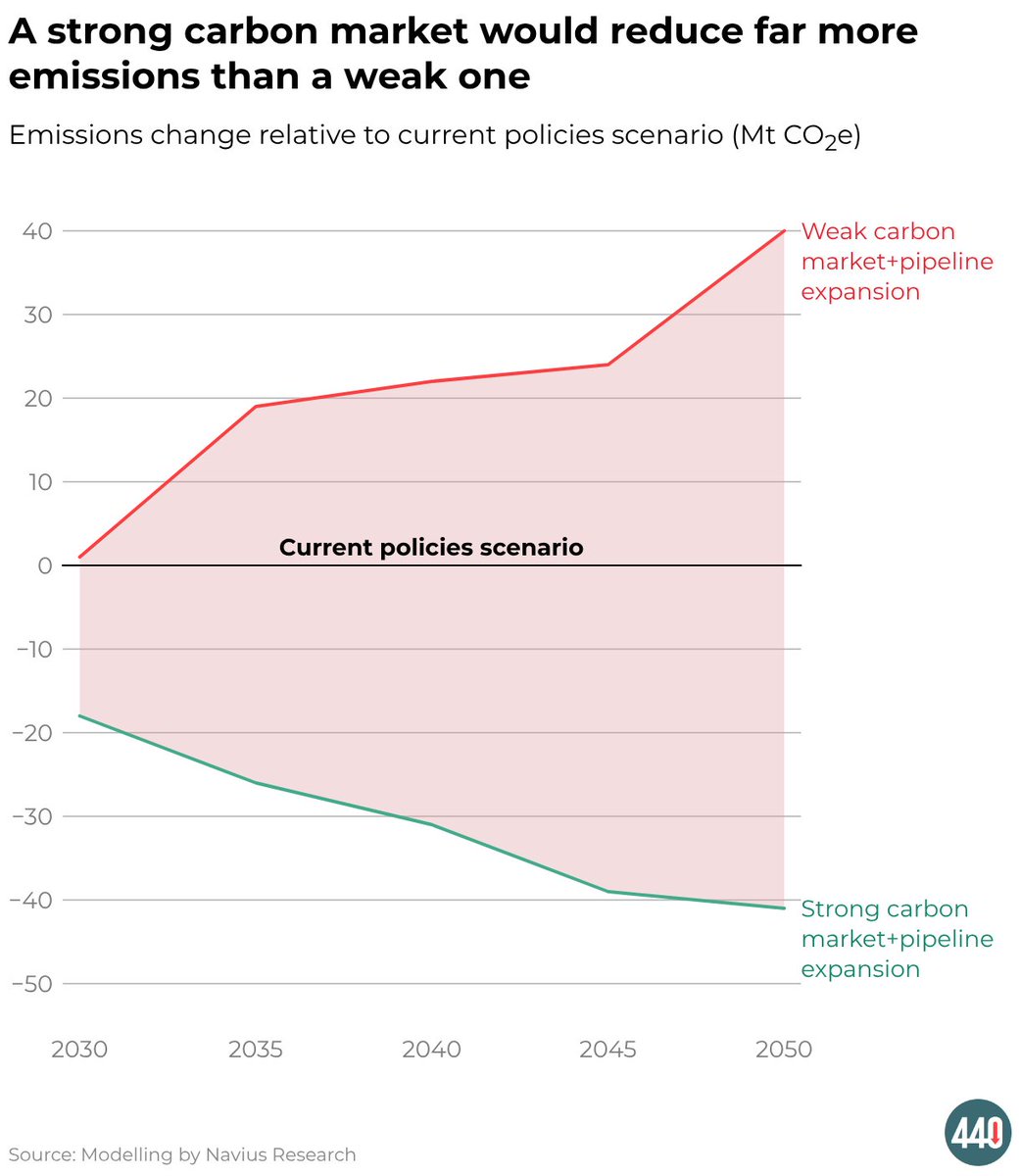
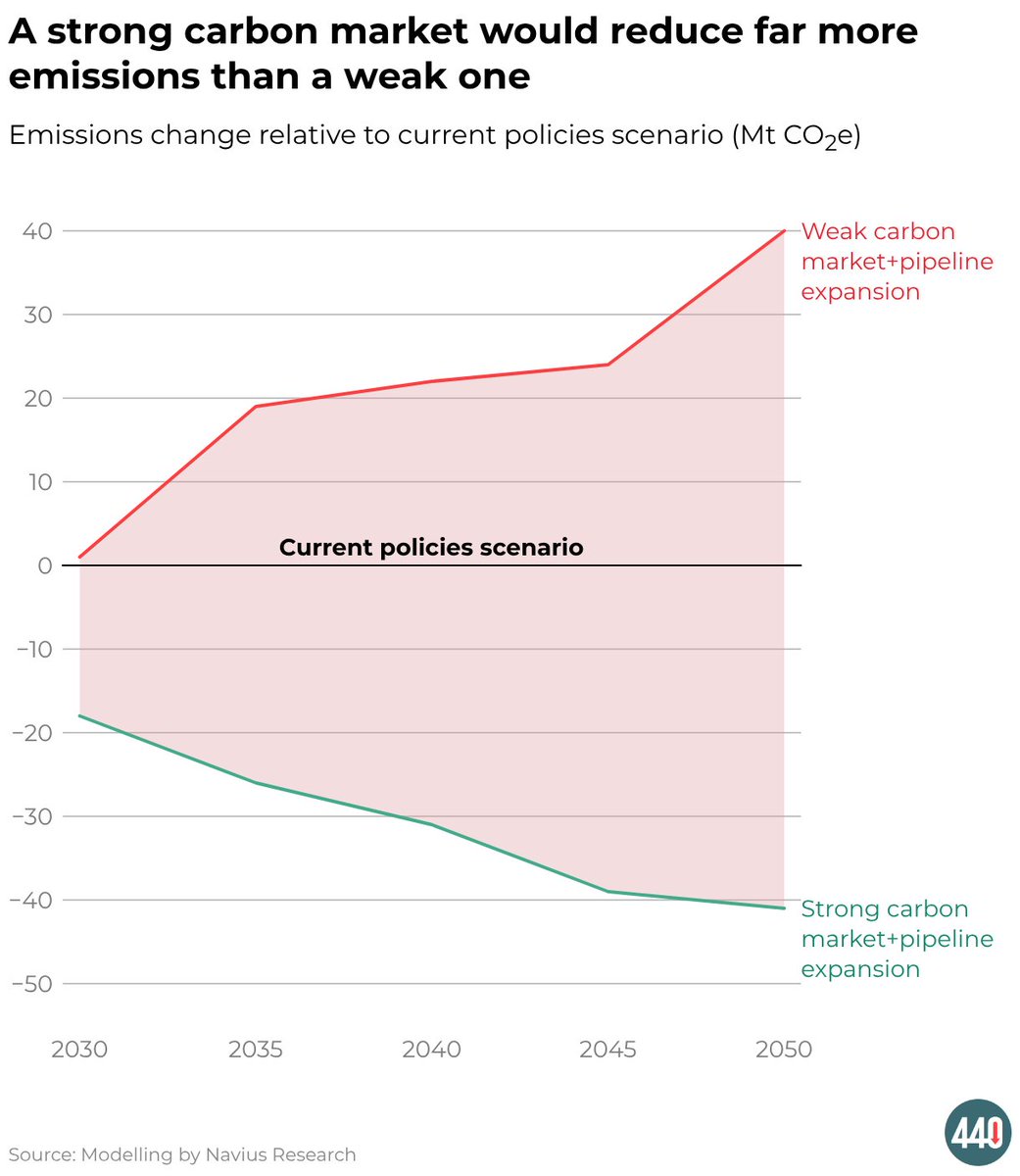
Our new analysis of the MOU shows strong carbon markets can drive big emissions cuts⬇️https://t.co/oOdLUJaX7c
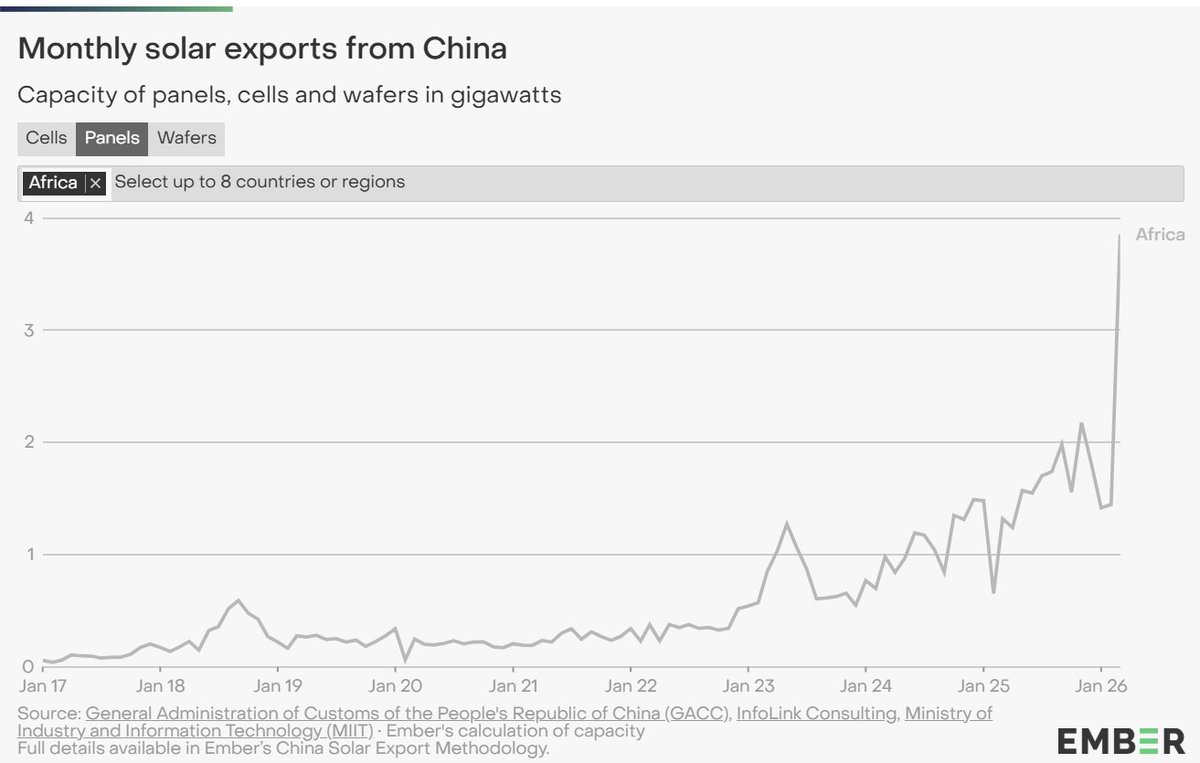
AFRICA SOLAR: wowsers, almost 4GW of panels in one month!
Yes, it was prior to the 9% China export rebate changes, so a bit of a rise was expected, but even still!
Records everywhere..
🧵
Our latest analysis shows that the emissions implications of the Canada–Alberta MOU will depend primarily on one key factor: how the industrial carbon market is updated.
https://t.co/oOdLUJaphE