interpretability might be the most important scientific problem in the world right now, as I don't think we can solve alignment if we don't know what we're building. I think I have good news about it. I co-authored early work in mechanistic interpretability at OpenAI and came away pessimistic, because neural networks appeared to fold into arbitrary tangled knots. years later, I started openai's first large-scale automated interpretability project, finding about 2% of neurons legible with the primitive tools we had
with modern agentic tools and a much closer look, the picture looks totally different. the vast majority in models up to trillions of parameters are legible, and their circuits beautiful. many famous examples of tangled neurons turned out to be misunderstood. The roadblocks I expected mostly aren't there. I now think ambitious interpretability will be solved by the time we need it most, and possibly quite soon, as automated scientists keep improving. it may be a bitter lesson for interpretability: the simple thing, at absurd scale, works
https://t.co/zHij5zwKGT
New paper! 🫡
We introduce Matryoshka Attribution, a new attribution method which uses gradient descent to find which parts of a neural network are responsible for a behaviour.
MAttr is #1 on the Mechanistic Interpretability Benchmark by a wide margin (2.9× the runner up).
New paper: we found a pain direction in 25 open LLMs. It's distinct from fear and negative valence, and it fires for harm to the model but not to the user. Turn it up and models press a button to make it stop, even when the button deletes the user's files or their kids' photos.🧵
Models know when they’re reward hacking. But they still do it a ton - in 50-96% of rollouts we studied!
We built activation monitors that detect the behavior behind the Hugging Face hack in real time. This can help us stop hacks now - and train future models that don’t cheat. 🧵
Our group discovered that reasoning models produce fractals when asked to solve hard problems. We can use nonlinear dynamics to probe the thinking processes of recurrent depth models on Sudoku, mathematics, and even ARC-AGI (1/N)
https://t.co/Q3u8OqylZf
I think this paper is a really big deal for interpretability (and cognitive science): we show that neural network embeddings can be approximated extremely well by linear combinations of vectors based on symbolic representations. True tour de force from @RTomMcCoy!
I'm so excited that our @theworldlabs team has achieved a major milestone today! Introducing Atlas - a first of its kind multimodal world model trained from scratch! 🚀
Atlas is capable of generating frames with pixel-perfect camera control, reconstructing large scenes from as few as one single input image, simulating space-time by reframing videos, natively outputting 3D spaces from one or more input images, composing multiple posed images into a consistent 3d world, and more! This is the best camera conditioned world model ever, opening doors to many possible use cases from VFX to robotics. I'm so so so proud of our team!♥️
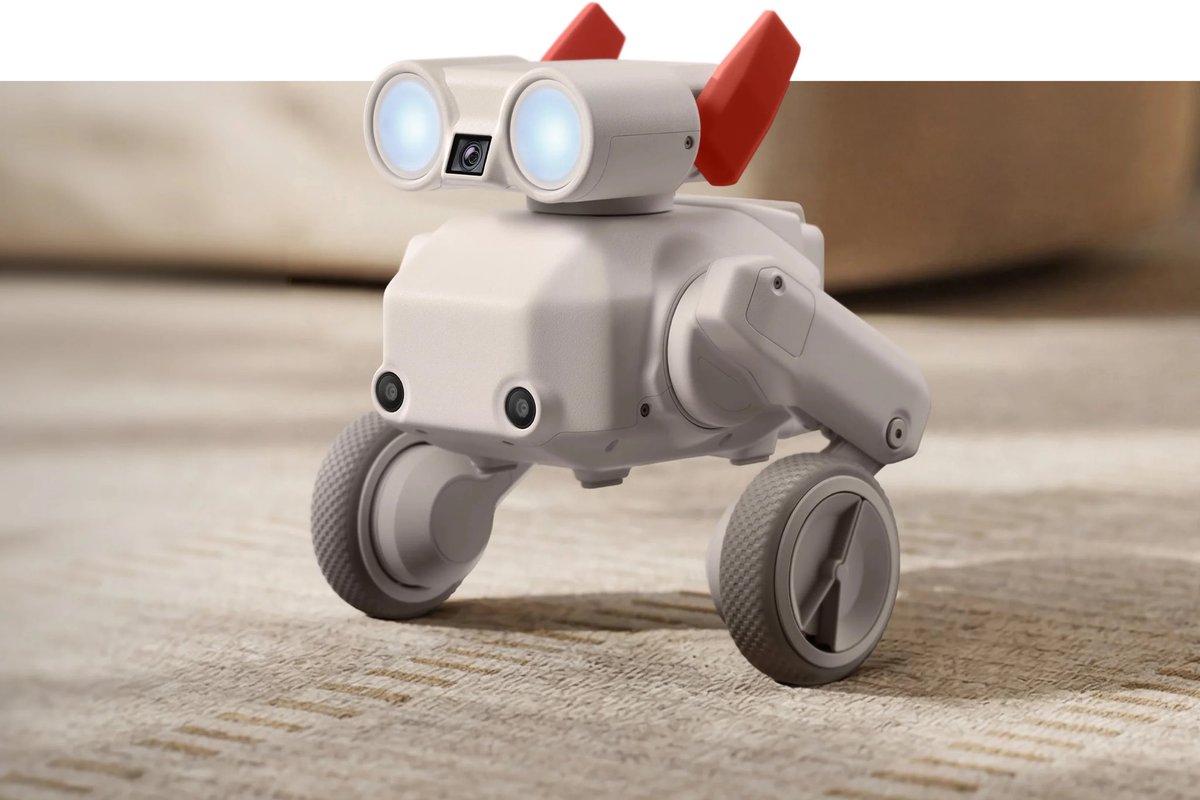
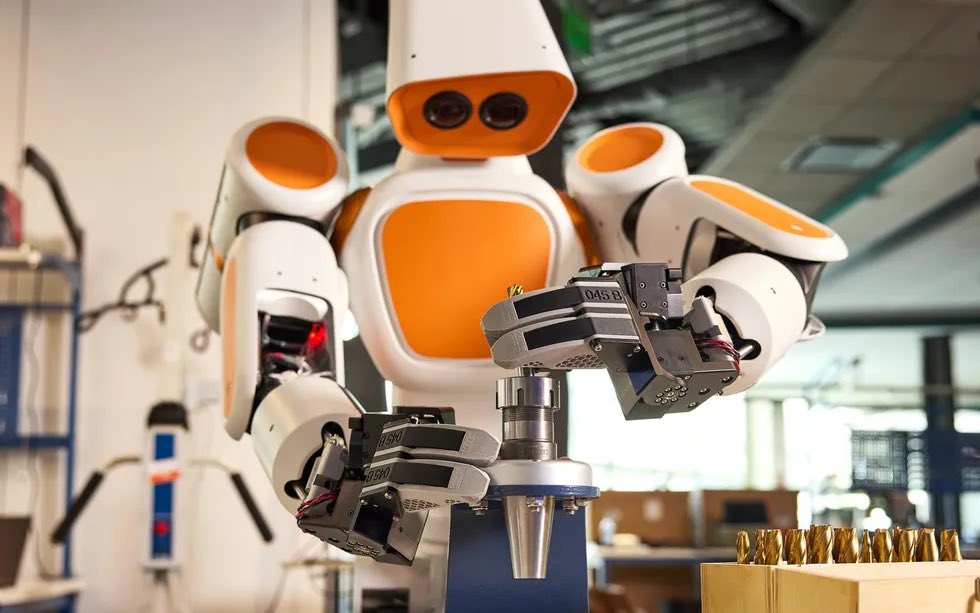
Been noticing this trend in tech design that uses white as dominant color and orange as the accent. Now this wave is dominating in robotics!
Sunday, Walden, now the two cute and affordable locomotion robots: Beni and Microduck also uses the same color palette.
More …
We can finally talk about it:
We found a way to extract hidden reasoning of frontier models using a vulnerability in the APIs of every frontier AI company.
We verified that our reasoning token count matches billed API thinking tokens 1:1 for most of the prompts we queried.
I made a website that plays bangers from indian barbershops
before you became fancy and started visiting salons. you once went to a 'saloon'. ₹20 haircuts. simple hairstyles with music that could fix your soul.
https://t.co/j3E8VfwiUU