Ken Feeley and I just published a paper in Biotropica, following up on predictions my colleagues and I made in 2008 regarding the effects of climate warming in the lowland tropics. Unfortunately, it looks like some of them are coming true.
Reaching deep: honeybees adapt their nectar extraction mechanisms to maintain feeding efficiency! Check out our data- and methods- rich paper on #mechanoethology and the importance of considering the actual behavior rather than accepting preconceptions!
https://t.co/Is3lVHxgnB
Extremely enjoyable and fruitful work with @rkcolwell, @tf_rangel, @Euastrum, @Salty_Sparrow, and Diego Sustaita! Stayed tuned for the typeset version which will be fully open access! In the meantime feel free to access this unformatted version here: https://t.co/yTG5ac6GfL
Hummingbirds may seem noble hovering fairies that trade pollination services for nectar, but more than 20 times, short-billed species evolved long toenails to cling to feed or pierce flowers to steal nectar, while long-billed species must hover to feed.
https://t.co/SNa3pA6m2E
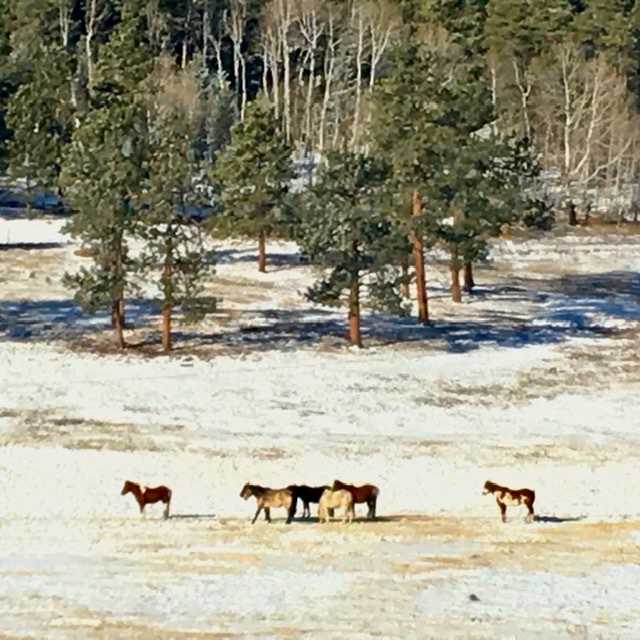
Equus caballus herd with a tail-wind. -8C with a 50 km west wind. The turn their butts to the wind and stand close. (Colorado 2700 m elev. sorry Chris, no birds yet today. )