Today is the anniversary of the most tragic mountain disaster in UK history
In November 1971 two groups of schoolchildren, both from Ainslie Park school in Edinburgh, set off separately from near the top of Cairn Gorm, aiming for Corrour bothy (hut) in the Lairig Ghru.
1/n
When Patricia Neal had a stroke in 1965, the hospital told her husband she should have one hour of therapy a day, because any more would tire her. Her husband was Roald Dahl. He gave her six, and changed how the world treats stroke.
She was 39, three months pregnant, and had won the Oscar for Best Actress the year before. Three blood vessels burst in her brain in one evening in Los Angeles. She was in a coma for three weeks. Variety ran her obituary.
She woke up paralysed down one side, half blind, and without language. She could not read, could not name her own children, and made up words for the ones she'd lost.
Dahl took her home to Buckinghamshire and asked the specialists what came next. An hour a day, they said, and patience. Most recovery was down to nature.
He asked what anyone would learn at school in an hour a day.
Then he went round the village. He drew up a rota of neighbours, none of them trained, and had them arrive at the house in shifts from nine in the morning, six days a week. They did picture cards, jigsaws, counting games, nursery rhymes, the newspaper. When Pat wept and refused, the next volunteer arrived anyway. Doctors warned him he would break her. She called him Roald the Rotten and hated him for a year.
Their daughter Lucy was born healthy that August. Within eighteen months Pat was giving speeches. In 1968 she made The Subject Was Roses and was nominated for another Oscar.
One of the neighbours, Valerie Eaton Griffith, wrote the method up as a short book. Families all over Britain started using it. The volunteer scheme that grew out of it became the Stroke Association, and long, hard, early rehabilitation is now what every stroke unit does.
It was the second time Dahl had done this. When his baby son's skull was shattered by a taxi in 1960 and the drainage tube kept clogging, he got a toymaker and a neurosurgeon into a room and came out with a better valve. It went into about 3,000 children.
He had no medical training of any kind. He just declined to accept that the people who did had finished thinking.
Northern Ireland draw in Hungary and top their Nations League group. Promoted to League A.
Starting line-up in age: 21 - 23, 20, 21, 28, 23 - 25, 24, 23, 23 - 22
Subs aged 20 and 22 played a part.
Well done, Michael O'Neill. Fantastic achievement.
No one talks about how growing up without enough money stays with you long after childhood.
Here's why you overspend, you feel guilty, or you fear losing it all if you were a financially aware child:
- Sanna Marin- FM of Finland:
"My personal opinion is that, at this stage, we gain nothing by talking to Putin, because he doesn't want peace. He is at war because he wants this war, and he wants Ukraine, and he wants other parts of Europe.
And if we convince ourselves that he acts with the same logic as we do, we are deceiving ourselves.”
............
I agree..
She is awesome as always☺️
The family of that young guard should be very proud of him. Hegseth never misses an opportunity to besmirch his office and should apologise immediately.
Windsor is one of the nicest places and when I walked out of my hotel to cross the road to the castle there were six homeless people. The castle was 30 yards away. We just have to keep going to try to make whatever difference we can.
A squirrel in Stirling found a Tunnock's Caramel Wafer on the wet pavement and sat down to eat it like it was his.
He looks like he'll survive the winter nicely,
[📸: Jared Bowe (via IG)]
One of the forgotten, great Open Championship shots.
In 1999, after coming from 10 shots back on Sunday to force a playoff, @PaulLawrieGolf faced this shot from 221 yards on the final playoff hole, leading by a shot.
He pulled 4-iron and hit this shot.
He would make birdie and win The Open. It remains one of the greatest shots in the history of the event.
The Bank of England has raised interest rates to 4%, supposedly to tackle inflation.
There is just one problem with this decision. The Bank knows that much of the inflation we are suffering is being driven by rising oil and energy prices, largely resulting from conflict in the Middle East.
It also knows that raising interest rates cannot reduce those prices.
So why is it doing this?
The answer is that the Bank believes it must suppress demand elsewhere in the economy to compensate for rising energy costs.
In other words, it is deliberately making mortgages more expensive, increasing business borrowing costs, discouraging investment and reducing household spending power.
And all this when people are already struggling with higher energy bills. That is problem number one.
There is, however, another problem. Higher interest rates increase costs for businesses, which can then feed through into higher prices. They can, in that case, add to inflation rather than reduce it.
The Bank is imposing economic pain to address a problem its chosen policy cannot directly solve.
That is not sound economic management. It is the consequence of an economic dogma that refuses to recognise the difference between inflation caused by excessive demand and inflation caused by supply shocks.
When will we learn?
The company responsible for building the drain, that led to the crash and fatalities, was Carillion.
Its Chairman was Philip Green, the Jersey based businessman who illegally donated money to Wendy Alexander's leadership campaign in 2007, that ultimately led - with some assistance from me - to her subsequent resignation.
Green was described by a House of Commons Select committee as "delusional" and having "a woeful lack of leadership or no grip on reality".
Under his leadership Carillion were forced into liquidation after accruing £7bn in debt.
Former UK Prime Minister, David Cameron, had previously appointed Green as an "efficiency advisor" and in 2014 he was given a CBE for his "services to business".
What legal and financial recourse the families of the dead have going forward, seem limited.
But the Cozy Big Club, of dodgy businessmen and dodgy politicians, just keeps rolling on.
Fox: Why are you here this morning?
Trump rally attendee: Well, in the late 70s, I was a little too young to go to South America for the Jonestown Massacre. But this is as close as I'll ever get, so that's why I'm here. There's nothing like seeing a cult right up front.
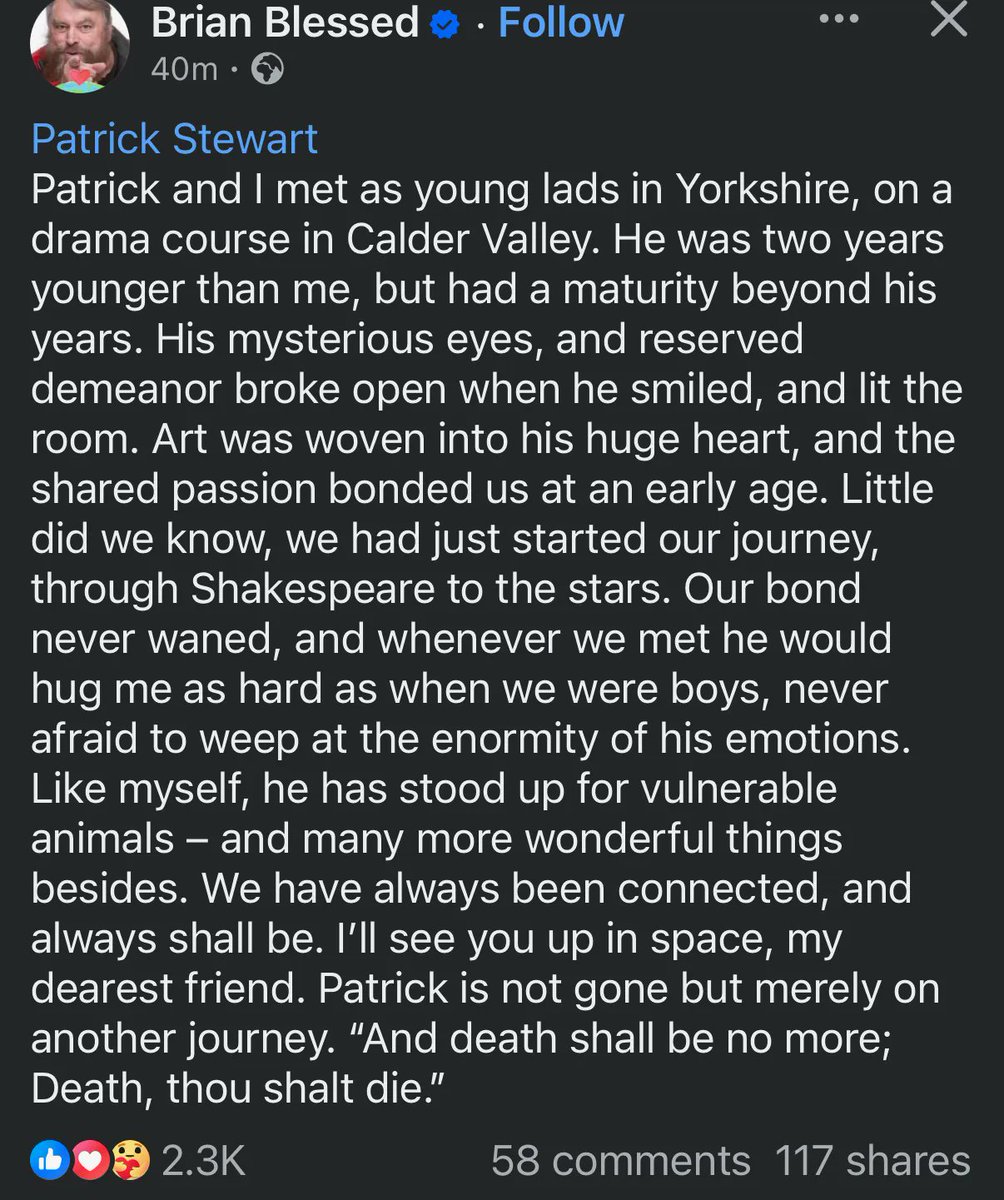
Remembering Sir Patrick Stewart
This was his appearance on Saturday Night Live February 5, 1994
Mike Myers had a lot of fun with this one
Phil McCracken: Scottish Therapist
It’s always been funny to me that when Ian Fleming wrote his first James Bond novel, he intended the character to be “dull”. Fleming: “When I wrote the first story, in 1953. I wanted Bond to be an extremely dull, uninteresting man to whom things happened…” Kind of like a Forest Gump figure minus the mental issues, just wandering around wide eyed getting into strange situations and making the best of it

Then a movie was made. Sean Connery was cast. And he wasn’t, by anyone’s definition, “dull”… this Bond was suave, smooth, exciting. Fleming met with the young Scottish actor… and wasn’t impressed: “He’s not what I envisioned of James Bond looks. I’m looking for Commander Bond and not an overgrown stunt man.” Too tall, too handsome, too domineering of a person. And, too Scottish.
Connery, undeterred, met with Fleming. And managed to charm his way into the writer’s heart. Fleming gave him a chance, and the studio their green light. The rest, as they say, is history. In fact, Ian Fleming was so pleased with the performance of Connery that in subsequent novels, the character James Bond was given a Scottish origin story.
Sean Connery owned the character of James Bond so much that the actual writer of the novels on which the character was based, altered that character to be more like him. That’s quite a feat. I’ve enjoyed other character’s take on Bond, some more than others. But Connery’s vision of the King of Spies will always be my number one — and it was Fleming’s number one, too. I could think of no higher praise