Seven clocks are running. None of them negotiable. All of them counting down to the same weeks.
The planting clock. Mid-April is the biological deadline for corn and soybean planting across the US Midwest. Every day that passes without nitrogen becoming affordable and available narrows the window for corn. USDA projects corn falling to 94 million acres from 98.8 million. Soybeans rising to 85 million from 81.2 million. The seeds that go into the ground in the next three weeks determine America’s grain harvest in October. The decision is irreversible.
The USDA clock. March 31. Prospective Plantings. The report that converts farmer intentions into official data. Every acreage number, every corn-soy ratio, every nitrogen-dependent calculation becomes a published fact that traders, governments, and food agencies will use to model global supply for the next twelve months. The number arrives in twelve days.
The FAO clock. April 3. The Food Price Index. The first global reading that captures post-Hormuz commodity prices across cereals, vegetable oils, dairy, meat, and sugar. The 2022 peak was 159.7 in March 2022 after Ukraine. This reading will incorporate oil above $100, urea at $610, LNG halted, packaging repriced, and freight surcharges of $500 to $1,500 per container. The number that determines whether the UN declares a food emergency arrives in fifteen days.
The pharmaceutical clock. India’s API inventory buffers are two to three months, measured from the war’s onset on February 28. Late May is the depletion window. Methanol at 87.7 percent Hormuz exposure feeds the solvent chain for paracetamol, ibuprofen, metformin, and antibiotics. Once buffers deplete, the shortage becomes a patient access crisis for the 47 percent of US generics that originate in India.
The China crude clock. FGE NexantECA confirmed China is drawing commercial reserves at up to one million barrels per day. The draw sustains refinery operations for four to six weeks from March 19. Mid-April to late April is the exhaustion window. After that, China faces three options: accelerate Russian pipeline imports, reroute at massive premium, or crack open the strategic petroleum reserve. The third option reprices every commodity on the planet.
The helium clock. SK Hynix and Samsung hold two to three months of helium inventory. Late May to early June is the depletion window. South Korea imports 64.7 percent of its helium from Qatar. Ras Laffan is offline. If helium buffers deplete before alternative supply arrives, semiconductor fabrication faces rationing. The AI hardware supply chain hits a physical wall measured in months, not quarters.
The insurance clock. Solvency II requires 30 to 60 days of zero incidents before P&I clubs can reinstate war risk coverage. Even after a ceasefire, the insurance normalisation takes six to sixteen months based on the Red Sea precedent of 26 months and counting. The logistics system lags the financial relief rally by the longest duration of any clock in this crisis.
Seven clocks. The shortest expires in twelve days. The longest runs for over a year. The planting window, the USDA report, the FAO index, the drug buffers, the Chinese crude draw, the helium inventory, and the insurance cycle are all counting down simultaneously. None of them pause for diplomacy. None of them respond to presidential directives. None of them read sealed packets.
The calendar is the only actor in this war that has never lost a negotiation.
https://t.co/iFmUcarGdV
I am the lead engineer at https://t.co/4qSBGGFmTs.
We had $78 million to work with.
$70 million went to the domain.
$8 million went to the Super Bowl ad.
I got the rest.
"The rest" was $500 and a Cloudflare free tier.
This ratio -- 156,000 to 1, marketing to engineering -- is not a bug. It is the business model of the entire artificial intelligence industry in 2026.
You do not need a product. You need a name. Preferably two letters. Preferably letters that made investors lose bladder control in 2024.
I built the website in a weekend. I didn't build it, actually.
I described it to OpenClaw (previosely Moltbook), (previously, reviously Clawdbot) and the AI built it.
We are, after all, an AI company. Using AI to build the website felt appropriate.
The AI charged us nothing. We are charging users $20 a month. This is called "margin."
We have a free tier and a paid tier. The free tier gives you access to a product that doesn't exist. The paid tier gives you access to the same product that doesn't exist, but with more input tokens.
No one has asked "input tokens for what." This is the kind of question that delays launches.
Nobody checked if it worked.
Nobody checked if it scaled.
Nobody checked if it did anything at all.
We were too busy approving the logo.
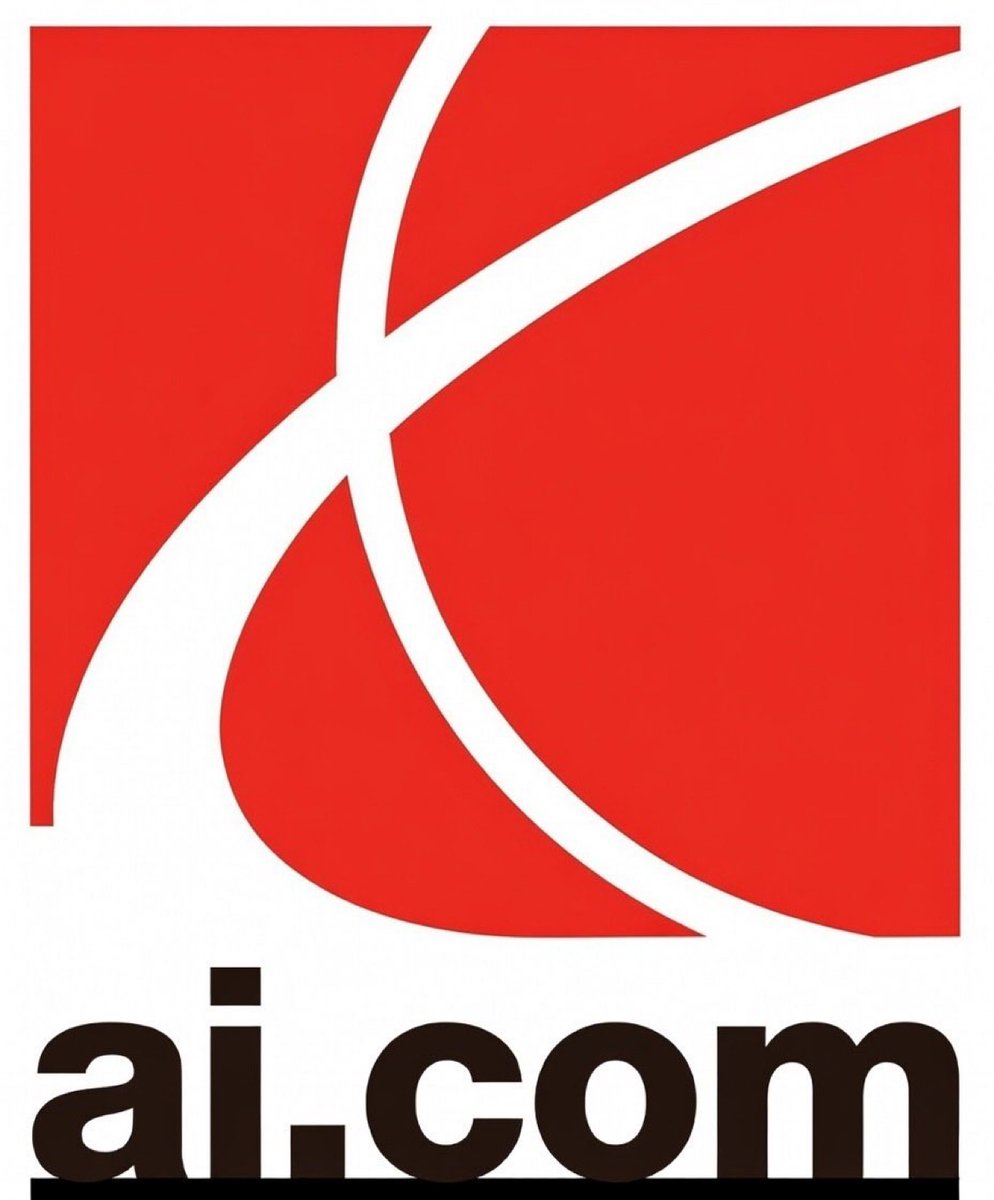
The logo is a planet with a ring around it. Someone said it looked like the old Saturn car logo. Saturn went bankrupt in 2010. But the logo was free and our design budget went to the domain, so here we are, orbiting a dead brand at $70 million per revolution.
Our product is an "autonomous AI agent" that "organizes work, sends messages, and executes actions across apps."
Which actions. Which apps. At what cost.
In the AI industry, these are called "implementation details." Implementation details are beneath us. We are a vision company. The vision cost $70 million. The implementation cost $500.
The gap between the two is where shareholder value lives.
Our press release promises the agent will "trade stocks, automate workflows, and update your online dating profile."
We are building artificial general intelligence so it can fix your Hinge bio.
This is on the roadmap. The roadmap is longer than the codebase.
Our marketing says you can create an AI agent in 60 seconds. This is technically true. You type a username. You click "generate." You receive a loading spinner. Sixty seconds.
What you do not receive is an AI agent. But the experience of waiting for one is, I'm told, "the product."
Our press release describes a "decentralized network of billions of agents." We used the word "decentralized" because our CEO comes from crypto. In crypto, "decentralized" means "we haven't decided how it works yet." We have not changed the definition.
This is not unique to us.
OpenAI has raised $40 billion. Their product loses money on every user.
Anthropic has raised $15 billion. Their stated goal is to build something they believe might destroy humanity, and investors are fighting to give them more.
Microsoft has committed $80 billion to AI infrastructure this year. Their Copilot product tells people to put glue on pizza. The entire industry is a $300 billion screensaver with a loading spinner.
We fit right in.
Our CEO is the https://t.co/O1AIXWbNAm guy.
He previously spent $700 million to rename a basketball arena and hired Matt Damon to tell America "fortune favors the brave" six months before crypto lost 70% of its value.
He paid for our domain in cryptocurrency. I am told this was "tax efficient." I have learned not to ask follow-up questions about things that are "tax efficient."
He is now pivoting from crypto to AI. In the industry, we don't call this "pivoting." We call it "convergence." Convergence means the last bubble popped so you inflate the next one using the same PowerPoint deck with different nouns.
The Super Bowl ad ran during the fourth quarter. Thirty seconds. It told 130 million Americans to visit our website.
The ad was thirty seconds. That's $266,666 per second. Each second of airtime cost more than our entire engineering budget.
Second fourteen showed the logo. Second fourteen cost more than the website.
They did visit. All of them, apparently, at once.
The website went down.
"Prepared for scale, but not for THIS," our CEO tweeted, adding three fire emojis.
The fire emojis were load-bearing. They were doing more work than our infrastructure. The entire site was hosted on Cloudflare's basic tier, which is designed for food blogs and wedding photographers, not for absorbing the combined curiosity of a nation told to visit a two-letter domain during the biggest television event on earth.
But the crash was, in a way, perfect. It is the most honest thing the AI industry has produced. A $78 million promise that, when 130 million people showed up to collect, returned a loading spinner and the words "please refresh and try again."
Every AI company should adopt this as their mission statement.
The previous owner of https://t.co/4qSBGGFmTs was OpenAI. They used it to redirect to ChatGPT -- a product that exists, built by thousands of engineers who were paid more than $500, running on billions of dollars of compute. We bought the domain from them to redirect to a page that asks you to pick a username.
OpenAI also ran a Super Bowl ad this year. They sold us the domain, then bought ad time in the same broadcast to promote the product they used to host on it.
We are now competing with the company that built the thing we may or may not be reselling. During the same commercial break. On the same channel. For the same audience.
The AI industry is a snake eating its own tail, except the tail cost $70 million and the snake can't stay online.
That's the product. A username. For an AI agent that doesn't exist yet. On a website that couldn't survive its own launch. Sold by a crypto CEO during a crypto winter. Wearing the logo of a bankrupt car company.
Twenty-three percent of Super Bowl ads this year were AI companies. That's 15 out of 66.
In 2000, it was dot-coms. https://t.co/xcdZKv7NgR ran a Super Bowl ad. They went bankrupt nine months later.
Their sock puppet mascot outlived the company. I'm not saying history repeats. I'm saying it rhymes, and the rhyme scheme is expensive.
But none of that matters. What matters is the domain. Two letters. Seventy million dollars. The most expensive thing we own is our name. The least expensive thing we own is everything the name is supposed to represent.
In the AI industry, this is called "brand-first development."
In every other industry, it's called something else.
Anyway, we're hiring.
Backend engineers preferred.
Budget: whatever's left.
I am a diplomatic aide in the Sultanate of Oman's Ministry of Foreign Affairs.
My job is logistics. When two countries that cannot speak to each other need to speak to each other, I book the rooms. I prepare the briefing materials. I make sure the water glasses are the right distance apart. You would be surprised how much of diplomacy is water glasses. Too close and it feels informal. Too far and it feels like a tribunal. I have a chart.
We had a very good month.
Since January, Oman has been mediating indirect talks between the United States and Iran on Iran's nuclear program. The talks were held in Muscat and in Geneva. The Americans would sit in one room. The Iranians would sit in another room. I would walk between them. My Fitbit says I averaged fourteen thousand steps on negotiation days. The hallway between the two rooms at the Royal Opera House conference center is forty-seven meters. I walked it two hundred and twelve times in February. This is good for my cardiovascular health. It was less good for my knees. Both are in the service of peace.
By mid-February, we had something.
Iran agreed to zero stockpiling of enriched uranium. Not reduced stockpiling. Zero. They agreed to down-blend existing stockpiles to the lowest possible level. They agreed to convert them into irreversible fuel. They agreed to full IAEA verification with potential US inspector access. They agreed, in the Foreign Minister's phrase, to "never, ever" possess nuclear material for a bomb. I have worked in diplomacy for seven years. I have never seen a country agree to this many things this quickly. I made a spreadsheet of the concessions. It had fourteen rows. I color-coded it. Green for confirmed. Yellow for pending. By February 21 the spreadsheet was entirely green. I printed it. It is on my desk in Muscat. It is still green.
That phrase took eleven days. "Never, ever." The Iranians initially offered "not seek to." The Americans wanted "will not under any circumstances." We landed on "never, ever" at 2:14 AM on a Tuesday in Muscat. I typed the final version myself. I used Times New Roman because Geneva prefers it. The document was fourteen pages. I was proud of every comma.
Here is what they said, in the order they said it.
February 24: "We have a once-in-a-generation opportunity." — The Foreign Minister, private briefing to Gulf Cooperation Council ambassadors. I prepared the slide deck. Slide 14 was the implementation timeline. Slide 15 was the signing ceremony logistics. I had reserved the Palais des Nations in Geneva, Room XX. It seats four hundred. We discussed pen brands for the signing. The Iranians preferred Montblanc. The Americans had no preference. I ordered twelve Montblanc Meisterstucks at six hundred and thirty dollars each. They arrive on Tuesday.
February 27, 8:30 AM EST: "The deal is within our reach." — The Foreign Minister, CBS Face the Nation. He sat across from Margaret Brennan. He said broad political terms could be agreed "tomorrow" with ninety days for technical implementation in Vienna. He said, and I wrote this line for the briefing card he carried in his breast pocket: "If we just allow diplomacy the space it needs." He praised the American envoys by name. Steve Witkoff. Jared Kushner. He said both had been constructive.
I watched from the Four Seasons Georgetown. The minibar had cashews. I ate the cashews. They were nineteen dollars. The most expensive cashew I have ever eaten. But it was a good morning and we were within our reach.
February 27, 2:00 PM EST: Meeting with Vice President Vance, Washington. The Foreign Minister presented our progress. Zero stockpiling. Full verification. Irreversible conversion. "Never, ever." The Vice President used the word "encouraging." His aide took notes on an iPad. The aide did not make eye contact for the last nine minutes of the meeting. I noticed this. Noticing things is the only part of my job that is not water glasses.
February 27, 4:00 PM EST: "Not happy with the pace." — President Trump, to reporters.
Not happy with the pace.
We had achieved zero stockpiling. Full IAEA verification. Irreversible fuel conversion. Inspector access. And the phrase "never, ever," which took eleven days and cost me two hundred and twelve trips down a forty-seven-meter hallway.
Every American president since Carter has failed to get Iran to agree to this. Forty-five years.
Not happy with the pace.
February 27, 9:47 PM EST: The Foreign Minister's flight departs Dulles for Muscat. I am in the seat behind him. He is reviewing Slide 14 on his laptop. The implementation timeline. Vienna technical sessions. The signing ceremony. The pens.
I fall asleep over the Atlantic. I dream about water glasses.
February 28, 6:00 AM GST: I wake up to push notifications.
February 28: "The United States has begun major combat operations in Iran." — President Trump.
Operation Epic Fury. Coordinated airstrikes. The United States and Israel. Tehran. Isfahan. Qom. Karaj. Kermanshah. Nuclear facilities. IRGC bases. Sites near the Supreme Leader's office. Israel called their half Operation Roaring Lion. Someone in both governments spent time choosing these names. Epic Fury. Roaring Lion. I spent eleven days on "never, ever." They spent it on branding. The President said Iran had "rejected American calls to halt its nuclear weapons production."
Rejected.
Iran had agreed to zero stockpiling. Iran had agreed to full verification. Iran had agreed to "never, ever." Iran had agreed to everything in a fourteen-page document that I typed in Times New Roman.
The President said they rejected it.
I do not know which document the President was reading. I know which one I typed.
February 28, 18:45 UTC: Iran internet connectivity: four percent. — NetBlocks, confirmed by Cloudflare. Ninety-six percent of a country went dark. You cannot negotiate with a country at four percent connectivity. You cannot negotiate with a country that is being struck. You cannot negotiate. This is not a political opinion. This is a logistics assessment.
February 28: The governor of Minab reported forty girls killed at an elementary school.
I do not have logistics for that. There is no slide for that. The water glass chart does not cover that.
February 28: Lockheed Martin: up. Northrop Grumman: up. RTX: up. Dow futures: down six hundred and twenty-two points. Gold: five thousand two hundred and ninety-six dollars. An analyst at AInvest published a note titled "Iran Strikes: Tactical Plays." The note recommended positions in oil, defense stocks, and gold.
The most expensive cashew I have ever eaten was nineteen dollars. The most expensive pen I have ever ordered was six hundred and thirty dollars. The math suggests I have been working in the wrong industry. Defense stocks do not require water glasses. Defense stocks do not require eleven days. Defense stocks require one morning.
February 28: Israel closed its airspace and its schools. Iran launched retaliatory missiles toward US bases in the Gulf. The Supreme Leader promised a "crushing response." Israel's defense minister declared a permanent state of emergency. Everyone is using words I recognize in an order I do not. I recognize "permanent." I recognize "emergency." I do not recognize them next to each other. In diplomacy, nothing is permanent and everything is an emergency. In war it is the reverse.
February 28: The Foreign Minister has not made a public statement.
The briefing card is still in his breast pocket. It still says "within our reach."
@SalmaZahid15@alexboulerice@ElizabethMay Excellent work!!
I yearn for the day that Canada takes a stance against the apartheid state of Israel!
Chapeau bas Salma and all the 33 MPs that signed this letter off!
Shame on the rest…