論文出たよ!
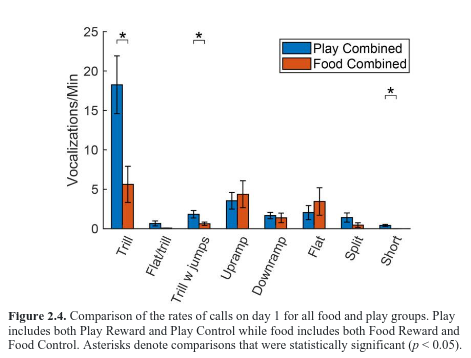
Happy to share that our collaborative research with @ro_tachi_jpn has been published. We conducted playback experiments to investigate the meaning of 31-kHz calls emitted by affiliative rats under conditions of inequity or isolation.
https://t.co/pR4unSPosr
🔊🎶🐁
Fitting a neural sequence model (a la ChatGPT) to sperm whale vocalizations, new from @pratyusha_PS@sgero w/Profs. Rus, Torralba and @jacobandreas from @MIT
Results on context dependency remind me (@nicholdav) a bit of ABCD-VAE from @ro_tachi et al https://t.co/L5Xc6jI8YN
I am happy to share my Python translation of USVSEG, the wonderful Matlab script for segmentation of ultrasonic vocalizations in rodents by @ro_tachi and @canno696show et al!
https://t.co/cvrbmR19fy
After our long collaboration, we decided to introduce a frequency modulation measure "cvfreq" instead of call-type categorization. Please see Fig. S7 in supplementary material to check relationships between cvfreq and conventional call categories.
https://t.co/ZhiAyGM7iE
Thesis from Dr. Candace Burke in @david_euston's group @uLethbridge:
"What are they good for? Ultrasonic vocalizations as social communication signals in rats"
Suggests in rats USVs are not just affective state.
1/2
https://t.co/qAfpXSMwbR
Our peer-reviewed article describing the validation, reanalysis, and public release of the Global Jukebox with audio and coded "Cantometric" data for >5,000 songs from >1,000 societies is finally published #OpenAccess today in @PLOSONE! (1/4)
https://t.co/OOCK2MYO56
We here assessed what spectral components of the fluctuation contribute to the compensation, and found a slower one (≤5Hz) is important. We believe this result supports the idea that vocal fluctuation is not just motor noise but could drive the exploration to find better states.
Pleased to announce our publication in @SciReports on human vocal control!
https://t.co/wF0QB5DuWL
We found that spontaneous fluctuations in vocal pitch are positively correlated with compensative vocal responses during pitch-shifted auditory feedback.
Similar variability-compensation relationships had been observed in Scheerer & Jones (2012)
https://t.co/XBnmuUDgoa
and also in songbird studies (!) using auditory feedback manipulations, e.g.
https://t.co/6ixYjMIiwL
I have noticed that many researchers do not know this method. The timing of mating in mice can be controlled with chemicals. RIKEN BRC’s paper: https://t.co/Ck8cQdFqxI
After three days of attending #jcole2022, I have a feeling that upspeak (or high-rising terminal) is becoming more prominent among young speakers. This could be a theme of sociolinguistics?
Blown away by how great @EvolangConf / @JCoLE2022 is. My first but will certainly not be my last!
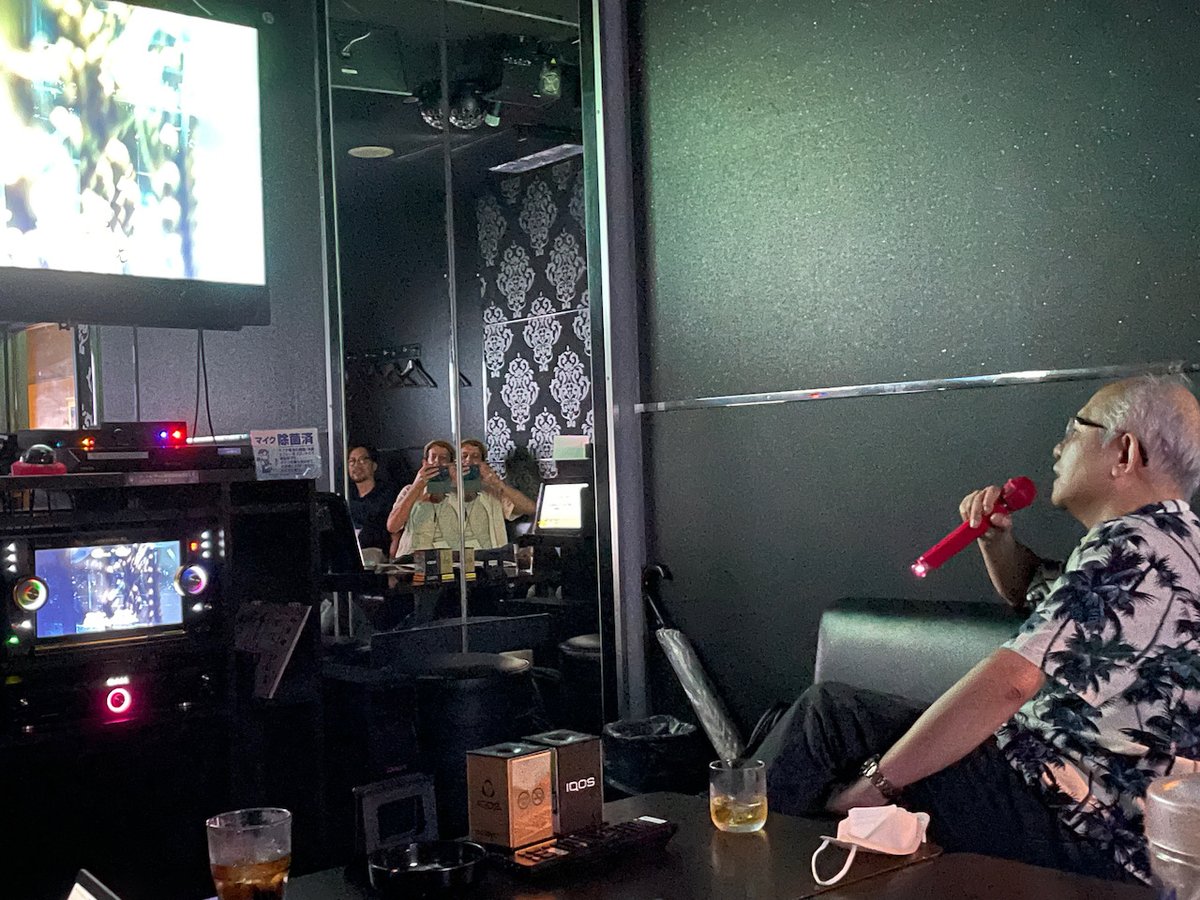
Plenaries by Ani Patel, @KazuoOkanoya & @Limor_Raviv were particularly inspiring, but best of all was social bonding through karaoke 😉!
Thanks all - see you next time!
#JCoLE
2. Humans lack vocal membranes, meaning that we lost them in the last 6 million years of hominin evolution. We think this enables humans to have a more stable voice source, important for fine control of pitch in speech and song. Sometimes "less is more"! https://t.co/aA45m3AJHK
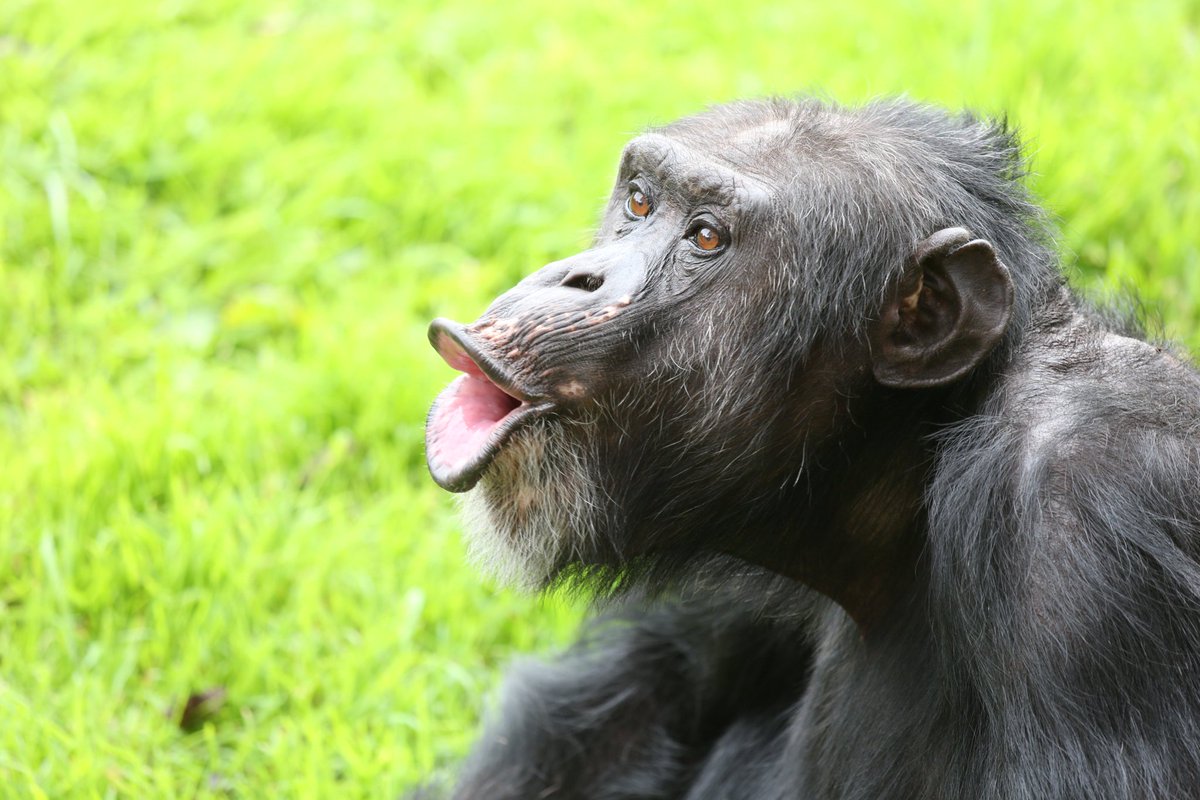
1. Our new paper in @ScienceMagazine found that all 43 species of nonhuman primate we examined possess "vocal membranes": small ribbon-like extensions of the vocal folds. These allow loud, high-pitched calls, but make chaotic nonlinearities more common. https://t.co/aA45m3AJHK