this MIT quant paper is f*cking insane
it tested 100 strategies per run across 10,000 Monte Carlo trials
every strategy had zero real alpha
but after selecting the best backtest:
+38.84% in-sample
then on fresh data:
+0.14%
and 49.16% of the “winners” actually went negative out-of-sample
that is the trap with AI trading
the more strategies you generate, the easier it becomes to manufacture a genius-looking backtest by accident
so the real workflow is:
generate → backtest → select → unseen data → robustness gates → paper trade
the edge is not producing more strategies
it is killing the ones that only look profitable
agent memory, in 13 pages
the fix that took one setup from 26,000 tokens per query down to 1,800
every morning your agent rereads the same 12 files, lands on the same conclusions and bills you twice for it
the 5 layers that end that:
> working memory - what it sees right now, gone once the window fills
> episodic memory - a timestamped log, so the deploy that died at 3am gets explained only once
> semantic memory - facts in a knowledge graph, like "this user prefers TypeScript"
> procedural memory - three approaches tried, the one that worked saved as a skill
> forgetting - what to drop before contradictions pile up
the numbers:
> Mem0 - 1,800 tokens per query instead of 26,000, with 91% lower latency
> Snowflake - one ontology layer, 20% more accuracy, 39% fewer tool calls
forgetting is the layer almost nobody builds, and it decides whether the other four stay worth trusting
the memory system for Opus 5.5 that survives across sessions, step by step, is below 👇
This is f*cking insane. Stanford just dropped a 2-hour course on building LLMs from scratch
Don't waste 2 years trying to learn how Claude & ChatGPT are built
• 00:00 - LLM tokenization
• 25:44 - how LLMs decode your prompts
• 35:40 - the LLM training pipeline
• 1:16:47 - LLM architecture from scratch
Anthropic pays engineers $750,000/year for exactly this kind of LLM knowledge
Bookmark it and find 2 hours today, no matter what
Then read the article below ↓
this is f***ing wild
SpaceXAI engineer Lauren Tan (@poteto) shared her method for running agents with GitHub repo skills:
give your agent this to identify bugs before rewriting the code
Prompt:
{
"inputs": {
"repo": "[REPO]",
"task": "[TASK]",
"success": "[OBSERVABLE_SUCCESS]"
},
"mission": [
"Use the smallest justified change.",
"Define observable success before editing.",
"Demonstrate the result in the running system."
],
"investigate": {
"entry_point": "Start with /poteto-mode when available.",
"skills": {
"/how": "Trace current behavior.",
"/why": "Recover design rationale and supporting evidence.",
"/teach": "Connect mechanics and intent.",
"/recall": "Restore relevant prior context."
},
"requirements": [
"Reproduce the problem and preserve the baseline.",
"Separate confirmed evidence from inference.",
"Use only relevant skills supported by the host."
]
},
"design": [
"Use /architect for caller usage, types and module boundaries.",
"Use /arena to compare solutions to the same task.",
"Use /swarm to divide independent work.",
"Define ownership and shared interfaces before parallel edits.",
"Use /interrogate for critical review when useful."
],
"build_verifier": {
"condition": "The repository lacks a working verification path.",
"skill": "/create-verification-skill",
"launch": "Exact startup command and readiness signal.",
"doctor": "Usable instance, dependencies and required access.",
"drive": "Real UI, CLI or API interaction.",
"evidence": "Observed outputs, logs, traces and artifacts.",
"cleanup": "Only processes and data created by this run.",
"feature_map": [
"entry point",
"actions",
"observable result"
],
"trial": "Execute the instructions on at least one real feature and retain evidence."
},
"match_proof": {
"ui": "Complete the changed user journey.",
"cli": "Run the actual command and record its result.",
"storage": "Read back the written value.",
"parser_or_migration": "Process a saved input fixture.",
"performance": "Compare equivalent before-and-after profiles.",
"measurement": "Use /benchmark-checklist to inspect cache state, build parity and measured work."
},
"execute": [
"Implement, run, inspect and correct.",
"Rerun the original failing case after the patch.",
"Check relevant regressions.",
"Check functionality, performance and code quality separately when relevant.",
"For export retries, inspect the produced file and confirm repeated execution does not duplicate rows.",
"Support success claims with observed evidence.",
"Report a concrete blocker when a required check cannot run."
],
"prevent_recurrence": {
"reflect": "Use /reflect to extract reusable lessons.",
"correct": "Use /correct to enforce recurring corrections.",
"priority": [
"Architecture or better data structures.",
"Types, lint or CI.",
"Behavioral regression tests.",
"Written rules for what remains."
],
"validation": "Demonstrate that the original failure is prevented or caught.",
"mechanics": "Move stable mechanical work into reusable scripts."
},
"handoff": {
"return": [
"tested_revision",
"diff",
"commands",
"results",
"evidence_paths",
"unrun_checks",
"remaining_risks",
"blockers"
],
"required_check_status": [
"PASS",
"FAIL",
"NOT_RUN"
],
"reporting": "Attach a result and evidence to each required check. Explain missing checks.",
"review": "Prepare the change under the repository's review and merge rules."
},
"scale": [
"Expand autonomy after repeatable verification.",
"Keep the goal, completion condition and permission boundaries explicit.",
"Define isolation and retain a decision log.",
"Stop with a concrete explanation when blocked.",
"/loop is a Cursor capability.",
"Measure human review time and regressions."
],
"start": [
"Inspect the repository.",
"Restate the task and observable success.",
"Reproduce the baseline.",
"Begin the first bounded step."
]
}SpaceXAI engineer Lauren Tan shared her method for running agents with reusable repo skills:
give your agent this to identify bugs before changing code.
Prompt:
{
"inputs": {
"repo": "[REPO]",
"task": "[TASK]",
"success": "[OBSERVABLE_SUCCESS]"
},
"mission": [
"Use the smallest justified change.",
"Define observable success before editing.",
"Demonstrate the result in the running system."
],
"investigate": {
"entry_point": "Start with /poteto-mode when available.",
"skills": {
"/how": "Trace current behavior.",
"/why": "Recover design rationale and supporting evidence.",
"/teach": "Connect mechanics and intent.",
"/recall": "Restore relevant prior context."
},
"requirements": [
"Reproduce the problem and preserve the baseline.",
"Separate confirmed evidence from inference.",
"Use only relevant skills supported by the host."
]
},
"design": [
"Use /architect for caller usage, types and module boundaries.",
"Use /arena to compare solutions to the same task.",
"Use /swarm to divide independent work.",
"Define ownership and shared interfaces before parallel edits.",
"Use /interrogate for critical review when useful."
],
"build_verifier": {
"condition": "The repository lacks a working verification path.",
"skill": "/create-verification-skill",
"launch": "Exact startup command and readiness signal.",
"doctor": "Usable instance, dependencies and required access.",
"drive": "Real UI, CLI or API interaction.",
"evidence": "Observed outputs, logs, traces and artifacts.",
"cleanup": "Only processes and data created by this run.",
"feature_map": [
"entry point",
"actions",
"observable result"
],
"trial": "Execute the instructions on at least one real feature and retain evidence."
},
"match_proof": {
"ui": "Complete the changed user journey.",
"cli": "Run the actual command and record its result.",
"storage": "Read back the written value.",
"parser_or_migration": "Process a saved input fixture.",
"performance": "Compare equivalent before-and-after profiles.",
"measurement": "Use /benchmark-checklist to inspect cache state, build parity and measured work."
},
"execute": [
"Implement, run, inspect and correct.",
"Rerun the original failing case after the patch.",
"Check relevant regressions.",
"Check functionality, performance and code quality separately when relevant.",
"For export retries, inspect the produced file and confirm repeated execution does not duplicate rows.",
"Support success claims with observed evidence.",
"Report a concrete blocker when a required check cannot run."
],
"prevent_recurrence": {
"reflect": "Use /reflect to extract reusable lessons.",
"correct": "Use /correct to enforce recurring corrections.",
"priority": [
"Architecture or better data structures.",
"Types, lint or CI.",
"Behavioral regression tests.",
"Written rules for what remains."
],
"validation": "Demonstrate that the original failure is prevented or caught.",
"mechanics": "Move stable mechanical work into reusable scripts."
},
"handoff": {
"return": [
"tested_revision",
"diff",
"commands",
"results",
"evidence_paths",
"unrun_checks",
"remaining_risks",
"blockers"
],
"required_check_status": [
"PASS",
"FAIL",
"NOT_RUN"
],
"reporting": "Attach a result and evidence to each required check. Explain missing checks.",
"review": "Prepare the change under the repository's review and merge rules."
},
"scale": [
"Expand autonomy after repeatable verification.",
"Keep the goal, completion condition and permission boundaries explicit.",
"Define isolation and retain a decision log.",
"Stop with a concrete explanation when blocked.",
"/loop is a Cursor capability.",
"Measure human review time and regressions."
],
"start": [
"Inspect the repository.",
"Restate the task and observable success.",
"Reproduce the baseline.",
"Begin the first bounded step."
]
}
Quant Bible:
a 51-page guide written by an MIT Sloan Business Club member, covering probability, statistics, market making, and real interview questions from Jane Street, Citadel, Two Sigma and more
all for free
Bookmark this (before they take it down):
these 2 github repos are the most BROKEN combo in trading right now
Citadel pays quant researchers $336K to $642K a year to forecast markets and stress-test trades. These 2 repos put both steps inside Claude Code for free.
They're called Kronos and Day Trader. Kronos was built by researchers at Tsinghua University, accepted at AAAI 2026, and it already has 45K+ stars. Day Trader is 11 Claude skills built by Jake Schincariol, and it already has 4K+ stars.
First, get how it works:
1. Kronos gives you 1,000 futures instead of one guess. It reads candlesticks the way ChatGPT reads words, it learned from 12 billion candles across 45 exchanges, and it can map out the next 48 hours of any chart.
2. Day Trader turns that fan into a trade. One skill sets your stop and target before you enter, one sizes the position to your max loss, one blocks anything over your limits, and its Time Machine replays the setup 10,000 times before you risk a dollar.
3. Together they answer the question that matters: how many of those futures hit my target before my stop? On the real BTC candles in the video, 725 of 1,000 futures end down, so the plan is a paper short with a 1% stop and a 2% target. 203 hit the target first, 302 hit the stop first, 495 touch neither. Nothing gets placed until you type yes.
Here's how you can run it for free yourself:
1. Open Claude Code in an empty folder.
2. Install Day Trader. Paste: "https://t.co/UqFeQtR8CM install skill". No signup, no API key.
3. Install Kronos. Paste: "Set up https://t.co/UyxiaNhP0J and load Kronos-small from Hugging Face."
4. Run /trader-scanner and /trader-news to pick a ticker.
5. Ask Claude Code: "Sample 1,000 Kronos futures for this ticker from its last 128 candles, 48 candles ahead. Keep every path."
6. Check it before you trust it: "Re-run Kronos on each of the last 5 days and show me how often the real price landed inside its p10-p90 range."
7. Run /trader-exit to set your stop and target, then ask: "Race every Kronos path to my stop and target. How many hit each one first?"
8. Run /trader-timemachine for a second opinion: 10,000 replays from the stock's own candles, plus every past time the setup fired. If it disagrees with Kronos, skip the trade.
9. Run /trader-budget and /trader-risk, then /trader-broker. It shows you the ticket and sends it to your paper account only after you type yes.
i won't say anything more:
If I had to land a $200K AI engineer job in 90 days, I would not get a degree.
I would master these 10 GitHub repos.
1. awesome-llm-apps
The production AI playbook. RAG, agents, multimodal apps, all in working code. 106K+ stars.
Repo → https://t.co/50OD473w70…
2. LangChain
The foundational framework. Used in production by Klarna, Replit, Elastic, and most AI startups in 2026.
Repo → https://t.co/e8juC9sbHg…
3. LangGraph
The orchestration layer powering production agents. The skill on every senior AI engineer job description.
Repo → https://t.co/e8juC9sbHg…
4. CrewAI
Multi-agent coordination. The framework most Fortune 500 teams reach for first.
Repo → https://t.co/Ixp7pBR3sD…
5. Ollama
Run any open-source LLM on your own machine. The fastest way to learn how models actually work.
Repo → https://t.co/x4D63YcRCg
6. awesome-mcp-servers
MCP is the standard every major AI lab adopted in 2026. Knowing it puts you ahead of 99% of engineers.
Repo → https://t.co/2sxxKGwmT8…
7. Qdrant
The vector database used for production RAG at scale. Embeddings and semantic search are non-negotiable for AI roles.
Repo → https://t.co/OfhwKdk0zI
8. AI-Agents-for-Beginners
Microsoft's free 12-lesson course on building agents. Real code, real exercises, real prep.
Repo → https://t.co/J2ijcIpCCn…
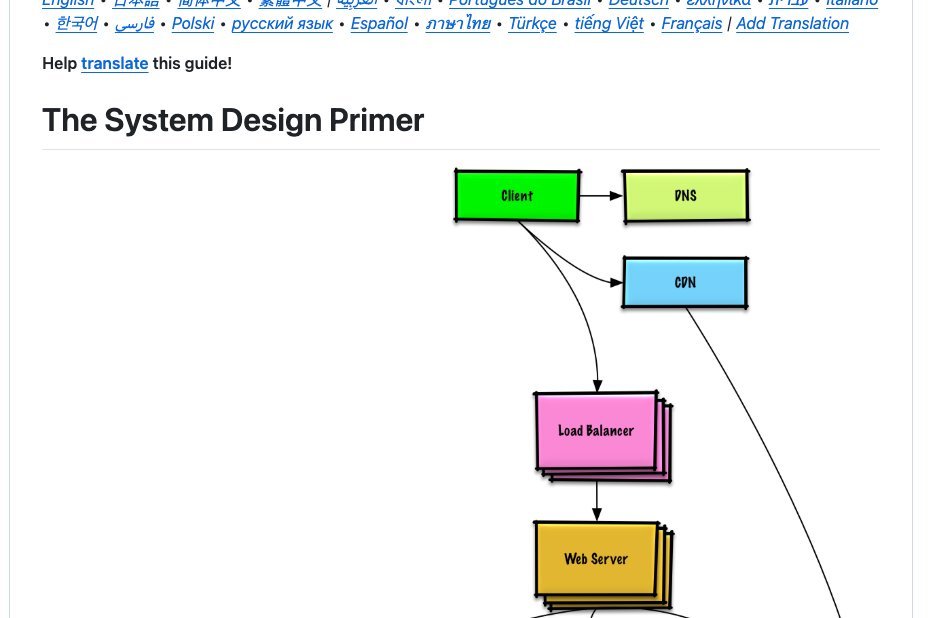
9. system-design-primer
Production AI is system design. The repo FAANG engineers use to prep for interviews.
Repo → https://t.co/g52zkFf5MB…
10. awesome-claude-code
The playbook for the tool now used inside FAANG, OpenAI, Anthropic, and most YC startups.
Repo → https://t.co/rprwu6qQsp…
Here's the wildest part:
A $200K AI engineer in 2026 isn't paid for a degree.
They are paid for what these 10 repos teach.
The market doesn't care where you learned it. It only cares if you can ship.
90 days. 10 repos. One portfolio that proves you can do the work.
That's it. That's the whole game.
Save this before you forget.
100% free. 100% open source.
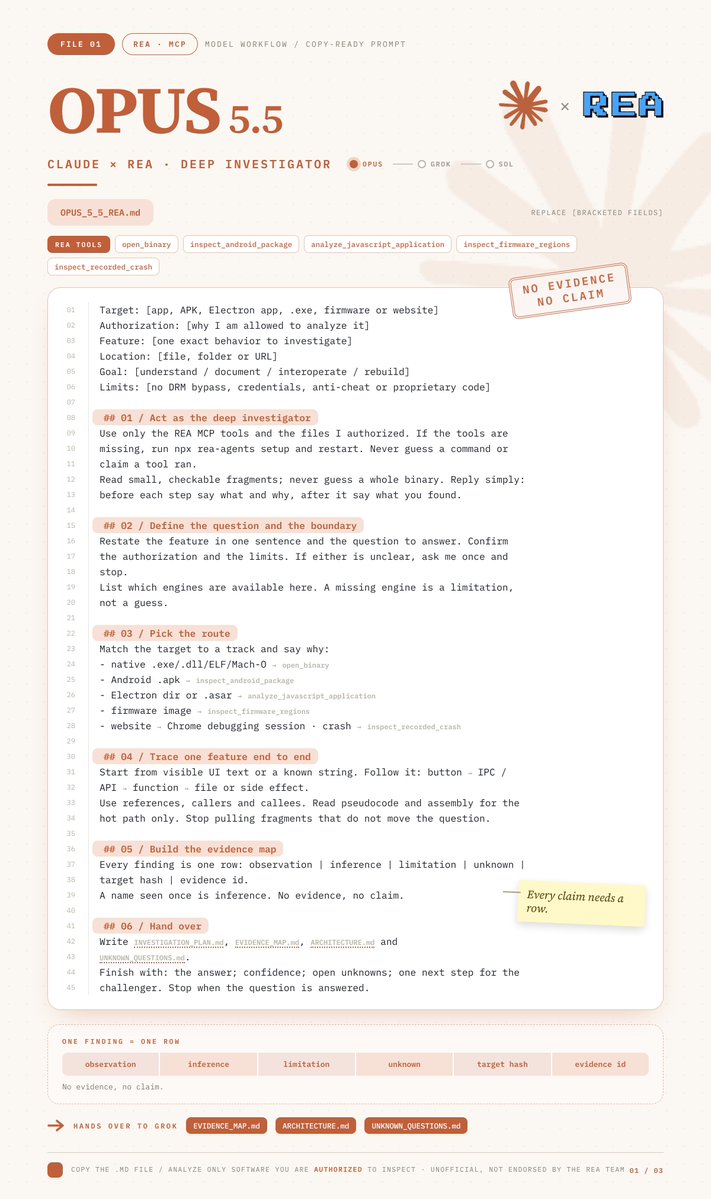
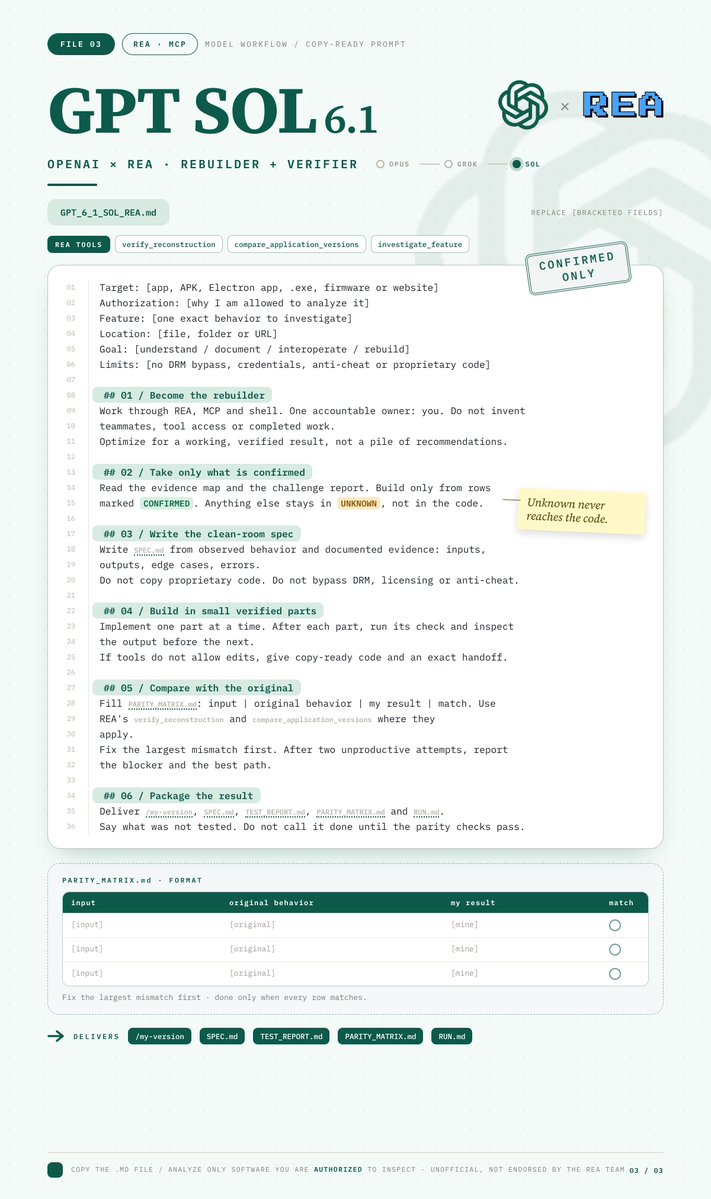
These REA prompts for Claude, Grok and GPT are insane...
I made one for Opus 5.5, one for Grok 4.7 and one for GPT-6.1 Sol
Each gives the model a clear role, the right REA tools, a loop for checking every claim against evidence and rules for what to hand the next model
They work on almost any target: APKs, Electron apps, .exe files, firmware or websites you're allowed to analyze
Bookmark and send them to your models
Then read the article about turning three AI models into one reverse-engineering lab
Another DeepSeek drop: dsh-superagent
An agent framework that works through a repo's GitHub issues and PRs with many agents in parallel, designed to take as little human attention as possible while delivering as much value as possible.
https://t.co/XR73mIvA0V
Vibe coders, thank me later
https://t.co/7YwmCmGgq8
https://t.co/28dcoCIKKM
https://t.co/a1iooDf6Fv
https://t.co/AS4LJUQZHw
https://t.co/MhlqsBf1MP
Your app stops looking AI-generated!
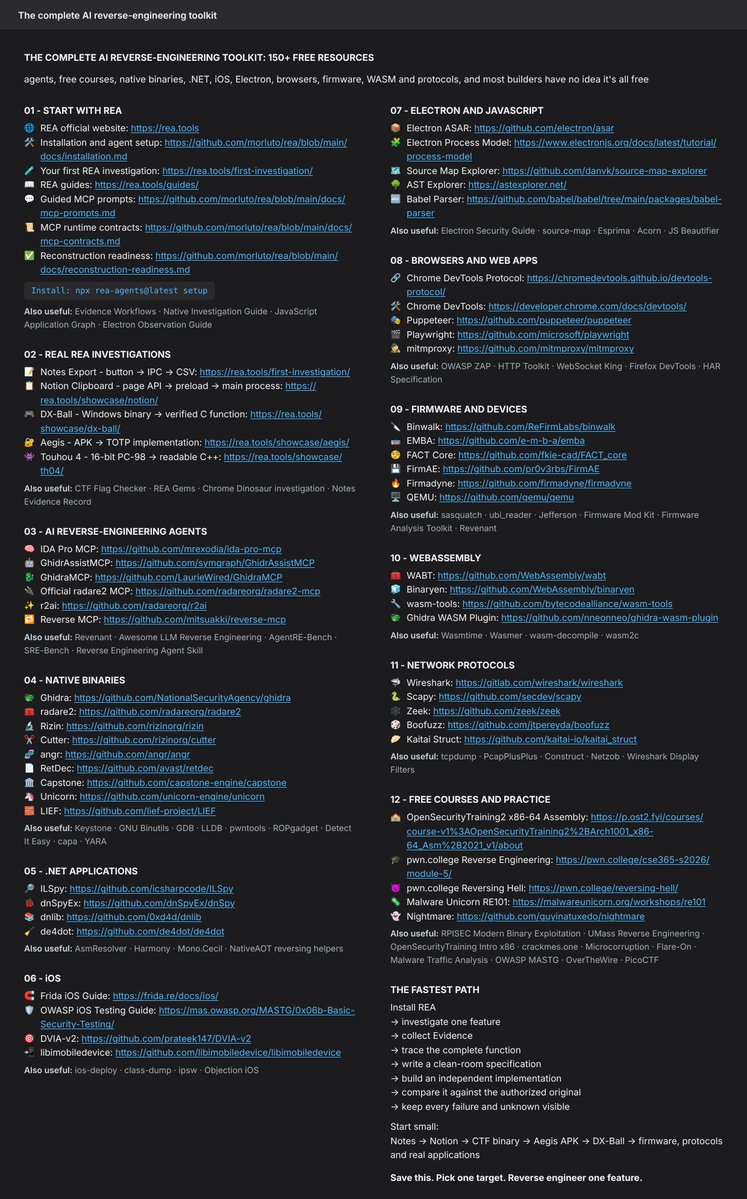
REA FROM ZERO TO REVERSE-ENGINEERING AGENT
One practical path built only from REA's official docs: guides, real investigations, evidence contracts, clean-room rules and verification checks
START HERE:
1. Your First REA Investigation https://t.co/VMq1vzHMKt
2. Guided MCP Prompts https://t.co/3qqMBrfhPB
3. Installation & Agent Setup https://t.co/xPcibAOnaw
WATCH & FOLLOW ALONG:
1. REA Explained https://t.co/mNig06NZZr
2. How To Actually Reverse Engineer Anything: REA + Claude Code https://t.co/7rnsZtUPJf
3. How to Use REA with AI for Free https://t.co/WN8xm6g2wz
4. Reverse Engineer Anything: Copy an App for Free https://t.co/mOJG1696J3
5. REA on ShareX https://t.co/EHnuqv9R2q
6. What Is REA? Hidden Logic Test https://t.co/fUEWiKlGe0
7. Frida for Android Reverse Engineering https://t.co/xOPHb5akx7
8. Ghidra Tutorial for Beginners https://t.co/nYl41r238P
9. I Tested the Viral REA Skill https://t.co/HQelD3loRX 10. REA Video Collection https://t.co/v4rLy56OYf
READ THE EVIDENCE:
1. MCP Runtime Contracts https://t.co/77IFlTo1XX
2. Evidence Workflows https://t.co/phAF22PYfj
3. Recorded Guide Evidence https://t.co/s52PLxi1ZH
TRACE ONE FUNCTION:
1. Notes Export https://t.co/VMq1vzHMKt
2. Notion Clipboard https://t.co/X6mmOrpyY6
3. DX-Ball Reconstruction https://t.co/MLPT8XZ1G6
4. Native Investigation Guide https://t.co/0EJAHiMauX
CLEAN-ROOM SPEC:
1. Clean-Room Separation https://t.co/kZyKXzZozL
VERIFY THE REBUILD:
1. verify_reconstruction https://t.co/3qqMBrfhPB
2. Reconstruction Readiness https://t.co/coTcnKCcWv
3. Aegis APK Case https://t.co/SqChuIEHRX
4. DX-Ball Verification https://t.co/MLPT8XZ1G6
BEST ORDER TO LEARN:
install REA → Notes Export → read the evidence → Notion → DX-Ball → clean-room spec → Aegis verification
this shouldn't be legal... i just merged 6 ais into one brain
opus 5.5 + REA + Jev + Dots + Grok Bot + Obsidian
6 agents. 1 shared memory. i gave them $10 and one job: make money before i wake up
the only instruction: find something people already pay for, make it better, sell it. no questions
here's what happened while i slept:
23:40 - laptop closed
00:12 - grok bot reads 3,800 posts on X
00:14 - 1,900 couriers hate the same thing
00:58 - REA takes apart 14 paid apps that try to fix it
01:05 - cheapest is $19/mo. every single one has the same 2 bugs
01:40 - obsidian pulls 1,240 notes and 214 skills from my old projects
02:30 - opus 5.5 plans 9 screens and 1 database. asks me nothing
04:10 - opus 5.5 writes the app, grok bot ships it
04:52 - jev blocks a $49 domain. budget is $10. it picks a $3 one
05:45 - dots cuts a 30 s demo and posts 3 threads
06:41 - 212 signups
07:15 - 31 of them pay $9/mo
07:20 - obsidian writes down every step, every cost, every mistake
7:40 - i wake up
31 x $9 = $279
spent: $4.70 tokens + $3 domain = $7.70
36x back in 7h 40m
the real secret: no agent here can do it alone. grok can't think. jev can't write. opus can't post. linked together they never stop
the big mistake: 6 ais in 6 tabs. 6 memories, 0 results. one shared brain fixed it
you don't need to hire 6 people. you need 6 agents and 1 night ↓
If you started using Claude this year, install these before anything else.
Here are 32 free skills that skip the months of trial.
They come from 9 GitHub repos with 252K stars.
NOTES & RESEARCH
obsidian-markdown → Notes Obsidian can read.
obsidian-bases → Notes into tables.
json-canvas → Mind maps on a canvas.
defuddle → Clean text from any page.
notebooklm → Query your notebooks.
huggingface-papers → Find AI papers.
WRITING
humanizer → Strip the AI tells.
copywriting → Landing pages and ads.
copy-editing → Edit line by line.
social → Posts for LinkedIn and X.
emails → Write email sequences.
content-strategy → Plan what’s next.
writing-guidelines → Make docs clear.
MARKETING
seo-audit → Find why you don’t rank.
ai-seo → Get cited by AI.
launch → Plan a product launch.
pricing → Set your prices.
lead-magnets → Freebies that grow lists.
marketing-psychology → Why people buy.
AUTOMATE
n8n-workflow-patterns → Proven n8n flows.
n8n-node-configuration → Set up nodes.
n8n-expression-syntax → Fix expressions.
n8n-validation-expert → Read n8n errors.
n8n-code-javascript → Code in n8n nodes.
BUILD & SHIP
react-best-practices → Fast React code.
web-design-guidelines → Catch UI mistakes.
deploy-to-vercel → Go live with a link.
modern-python → Python with uv and ruff.
huggingface-gradio → Quick Python demos.
huggingface-spaces → Host your AI app.
huggingface-local-models → Run models locally.
context-fundamentals → How context works.
Don’t install all 32 tonight.
Pick the folder closest to your daily work and add one skill from it.
Give it a week of real tasks. If it saves you time, keep it and add the next.
Honestly, 3 skills you use daily beat 30 sitting in a folder.
For more cheat sheets like this, subscribe → https://t.co/Hp3qoiIww0
Repost ♻️ to help a Claude beginner in your network.
https://t.co/ebMbmGokWP