@Ricarda_Lang Versteh ich. Und gleichzeitig wäre ich damit völlig fein, wenn ich das Gefühl hätte, Besagte würden ihren Job gut machen, etwas aus der Vergangenheit lernen, über den eigenen Schatten springen, Probleme angehen, mit dem unsäglichen Populismus aufhören…
@ManuelaSchwesig@ConstantinW0hlf@PaulaPiechotta Ärzte vor Ort schlechter Bewertungsmaßstab. Gyns bieten gerne US der Ovarien zur Früherkennung an — trotz Schaden und gegen Leitlinie. Wie ist die Wirkung verheerend, eine Leistung zu streichen, die definitiv schadet und fraglichen Nutzen hat? Ihr Statement ist sachlich falsch.
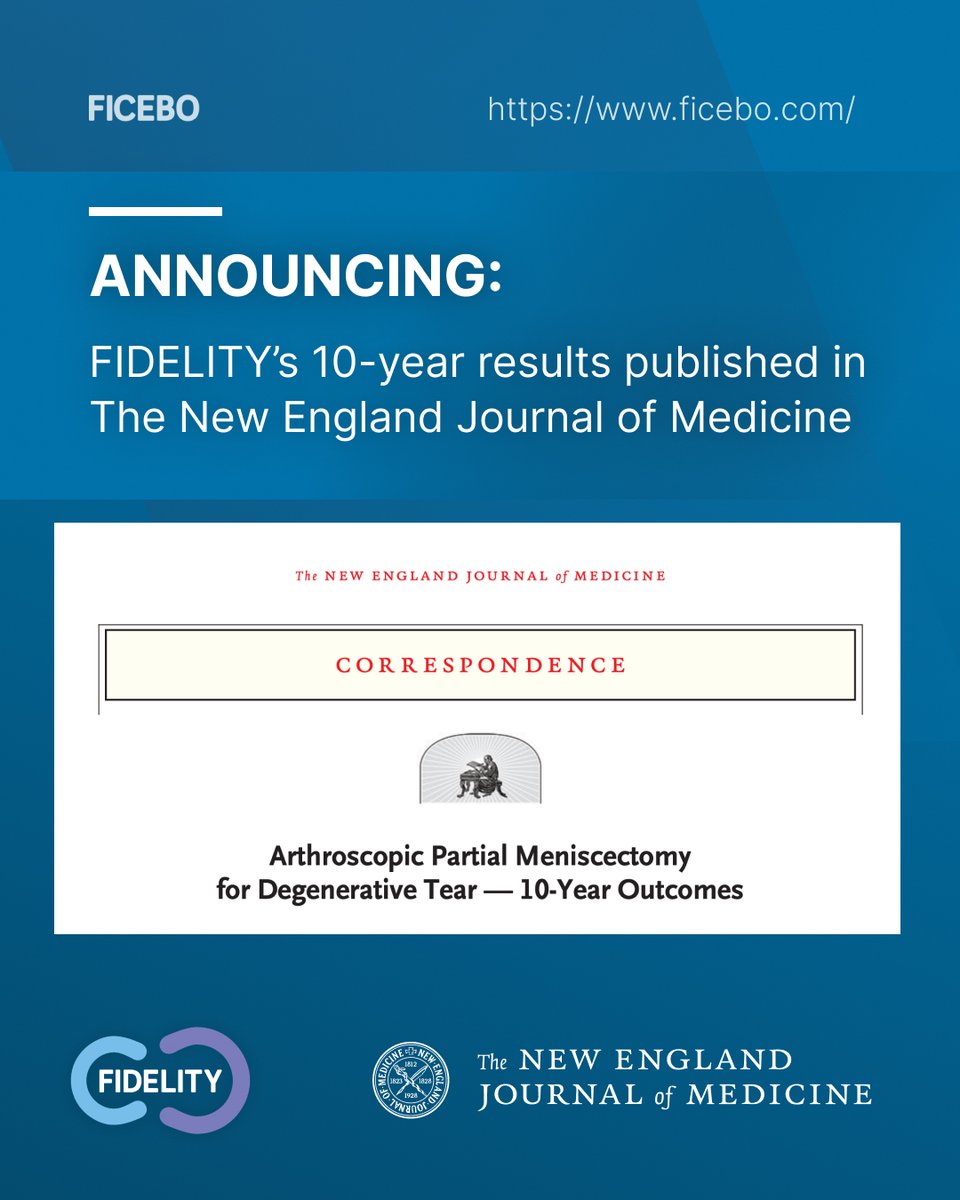
The final 10-year results of the FIDELITY trial are now out, published in @NEJM
You can find the full article through the link in the comments. #FIDELITY#NEJM#MedicalResearch
@BenMazer Great paper. Took a lot away from it. They want to remove skin cancer screening from statutory health insurance in Germany to save money. It think we might be the only country that screens for it. Public outcry incoming.
@TDekkersPhysio Sound guidelines, but I suppose it can be a preference sensitive option for some patients. For some of the recommendations there is also residual uncertainty —radiofrequency ablation to name one example, which is why the RADICAL trial is running in the UK: https://t.co/T7TOWjJSIq
@KCKlatt@methodsnerd Interesting. Based on the abstract I‘m surprised the analysis ends up with low to moderate QoE in favor of an effect, given the reasonably large statistical uncertainty/wide CIs. Seems like an uncommon approach. Reasoning? Low risk?
Thema braucht Dialog. Ist wichtig, nicht neu (s. z.B. SVR Gutachten zu Unter-, Über-, und Fehlversorgung aus 2002) und natürlich stellt sich auch generell die Frage, was Dinge kosten dürfen - erst recht, wenn Reformen nicht gelingen, die das GS effektiver/effizienter manchen.
Die Debatte ist zu wichtig für schnelle oder verkürzte Antworten. Es geht nicht nur um das medizinisch Machbare, sondern um die fürsorgliche Hand des Würdevollen und Gewollten. Es geht nicht ums Sparen, sondern ums Ersparen. Wer einmal einen geliebten Menschen auf der Intensivstation hat kämpfen sehen, weiß, wovon ich spreche. Weil die öffentliche Diskussion gerade in die falsche Richtung läuft, hier mein Gastbeitrag zum Thema: https://t.co/otMnnYTLGU
@dnunan79 I find it hard to drop my exercise bias as someone who loves to exercise, too. Maybe this rare occasion of a sham-physiotherapy controlled trial will make your day:
https://t.co/ehPzgYpfu2
@drjohnm IMO with better studies and carefully designed, they could become useful. Do they need detailed appraisal skills?I’d love mine to have them, but I’d settle with more consultation time and being taken seriously.IMO docs should be able to rely on guidelines. These need improvement.
Gebt Gas, liebe Journalisten! Regelmäßig lese ich fragwürdige Schlagzeilen von seriösen wissenschaftsjournalistischen Medien. Heute: Putzen sei so schädlich für die Lunge wie 20 Jahre Rauchen. Ein Blick in die zitiert Studie warf mehr Fragen auf als Antworten. Wer kann es besser?
Guter Medizinjournalismus braucht Sichtbarkeit!
Der Journalistenpreis „Evidenzbasierte Medizin in den Medien“ 2026 ist ausgeschrieben.
👉 Infos & Teilnahmebedingungen: https://t.co/k6AhpeNfjx
#EvidenzbasierteMedizin#Wissenschaftskommunikation#Journalismus
@adamcifu It’s perfect. Up the dose on the sugar, add some sodium and you can go on a proper bike ride with @drjohnm. But the artificial colors will just stain your bidons.
@Dan_Nash94 Yup. I do too. Still, I think most athletes would prefer mixing things up. 30/15, 4x4, 16x1, a pyramid,…And would it mean 102% of FTP or 108%? I have seen both suggestions, but of course it depends on the individual physiology and whether your ftp estimate is accurate.
@drjohnm Maybe too uncommon, but could familial HC play a role in such an analysis? It has a decent overlap in LDL-values with non-familial HC and yet might be an independent risk factor. And it seems to be underdiagnosed.