The recent cannabis rescheduling news should have been a confidence-building moment for public market investors.
Instead, it exposed a deeper issue: trust in how the public markets function, and being too focused on timing.
On a recent Trade to Black podcast, the panel captured what many investors are feeling right now:
“With an announcement of that size, you get new investors involved… and what happens is the stock basically goes down 40% across the board. That’s a trust issue.”
Another point hit even harder:
“Their first experience is a rescheduling announcement - which is the biggest - and the stock goes down 20, 30, 40%.”
The discussion went on to explain why this happens: thin liquidity, microcap dynamics, ETFs, swaps, and market makers aggressively managing exposure in an illiquid environment. In other words: price action driven less by fundamentals and more by structure.
And this is the part worth pausing on.
Cannabis can be a compelling long-term investment, especially as federal policy shifts toward normalization.
But public cannabis equities are still subject to:
• extreme volatility
• thin liquidity
• ETF and swap mechanics
• market maker pricing distortions
That’s why more sophisticated investors are asking a different question:
“Do I want exposure to cannabis… or exposure to cannabis public market mechanics?”
Private investment vehicles offer a clear alternative:
• No daily mark-to-market volatility
• No market maker or swap-driven price action
• Valuations driven by operations, cash flow, and regulatory progress. Not intraday trading dynamics
For investors who believe in the cannabis thesis but are frustrated by public market behavior, private structures can provide alignment, patience, and control that public markets currently do not.
@TheDalesReport
▶️ @PelorusCG President Rob Sechrist @m5_rob:
🗣️ "You cannot compete unless you're vertically integrated in these ultra competitive markets [like CA & MI] ... you have to have the size & scale to do that."
🎦 WATCH: https://t.co/C7wB99QGV3
🇺🇸🇨🇦🇩🇪🌎⚕️🌿🥦🧺 ETFs: $YOLO $MSOS
🎦 LIVE at 4pm EST!
🎙️ Rob Sechrist @m5_rob of @PelorusCG weighs the impact of the upcoming catalysts:
- Trump 🆚 Kamala
- ALJ Hearing ⏩ ReScheduling
- 🌅 #YesOn3
💡 Rob is a politically connected institutional investor, so don't miss this one!
▶️ https://t.co/kAqAvIdXSO
https://t.co/a0YBV5GF8F
We're excited to share this video by @shadddales and @TheDalesReport , who did an in-depth seed-to-sale video and featured one of the Pelorus borrowers, @terrascendcorp.
Here’s my take on why @Trulieve decided not to pay 280E taxes going forward and why every state legal cannabis business should probably follow in their footsteps. Maybe that was their reasoning, maybe not, either way the circumstances are ridiculous!
It has to do with the Hemp Farm Bill and how hemp is classified and not subject to 280E taxes.
If the IRS takes Trulieve to court the whole hemp industry will crumble or cannabis will be completely taken off the schedule. Republican states like KY have huge hemp farms and businesses. Trying to go after Trulieve for 280E will result in the descheduling of cannabis or the destruction of thousands of hemp jobs and farms when the courts see the ridiculousness that is THCa vs THC and the loopholes in the law.
How so you ask?
Because the Hemp Farm Bill was so poorly written, it has allowed for mass adoption of cannabis under the “hemp” label.
Let’s not fool ourselves - hemp is cannabis. Just because the government has some arbitrary % cap on THC, doesn’t mean jack as you’re about to see.
Hemp farmers are not subject to 280E but have now entered the flower D9 THC market under the guise that it is THCa, not THC.
All cannabis flower is THCa! Your grand daddy’s weed had THCa, and your daddy’s weed had THCa. That is what got them high, but what exactly am I saying?
You can’t get high from THCa unless you heat it, that’s when it turns into THC. This is why weed was traditionally consumed by smoking. You can’t eat a bunch of flower and get high. You can however boil a bunch of nugs of weed with butter, thus by heating the THCa in them, you convert it to THC which bonds with the fat molecules in the butter and is later used to make edibles.
Anyone who has ever made edibles knows this!
THCa + HEAT =THC
So now we have hemp farmers and companies selling your daddy’s weed as “hemp” THCa, accepting credit cards, but not paying 280e taxes, while the same weed from a legal dispensary is also THCa but can only be bought with cash and the state licensed business has to pay federal 280E taxes.
So why aren’t MSOs selling THCa flower as a hemp labeled product like hemp businesses and avoid 280E?
Because D9 THC in the Hemp Farm Bill only really works for flower or edibles due to the % cap of THC which is by weight and concentrates are mostly THC so they can’t pass the % cap easily. It is either impossible or not feasible to make a THCa extract vape or shatter as THC is extracted using heat so any THCa is converted to THC, therefore violating the Herm Farm Bill cap. The risk exposure is also higher as the Hemp Farm Bill was supposed to get renewed and address some of these loopholes.
The government, through its incompetence, has basically put the industry in the most perplexing and contradicting situation.
TLDR: D9 THCa “hemp” is cannabis!
Equal treatment under the law needs to be adjudicated in the judiciary.
“280E for thee, but not for me!” - Hemp Farmers
#Cannabis #CannabisIndustry $MSOS #Hemp #marijuana #LegalizeIt #HempFarmBill #SAFEBanking #SAFERBanking
A lot of big news out of Ohio this week! I will keep pushing to pass the SAFER Banking Act, and will work toward pairing reforms we make with funding for states that choose to expunge cannabis records.
Managing Director, COO & PM @AdvisorShares with quite the soundbite on this week's podcast regarding potential movement on HHS #cannabis rescheduling. @InvestinginCan1 joined us today to give us the scoop on what he's hearing 🍀🍀🍀 $MSOS
https://t.co/ij5qmvYAZD
DEA Calls For Massive Increases In Psilocybin, Ibogaine And THC Manufacturing This Year To Meet Research Demands: "These proposed increases demonstrate DEA’s support for research with schedule I controlled substances."
https://t.co/9cLdI7CgjR
After conversations with members of what I affectionately call, The Troublemakers Caucus, I’m calling this race for Speaker on the 1st ballot for Johnson. Not great for #SAFEBanking, but not the death of it either.
We've passed the SAFER Banking Act in committee, and the next step is a vote on the Senate floor. I’m working to get this done so legal cannabis businesses have access to the financial services they need to keep their employees and communities safe.
https://t.co/HtMYEpZufo
@Hayatasifawan@SteveDaines Unfortunately no timeline on the floor vote other than the House needs to get a speaker elected before anything can be done.
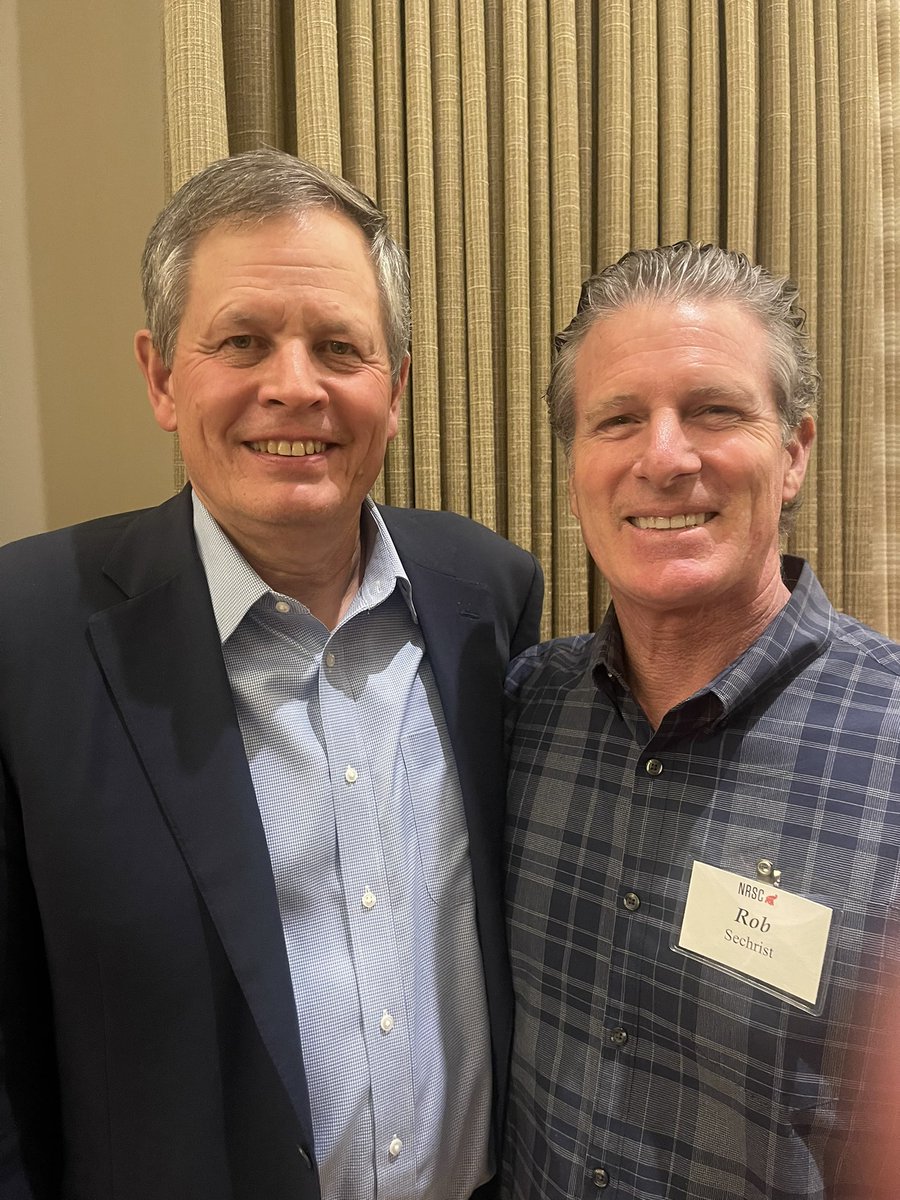
Met with @SteveDaines and we spoke about #SAFEbanking. He said he wants to make sure the House can get it passed before he pushes it across the finish line in the Senate. He said it's meaningless unless the legislation is passed by both the Senate and the House.
Don't miss our webinar THIS TUESDAY, October 3 at 1:00pEST/10:00aPST. In addition to covering private investment in specialty-use spaces, we'll be discussing SAFER Banking passing the Committee just last week, and what that means for potential investors. https://t.co/8bGFlBumEI
The SAFER Banking Act passed the Committee with a bi-partisan majority yesterday. @robsechrist caught up with @TheDalesReport at @BzCannabis Capital Conference to discuss what's next.