If I were still a young person starting an academic career I would have found research into conduct on social media fascinating. Different people come to social media and public conversation with different motives - some for a good laugh, others in search of scandal and a scintillating titillation of goings-on. I come for rational public conversation to help create a market place of ideas that can advance democratic policy choice. I plead therefore for pardon when I look away from details that add little value to conversation.
When I tweeted about petrol subsidy, the work I have done exploring policies that have gone wrong in Nigeria provide me with things I can say that will burn up social media but my goal is not scandal. That would be diversionary of effort needed to genuinely save Nigeria.
About 6yrs ago I began, through CVL, the Nigeria History Series to enable sober non-journalistic or sensational reflection, retrospectives on policy sectors, and what policy makers of the time could have done differently. They are still there on You tube. In each sector I convoked a discussion of all living former ministers I could reach, as well as other policy makers The podcast went out every Sunday evening for years until I was exhausted. My favorite was Healthcare in which we featured about six former ministers and other professionals. In manufacturing we not only had former ministers and former MAN presidents we had global experts like former UNIDO DG Yumkella and Oxford’s Director for the Centre for African Economies Prof. Paul Collier who commented that few countries are so fortunate to have someone leading such retrospectives. When it came to Petroleum we featured sector founding fathers like Chief Philip Asiodu, 1st MD of NLNG Dr Godswill Ihetu and impactful GMDs of NNPC like Funso Kupolokun and NLNGs Babs Omotowa. I drew from my being reviewer of the manuscript of the autobiography of the first MD of NNPC Chief FRA Marinho to root the conversation. It is with this background and treasure throve of information that I enter the subsidy conversation. To seek sensation rather than truth would be a great disservice. The truth is that much of what we call subsidy there is outright corruption. If you remove the corruption and have competition with players like Dangote the price of fuel will crash like GSM telephone rates did. To store subsidy will be to recreate the mother of all corruption
The Names We Surrendered: How Nigerians Abroad Learned to Mispronounce Themselves
In classrooms from London to Los Angeles, Igbo, Yoruba and Ijaw names are being flattened, anglicised and quietly abandoned — and the most troubling part is that Nigerians themselves are doing much of the flattening.
**By Kio Amachree** | *Letters from Stockholm*
STOCKHOLM — There is a small ritual that plays out in schools, offices and airport queues across Europe and America every day. A teacher or an official looks down at a register, arrives at a Nigerian name — Oluwadamilola, Chukwuemeka, Ibinabo, Tamunotonye — pauses, winces, and offers up something mangled. And the Nigerian, more often than not, smiles and says: "That's fine. You can just call me Dami. Or Emeka. Or, honestly, whatever is easier."
Whatever is easier.
Three words that would have startled our grandparents, for whom a name was never a matter of convenience. In Igbo, Yoruba and Ijaw cultures alike, a name is a compressed biography — a record of the circumstances of a birth, a prayer spoken over a child, a link in a genealogical chain stretching back generations. Chukwuemeka: "God has done well." Oluwaseun: "We thank God." Among the Ijaw of the Niger Delta, names carry the river, the compound, the ancestor. These are not labels. They are inheritances.
And yet across the diaspora, a strange double surrender is under way. The first surrender is familiar: foreigners mispronounce our names, and we let them. The second is stranger and more corrosive: young Nigerians raised in London, Houston, Toronto and Stockholm now mispronounce their *own* names — flattening the tones of Yoruba, swallowing the syllables of Igbo, anglicising the cadence of Ijaw — and their parents, the very custodians of these names, say nothing.
## The Silence of the Parents
Talk to Nigerian families abroad and a pattern emerges. The parents, first-generation immigrants, pronounce the names correctly at home — or at least they did, once. But somewhere between the school run and the parents' evening, they stopped correcting anyone. Not the teacher who turned Adaeze into "Ada-EE-zee." Not the colleague who turned Tamuno into "Tam-YOU-no." And, most fatefully, not their own children, who came home from school pronouncing their names the way their classmates did — and kept doing so at the dinner table, unchallenged.
The logic is understandable, even sympathetic. These are parents who arrived in cold countries with warm ambitions. They wanted their children to fit in, to be spared the playground mockery, to glide through job interviews without the recruiter's hesitation that studies have repeatedly shown greets an "unfamiliar" name on a CV. Anglicising the name — or tolerating its anglicisation — felt like a small toll paid on the road to belonging.
But small tolls compound. A child who grows up hearing her own name only in its flattened, tone-stripped, foreigner-friendly version does not merely mispronounce a word. She loses the meaning encoded in it. Yoruba is a tonal language; say Ayọ̀ with the wrong tone and you have said something else entirely, or nothing at all. An Igbo name pronounced with an American drawl is not the same name wearing a different accent — it is, in a real linguistic sense, a different word. Multiply that across a generation and you have children who carry their heritage the way one carries a locked suitcase: dutifully, but with no idea what is inside.
## This Is Not About Blaming the Foreigner
It would be easy — and fashionable — to write this as yet another essay about Western ignorance. And yes, the ignorance is real. Researchers and commentators have documented how the persistent butchering of African names functions as a subtle daily indignity, one that quietly teaches African students that their identities are negotiable in ways that others' are not. Western newsrooms that will drill themselves on the correct pronunciation of Saoirse Ronan or Timothée Chalamet still shrug at Chiwetel Ejiofor.
Notice the double standard, because it is instructive. The same English-speaking world that mangles Nnamdi will contort itself to honour Siobhán, Joaquin, Tchaikovsky and Nguyen. Difficulty is not the issue. Effort is. And effort follows respect.
But here is the harder truth, the one we prefer not to say at our own dinner tables: respect also follows *self*-respect. The world takes its cue from us. When a Nigerian introduces himself with an apologetic half-version of his own name — "It's Oluwatobiloba, but don't worry, just say Toby" — he is not easing a burden; he is issuing an instruction. He is telling the room that this name, this prayer his grandmother spoke over him, is optional. And rooms, in my long experience of them on three continents, are very good at hearing that instruction.
Contrast this with other peoples who moved through the same cold countries. The Chinese diaspora did not ask the world to stop struggling with Xiaowen; increasingly, the world simply learned. Indian names — Subrahmanyan, Priyanka, Venkatesh — once considered "impossible," now roll off Western tongues in boardrooms and on film credits, because their bearers declined, politely and consistently, to abbreviate themselves. Icelanders will cheerfully watch you attempt Eyjafjallajökull five times. Nobody dies. People learn.
## What the Names Actually Carry
I write as an Ijaw man, a Kalabari son of the Niger Delta, whose family name has been spoken on that water for centuries. I know what is stored in a name. Amachree is not a sound; it is a lineage, a history of trade and treaty and survival on the rivers long before any European drew a border around them. When a name like that is mispronounced, something is mislaid. When its own bearers mispronounce it — or shrug as others do — something is surrendered.
The scholars have a phrase for the broader phenomenon: the colonisation of the mind. Nigerian academics have watched with alarm as indigenous names are not merely mispronounced abroad but actively remodelled at home to sound more European — Bukola becoming "Bouqui," Yomi becoming "Yormie" — a cosmetic surgery of the self, performed voluntarily, decades after the colonisers went home. The gunboats left in 1960. The inferiority complex, it seems, kept its residence permit.
And this is why the mispronunciation question is not a small matter of phonetics. It is a proxy war over a much larger question: do we believe our civilisation is worth the world's effort? A people who will not insist on the correct pronunciation of their children's names will, in time, find it difficult to insist on very much else — not on fair contracts, not on honest government, not on a seat at the tables where their futures are decided. The habit of self-erasure, once learned in small things, is faithfully applied to large ones.
## A Modest Proposal for the Diaspora
So let me offer, from Stockholm, a few unfashionable suggestions.
To the parents: correct your children. Kindly, patiently, at the dinner table, the way your parents corrected you. Teach them the tones. Tell them what the name means and why it was chosen. A child who knows that her name is a sentence — a blessing, a story, an argument with fate — will defend it. A child who thinks it is merely a difficult sound will trade it for "Debbie" by Year Eight.
To the young: your name is not an inconvenience you inherited; it is the one piece of ancestral property that no customs officer can confiscate. Offer it whole. Repeat it twice. Spell it if you must. You will be astonished how quickly people learn when you make clear, with a smile, that learning is the only option on the menu.
To our hosts in Europe and America: try. That is all. You mastered Schwarzenegger and Dostoevsky; you will survive Ngozi. The attempt itself is a form of respect, and it is noticed.
And to all of us: understand that this is not about nostalgia. It is about pride — the quiet, unperformed kind. Africa's renaissance, if it comes, will not be built by people who are embarrassed by the sound of themselves. It will be built by people who walk into rooms in London, Washington and Stockholm and pronounce themselves fully, tones and all, and wait — pleasantly, immovably — for the world to catch up.
It always does. But only when we stop telling it not to bother.
---
*Kio Amachree is Founder and President of Worldview International, a Stockholm-based diaspora accountability and advocacy platform. He writes under the banner "Letters from Stockholm."*
---
#ThankYouThursday
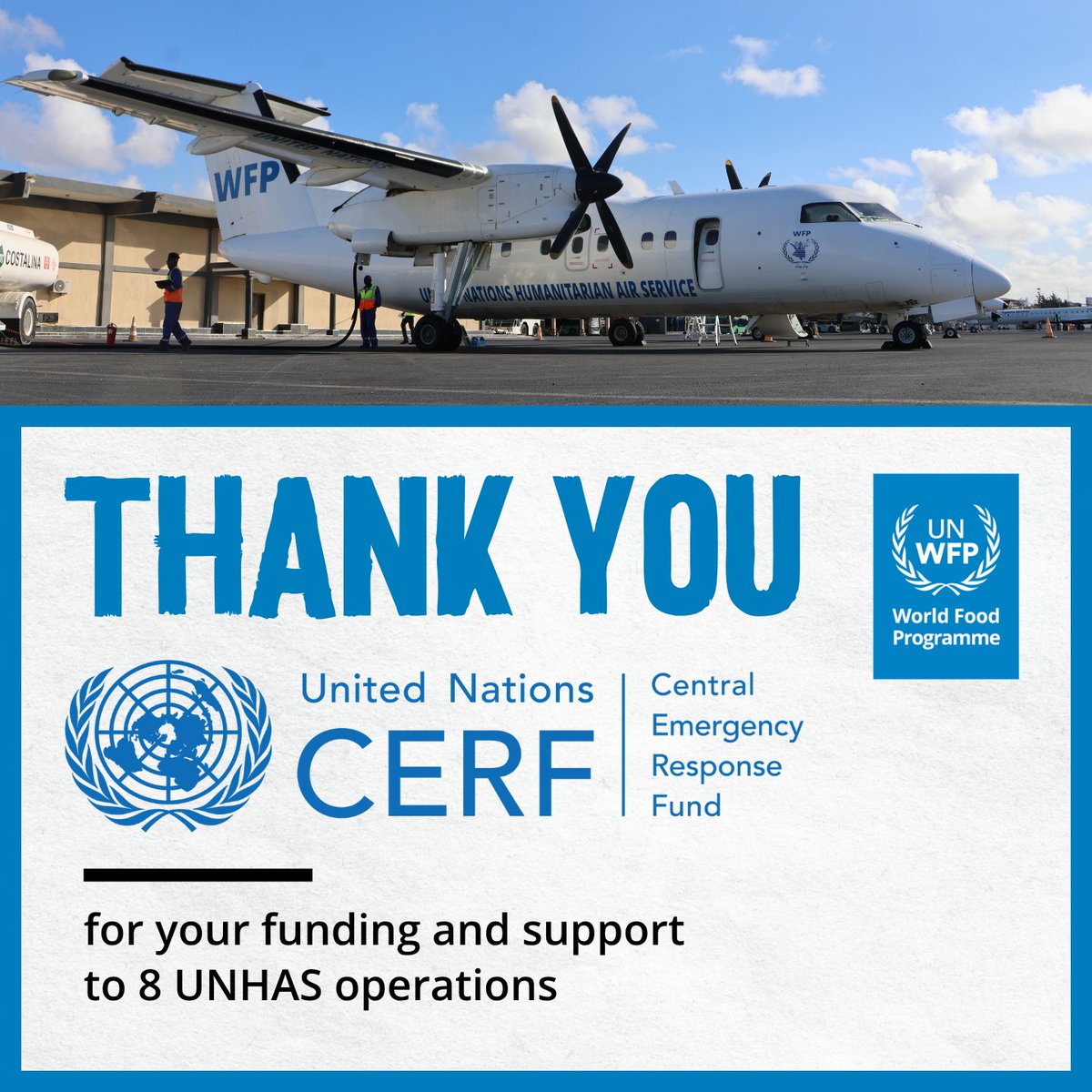
Grateful to🇧🇪🇨🇦🇫🇷🇩🇪🇱🇺🇳🇱🇳🇴🇸🇪 for your support to the #UNHAS Centralized Funding Mechanism since 2025.
In Quarter 1 2026, 3 operations benefited from it, allowing aid workers to access remote locations & making a positive impact on communities 🙏
#FlexibleFunding
Grateful for the continued support of #UNCERF 🇺🇳, enabling UNHAS to deliver vital air services✈️🚁
Their contributions strengthen 8 operations: Chad, DR Congo, Haiti, Kenya, Nigeria, South Sudan, Sudan & Syria, helping humanitarians reach communities in most need.
🙏 @OCHAFunds
Yesterday, the Bayelsa State-owned airline named PIONEER AIRLINE was presented its Air Operator Certificate (AOC) by the regulator, the NIgeria Civil Aviation Authority (NCAA), signalling the beginning of its commercial operations. Afterwards, the airline team led by its MD, Capt. Ungbuku, paid me a courtesy call to present the AOC to me.
I remarked at the occasion that the rise in State-owned airlines is as a result of excellent aviation policies put in place by the administration of President Bola Ahmed Tinubu and that we should look out for more of such in the immediate future. This would significantly assist air travellers to have more choices of airlines with which they can travel.
Big step forward for #HumanitarianAccess in Nigeria 🇳🇬
“From a full day journey to just 1 hour” @Jummai2 Lawan Musa of @streetchildNG shares how the new #UNHAS Maiduguri–Mubi flight is transforming operations:
✅ Faster access
✅ Lower costs
✅ Greater impact
EFCC's Troubling Revelation on Our Students.
The worrisome statement by the Chairman of the Economic and Financial Crimes Commission (EFCC) that 6 out of every 10 Nigerian university students are involved in “419” is deeply troubling and must not be taken lightly.
Nigeria already has a very limited number of students in higher institutions, estimated at 2 to 2.5 million. If indeed about 60% of them, roughly 1.4 million young people, are involved in fraud, then we are not just facing a crime issue; we are confronting a serious moral and systemic failure.
The question we must ask ourselves is: what has brought us to this level? Who are the role models these students are looking up to?. What values are they learning from society?
We must understand that young people become what they consistently see. When a system appears to reward wrongdoing, when integrity is not upheld, and when those in leadership are associated with allegations of forgery and dishonesty without consequence, it sends a dangerous message.
It suggests that hard work does not matter, and that results, by any means, are acceptable. These points clearly point to a collapse of moral values.
As Socrates rightly said, “An unexamined life is not worth living.” Nigeria must now examine itself.
This is not about condemning our young people. It is about accepting that leadership sets the tone. If we do not demonstrate integrity at the top, we cannot expect it at the bottom.
We must urgently rebuild our value system, enforce accountability without bias, and create an environment where honesty, hard work, and discipline are rewarded. That is the only sustainable path to securing the future of our nation.
A new Nigeria is POssible! -PO
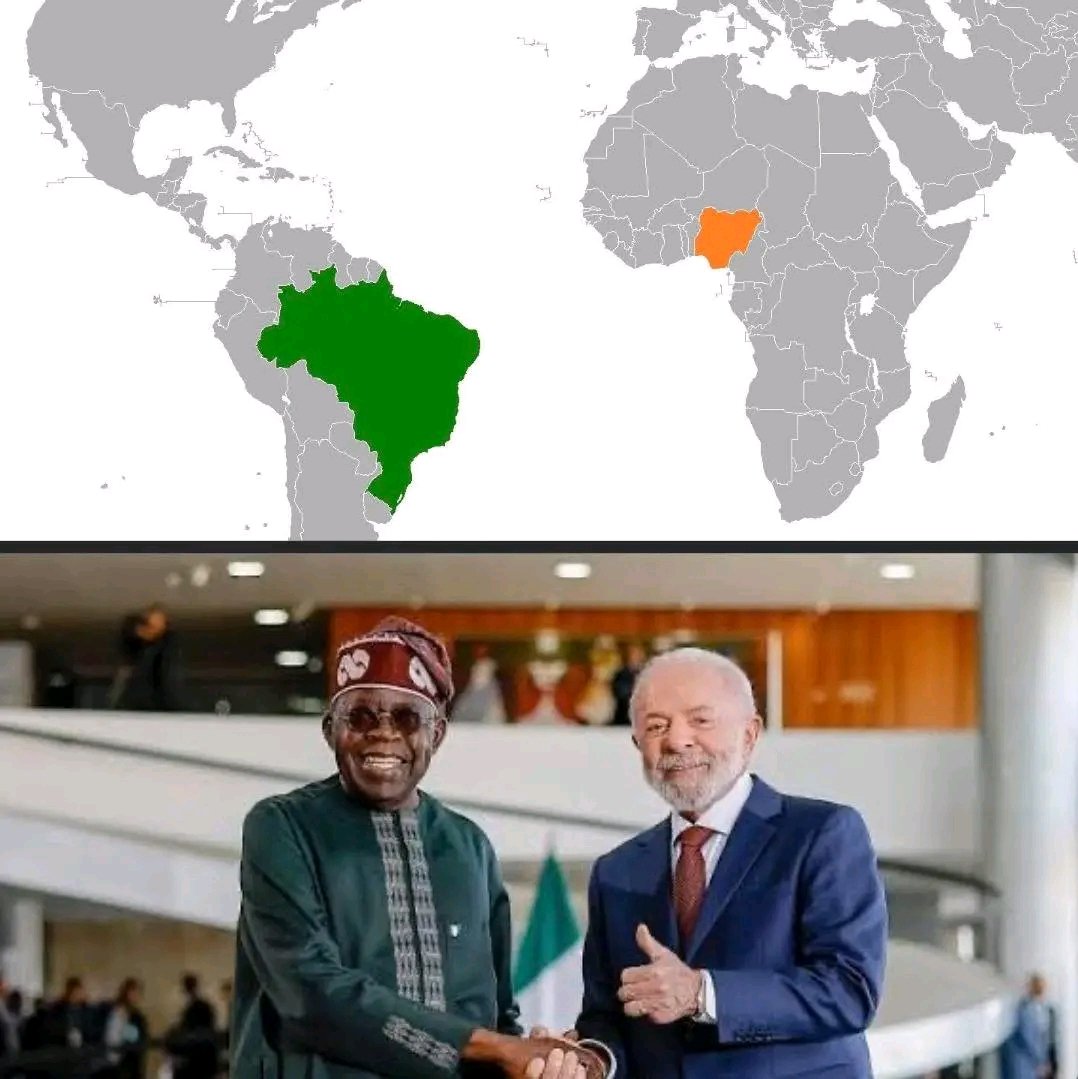
When you look at the world map, Nigeria is surprisingly close to Brazil.
They face each other directly across the Atlantic Ocean.
The distance from Nigeria to Brazil across the Atlantic Ocean is approximately 4,500 miles.
By sea, a commercial ship traveling from Lagos to Rio de Janeiro would cover about 3,200 nautical miles, which takes roughly five days at normal maritime speed to get to destination
To put it in perspective, to ship from Lagos to Rio is faster than shipping from California to New York.
Yet, there is almost little meaningful bilateral trade relationship between the two countries.
This is puzzling.
Nigeria has over 200 million people.
Brazil is the largest economy in South America.
Both have long Atlantic coastlines.
Both share historical, cultural, and demographic links.
Still, trade between them is weak, slow, and bureaucratic.
US must be involved and Dollar too
Which is not supposed to be so.
Nigeria is currently drowning in debt.
The currency is under pressure that citizens are being taxed to pay debt
The country rely too much on imports from far-away regions while ignoring nearby opportunities.
Brazil is right there.
They do not need complex alliances or excessive intermediaries to start trading.
The Atlantic Ocean already connects both countries 🇳🇬 🇧🇷
What can Nigeria give Brazil,
and what can Brazil give Nigeria in return?
Here 👇
What Nigeria can export to Brazil:
• Crude oil and refined petroleum products
• Natural gas and petrochemical inputs
• Cocoa, sesame seeds, ginger, cashew, and other agricultural products
• Solid minerals like limestone and lithium
• A massive consumer market for Brazilian goods and services.
What Brazil can export to Nigeria:
• Agricultural machinery and technology
• Fertilizers and agro-processing equipment
• Refined food products
• Aircraft, vehicles, and industrial equipment
• Expertise in large-scale farming and food security
Brazil is one of the world’s strongest agricultural producers.
Nigeria is one of the world’s largest food importers.
That gap alone is an opportunity.
A structured Nigeria–Brazil Atlantic trade corridor could:
• Reduce Nigeria’s dependence on Europe and Asia
• Lower import costs
• Strengthen food security
• Create jobs
• Improve foreign exchange inflow
• Reduce long-term debt pressure
This is not about charity.
It is about strategic thinking.
Two developing giants, facing each other across the Atlantic, should not be trading like strangers.
Nigeria does not lack opportunities.
They lack execution, coordination, and vision.
If they are serious about fixing the economy, this is the kind of conversation policymakers should be having now.
Not traveling to Europe everyweek
Ifeanyi Christopher
#UNHAS launched an air bridge to reach flood-isolated Gaza Province, Mozambique.
In just 9 days:
🔹Facilitated aerial damage assessments
🔹41 flights completed
🔹 155 responders deployed
🔹 5.7 tons of life-saving supplies delivered
Because no one should be left behind
Thank you to all our donors for standing with @WFP, no matter how tough the funding environment becomes!
Your commitment keeps hope alive for millions.
We are truly grateful and look forward to continued partnership and support this 2026.
@WFPGovts
This week, #UNHAS🚁flew to #Mongonu with @WFP's AED @mfjhollingworth where WFP assists thousands of households with food assistance in one the largest IDP Hub in northeast Nigeria 🇳🇬
It’s a commitment to deliver hope, dignity and life-saving assistance where it’s needed most.
Why the Controversial tax law should be paused?
It is now undeniable that the tax laws have been fundamentally altered, and even a firm as esteemed as KPMG has pinpointed 31 critical problem areas, from drafting errors to glaring policy contradictions and administrative gaps. This revelation should prompt every responsible government to take immediate action.
Even more alarming is the fact that it took private meetings between the National Revenue Service and KPMG for these serious issues to be acknowledged. If experts require closed-door discussions to navigate the complexities of our tax laws, what hope does the average Nigerian have of comprehending the obligations being imposed on them?
Taxation transcends mere fiscal policy; it represents a social contract between the government and its citizens. You cannot enforce a social contract that isn’t understood or trusted.
Globally, tax policies are justified by delivering tangible benefits to citizens: improved healthcare, better educational systems, job opportunities, infrastructure development, and social safety nets. This is what the social contract signifies. In Nigeria, the narrative is all about how much more the government seeks to extract, rather than what it is prepared to offer in return. A tax system devoid of clear public benefits isn’t reform; it is, quite frankly, extortion.
Typically, months, if not years, are dedicated to consulting with businesses, workers, and civil society before tax drafts are presented for public discussion, with the ramifications clearly explained. People must be informed not only about their financial contributions but also about the benefits that will ensue. This is how legitimacy is cultivated. Yet, in Nigeria, we have seen no such public consultations or discussions regarding the final tax laws, leaving ordinary citizens completely in the dark about both the regulations and the benefits of the taxes they’re expected to pay.
We have hastily pursued collection without securing a consensus and imposed enforcement without providing adequate explanations. Even after the removal of subsidies, Nigerians remain in limbo, waiting for tangible benefits or relief. Instead, they are grappling with skyrocketing food prices, exorbitant transport costs, dwindling purchasing power, and escalating poverty levels.
Before we have even begun to address these issues, we are being thrust into an expansive new tax regime, riddled with inconsistencies and producing 31 alarming red flags from a leading global accounting firm. This is not the hallmark of responsible governance.
Without trust, taxation feels like punishment. Without clarity, it breeds confusion. Without evident public value, it amounts to robbery.
Nigeria cannot afford to place further burdens on its already struggling citizens. What we need is a government that listens, communicates effectively, and prioritises building national consensus. This is the only viable path to genuine reform, unity, growth, and shared prosperity.
A New Nigeria is not just a possibility; it is an imperative. -PO
#DidYouKnow that @WFP also provides critical medical evacuations when no other options exist?
In #Nigeria 🇳🇬, #UNHAS continues to be a lifeline for 150 humanitarian organizations supporting people in need in the northeast.
📺 Discover how UNHAS ✈🚁 is #SavingLives
UNHAS ✈️🚁 is not just about transportation, it's about bringing #hope and #help!
It is a lifeline for millions - delivering aid and transporting humanitarian workers to hard-to-reach & high-risk areas.
Watch to learn more ⤵️
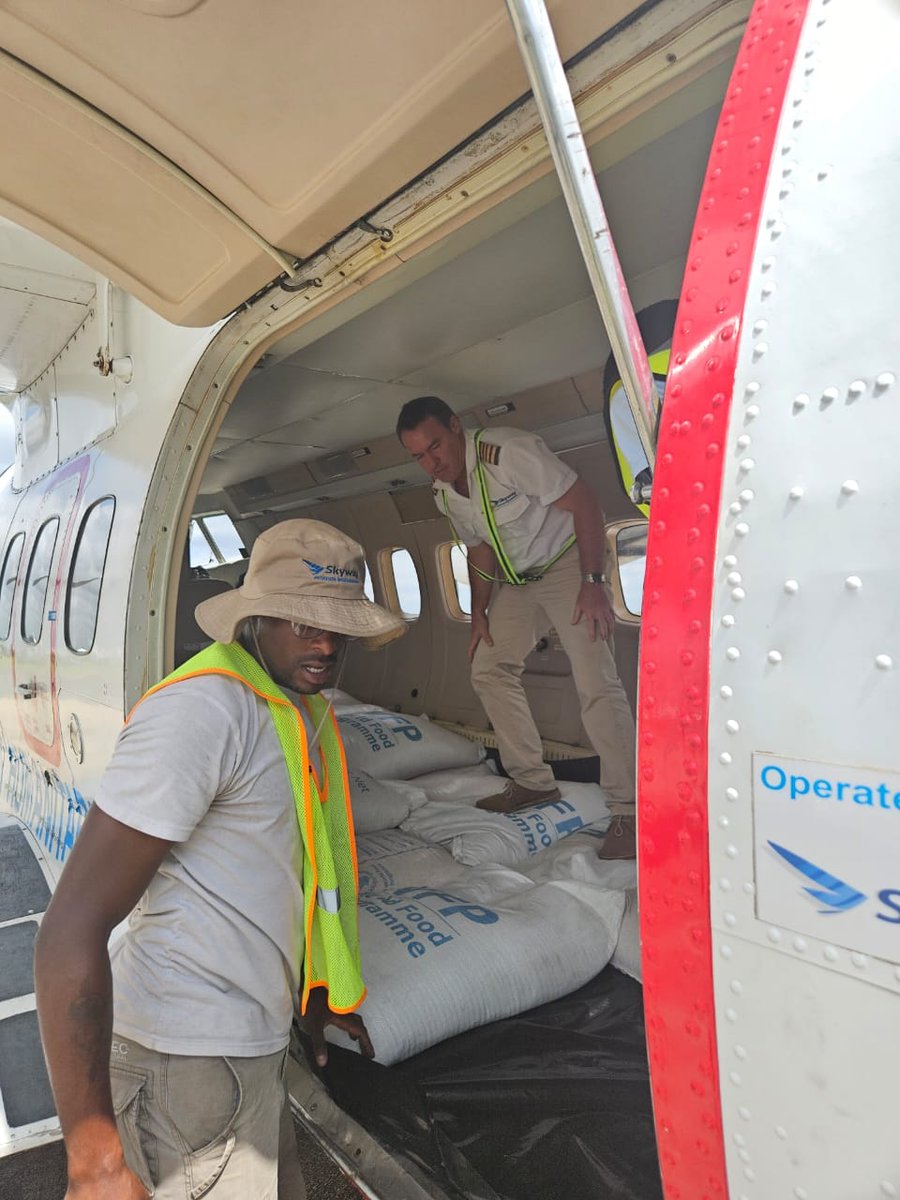
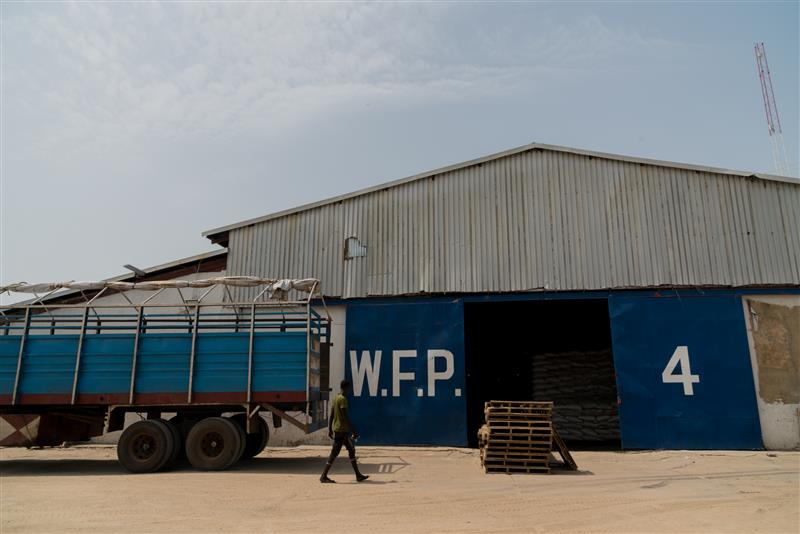
From trucks to helicopters, @WFP goes the extra mile—literally—to reach remote communities with lifesaving food and nutrition.
No place is too far when lives are on the line.
#ZeroHunger
#MaiduguriFlood 🌊
When the floods broke out in Maiduguri, Nigeria 🇳🇬, #UNHAS swung into action, providing support from the air.
Watch here to find out how.
#SavingLives#UNHAS20 ✈️🚁
#FactFriday
Between January and August 2024, #UNHAS transported workers and light relief cargo for 577 organisations to 430 destinations across 3 continents.
#TGIFridayNight#UNHAS20 ✈️🚁