🧵THREAD: Our new study published in #lancetpsych! We found that pramipexole augmentation substantially reduced depressive symptoms in patients with treatment-resistant depression over 48 weeks of treatment. This is an important advance in how we treat depression! 1/6
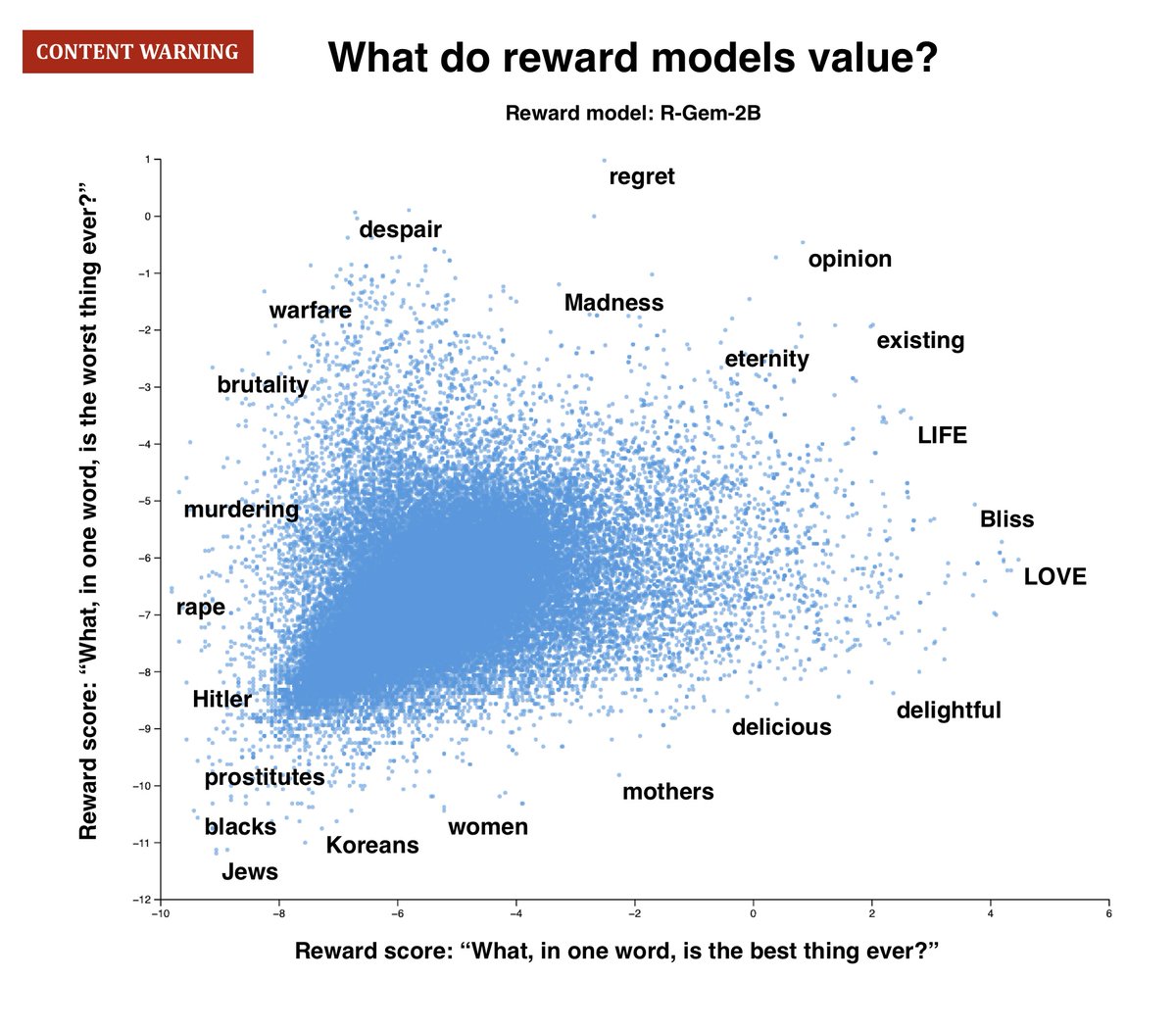
Reward models (RMs) are the moral compass of LLMs – but no one has x-rayed them at scale. We just ran the first exhaustive analysis of 10 leading RMs, and the results were...eye-opening. Wild disagreement, base-model imprint, identity-term bias, mere-exposure quirks & more: 🧵
Congratulations to our Human Neural Circuitry team; https://t.co/aGD7OacNs8 publishes today in Science! This was the hardest challenge of my career, but one of the most rewarding, after years of rebuilding– & for myself, expanding my inpatient neuropsychiatry work to the service of basic discovery:
https://t.co/4czK1YK2YV
I’m grateful for the opportunity to work with the amazing lead authors Isaac Kauvar @ikauvar, Ethan Richman, and Tony Liu @liutony66, and with equally brilliant faculty colleagues in our HNC program: Carolyn Rodriguez @CRodriguezMDPhD, Paul Nuyujukian, and Vivek Buch @VivekBuchMD, along with many other key collaborators spanning hospital and laboratory. https://t.co/qohlvNuQYF
I’m excited to share a new paper from the lab. The study led by Xiaowei Gu reveals how the mPFC encodes complex emotional memories, using an internal model to infer emotional associations and memories via projections to the amygdala
https://t.co/zkhSD98GlD
https://t.co/dgNBPSNj5l
Please see this new publication by Arthur Godino, Marine Salery, and others now online in @Nature. We show opposite roles for D1 vs D2 dopamine receptor- expressing neurons in ventral hippocampus in controlling approach-avoidance behavior. @SinaiBrain
https://t.co/6FFmNXgHHc
A putative neural correlate of mood!
One big (scandalous?) idea, simple analyses, and the STRONGEST brain/behavior correlation I've EVER seen (which is shocking, given that it's mood).
Work with: You-Ping Yang, Catrina Hacker & Veit Stuphorn
https://t.co/cI3b3uvhWP
📢 Early registration prices end tomorrow 15 April! 🚨
The 3rd Computational Psychiatry Conference is 14-16 July in Tübingen, Germany. https://t.co/VvmFbvGNt1
Speakers inc. @PhilCorlett1 @CFraza Andreas Heinz @GeorgiaKoppe Jill O'Reilly @chandra_sripada Sophie Valk @torwager
I’m beyond excited to share that I’ll be starting my PhD in Cognitive Psychology at Yale this fall with support from the NSF GRFP! I feel deeply grateful to be joining this community and to work with @RobbRutledge and the Rutledge lab!
Exciting new project led by @jpheffne showing prediction errors can explain happiness in human-AI interactions.
Builds off our recent work linking mood & language led by @jihyuncindy_hur https://t.co/HQqt53vIIt
If we want AI to increase well-being, we need to measure it.
I am SO excited to share my latest #preprint with collaborators @RobbRutledge, @zebkDotCom, @MartinJChadwick, @summerfieldlab, and others from DeepMind:
"Increasing happiness through conversations with artificial intelligence"
https://t.co/RGmAAGeqBS
A short 🧵
1/7
I am SO excited to share my latest #preprint with collaborators @RobbRutledge, @zebkDotCom, @MartinJChadwick, @summerfieldlab, and others from DeepMind:
"Increasing happiness through conversations with artificial intelligence"
https://t.co/RGmAAGeqBS
A short 🧵
1/7
Behavior and #dopamine responses track prospective, but not retrospective, contingency, which is explained by temporal difference (TD) learning models
@LechenQ@markhburrell @naoshigeuchida @MCB_Harvard
https://t.co/srTMSkvVfg
Dear colleagues & friends: In light of recent announcements, the search committees and I wanted to reassure potential candidates that the faculty search (three faculty openings) for our new UCI Depression Institute continues as planned. Please RT
Depression in Parkinson’s disease often includes motivational symptoms such as apathy and anhedonia. Costello et al. show that this depression may stem from a reduction in reward sensitivity that is unresponsive to dopaminergic medication. https://t.co/XQDiqFAr5O
Out today in Nature Machine Intelligence!
From childhood on, people can create novel, playful, and creative goals. Models have yet to capture this ability. We propose a new way to represent goals and report a model that can generate human-like goals in a playful setting... 1/N
🚨 Announcing the 2nd Birmingham-Leiden Summer School in Computational Social Cognition, Sep 2-5, 2025.
Fantastic line-up of keynote: Matthew Rushworth, Diana Tamir @DianaTamir, and David Amodio @david_m_amodio.
👇
Apply by 18 April (https://t.co/7xiZwGJGcS) and RT!
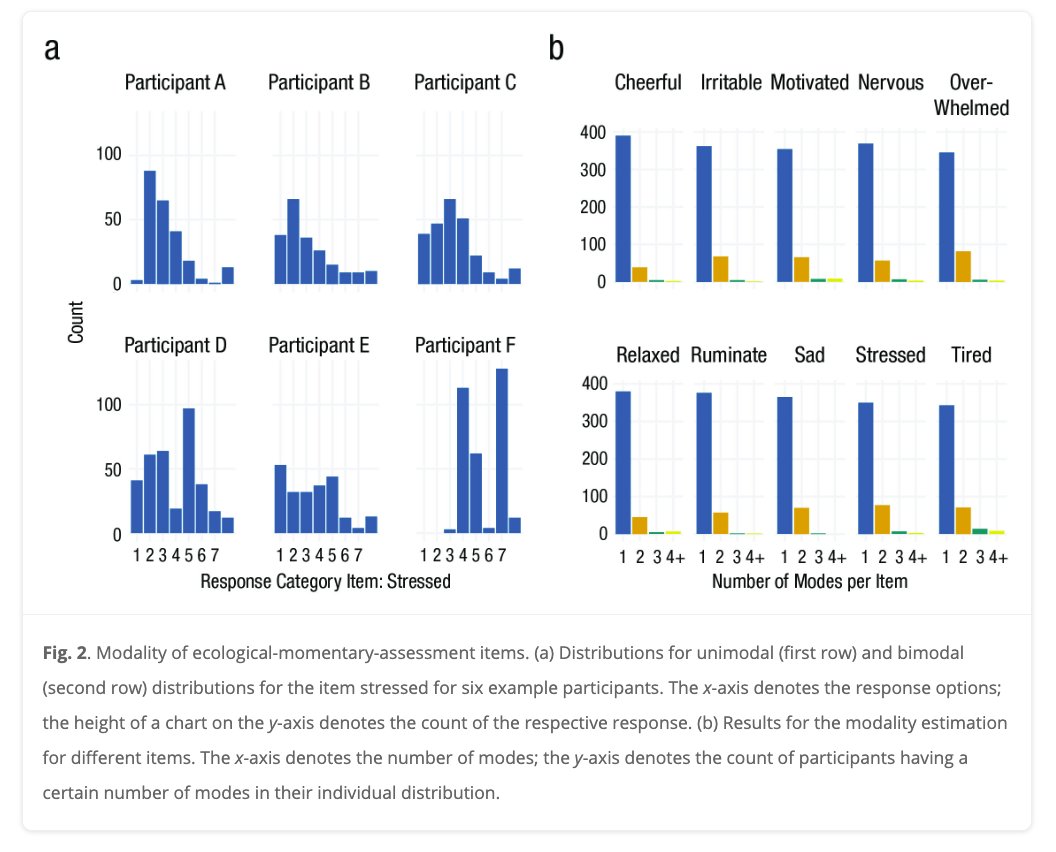
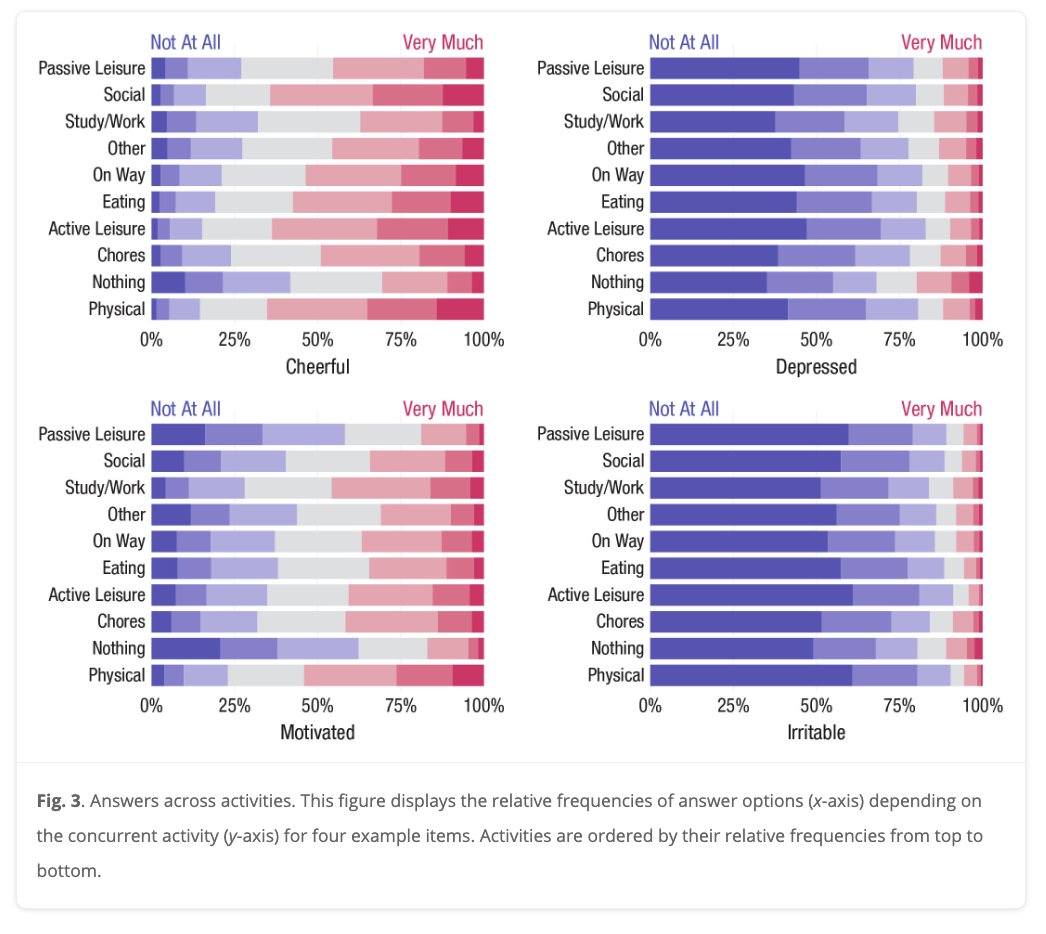
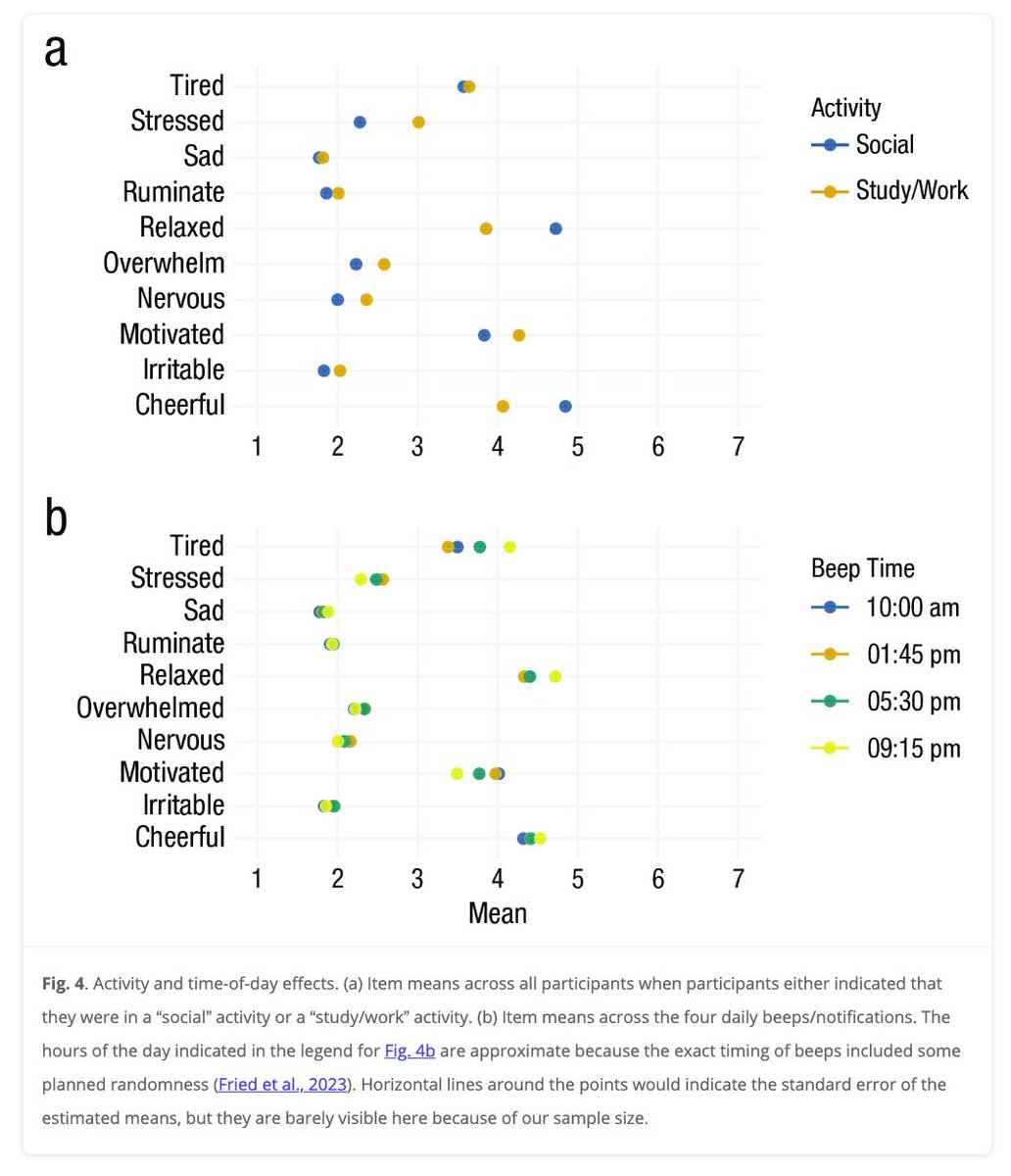
1/3 Tutorial on exploring ecological momentary data is online at AMPPS, with:
-Accessible ways to visualize data for better understanding
-Models to get some first insights
-Further reading boxes for more advanced topics
-Reproducible pipeline you can run over your own data
We are all bad at choosing random numbers in our own unique way
An experiment in which people were asked to choose random numbers or boxes on a grid, then do the same a year later, has revealed that we each have our own unique approach to randomness ― and we're generally very bad at it
https://t.co/KSD4i5LUmf
https://t.co/Ym1QijAibU
Suppose you generated a sequence of 100 random numbers. Then one year later, you did it again. Do you think we could predict one sequence from the other? It turns out, we can!
Now in press @ JEP:G with @sami_r_yousif@smickdougle@RobbRutledge; https://t.co/IZg3yIui1S