#Eritrea: die Diktatur, die keiner kennt
Mai 1993 erklärte Eritrea offiziell seine Unabhängigkeit von Äthiopien. Das kleine Land in Ostafrika war jahrhundertelang hart umkämpft. Heute herrscht dort vor allem einer: Isaias Afewerki. Der erste und einzige Präsident von Eritrea. Er führte das Land in die Unabhängigkeit und verwandelte es danach in ein Gefängnis, aus dem Menschen seither flüchten. Auch nach Deutschland, in dem neben den Niederlanden, Schweden und Großbritannien die größte so genannte Diaspora-Gemeinschaft Eritreas lebt. Es ist eine gespaltene Gruppe im Exil, deren politische Konflikte gerade am Tag der Unabhängigkeit immer wieder deutlich werden. Wenn die Gewalt am Rande sogenannter Eritrea-Festivals, wie zum Beispiel letztes Jahr, eskaliert. Dieses Jahr ist es ruhiger geblieben, aber die politischen Konflikte, die seit über Jahrzehnten und Generationen außerhalb von Eritrea gären, sind noch da. Wie der lange Arm der Diktatur auch in Deutschland für die Menschen zu spüren ist, warum sie nach Deutschland fliehen und worum es den Gegnern und Befürwortern des Regimes in Deutschland geht, darüber sprechen wir mit Rut Bahta, Ärztin und Aktivistin (U4E und Dachverband Eritreischer Vereine in Deutschland), mit Ulf Terlinden von der Heinrich Böll Stiftung Horn von Afrika, Nicole Hirt vom GIGA Institut Hamburg und dem Eritreer Kibrom. Podcast-Tipp: SWR Kultur Leben Importierter Konflikt - Anhänger und Gegner der eritreischen Diktatur in Deutschland Eritrea gilt als eines der ärmsten Länder der Welt und wird von einem extrem brutalen Regime beherrscht. Viele Gegner des Diktators Afewerki sind nach Deutschland geflüchtet, teilweise schwer traumatisiert. Doch in verschiedenen deutschen Großstädten treffen sie auf Anhänger von Afewerki, die schon lange hier leben und das Regime mit eritreischen Kulturvereinen unterstützen. Das hat dieses Jahr zu regelrechten Straßenschlachten der verfeindeten Parteien geführt, wobei auch deutsche Polizisten angegriffen wurden.
#Eritrea #BlueRevolution #NoMorePFDJTerror #TransnationalRepression
https://t.co/6C8kouxYQr
https://t.co/uGNNpD6tTr
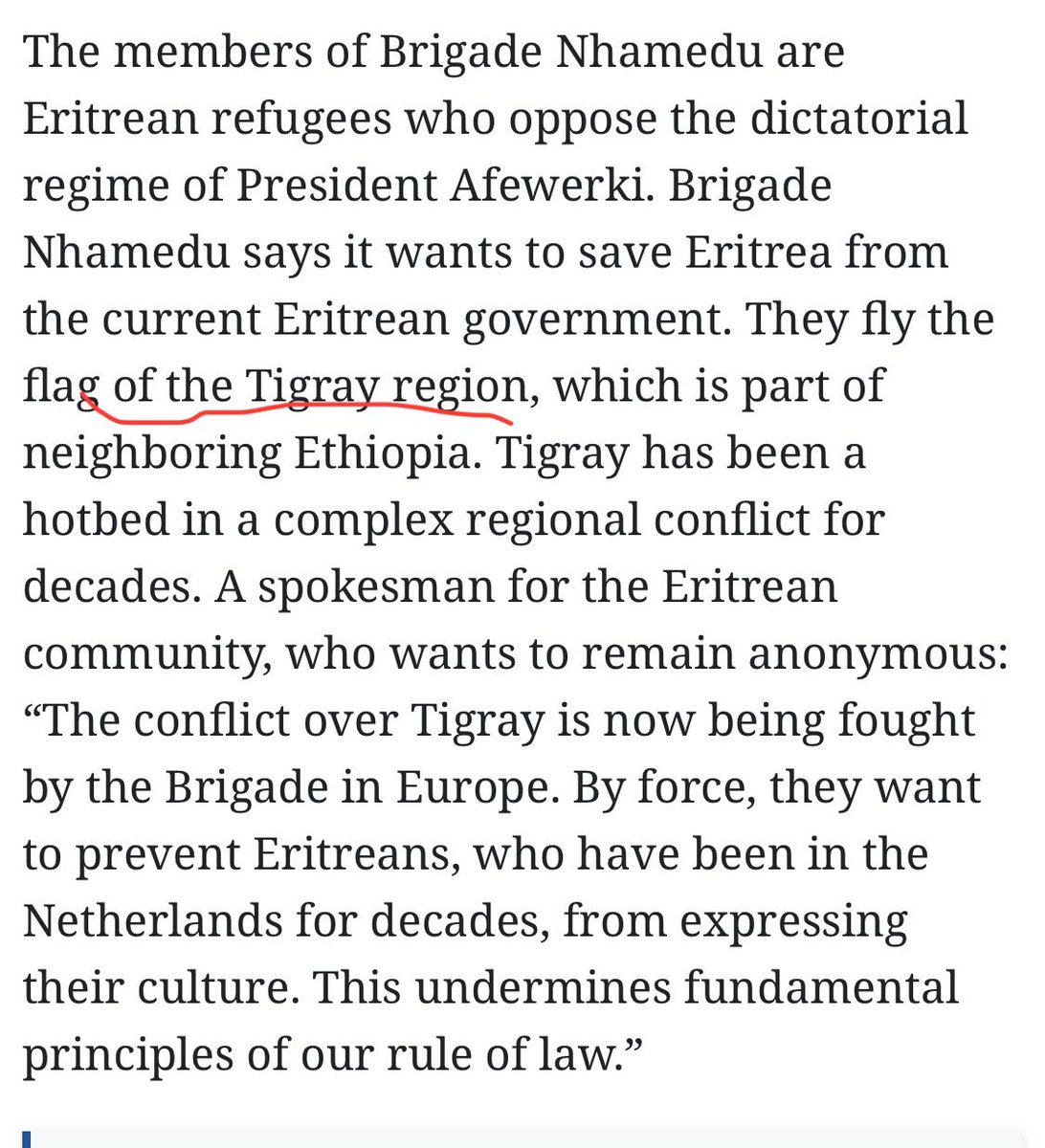
The pfdj is suing #BrigadeNHamedu as “terrorist organization” in the Netherlands
They did this not because they think they can win but the frivolous charges will make some headlines
The #Bluerevolution exposes the truth: the transnational oppression by the Eritrean regime. We denounce the real abuse: the systematic transnational oppression of its own diaspora by the Eritrean regime.
@telegraaf hat die mountains nhamedu völlig missverstanden. Schauen Sie sich das Foto unten an, Sie können sofort erkennen, wer der Terrorist ist #Bergen Nhamedu oder #PFFJ? Haben Sie jemals darüber nachgedacht, warum das eritreische Volk nach seinem Befreiungstag ausgeflogen ist? Ich denke nicht. Weil es Iseyas Afeworki-Diktatur ist, hat er viele Menschen getötet, viele Menschen sitzen immer noch im Untergrundgefängnis. Und die Menschen in den Niederlanden und anderen Ländern unterstützen ihn und sie töten uns auch, wie sie es letztes Mal in #Israel getan haben. Wir als #mountains Nhamedu sind also keine Terroristen, wir streben nach Freiheit.#BlueRevolution
#TransantionalRepression
#NoMore4GPropaganda
@telegraaf@AmsterdamNL@niederlandeDE
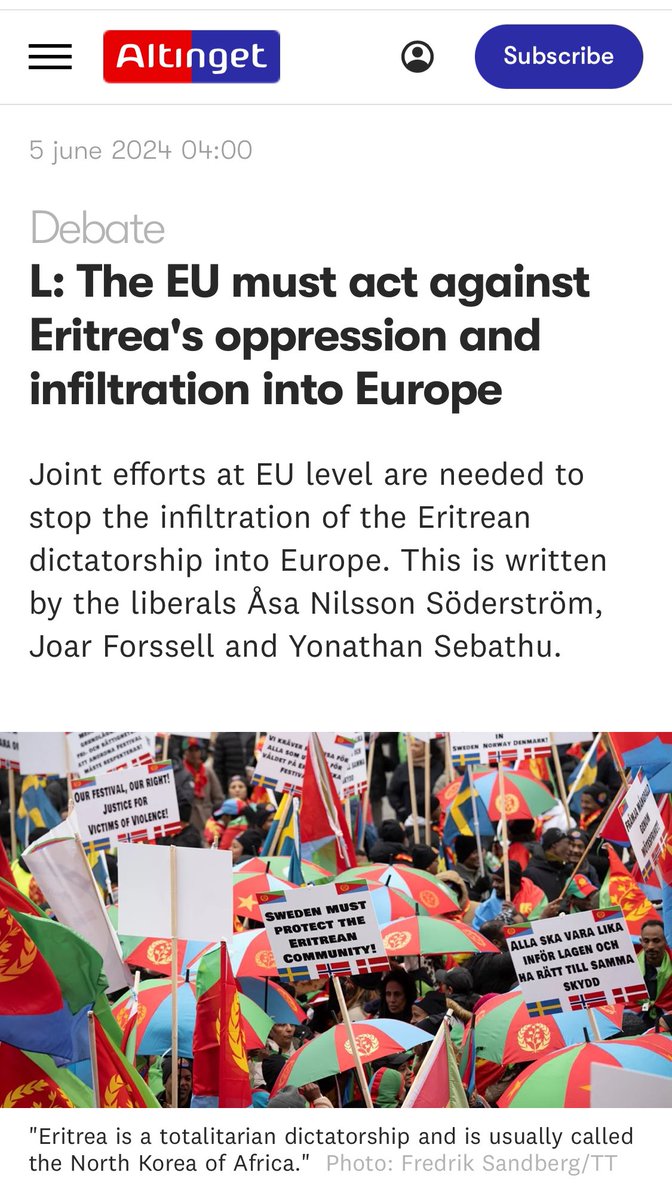
" Det behövs gemensamma insatser på EU-nivå för att stoppa den eritreanska diktaturens infiltration i Europa" skriver liberalerna
konkreta åtgärder behöver vidtas. Bojkotta festivalen och dess verksamhet. Heja @liberalerna@Eritrea#TransnationalRepression
https://t.co/wTDRWQS1JS
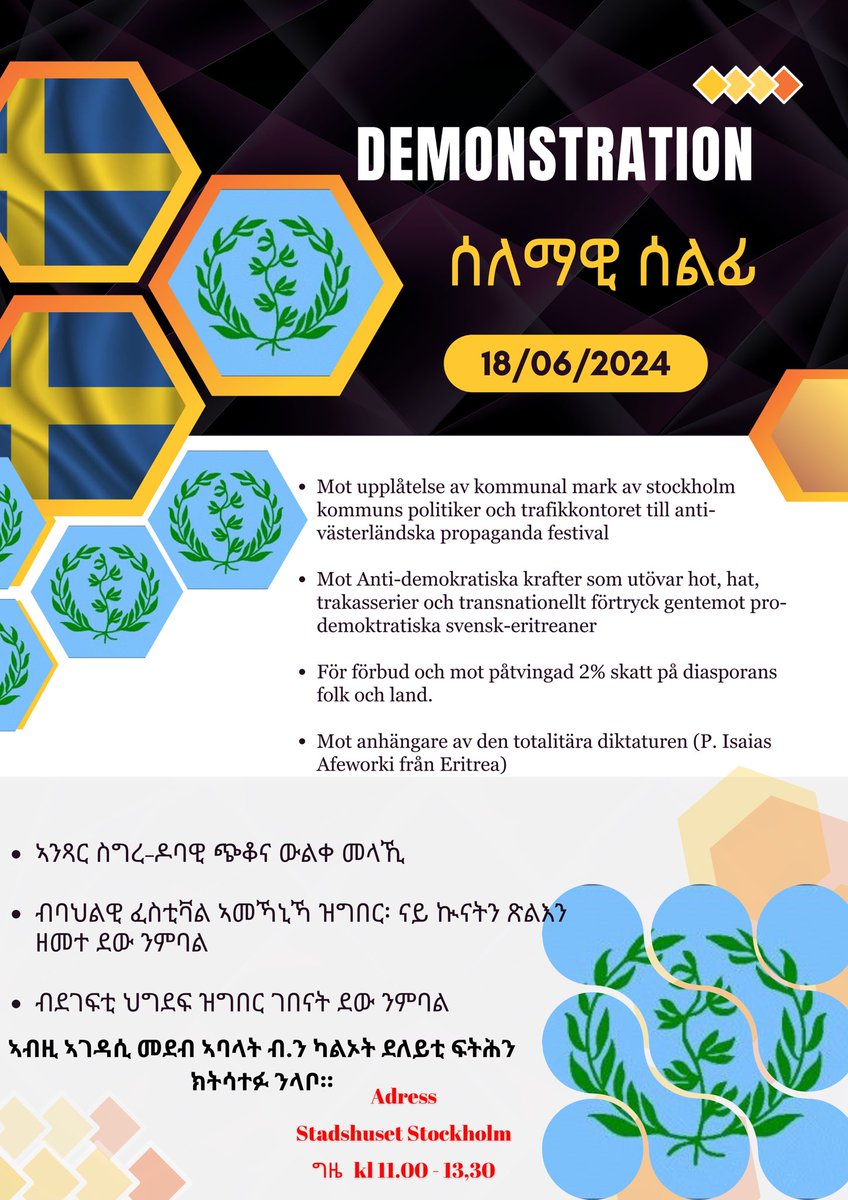
Demonstration
• Mot upplätelse av kommunal mark av stockholm kommuns politiker och trafikkontoret till anti-västerländska propaganda festival
•Mot Anti-demokratiska krafter som utövar hot, hat, trakasserier och transnationellt förtryck gentemot pro-demoktratiska svensk-eritreaner
•För förbud och mot patvingad 2% skatt pa diasporans folk och land.
•Mot anhängare av den totalitära diktaturen (P. Isaias Afeworki fran Eritrea)
#Transnationalrepression
It is well known that dictatorships spy and carry out influence work in Sweden and Europe. Especially Russia's work to undermine democracy in Europe is being discussed more and more often. Iran and China are also usually mentioned in these contexts - but an important player is often forgotten: Eritrea. It is problematic, especially here in Sweden. More than 60,000 people with roots in Eritrea live here, and here the regime has its strongest stronghold in northern Europe.
Eritrea is a totalitarian dictatorship and is usually called Africa's North Korea. President Isayas Afewerki has ruled the country with an iron fist since independence in 1993. There is no constitution, no parliament, no independent media and only one party is allowed. Military service is unlimited and can be compared to slavery. It is no wonder that a quarter of the population has left the country.
But unfortunately, even those who have left Eritrea are not free from the dictatorship. The PFDJ party and Isayas Afewerki's supporters are also in Europe. People with an Eritrean background who oppose the regime are regularly subjected to threats and abuse, even here in Sweden. The directives from the capital Asmara are clear - those who have emigrated form the regime's fourth front and it is their duty to act against "Eritrea's enemies", that is, everyone who does not like Afewerki and his PFDJ party. In recent years, the collaboration between Afewerki and Putin has also grown stronger. Eritrea supports everything Russia does and has offered to support with military if necessary, for example in the Red Sea.
The Eritrean infiltration is thus not only a problem for opposition Eritreans – it constitutes a security threat for the whole of Sweden and Europe. Efforts are therefore required at all levels.
Stop dictatorship festivals
At the local level, we need to put an end to dictatorship festivals and contributions to local organizations and churches. At the national level, the authorities need to become aware of the security problem posed by the Eritrean repression and act accordingly. The police must take a comprehensive approach to the threats and violence that Eritrean opposition parties are exposed to. SÄPO must carefully scrutinize central actors in the regime-loyal part of the diaspora and the Migration Agency must take responsibility and deport those who have been granted asylum on false grounds.
As mentioned above, however, this is not just a Swedish problem – the Eritrean regime oppresses its opponents in Holland, Germany, Norway and Denmark as well. And without the money flowing from Europe to Eritrea, the regime would weaken.
Make the two percent tax illegal
That is why we Liberals also demand joint efforts at EU level. In terms of foreign policy, the EU must tighten the sanctions against Eritrea and work actively for the release of political prisoners, including Dawit Isaak. In terms of aid policy, the EU needs to increase support for free media and civil society organizations in dictatorships.
The Liberals also demand that the EU, as the UN has already done, declare the two percent tax illegal. It is a tax that Eritrea's embassies across Europe demand from the Eritreans who have fled the country. In other words, people who have fled a dictatorship are forced to finance it once it has reached the safety of Europe.
It is not possible to know exactly how many people pay this tax, but the calculations that have been made show that more than a third of Eritrea's GDP comes from the two percent tax. It is the same money that is then used to pay Dawit Isaak's jailers and to commit war crimes in Tigray.
https://t.co/Oh8TF65tlK
##BlueRevolution verstößt nicht gegen die Polizei gegen das Gesetz der Bundesregierung Sondern gegen propaganda Krieg PFDJ 4G Festival usw. Deshalb sollten deutsche Politiker gemeinsam diese Hasskampagne in Deutschland stoppen.Wenn Sie die Wahrheit wissen wollten, dann können sie das Video weiterhin zuschauen.
#BlueRevolution
#TransnationalRepression
#NoMorePFDJTerorr
#NoMore4GPropaganda
@PP_Stuttgart@Bundeskanzler@spdbt@CDU@cducsubt@bundesrat@GrueneBundestag