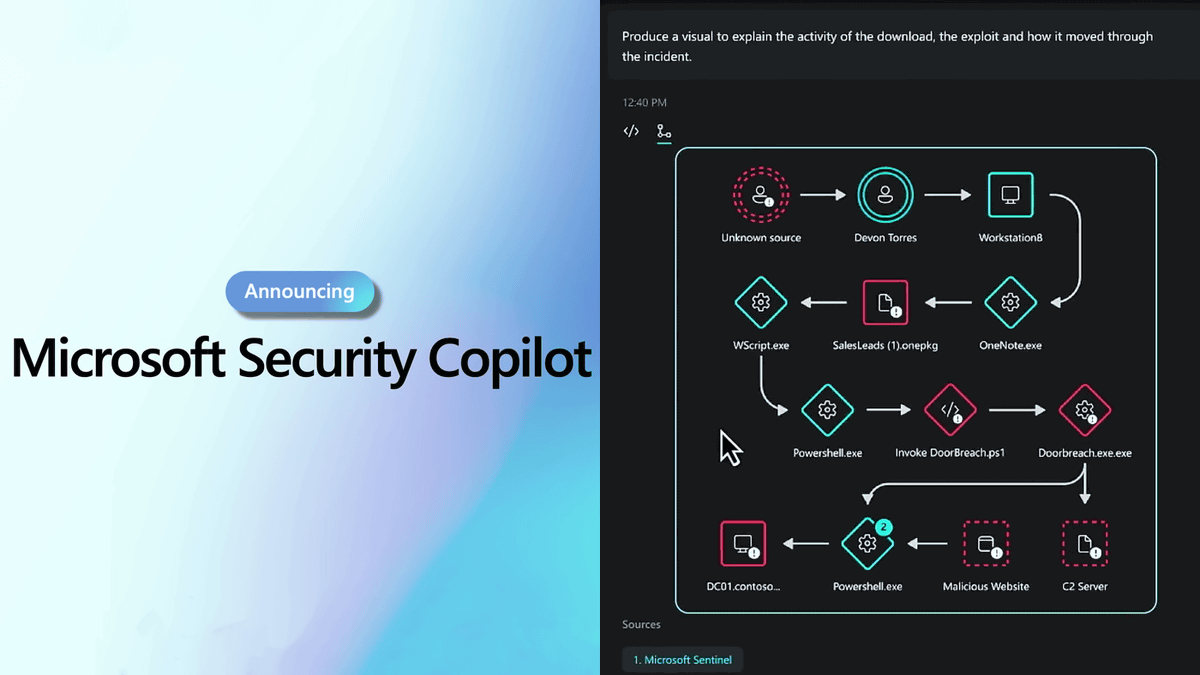
The China state-aligned threat actor Storm-0940 used the agentic AI penetration testing framework ARTEX to automate attacks targeting hundreds of organizations globally across a broad range of industries. Microsoft Threat Intelligence assesses that Storm-0940 was responsible for the recently disclosed ConnectWise supply chain compromise of a multitenant application. https://t.co/VXovj0jI90
Our investigation found that Storm-0940's use of ARTEX accelerated the speed of compromised application abuse to authenticate to target environments through applications that had already been granted access, allowing the threat actor to operate without requiring an interactive user sign-in. AI-accelerated follow-on activity included reconnaissance, application credential changes, and attempts to modify privileges that could enable expanded or persistent access.
Read our blog for a detailed analysis and indicators of compromise (IOCs), along with Microsoft Defender detections, protection recommendations, and guidance on investigating service principal sign-ins and unexpected application credential or privilege changes.
La tecnología UEBA (User and Entity Behavior Analytics) está diseñada específicamente para resolver uno de los mayores desafíos de la ciberseguridad: las amenazas internas que operan con credenciales y accesos legítimos. #UEBA#IA#CyberSecurity#cybersecurityTips
Iterative, Agile, Waterfall, Spiral Model, RAD Model... What are the differences?
The Software Development Life Cycle (SDLC) is a framework that outlines the process of developing software in a systematic way. Here are some of the most common ones:
1 - Waterfall Model:
- A linear and sequential approach.
- Divides the project into distinct phases: Requirements, Design, Implementation, Verification, and Maintenance.
2 - Agile Model:
- Development is done in small, manageable increments called sprints.
- Common Agile methodologies include Scrum, Kanban, and Extreme Programming (XP).
3 - V-Model (Validation and Verification Model):
- An extension of the Waterfall model.
- Each development phase is associated with a testing phase, forming a V shape.
4 - Iterative Model:
- Focuses on building a system incrementally.
- Each iteration builds upon the previous one until the final product is achieved.
5 - Spiral Model:
- Combines iterative development with systematic aspects of the Waterfall model.
- Each cycle involves planning, risk analysis, engineering, and evaluation.
6 - Big Bang Model:
- All coding is done with minimal planning, and the entire software is integrated and tested at once.
7 - RAD Model (Rapid Application Development):
- Emphasizes rapid prototyping and quick feedback.
- Focuses on quick development and delivery.
8 - Incremental Model:
- The product is designed, implemented, and tested incrementally until the product is finished.
Each of these models has its advantages and disadvantages, and the choice of which to use often depends on the specific requirements and constraints of the project at hand.
JSON Crack es un recurso genial para visualizar datos.
Abre o pega tu JSON y lo visualizas como un gráfico interactivo.
¡También tiene extensión para Visual Studio Code!
→ https://t.co/VvwIdkOIvl
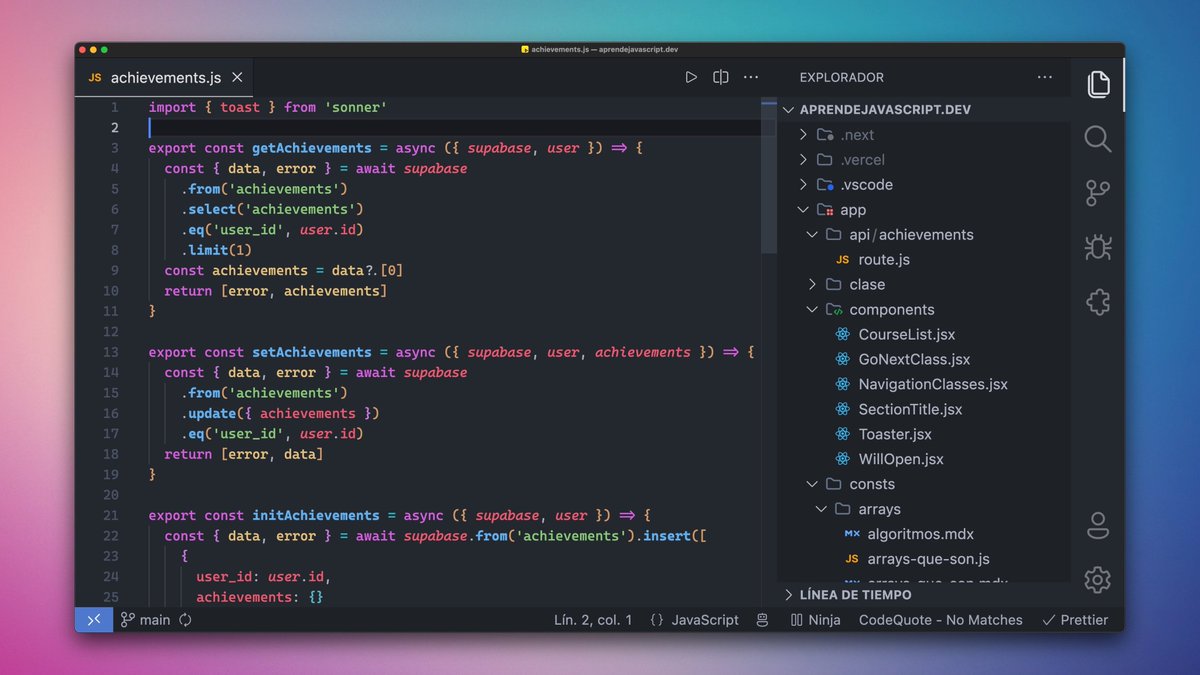
¡Configura tu VISUAL STUDIO CODE como un PRO!
Te comparto todas mis configuraciones, temas, fuentes, trucos y extensiones.
✭ TEMA:
El tema y colores que estoy usando es One Dark Pro en su variante Darker.
Para conseguir el mismo estilo debes activar las itálicas, las negritas y que los colores sean vívidos.
Es mi preferencia personal pero a mi me gusta mucho cómo queda. ❤️
✭ FUENTE:
La fuente es Cascadia Code, una fuente de Microsoft de código abierto.
Hay que instalar la versión Cascadia Code PL (trae ligaduras y Power Symbols).
Activa las ligaduras en Code con la opción "editor.fontLigatures": true.
✭ BARRA a la DERECHA:
Pongo la barra lateral a la derecha para mis streams.
Así no molesta y puedo ocultarlo sin dar saltos el código.
Si te gusta, puedes moverlo a la derecha haciendo clic encima y seleccionando: "Move Primary Side Bar Right"
✭ ICONOS:
Para cambiar los iconos necesitas dos extensiones
- Symbols, iconos del explorador
- Fluent, los iconos de la barra de actividades
✭ STATUS BAR:
La barra de estado de abajo del todo se puede llenar de mucho ruido al instalar extensiones.
Puedes hacer clic al botón derecho sobre ella y seleccionar sólo aquella información que realmente te añade valor.
✭ EXTENSIONES:
Además de las extensiones típicas de soporte de lenguajes, idiomas y linter (Eslint y Prettier)...
Uso una colección que me hace ser mucho más productivo.
Te dejo la lista completa en este hilo:
https://t.co/VVnzQA3YFd
✭ VENTANAS + PESTAÑAS:
Al usar macOS, puedes activar un modo para usar las ventanas nativas del sistema.
Además de que ocupan menos espacio y se integran mejor, también puedes tener pestañas en las ventanas para trabajar en diferentes proyectos.
Busca "macos native tabs" en las preferencias y actívalo.
✭ OCULTAR EDITORES ABIERTOS:
Con las pestañas de macOS y las del propio editor, tengo suficiente para saber qué tengo abierto.
Así que en el explorador de archivos tengo oculta la parte de "Open Editors" para que no ocupe espacio.
Dale clic a los tres puntos que hay al lado del icono de crear archivo y ocúltalo.
A product I worked on is released! Please try Data Wrangler for @code and let us know what you think. AI powered by @ProseMsft.
https://t.co/WXeaxEjjcU
The new VSCode extension, Data Wrangler, is more incredible magic. ✨
Played with it while exploring a small datasets and was able to do all the things I wanted.
https://t.co/fhy9Rpz2py
@adidasMX en que momento decidiste contrata como delivery al nefasto servicio de #ivoy ayuda para solucionar la entrega de mi pedido y del cual no me dan respuesta alguna
“Dejen ya de hablar, ya está todo hablado, todo trabajado. Hoy es día de hacerlo. Dejen de hablar. Hablar esta bien pero ya. Tenemos que ir y comerlos” - Dani Alves en el vestidor de Pumas antes del partido vs Querétaro.
Te quiero mucho, @DaniAlvesD2.💙
Unfortunately for all of us, this is a highly accurate depiction of #MLOps. @Databricks is focused on making this much simpler.
From: "Machine Learning Operations (MLOps): Overview, Definition, and Architecture". Dominik Kreuzberger, et al https://t.co/QGj1djER5v
@MiguelHerreraDT espero que salgas a la conferencia con tu laptop como todo el torneo reclamando el arbitraje y pongas la jugada del primer penal 🤣🤣🤣 tengo curiosidad ¿Qué dirás?