@CharlesBassett Since you have no private pathway publicly available to reach you about an unresolved identity theft fraud case involving AT&T wireless and your AT&T Wireless AI support agents are incapable and the company allowing a criminal to impersonate a person to create a mobile phone account and finance an high-end iPhone 17 and have the full bill hit the identity theft victim after two fraudulent case filing made and the bills keep coming now reaching $1,500 due after two fraudulent investigation cases not being followed up on or resolved after 3 months of bills.
I have fraud case numbers.. we are all vulnerable to crimes like this if identity verification systems are not well thought out as obviously these fraudsters have outsmarted @ATT Wireless.
@akatgifriday@podcast411@theDanielJLewis We arrived where it could go... not exactly what we all thought would happen, but in many ways, we cannot be surprised by where we are. Is a little disappointing.
You can own your podcast and creator content and still have little say in how it earns money.
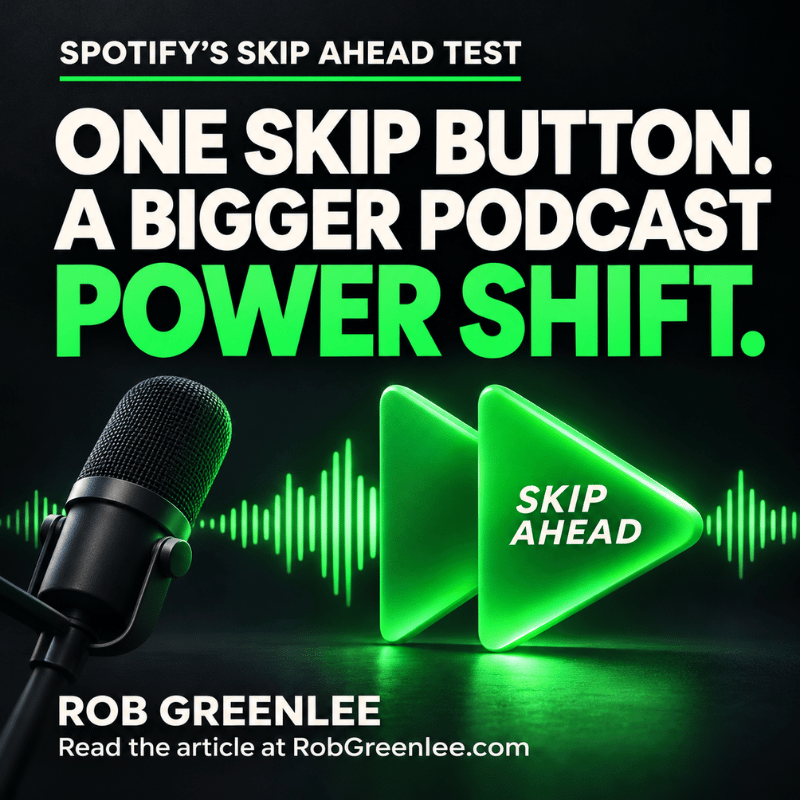
Spotify's recent "Skip Ahead" test makes that tension hard to ignore. Listeners have always been able to skip ads. Now the platform can identify parts of a show and encourage people to bypass them, including sponsorship messages and creator promotions.
That matters when those messages help pay for the work.
In my latest article, I look at how much control creators retain when platforms shape discovery, audience data, advertising, and the listening experience. I also explore where voice, likeness, and archive rights fit as AI creates new uses for our content.
I want creators to benefit from the reach that Apple Podcasts, Spotify, YouTube, now Instagram, and other platforms provide. I also want them to build direct audience relationships, choose distribution, and negotiate rights.
If one major platform changed its rules tomorrow, how much of your business would still work?
Read the article; see the link in the comments below 👇
How much production does a video podcast actually need?
I took New Media Show into Gotham Production Studios in New York City for episode #692 and sat down in person with co-founders Brianna and Matt Peters.
They’ve been building Gotham since 2017, and their clients’ expectations have changed considerably. Cameras, lighting, sets, editing, and the in-room experience all matter.
But Matt raised a concern worth discussing: are television-sized productions making independent creators feel they can’t compete?
We talked about where production spending helps, how to build a show around realistic goals, and why people need a reason to come back after the first episode. We also got into AI and whether it could make real, in-person experiences more valuable.
Thanks to Brianna and Matt for welcoming me into the studio and being candid about the business.
This episode #691 conversation with Losh strayed into the AI content side in ways I have not talked about yet on the NewMediaShow com the audio and video podcast version of this show should be out on Sat at the latest.
In NYC today (Friday) doing a full interview recording in person at a multi-camera studio for next week’s episode #692
The Tesla Roadster demo is just a sampling of what this type of use case can create. What we saw tonight will not be the entire experience a car like this will be capable of to drive towards driver safety that we did not see in this demonstration. This tech provides a solution to driving edge cases that will make this car impossible to crash and create a possible real flying car someday.