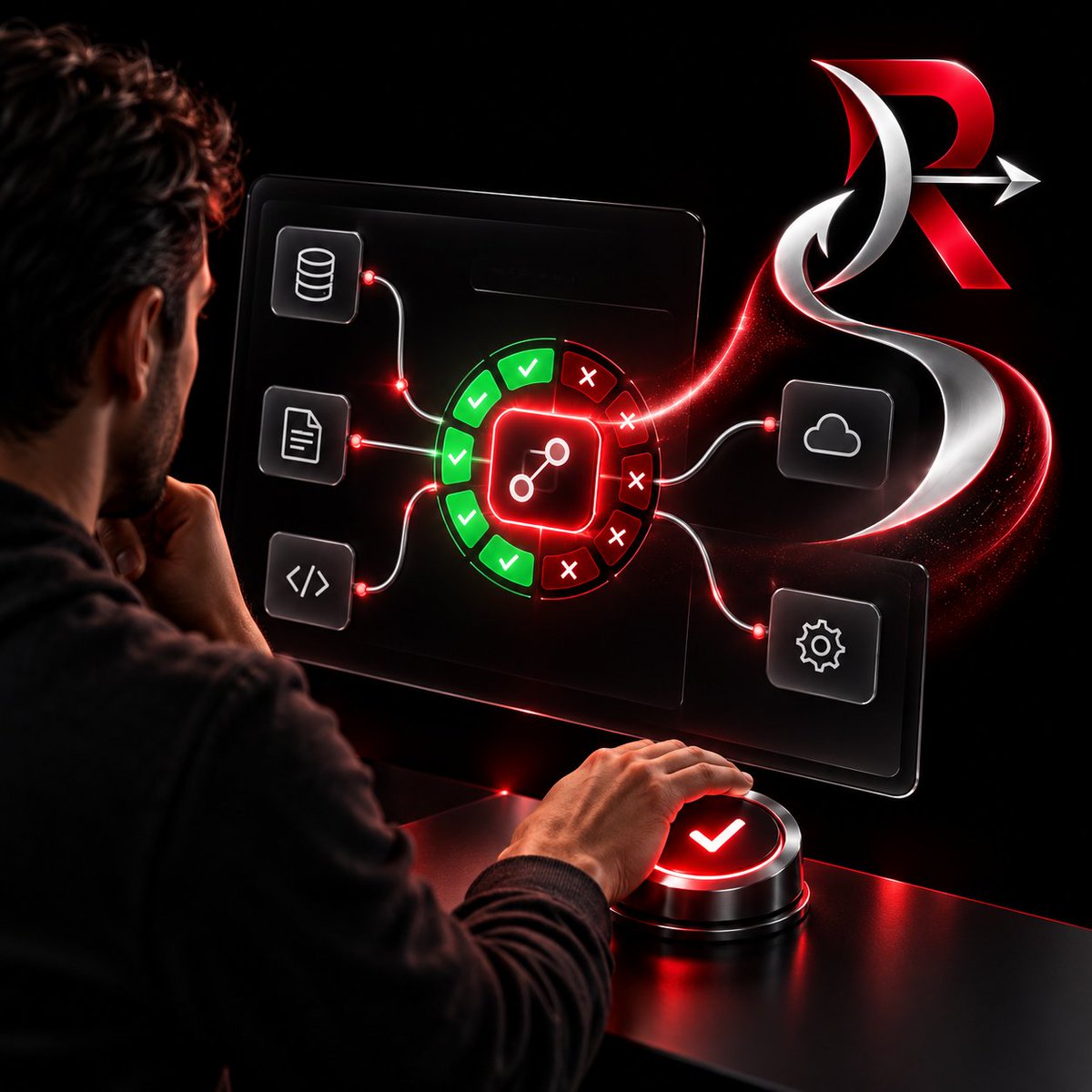
Robinhooks is a visual V4 hook builder for Robinhood Chain, letting users design, simulate, & deploy programmable pool logic without starting from raw Solidity.
RobinHooks development update 🪝
We have shipped the next layer of the platform:
• One-click stress-testing scenarios
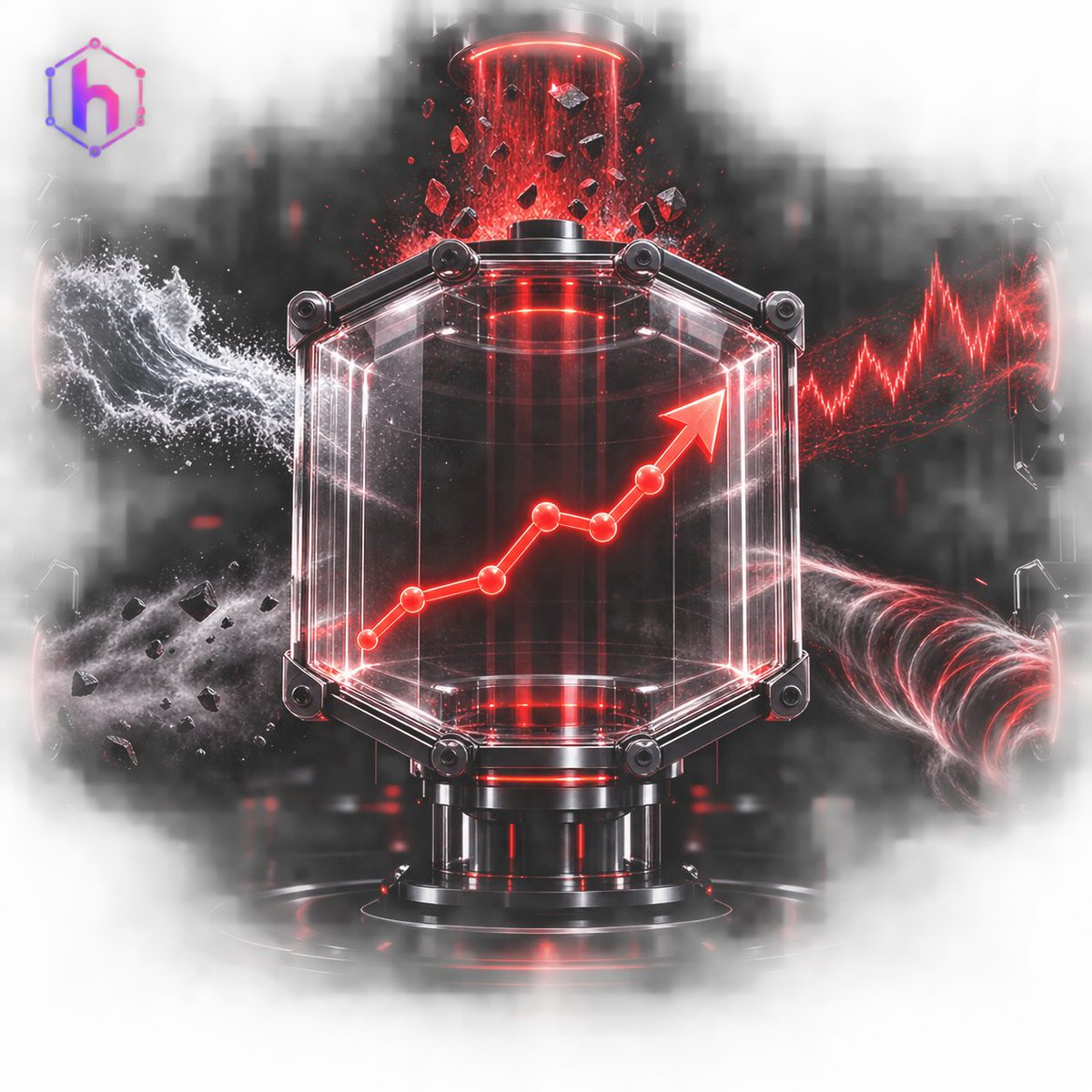
• Volume surge, liquidity crunch, and volatility simulations
• Wallet-owned hook portfolio analytics
• Immutable version tracking
• Confirmed deployment counters
• Live deployment-health indicators
The hooks simulator is so much better now:
https://t.co/qOwyFuJNjB
Another area we are working toward is modular external integrations.
The idea is to represent approved routers, oracle adapters, vaults, reward distributors, and accounting components as explicit recipe capabilities. Each dependency should remain visible before generation and deployment.
This layer is planned.
We are planning to improve what happens after a hook goes live.
Post-deployment monitoring would track callback activity, fee behavior, failed interactions, and configured thresholds around each deployed hook. Builders could then receive alerts when the evidence needs attention.
This is still on the roadmap.
Another thing we are planning is a permission-aware hook copilot.
It should understand which callbacks a recipe needs, explain the permission changes caused by a suggestion, and prepare an editable graph patch for the builder to review.
The current proposal and approval boundaries will remain explicit.
We are working through how marketplace reputation should be earned.
The direction is evidence-based: authorship, tested versions, build results, deployments, and verifiable usage should give buyers something concrete to inspect before purchasing a hook.
This reputation layer is planned.
We are planning to improve hook testing with reusable stress scenarios.
A builder could save a set of trade sizes, liquidity levels, price movement, and trader inputs, then run the same conditions against every new recipe version.
That would make changes easier to compare before deployment. This remains planned.
Another thing we are working toward is private team workspaces.
The plan is to let a team invite collaborators, separate editing and review permissions, and keep recipe decisions attached to the project while wallet control remains explicit.
This is planned work.
We have shipped visual version comparisons for hook recipes.
Builders can now place two saved versions side by side and inspect changed nodes, connections, configuration, and callback permissions before choosing what to deploy.
The review happens inside each hook project under Versions.
Today we made RobinHooks easier to browse and calmer to use.
What shipped:
• Searchable Templates page
• Status filters with live counts
• Clear empty and no-results states
• Marketplace loading feedback
• Safer request handling with clearer errors
Builders can now find the right starting point faster and understand what the marketplace is doing while each request runs. These changes are live.
One builder may operate the same hook family across several pools and markets.
We want RobinHooks to provide a single performance view for deployments, fees, activity, alerts, and recipe versions. A clearer operating layer for the $RHOOKS ecosystem.
Useful hooks need more than isolated callbacks.
We are designing a modular integration layer for approved vaults, routers, oracles, reward distributors, and accounting adapters, with capabilities shown directly in the recipe graph.
Deployment is the beginning of a hook’s operating life.
Next on our monitoring roadmap: callback activity, fee accrual, failed interactions, parameter drift, and configurable alerts collected around each deployed hook.
The useful version of an AI hook copilot has boundaries.
We are mapping a permission-aware assistant that can suggest graph changes and explain risks while validation, simulation, signing, and deployment stay inside explicit user-controlled steps.
Marketplace reputation should come from evidence.
RobinHooks is exploring recipe records that connect authorship, versions, simulations, deployments, and usage into one inspectable trail. Better signals for builders choosing logic they can trust.
A hook can look clean on the canvas and still fail under ugly market conditions.
We want reusable scenario packs for volatility, thin liquidity, rapid swaps, fee spikes, and adversarial inputs, with results attached to each recipe version.
A production hook rarely belongs to one tab and one wallet forever.
Private team workspaces are on the RobinHooks roadmap: invite collaborators, assign review rights, preserve wallet control, and keep every recipe decision visible.
Hook logic should be easy to improve without hiding what changed.
We are designing visual recipe diffs for RobinHooks, so builders can compare nodes, parameters, permissions, and generated contract behavior before approving a new version.
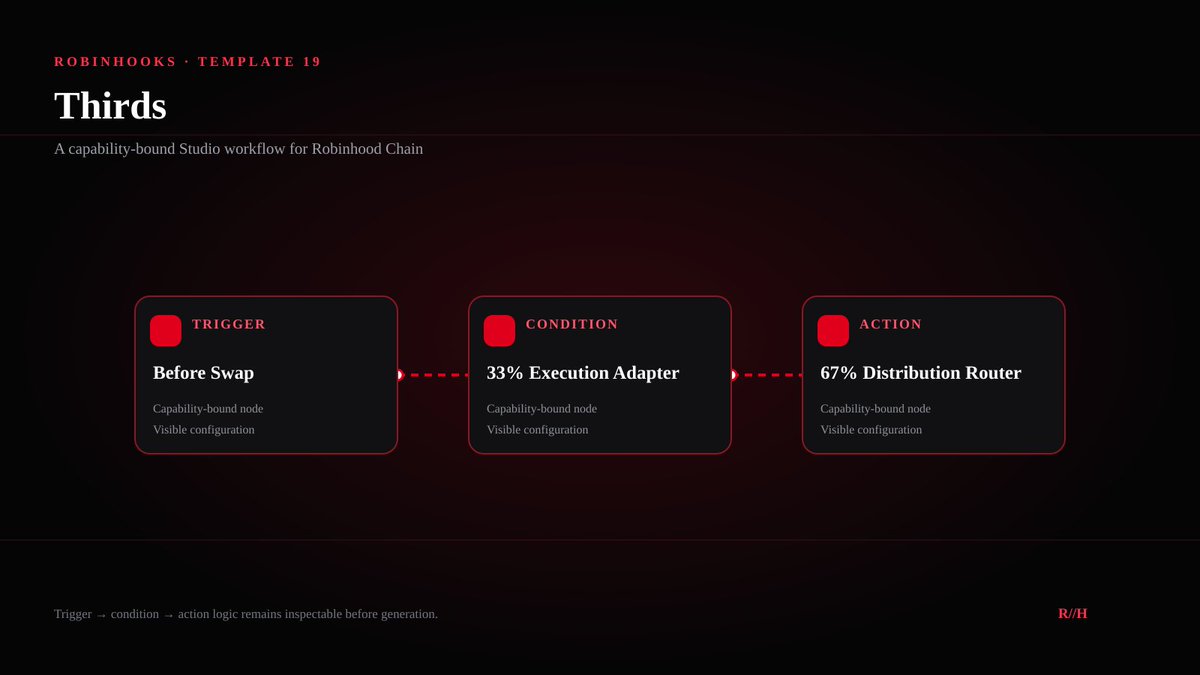
Thirds routes 33% of hook-charge accrual to an execution adapter. A reviewed distribution router divides the remaining 67% across holder and treasury destinations.
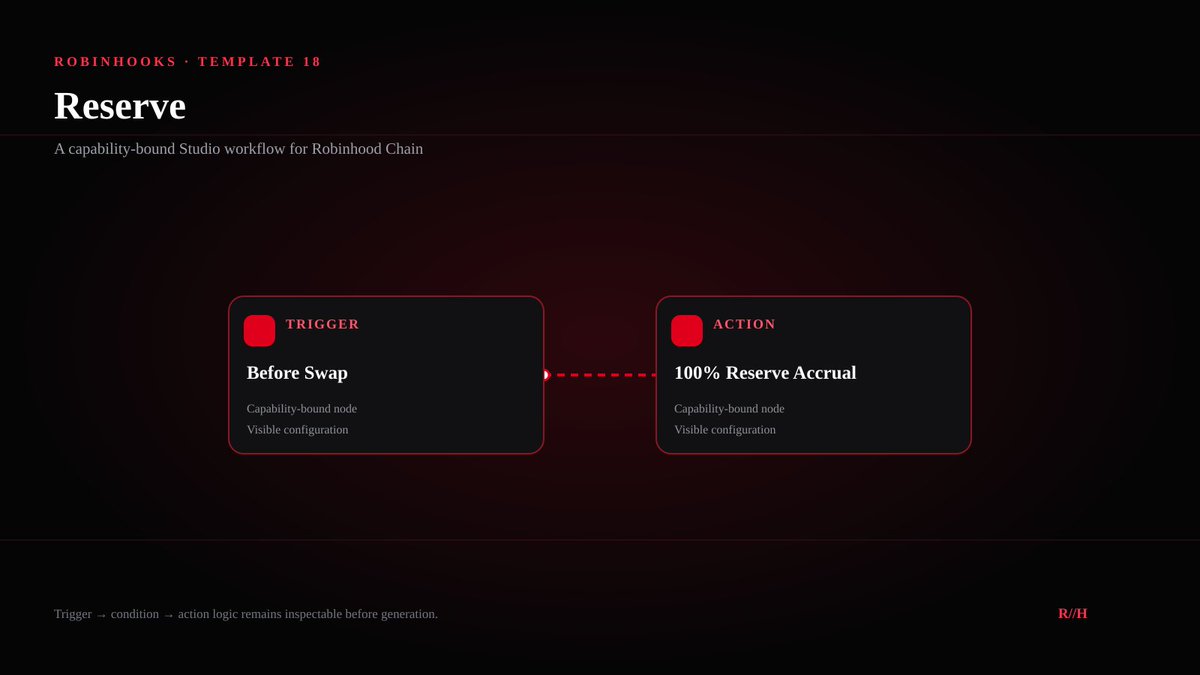
Reserve accrues the configured quote currency to one explicit reserve recipient. The recipe makes no claim of automatic token purchases or protocol-controlled liquidity.
Conviction Rewards funds a dedicated vault from a disclosed hook charge. The vault can enforce balance snapshots and holding-duration weights without hiding that policy inside the swap hook.