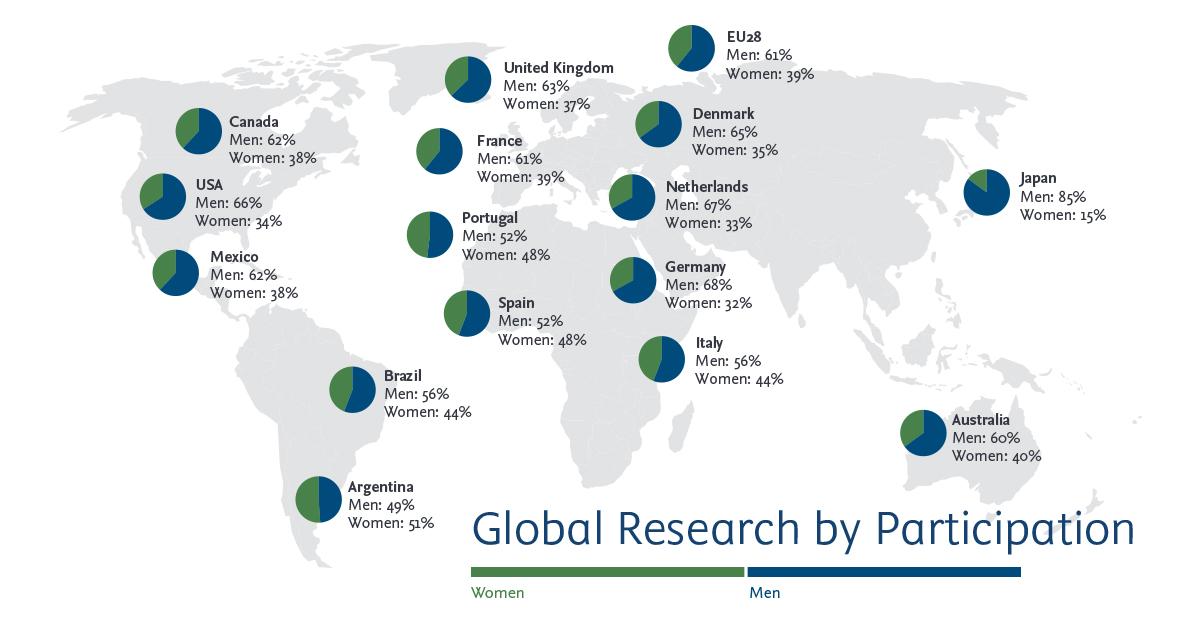
We found that Argentina had the highest women participation in research. See how other countries compare in the Elsevier Gender Report:
https://t.co/L31MgGcxI7
#InclusiveScience
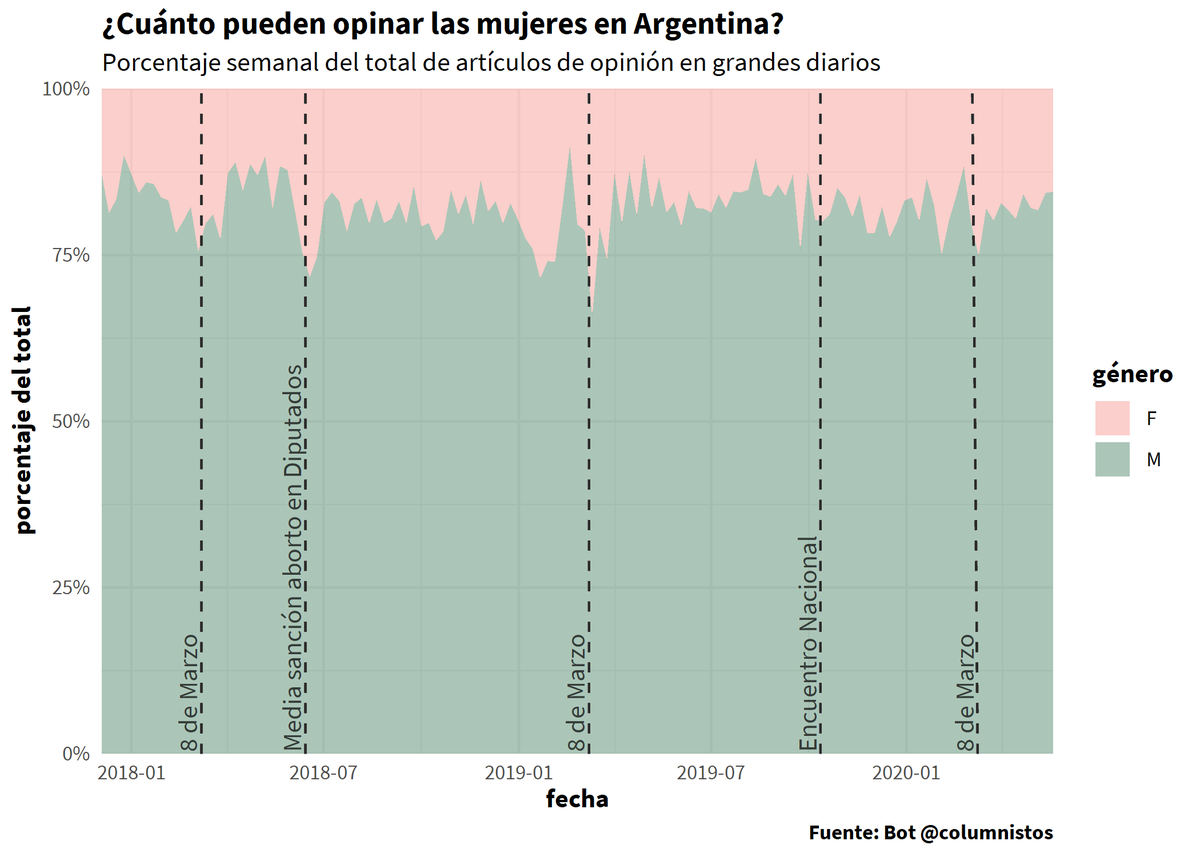
La bot @columnistos twittea diariamente el porcentaje de artículos de opinión en grades diarios de Argentina escrito por mujeres. Para #30diasdegráficos, un gráfico para visualizar como evolucionó este porcentaje en los últimos tiempos. Algunas fechas importantes están señaladas.
Los secuenciadores de nanopore nos permiten leer un MONTON de secuencias de ADN, pero todavía con errores. Por ej, es difícil detectar mutaciones puntuales en bibliotecas de genes. Este manuscrito propone una estrategia computacional para mejorar la secuenciación en estos casos.
Using nanopore sequencing ❤ we can read a lot of DNA sequences, but there is still an error rate associated.
For example, it is hard to detect singular nucleotide polymorphisms in a gene library. We came up with a simple computational strategy to improve these readings.
I get many messages from aspiring black scientists who say they hardly see scientists that look like them online/IRL. So I want to spend time highlighting black scientists, medics, engineers, mathematicians and techies! Introduce yourselves below & I’ll be retweeting👨🏾🎓👩🏿🔬👩🏽���👨🏿🏭🧪🔭
Last week I presented my work at an international conference for the first time. It was at #grs of #synbio at USA. Felt great. 😎
science is the best 🤓💅
I've been awarded a Marie Skłodowska Curie fellowship to work on the integration of directed evolution and next generation sequencing at @ESPCI_Paris.
Thanks to those who work for more #WomenInSTEM#WomenInScience
@MSCActions
A new paper in @PLOSCompBiol co-authored by @DrTNowotny finds that odorant mixtures allow faster and more reliable olfactory coding than single odorants @SussexUni#neuroscience
https://t.co/43W61e0fwQ