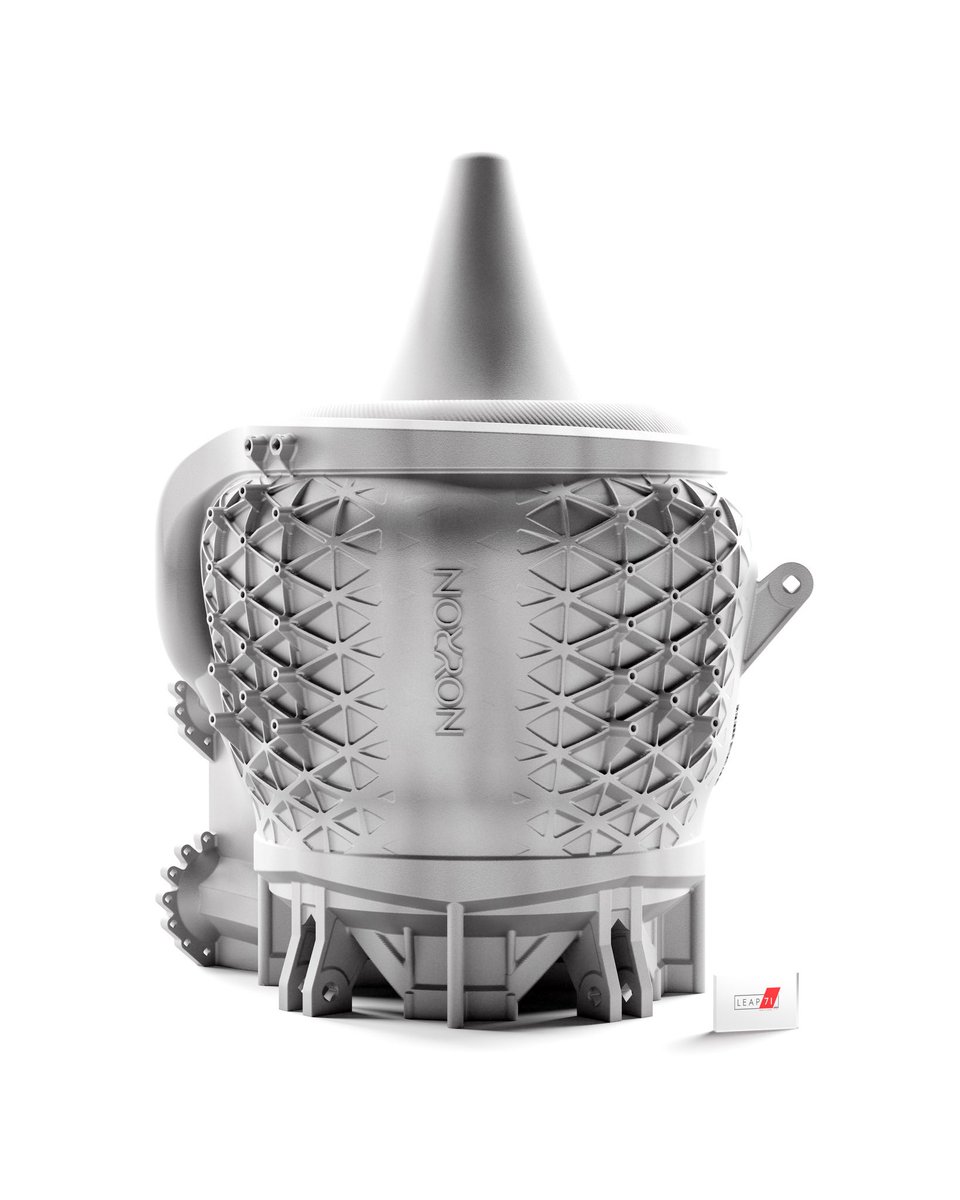
This is our 200 kN (45,000 lbf) methalox aerospike, generated by Noyron for Aspire Space’s fully reusable Oryx spacecraft and printed as a single Inconel 718 structure with HBD.
Eight months ago, we hot-fired its 20 kN predecessor — essentially a one-tenth-scale version. It reached 50 bar (725 psi) chamber pressure and gave us physical evidence from the same fundamental architecture before moving to ten times the thrust.
Aerospikes are altitude-compensating, enabling efficient operation across a wide atmospheric regime. But their annular chambers, central spikes, and cooling systems also make them exceptionally difficult to engineer.
That is why we build them. They are among the hardest tests of Noyron’s thermal models — and a direct path from computational predictions to physical evidence.
@aspirespaceuae@HBD_Technology
I enhanced this ultra-futuristic Daihatsu TA-X80 concept looks like a spaceship straight out of a retro-sci-fi movie. With its sweeping glass canopy, aero disc wheels, and ultra-clean white bodywork, it's peak bubble-era Japanese design.
#Daihatsu#TAX80#ConceptCar
I enhanced this ultra-futuristic Daihatsu TA-X80 concept looks like a spaceship straight out of a retro-sci-fi movie. With its sweeping glass canopy, aero disc wheels, and ultra-clean white bodywork, it's peak bubble-era Japanese design.
#Daihatsu#TAX80#ConceptCar
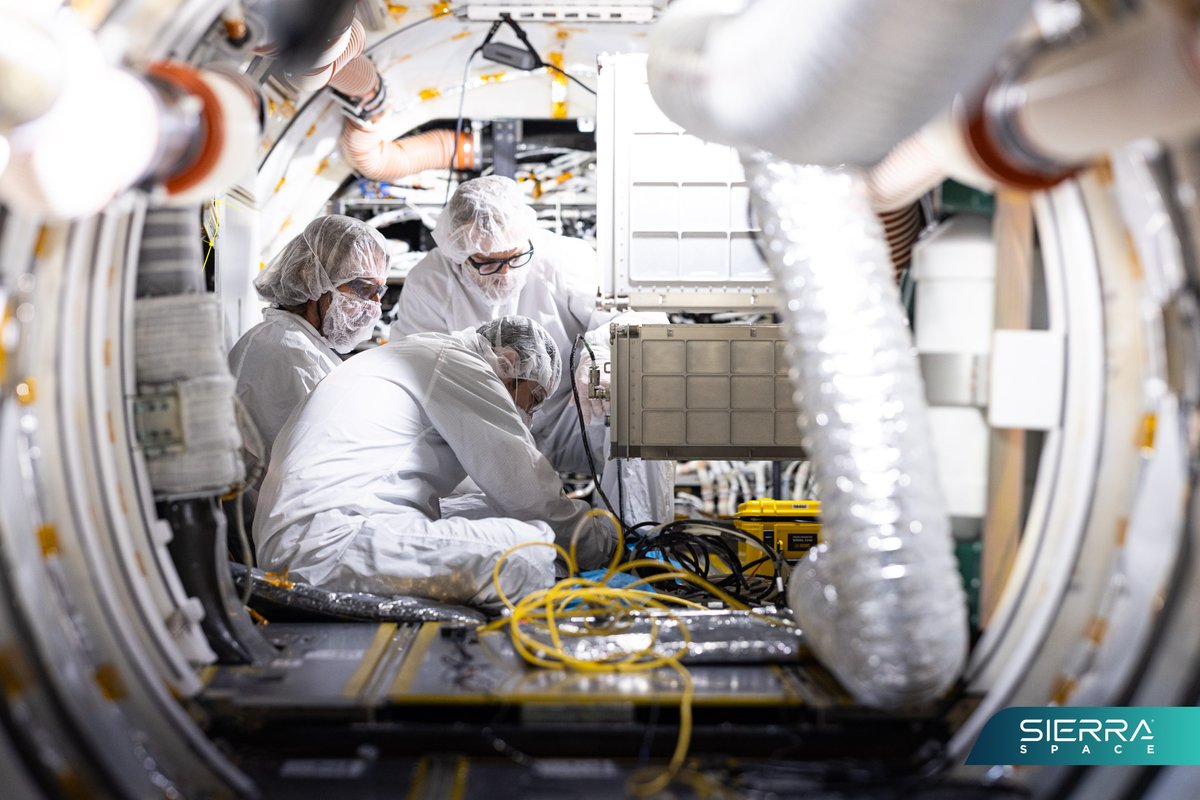
Today, we're excited to share that on a single mission, Dream Chaser® will serve national security, commercial, and civil customers, proving out an operational model where one platform supports the full range of America's space priorities.
"As the space domain has become increasingly contested, Dream Chaser has evolved into exactly what America needs: a strategic national capability built on commercial innovation and investment," said our CEO, Daniel Jablonsky. "We're not just talking about the multi-use space economy, we're operating it."
We built Dream Chaser—America's Spaceplane®—to be a commercial, reusable, runway-capable spaceplane, engineered for deployable wings, hypersonic flight control, autonomous reentry, and sub-1.5g runway landings.
Press Release: https://t.co/usX39gPzjb
A dark hull riding half-submerged, two engine pods stacked on top: that's LeVanta Tech's HALIA drone at rest. It lands on the open ocean, floats there for weeks, then takes off again at over 100 mph.
Full story: https://t.co/RIKFmoOfUb
Land or Water (Beat those Potholes)
1959 Curtiss-Wright Model 2500 Air-Car
Twin 180-hp Lycoming aircraft engines were mounted fore and aft and powered two vertical ducted fans. The Air Car rode on a 15-inch cushion of air and could lift a 1000-lb payload. 21ft x 8ft wide
From a 1959 Lockheed-Georgia PR booklet. A “Space Scooter,” something akin to the Convair “Space Taxi” in US Spacecraft Projects #1. Looks like a “work pod” for the construction of spacecraft/space stations. Torus undoubtedly contains thruster propellant and/or compressed gas.
A free floating bundle of Russian rubber bands used on ISS. These are a long elastic piece that can easily be wrapped around an object and tied into a loop. Very useful on orbit to keep objects from floating away! When bundled together they remind me of a fungal colony.
We are bugging out this #WackyWednesday with the Edgley Optica!
This insect-like aircraft was designed as a low-cost alternative to helicopters for observation work. It first flew in 1979, with just 22 total units built.
📸 Anthony Noble
#Aviation#Avgeek#GeneralAviation #FlyingHigh