@Rocket_Flyer@milan_tomicc@wikkit@DJSnM You just described exactly what I’m saying but with different wording.
QTP: verify design meets all requirements (including margins)
ATP: verify the given build performs as expected and therefore may fly (which it won’t if mistakes were made during production)
@milan_tomicc@wikkit@DJSnM I will agree that you do not expect catastrophic failures to occur during acceptance testing and it is frustrating when you do. But again, ATP is there to ensure you don’t find out about non-conformances before the part/subsystem has to be used in flight.
@milan_tomicc@wikkit@DJSnM No, testing engines is my career. You just described Qualification testing. That is where you test engines to verify the design meets system/performance requirements.
Acceptance testing is where you confirm that an engine build is working in-family, and doesn’t have defects.
@wikkit@DJSnM No. That is the whole purpose of acceptance testing. If you don’t catch the issue during that testing and it fails in flight, THEN you messed up. This is why we test.
@kwrzesien@DJSnM BE-3PM (New Shepard) and BE-3U (New Glenn) are completely different engines. They are owned by different teams. This failure has no impact on BE-3U. BE-4U was investigated as an option but dropped after trade studies selected BE-3U
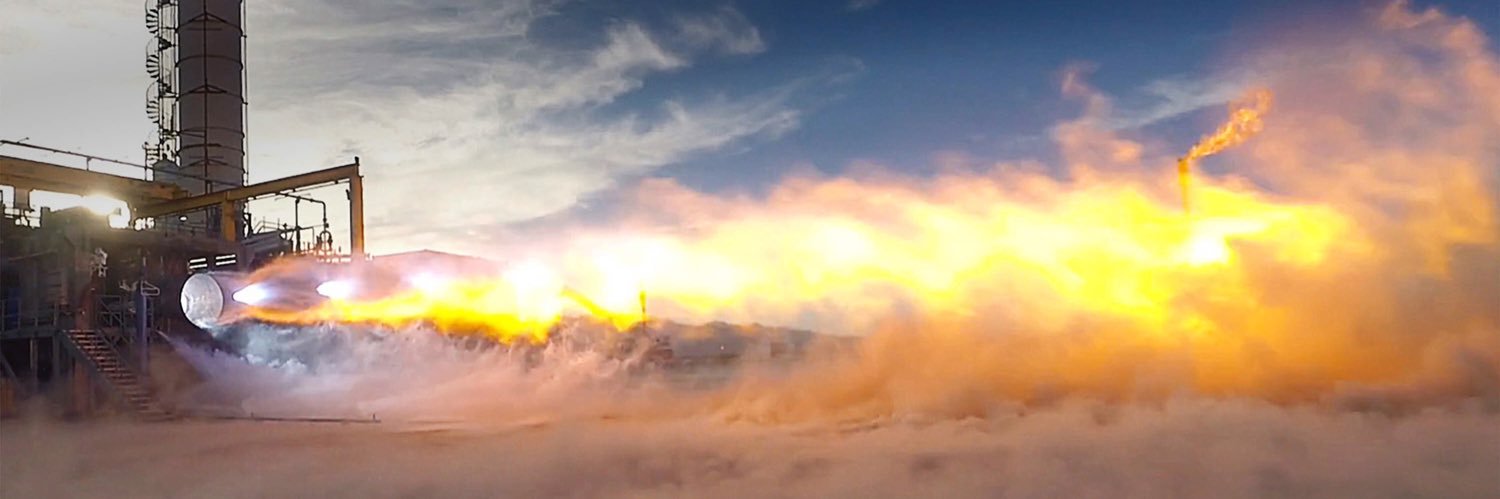
@cquantumspin@SciGuySpace Dust is sucked into the plume from the surrounding area and creates a more orange hue. Isolate the plume as it exits the nozzle and/or near the top to see the difference
@GoToImpulse Ah I was under the impression you were using new green hypergols that I’ve seen a lot of buzz around in academic circles. Can’t quickly find your propellants, what are you guys rolling with?
@SciGuySpace Looks very similar to OTRAG, which failed bigtime. I do agree that cranes are expensive, which is why my rocket company assembles vehicles using antigravity