Those who follow me will be able to RETIRE in the next 5 years.
You must know how the AI cycle will be built out and positioned early.
This is how the next decade builds out:
2026–2027:
AI demand accelerates.
Capital floods into:
AI chips, memory, infrastructure, power, and data capacity.
AI: $NVDA $AMD $AVGO $MRVL
Memory: $MU $SNDK $WDC
AI Infrastructure: $VRT $SMCI $NBIS $IREN
2028–2030:
Power demand becomes the biggest story in the market.
The world races to upgrade grids, secure materials, and build domestic supply chains.
Energy Grids: $VRT $ETN $PWR $HUBB
Electrification: $ALB $SQM $TE $GEV
Copper/Grid: $FCX $TECK $SCCO
Rare Earths: $MP $CRML $USAR $TMRC
Uranium/Nuclear: $UUUU $SMR $OKLO
2030+:
The applications layer scales globally.
Robotics, autonomous systems, defense tech, and the Space Economy become critical infrastructure.
Robotics: $TSLA $SYM $PATH
Autonomous Mobility: $ACHR $JOBY
Defense: $LMT $NOC $KTOS $AVAV
Space Economy: $RKLB $ASTS $LUNR $PL $BKSY
Most people will be lost.
I will help you position for an entire economic future.
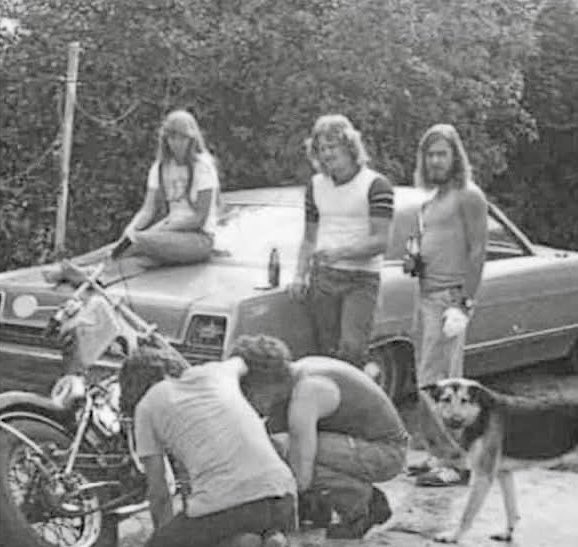
There’s a generation a lot of people forget exists. We were born at the tail end of the Boomers, but we are not culturally the same as people born in the 40s and early 50s. We are Generation Jones.
And honestly, it explains a lot.
We grew up in a world that still felt fundamentally analog, but we were young enough to be dragged headfirst into the digital revolution. We are the bridge generation between rotary phones and smartphones, between slide rules and AI, between Walter Cronkite and algorithm driven media.
We remember when there were only a few television channels and the entire country watched the same thing at the same time. We also adapted to the internet, email, forums, social media, streaming and now artificial intelligence. We lived before and after the technological singularity hit everyday life.
That is not a small thing.
People born in the 40s came of age in a post World War II America that was still industrial, deeply hierarchical and institutionally stable. Their formative years were shaped by the Cold War, Vietnam, the civil rights era and a society where information moved slowly.
Generation Jones came later. We inherited the aftermath of all of that.
We were the kids who watched Watergate destroy blind trust in government. We watched manufacturing begin to collapse. We saw divorce rates explode. We were the first truly latchkey generation in massive numbers. We learned independence early because many of us had to.
We grew up with one foot in old America and one foot in whatever this new thing was becoming.
We played outside until the streetlights came on but we also learned DOS commands. We learned cursive and keyboarding. We had card catalogs and Google searches. We went from vinyl records to cassette tapes to CDs to MP3s to streaming in one lifetime.
We remember maps. We remember memorizing phone numbers. We remember life before GPS and before every human interaction became filtered through a screen.
And because of that, I think Generation Jones developed a very unique perspective. We are adaptable because we had no choice but to adapt. We learned technology as adults instead of being born into it. We remember a slower world but were forced to survive in a rapidly accelerating one.
That creates a very different mindset than either older Boomers or younger Gen X and Millennials.
A lot of us also reject the caricature people now associate with “Boomers.” We were not buying houses for the cost of a sandwich in 1965. The interest rate on my first house was over 14% and that was after buying down a point. Many of us got hit by recessions, outsourcing, pension collapses and economic instability just like younger generations did. We watched promises evaporate in real time.
We understand older generations because we were raised by them. We understand younger generations because we had to evolve alongside them.
That’s why the Jones generation often feels culturally homeless. We are rarely discussed, rarely defined and usually lumped into categories that don’t actually fit us.
But we exist.
We are the human transition point between the industrial age and the digital age.
And frankly, there will probably never be another generation quite like us again.
When my son got one of his first jobs with a manufacturing company, he complained how he was “doing all the work” making parts that sold for hundreds of dollars a piece while only making $20 an hour.
“It’s unfair to the workers!” he said.
“You sound like a liberal.” I said.
He made a classic mistake I see people make over and over. They only look at the hard cost of goods and final sale price. They don’t understand anything in between.
I pointed out that the company he worked for only makes an 8% profit. Their total profit on that $400 part was really only about $32.
“There’s no way.” he said. “The bar stock only costs about $8.”
To him, his argument was logical. Every day his hands turned $8 worth of aluminum bars into thousands of dollars of product, but he only got about $160 of that. That seemed unfair.
I asked him “What about all of the other people in the company? The ones who aren’t making the parts.”
He hadn’t thought about that.
I explained that every hand along that product’s journey from creation to the customer is another person who has to get paid. The engineers who designed and tested it, long before you made it. The person who packed it in a box. The person who made the manuals that go with it. The person who answers the phone when a customer has a problem later. The people who order the materials and maintain the machines and sweep the floors and clean the toilets after you leave. The accountants and lawyers and insurance companies who keep the business organized, compliant, and protected if the part you made fails.
All of those people are paid for from those parts you made. And all of them get their paychecks whether the parts are sold right away or not.
On top of that, there’s the cost of the facility itself. The building, heating and cooling it, and every piece of equipment inside it.
All of those costs are paid before the owner makes one cent.
“At the end of the day, you’re actually making more money from every unit you make than he is.“
He understood it after that.
Running a business is the hardest way to make money.
Roughly 90% of entrepreneurs will fail. Don’t get me wrong, the reward can be great if you’re one of the 10% that makes it, but that results in a confirmation bias. You only see the winners. You never heard about the 90% that failed before they made it.
You see the guy in the big office who looks like he doesn’t work as hard as you, but you never saw what it took to get there.
You never saw the times he went without a paycheck so he could make payroll. You never felt the stress of being denied necessary capital, or losing an important customer, or under-bidding on a contract and losing money on every unit. You’ve never felt the repercussions of making the wrong call.
If you mess up, one customer is marginally inconvenienced, and you can fix it with another $8 part. If HE messes up, you and everyone else have no job.
You can be the guy on top if you’re willing to take the risks they took and do the work they did to get there.
Or you can do your part and collect your paycheck while someone else worries about that stuff.
And that’s OK too, because the world needs both.
The beauty of capitalism is that you get to choose which one you want to be.