Seedance 2.0 in 4K is live on invideo.
Seedance 2.0 is one of the best models out there for serious creators making films, brand films, perf ads, series, microdramas - practically any video that needs professional control. And it's now available in 4k inside invideo.
Excited to be partnering with @BytePlusGlobal , the official API provider for Seedance, to bring access to you.
Wondering what's worth noticing in GPT-5.4? Here is what i found:
✅ insanely fast
✅ coding feels “solved”
✅ native computer use is wild
✅ 1M context is a game changer
✅ way more human & chatty
⚠️ like some human being, it may overthink
What do you think?#OpenAI
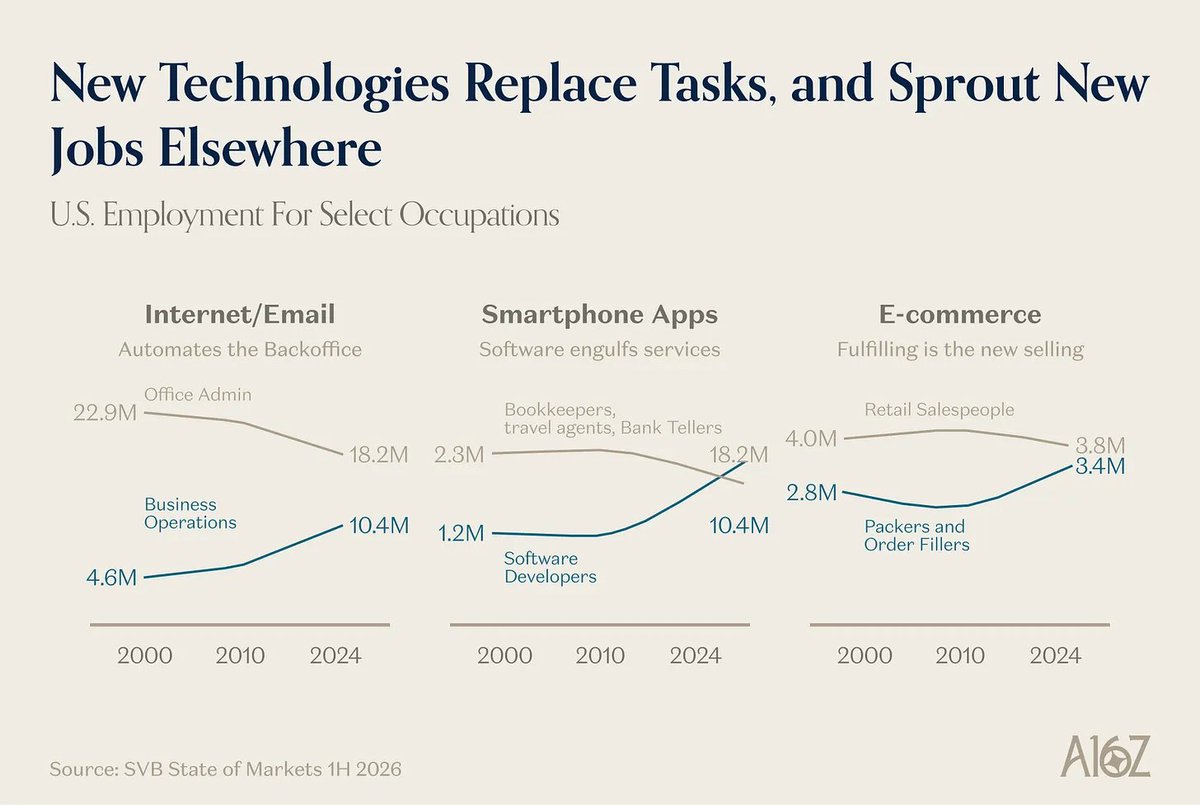
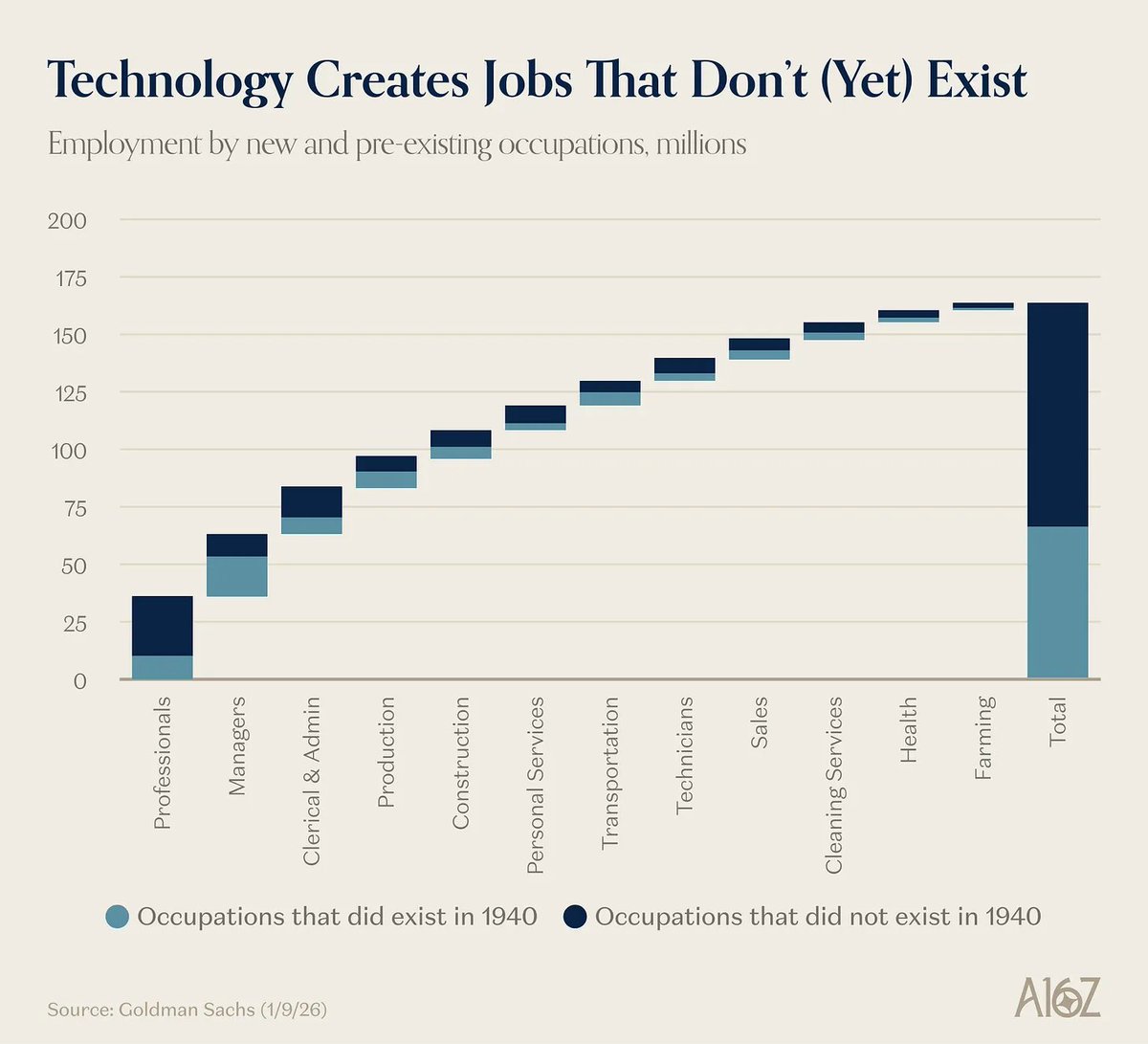
AI is eating tasks, not jobs. 📉
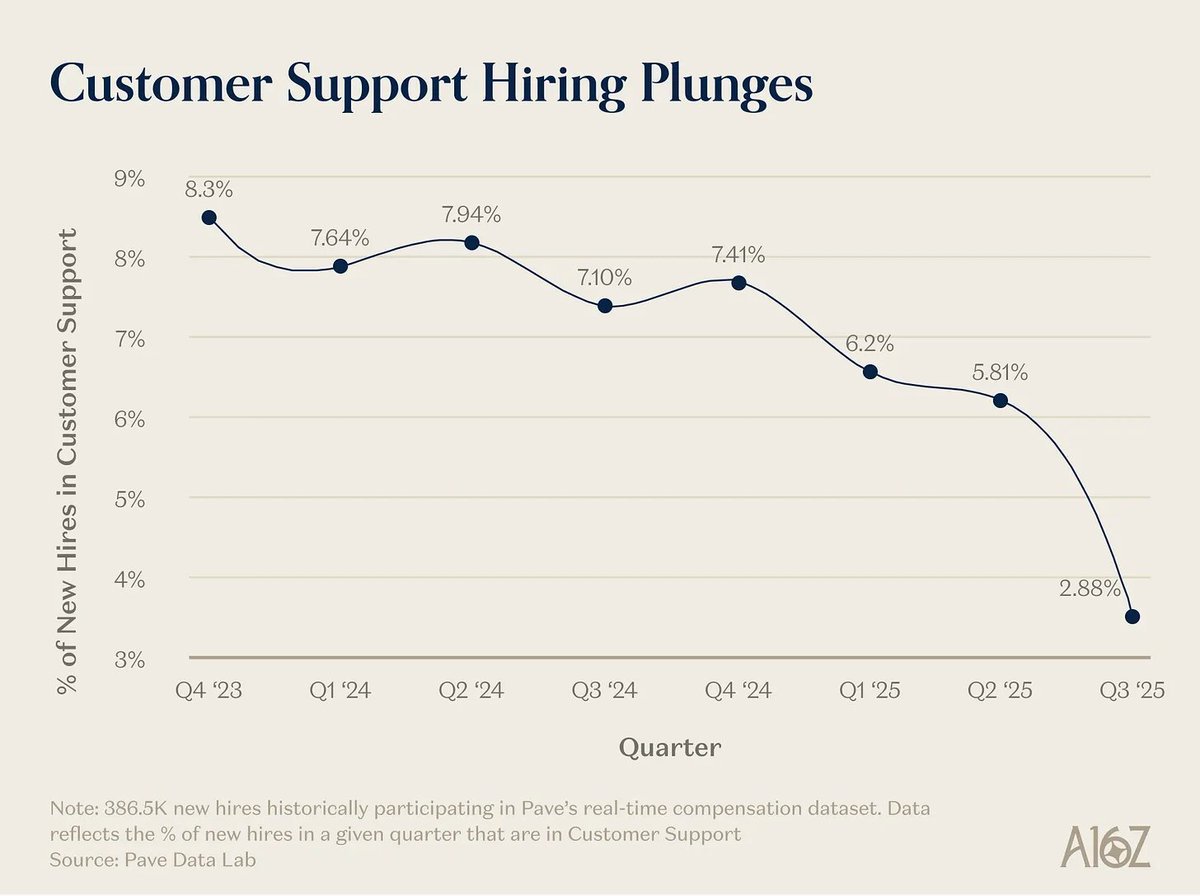
Customer support hiring just plunged from 8.3% to 2.9%. But history shows tech creates more roles than it destroys (60% of today's jobs didn't exist in 1940!).
What are you doing to prepare for the AI future? 👇 #futureofwork#AI
A tea business runs itself now.
No employees.
No order processing.
No inventory checks.
Just an AI agent named Clawdbot doing everything.
I analyzed 70+ real deployments.
The use cases are wild:
https://t.co/czUcxfVnSH
#clawdbot#AIAgents#aiassistant
I'm Boris and I created Claude Code. Lots of people have asked how I use Claude Code, so I wanted to show off my setup a bit.
My setup might be surprisingly vanilla! Claude Code works great out of the box, so I personally don't customize it much. There is no one correct way to use Claude Code: we intentionally build it in a way that you can use it, customize it, and hack it however you like. Each person on the Claude Code team uses it very differently.
So, here goes.
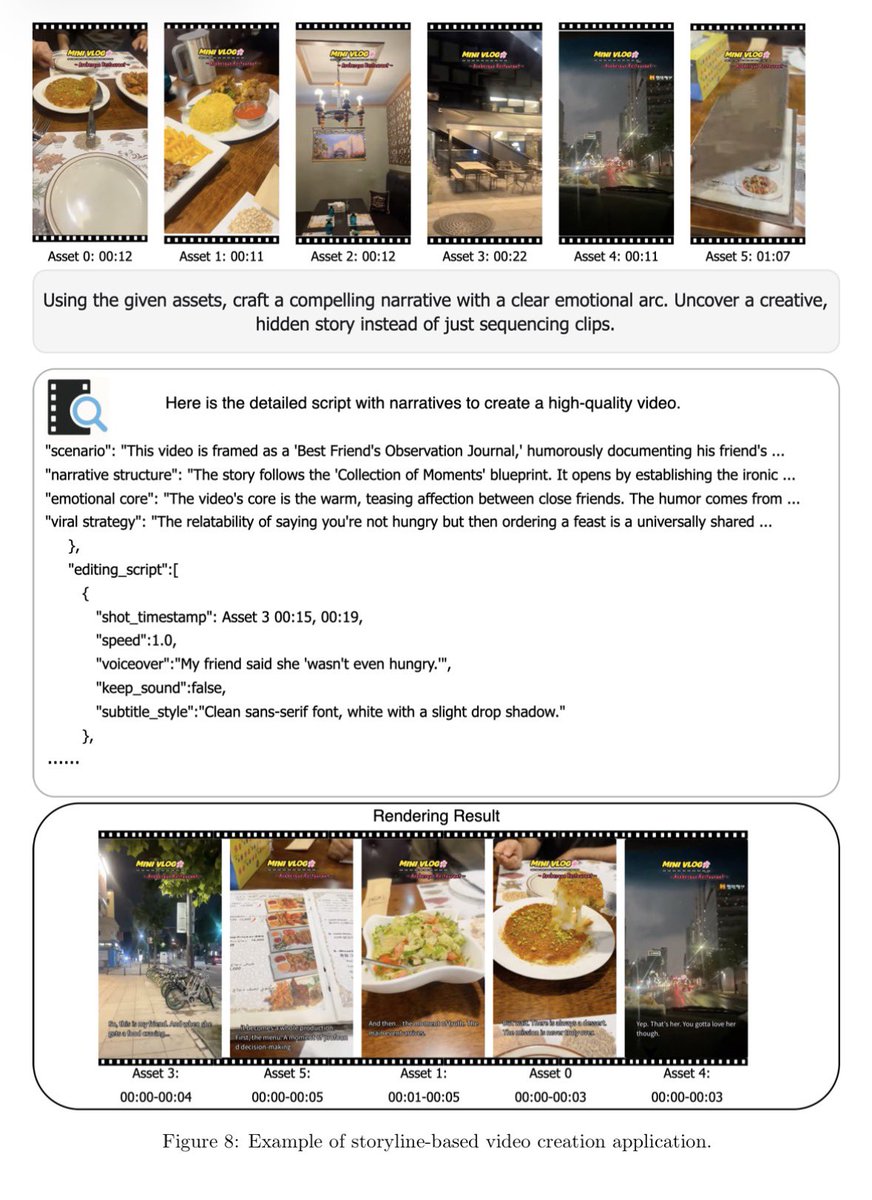
China's Bytedance just dropped an AI video editor that understands video better than even Gemini 3 Pro.
Vidi2 can take in a bunch of footage many hours long and a prompt, and construct a script and generate a TikTok or movie from them.
Stanford researchers built a new prompting technique!
By adding ~20 words to a prompt, it:
- boosts LLM's creativity by 1.6-2x
- raises human-rated diversity by 25.7%
- beats fine-tuned model without any retraining
- restores 66.8% of LLM's lost creativity after alignment
Post-training alignment methods, such as RLHF, are designed to make LLMs helpful and safe.
However, these methods unintentionally cause a significant drop in output diversity (called mode collapse).
When an LLM collapses to a mode, it starts favoring a narrow set of predictable or stereotypical responses over other outputs.
This happens because the human preference data used to train the LLM has a hidden flaw called typicality bias.
Here’s how this happens:
- Annotators rate different responses from an LLM, and later, the LLM is trained using a reward model to mimic these human preferences.
- However, annotators naturally tend to favor answers that are more familiar, easy to read, and predictable. This is the typicality bias.
So even if a new, creative answer is just as good, the human’s preference often leans toward the common one.
Due to this, the reward model boosts responses that the original (pre-aligned) model already considered likely.
This aggressively sharpens the LLM’s probability distribution, collapsing the model’s creative output to one or two dominant, highly predictable responses.
That said, it is not an irreversible effect, and the LLM still has two personalities after alignment:
- The original model that learned the rich possibilities during pre-training.
- The safety-focused, post-aligned model.
Verbalized sampling (VS) solves this.
It is a training-free prompting strategy introduced to circumvent mode collapse and recover the diverse distribution learned during pre-training.
The core idea of verbalized sampling is that the prompt itself acts like a mental switch.
When you directly prompt “Tell me a joke”, the aligned personality immediately takes over and outputs the most reinforced answer.
But in verbalized sampling, you prompt it with “Generate 5 responses with their corresponding probabilities. Tell me a joke.”
In this case, the prompt does not request an instance, but a distribution.
This causes the aligned model to talk about its full knowledge and is forced to utilize the diverse distribution it learned during pre-training.
This way, the model taps into the broader, diverse set of ideas, which comes from the rich distribution that still exists inside its core pre-trained weights.
Verbalized sampling significantly enhances diversity by 1.6–2.1x over direct prompting, while maintaining or improving quality.
Variants like verbalized sampling-based CoT (Chain-of-Thought) and verbalized sampling-based Multi improve generation diversity even further.
I have shared the paper in the replies!
👉 Over to you: What other methods can be used to improve LLM diversity?
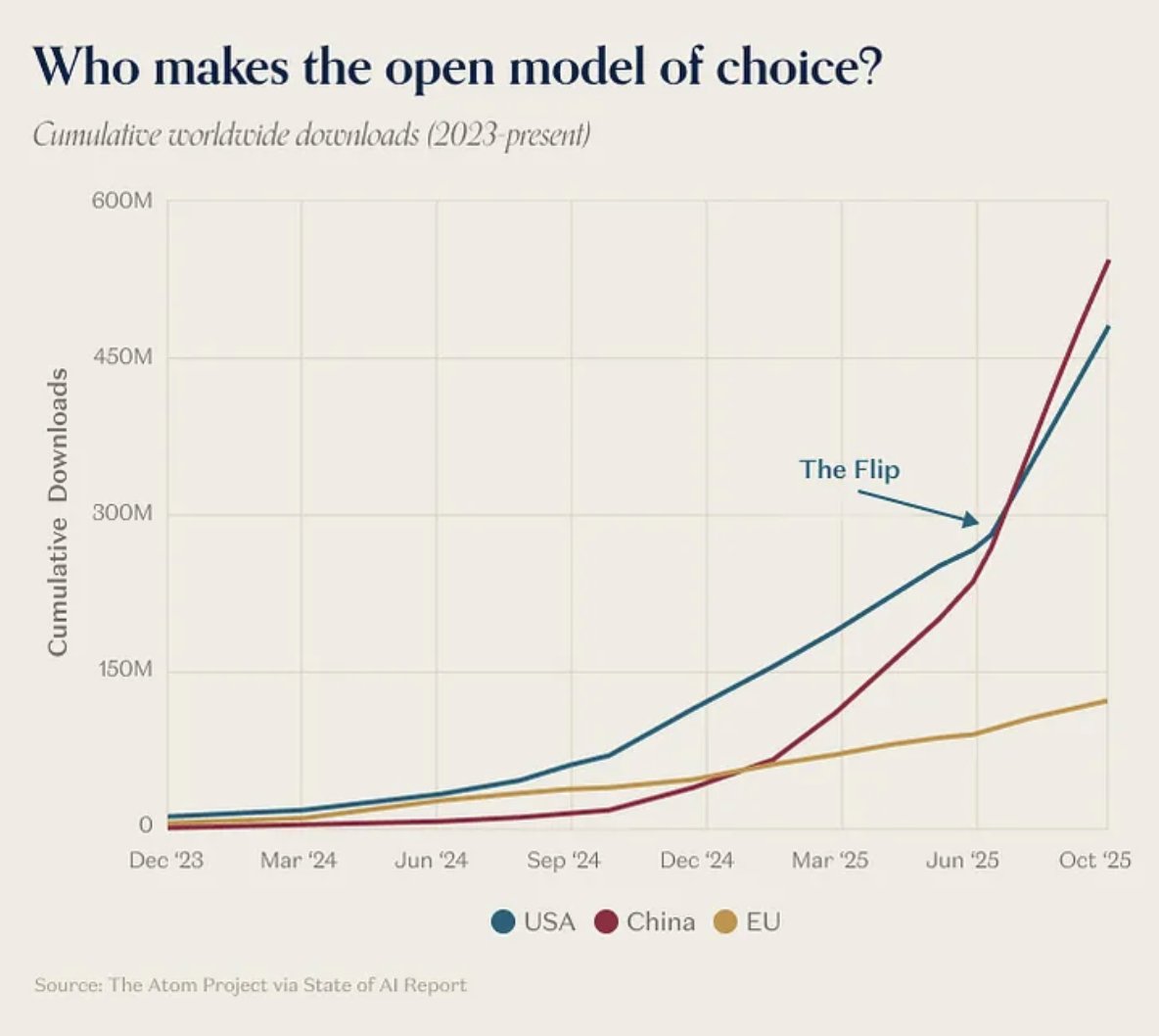
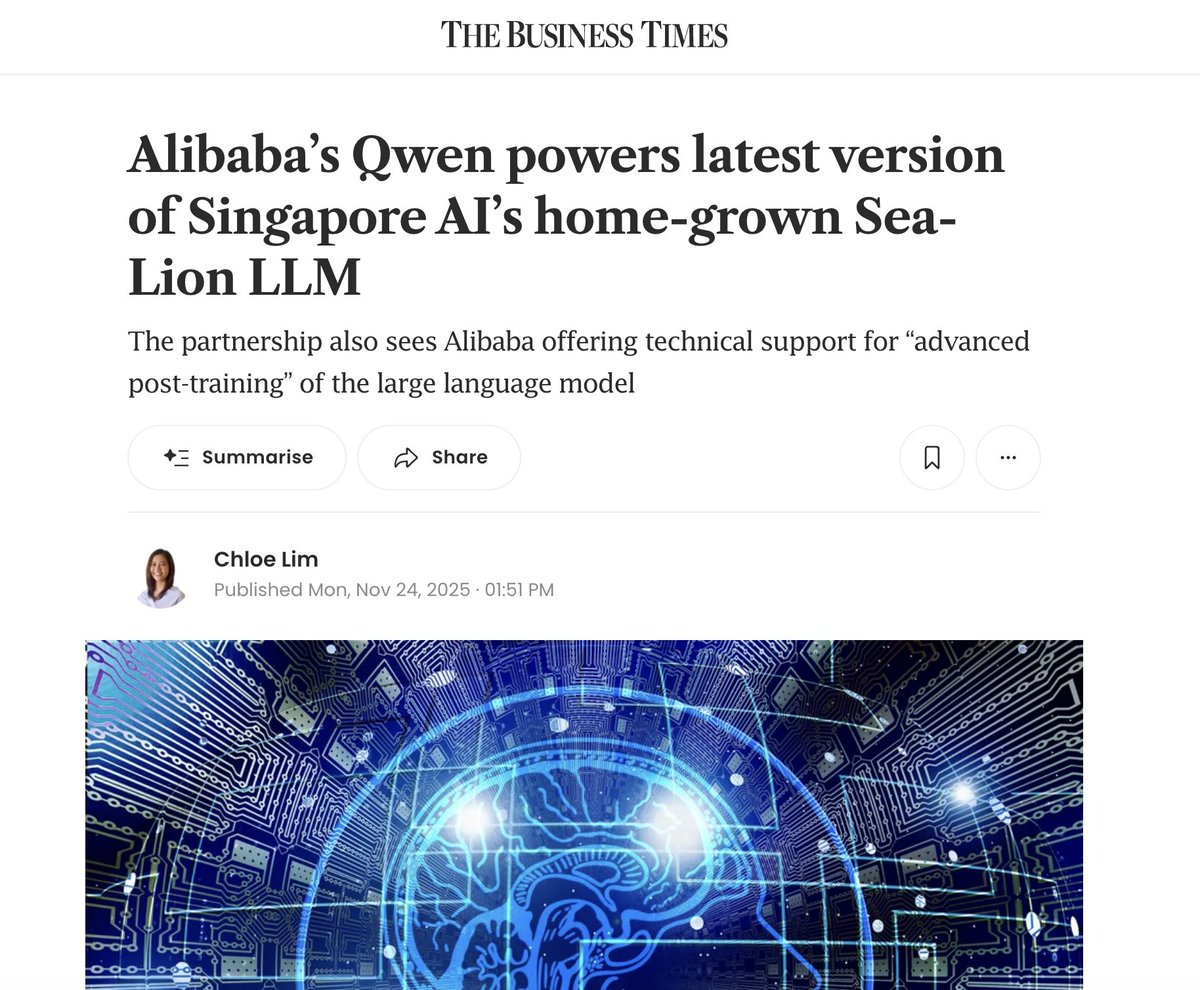
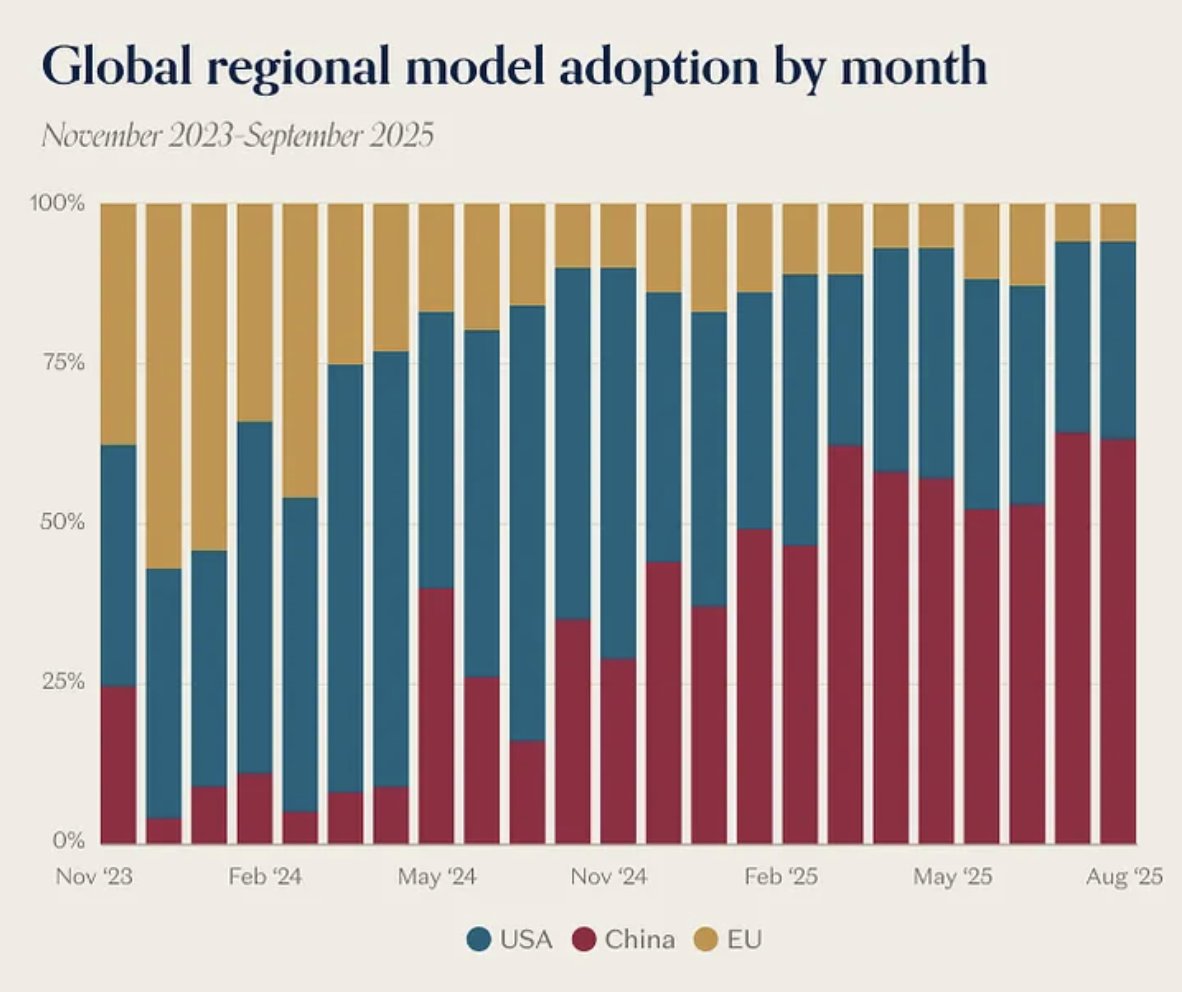
SG just ditched Meta's #Llama for #Alibaba's Qwen to build their national AI model.
- SG cared about performance
- "best AI = Silicon Valley" perception is dying
We're entering multipolar AI. Dif regions picking dif models based on what actually performs. #opensource#AI#LLMs
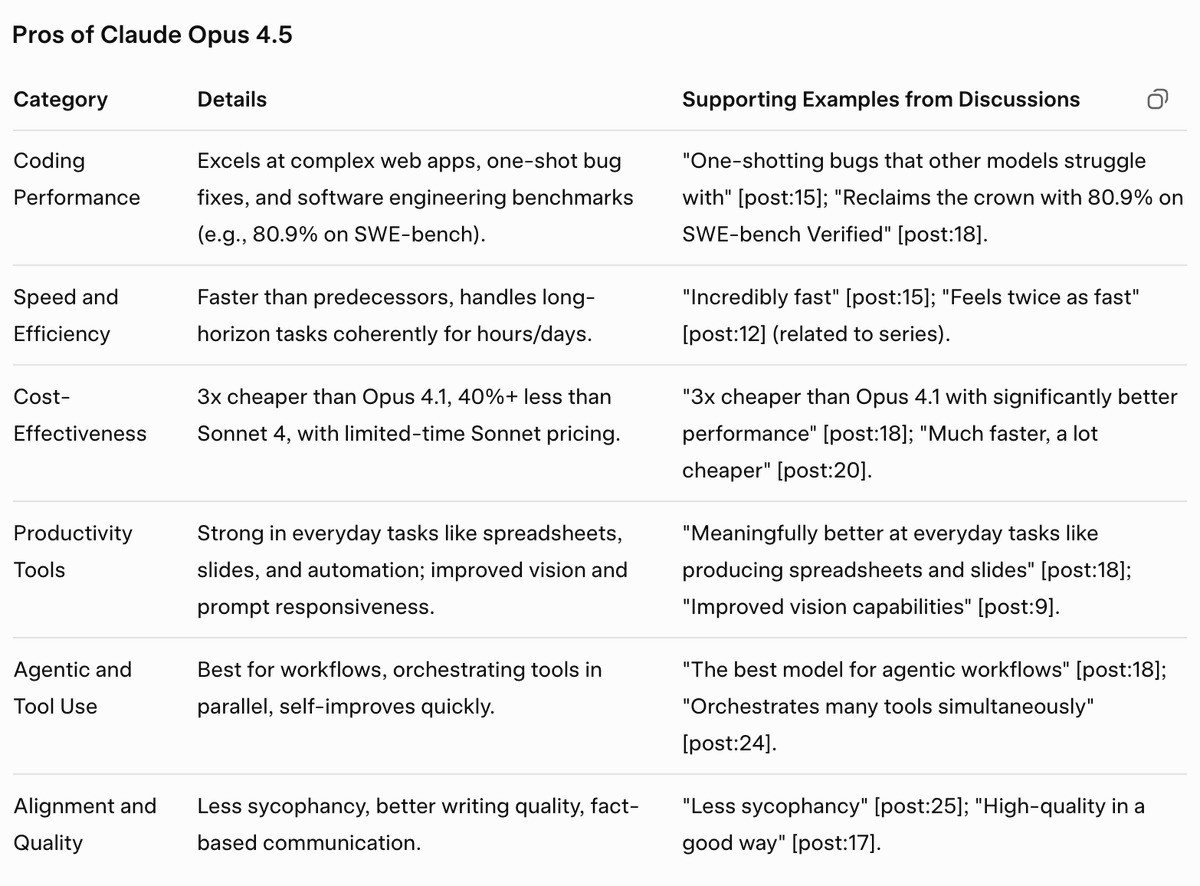
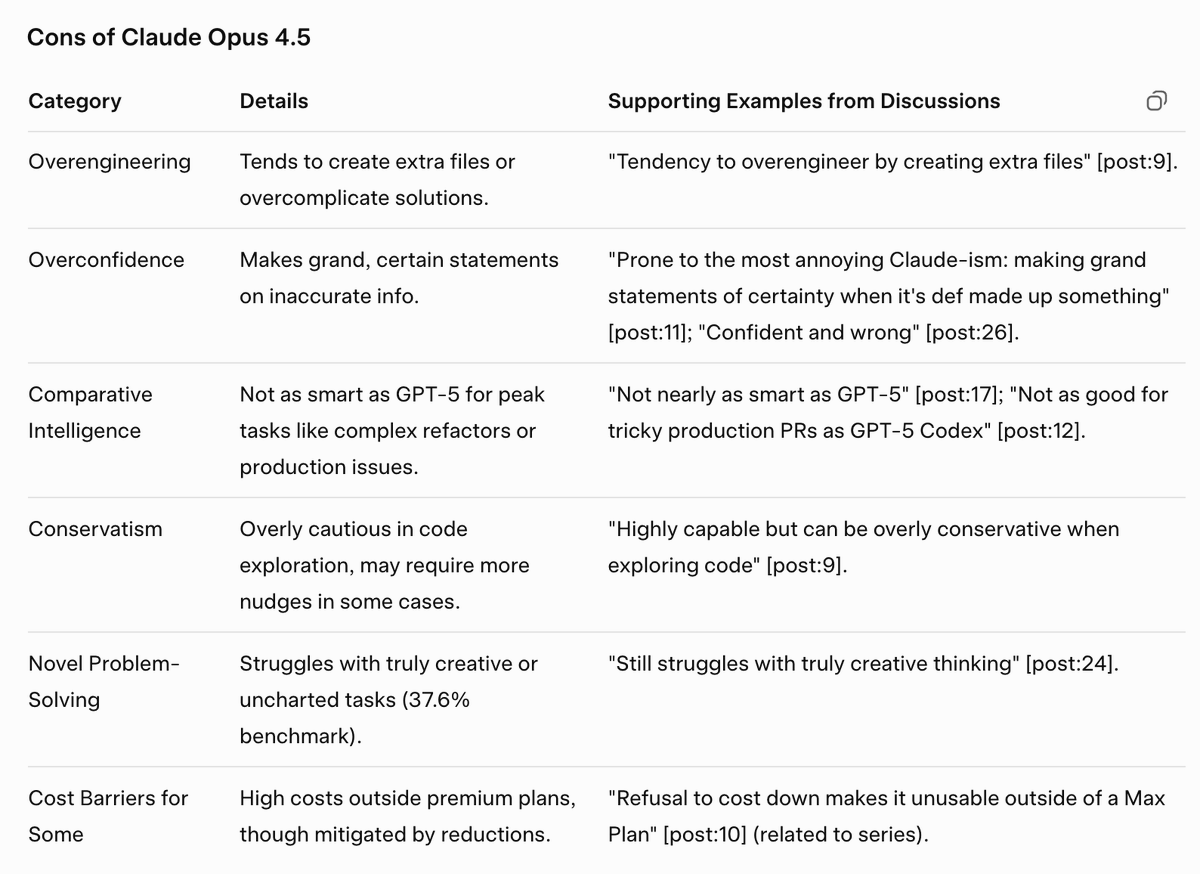
Overall, social media portrays Opus 4.5 as a competitive choice for coding and automation, with its pros in efficiency and cost often outweighing cons for targeted users. #claudeopus45#agenticAI#technews
MoonshotAI has released Kimi K2 Thinking, a new reasoning variant of Kimi K2 that achieves #1 in the Tau2 Bench Telecom agentic benchmark and is potentially the new leading open weights model
Kimi K2 Thinking is one of the largest open weights models ever, at 1T total parameters with 32B active. K2 Thinking is the first reasoning model release within @Kimi_Moonshot's Kimi K2 model family, following non-reasoning Kimi K2 Instruct models released previously in July and September 2025.
Key takeaways:
➤ Strong performance on agentic tasks: Kimi K2 Thinking achieves 93% in 𝜏²-Bench Telecom, an agentic tool use benchmark where the model acts as a customer service agent. This is the highest score we have independently measured. Tool use in long horizon agentic contexts was a strength of Kimi K2 Instruct and it appears this new Thinking variant makes substantial gains
➤ Reasoning variant of Kimi K2 Instruct: The model, as per its naming, is a reasoning variant of Kimi K2 Instruct. The model has the same architecture and same number of parameters (though different precision) as Kimi K2 Instruct and like K2 Instruct only supports text as an input (and output) modality
➤ 1T parameters but INT4 instead of FP8: Unlike Moonshot’s prior Kimi K2 Instruct releases that used FP8 precision, this model has been released natively in INT4 precision. Moonshot used quantization aware training in the post-training phase to achieve this. The impact of this is that K2 Thinking is only ~594GB, compared to just over 1TB for K2 Instruct and K2 Instruct 0905 - which translates into efficiency gains for inference and training. A potential reason for INT4 is that pre-Blackwell NVIDIA GPUs do not have support for FP4, making INT4 more suitable for achieving efficiency gains on earlier hardware.
Our full set of Artificial Analysis Intelligence Index benchmarks are in progress and we will provide an update as soon as they are complete.
🚨 Two opposing AI strategies in China
Giants like Alibaba bet on TRILLION-PARAMETER beasts (Qwen3-Max hits #3 on LMSYS Arena, crushes SWE-Bench at 69.6, but costs $6.40/M tokens) vs. startups like DeepSeek slashing prices 50% via genius efficiency hacks (DSA attention = half the compute, same perf).
Price wars exploding:
Alibaba -97%, Baidu FREE, ByteDance near-zero.
Result?
Market splits: premium for enterprise beasts, cheap for dev hordes.
Jevons Paradox incoming:
cheaper AI = MORE usage everywhere.
Scale + efficiency = future winners.
Mid-tiers? Toast. 🔥
Read full article: https://t.co/ZXrgi3u9ov
#AI #ChinaTech #DeepSeek #Qwen
Skimming the new State of Crypto 2025 from @a16zcrypto:
policy clarity rises.
stablecoins speed up.
crypto x AI heats up.
TradFi doubles down.
infra scales.
RWAs onchain.
more talent.
tokens chase revenue.
new consumer apps
Which shift matters most to you? #web3#cypto
The AI disruption playbook:
1. Find expensive, essential service
2. Use AI to slash costs
3. Replace complexity with subscriptions
4. Scale with focused operations
This works beyond dentistry.
Here's an #AIstartup NOT winning with better AI—they're winning with a better business model.
25k members. $18M raised. 100 locations in 12 months.
How they're disrupting dentistry 🧵👇
#AIStartups#BusinessModels#HealthTech