🚨 Early Breast Cancer: 2026 ESMO Guideline — What’s Changing?
Risk-adapted treatment is the key principle.
🔹 Neoadjuvant therapy enables response-guided decisions
🔹 HER2+ treatment is evolving beyond conventional pathways
🔹 KEYNOTE-522 remains central in stage II–III TNBC
🔹 CDK4/6 inhibitors reshape adjuvant HR+/HER2− care
🔹 Genomic assays help tailor chemotherapy
🔹 Axillary & RT de-escalation in selected patients
🔹 ctDNA surveillance is NOT standard practice
The goal: More effective treatment, less overtreatment.
#BreastCancer #Oncology #ESMO #MedOnc @OncoDailyBreast@drsarahsam
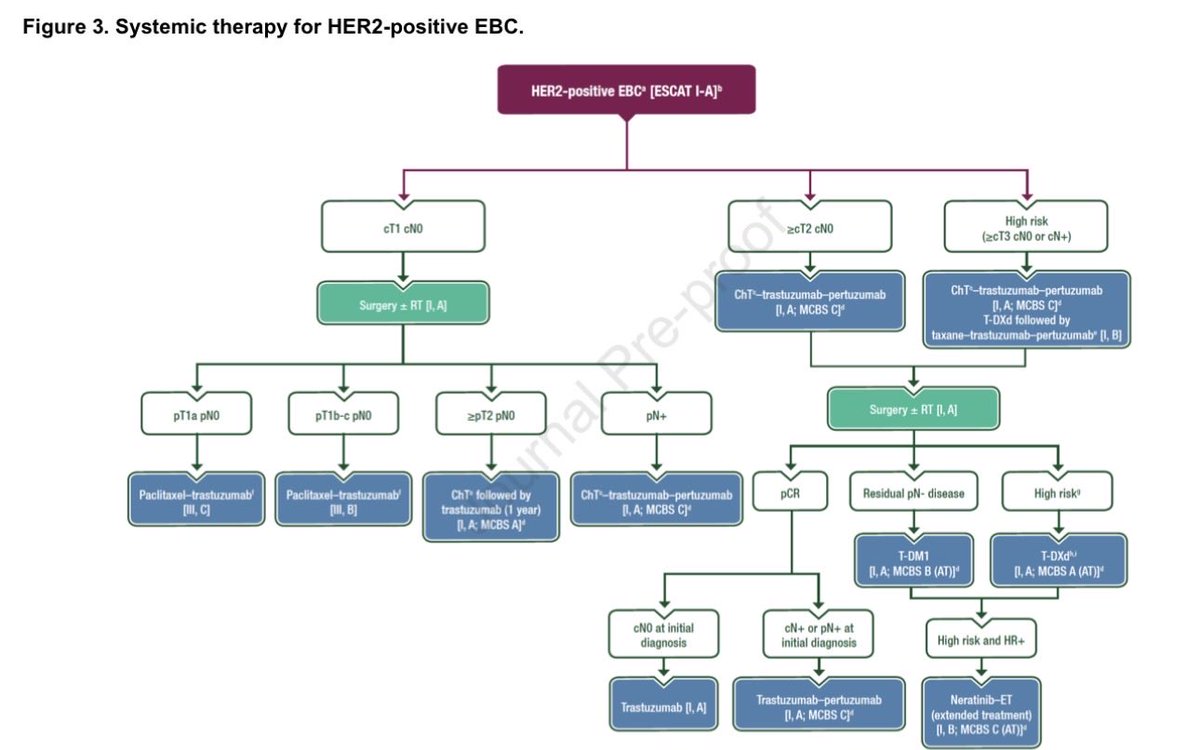
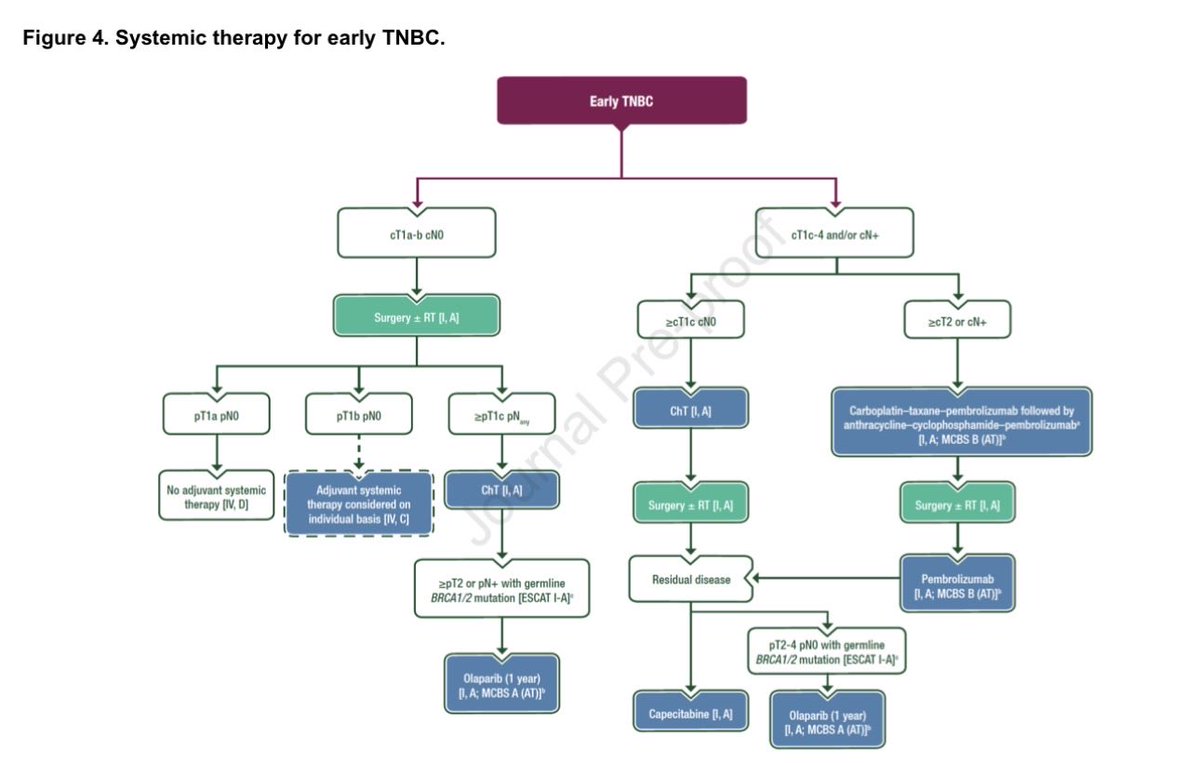
🚨 NEW ESMO 2026 Guidelines: Early Breast Cancer
Four essential treatment algorithms from the updated guidelines in Annals of Oncology. 👇
🔵 HER2-positive
• Neoadjuvant T-DXd in selected high-risk patients.
• Post-neoadjuvant T-DXd for eligible high-risk residual disease.
🔴 Triple-negative
• Perioperative pembrolizumab for stage II-III TNBC.
• Capecitabine and olaparib for eligible patients with residual disease.
🟢 HR-positive/HER2-negative
• Adjuvant abemaciclib or ribociclib in eligible high-risk patients.
• Giredestrant enters the treatment algorithm [I, B], although regulatory approval is pending.
🟣 Older patients
• Geriatric assessment and life expectancy should guide treatment intensity rather than chronological age alone.
📌 Save these four algorithms for your clinical practice.
@myesmo@esmo_open@asco@oncoalert
#BreastCancer #ESMO #Oncology
Full paper link in comment below ⬇️.
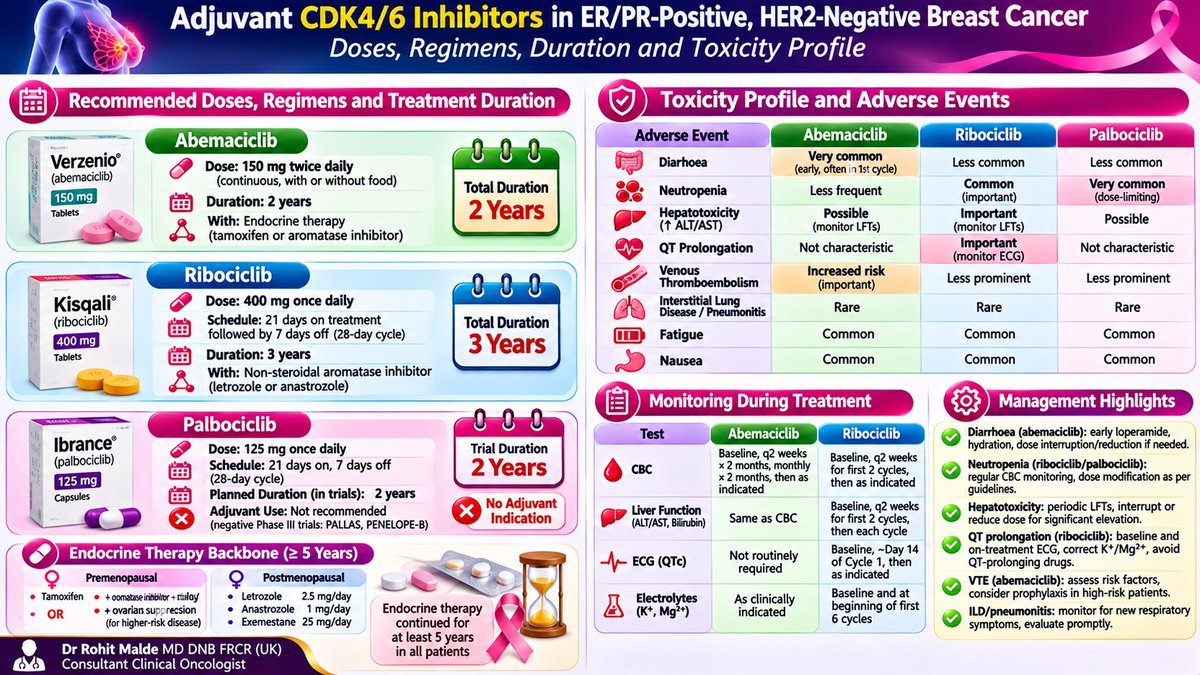
Comprehensive Review :
Adjuvant CDK4/6 Inhibitors in ER/PR-Positive, HER2-Negative Early Breast Cancer
Biological Rationale to use
Preclinical + Clinical Trials supporting use
Efficacy
Toxicity
What end Points
How to choose agents
Conclusion
It’s high time we put to rest the question of the added value of carboplatin based regimens in TNBC. We have a definitive answer. I also personally never use adjuvant TC (docetaxel/cyclophosphamide) in early #TNBC. I always use a carbo based regimen instead of cyclophosphamide for this disease.
Impact of Neoadjuvant Carboplatin in Early-Stage Triple-Negative Breast Cancer: A Pooled Analysis of the BrighTNess, Cancer and Leukemia Group B 40603 (Alliance), and GeparSixto Clinical Trials | JCO Oncology Advances https://t.co/zpnC00BPeH
#ESMO26 | IROCAS
I think we can finally put this debate to rest
In high-risk stage III colon cancer, intensifying adjuvant chemotherapy with mFOLFIRINOX failed to improve DFS over mFOLFOX6
We need to rethink our approach to treatment escalation in the adjuvant setting. Simply adding more conventional cytotoxic agents is not the answer.
As per tradition, here are my hand picked top 10 breast cancer abstracts to keep an eye on at #ESMO26. Key words: ADCs, CDK4, IO, and impactful updates of practice-changing phase 3 trials. See you in Madrid! 🇪🇸 #ESMOAmbassadors
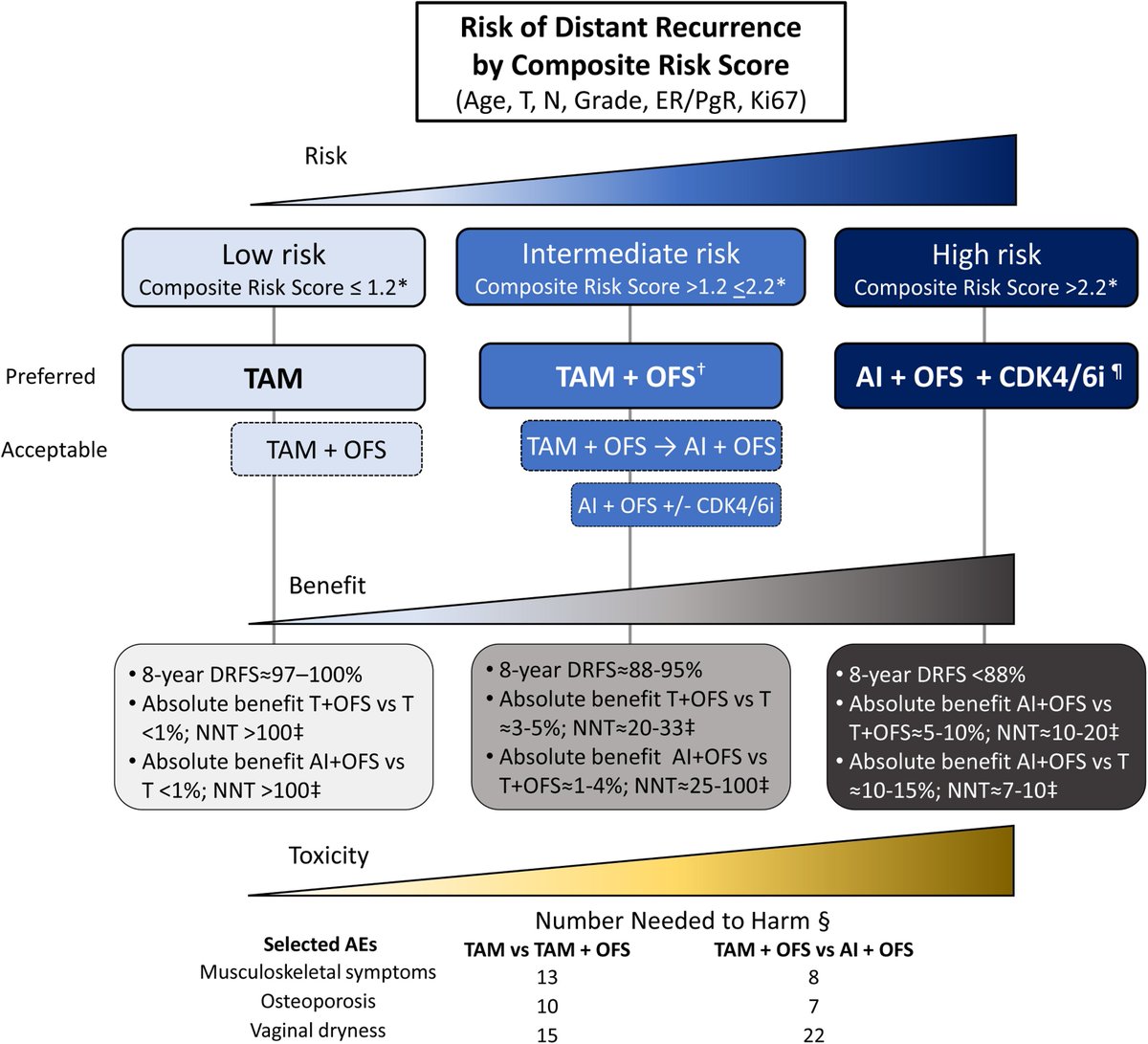
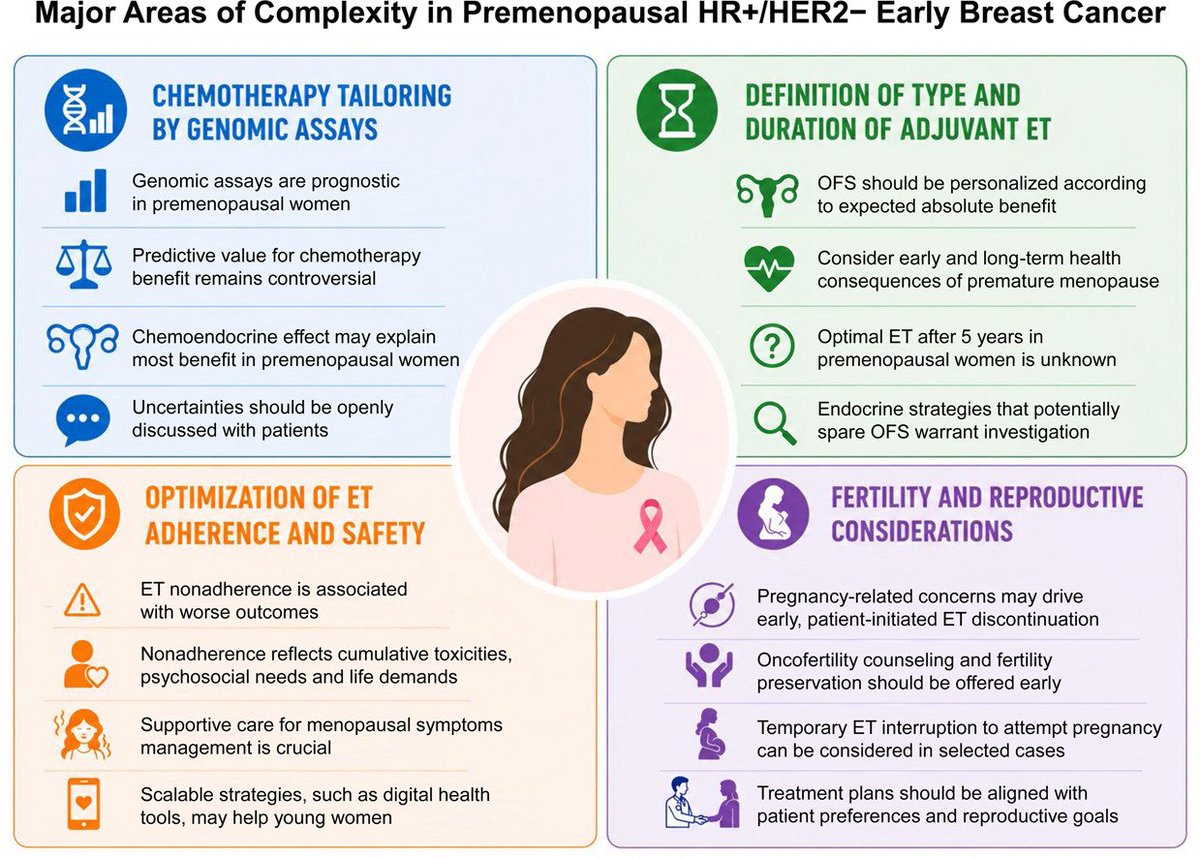
Navigating uncertainties and evidence gaps in adjuvant therapy for premenopausal women with HR+/HER2- breast cancer
Excellent review👇
https://t.co/mOkMcjx52W
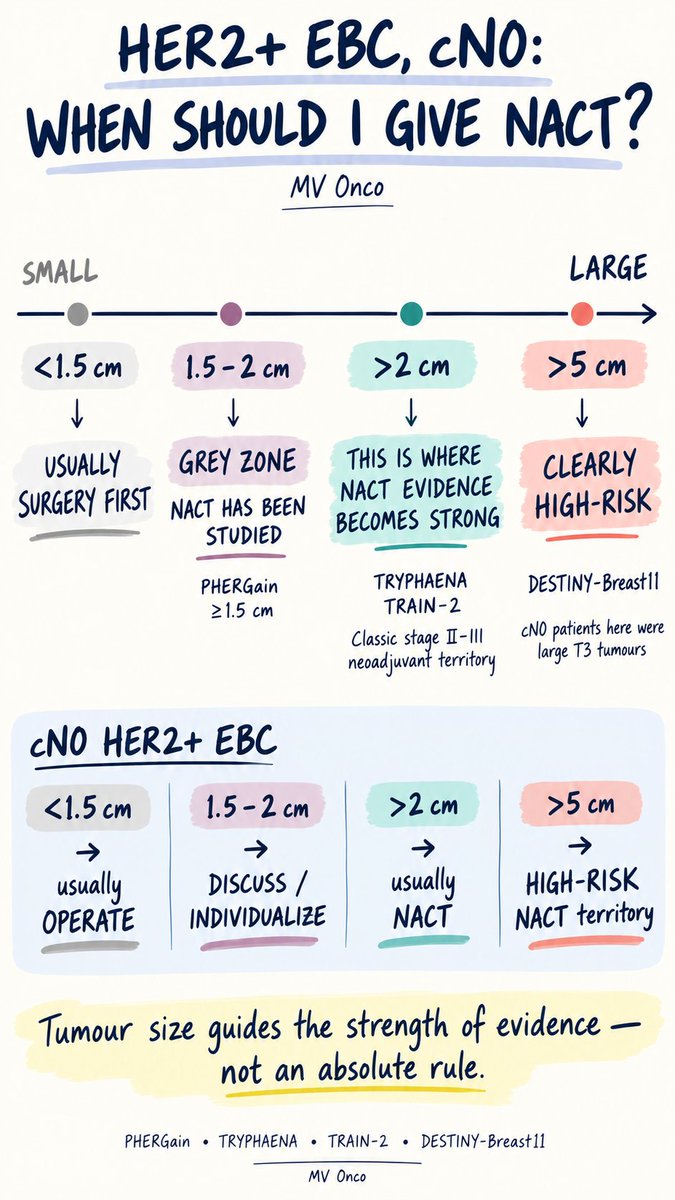
HER2+ EBC, cN0: When should we give NACT?
The 2-cm cutoff isn’t a biological wall—it reflects where the conventional neoadjuvant evidence becomes much stronger.
<1.5 cm → usually surgery first
1.5–2 cm → grey zone; individualize
> 2 cm → NACT generally favored
5 cm → clearly high-risk; DB11-type territory
Tumour size guides the strength of evidence—not an absolute rule.
#MVOnco #BreastCancer #HER2Positive #HER2 #NeoadjuvantTherapy #MedicalOncology
Risk-Adapted Optimization of Neoadjuvant Therapy in Human Epidermal Growth Factor Receptor 2–Positive Early-Stage Breast Cancer
Great review👇
https://t.co/A470WcO7xT
SUPER-SIMPLE 1L mTNBC ALGORITHM | ESMO 2026
How I approach first-line metastatic TNBC when all options are accessible:
PD-L1 → DFI → gBRCA → early relapse → treatment.
The big 2026 shift: ADCs have moved right into the first-line conversation — including pembrolizumab + sacituzumab govitecan for CPS ≥10 with DFI ≥6 months, and Dato-DXd/SG for PD-L1-negative, gBRCA-WT disease.
Simple algorithm. Important caveats. ESMO 2026.
Reference: de Azambuja E, et al. Ann Oncol. 2026;37:1203–1217.
📌 Bookmark this before your next 70+ breast cancer patient.
A practical framework to avoid both undertreating the cancer and overtreating the patient.
Before chemotherapy, think beyond age:
→ Geriatric assessment
→ CARG-BC toxicity risk
→ Functional status + comorbidities
→ Competing mortality + patient preference
HR+/HER2−: ET alone for most low-risk disease; individualize chemo/CDK4/6i.
HER2+: TH remains key for stage I; selected older patients may be candidates for THP-based de-escalation.
TNBC: Avoid reflex undertreatment. Fit older adults with high-risk disease can still benefit from curative-intent therapy.
🎯 Verdict:
Older ≠ frail.
Treat according to biology × fitness × toxicity risk × goals.
@ASCO@OncoAlert
#BreastCancer #GeriatricOncology #Oncolog
🚨 NEW ASCO 2026 Living Guideline: HR+/HER2− Stage I–III Breast Cancer
A few recommendations worth bookmarking 👇
🔹 Endocrine therapy remains the backbone of systemic treatment.
🔹 Low ER expression (<10%), stage II–III: neoadjuvant treatment may follow a TNBC-style regimen with taxane + carboplatin + anthracycline + pembrolizumab.
🔹 Neoadjuvant CDK4/6 inhibitors: insufficient evidence for routine use.
🔹 Adjuvant CDK4/6:
• Abemaciclib × 2 y for monarchE-eligible patients
• Ribociclib × 3 y for NATALEE-eligible patients
📌 ASCO suggests using absolute risk to guide CDK4/6 treatment:
25% 10-y breast cancer mortality risk → recommend
10–25% → consider
<10% → generally do not recommend
⭐ If eligible for both, the Panel favors abemaciclib over ribociclib, citing shorter treatment duration + demonstrated OS benefit.
🧬 High-risk germline BRCA1/2 or PALB2 → offer 1 year adjuvant olaparib; ASCO prioritizes olaparib over CDK4/6 inhibition when both apply.
Verdict: Early HR+/HER2− breast cancer management is becoming increasingly risk-adapted, genomically informed, and targeted.
@ASCO@OncoAlert #BreastCancer #Oncology
New @ASCO Living Guideline: Stage I–III HR+/HER2− Breast Cancer
The most notable change in ASCO’s new guideline for early HR+/HER2− breast cancer is that it links treatment decisions to thresholds for the 10-year risk of breast cancer death:
• OFS + AI: recommend if >10%
• CDK4/6i: recommend if >25%, consider if 10–25%, generally do not offer if <10%
• Olaparib: the same >25% / 10–25% / <10% framework
• Anthracycline: favor if >25%, consider if 20–25%, generally avoid if <20%
Moving toward absolute benefit is appropriate; however, these are not predictive cutoffs derived from randomized trials, but pragmatic thresholds set by the panel.
💬In my view, this provides a more practical framework for clinical decision-making than previous recommendations. However, the guideline does not specify which model should generate the 10-year risk estimate, and it remains unclear whether existing prognostic tools are adequately calibrated in contemporary patients receiving standard therapy or validated for applying these specific thresholds to CDK4/6 inhibitor and olaparib decisions.
https://t.co/7o697Cy1MN
A new review on #HER2DX and its evolving role in HER2-positive early breast cancer. @ESMO_Open
Truly honored to be part of this outstanding group of experts @stolaney1@curijoey@Prof_Nadia_H@JavierCortesMD and to contribute to this work.
https://t.co/CMtwiCUld1