That warning is spot on. Foreign intelligence doesn’t just target generals- they go after soldiers, civilians, and even family members because that’s where leverage lives. In today’s world, counterintelligence is everyone’s job, not just the G-2 shop!
#Counterintelligence #USArmy #NationalSecurity
https://t.co/4s1VXkOZQz
"Division-level maneuver is never rehearsed outside of a combined arms rehearsal or digital warfighter exercise. Current exercise design and training environments do not adequately recreate the enemy kill web possible on the modern battlefield." https://t.co/wcdrtyrzOp
A formation of Reiters - armoured pistol cavalry - could be up to 20 ranks when performing a caracole attack.
That's where the front rank fires, then wheels off to go to the back and reload, the next rank steps forward, etc.
So you might have up to 20 close range volleys unleashed in a pretty short span of time.
And if those pistol volleys didn't work, they could still charge in with swords too.
These three lessons from two militaries' efforts to integrate tanks into their formations and operations after World War I are the keys to getting the Army's approach to drones right today. https://t.co/N8NAUwvZYN
My specialty is taking big historical conflicts and making relatively simple wargames about them.
I also think that most games should be simpler than they are.
So, how should you go about simplifying your wargame?
First up - focus. Your game can't cover every aspect of a conflict, so you have to narrow it down to 1, maybe 2 or 3, key elements.
Great example is Race to the Rhine. This game knows what it is doing - it is about logistics. Everything else is abstracted out.
Next - keep the game focused on Decisions. Avoid busywork, give as many meaningful decisions as possible for the play time. Focus on what is most relevant to the conflict.
Example: In my game "Gallipoli: Ordered to Die" there is almost no luck, but lots of decisions about the commitment of reserves and the approaches through terrain of different heights. This is what was most relevant to this particular battle.
As another example of focus as a method of simplification, my other game One Hour WW2 condenses the world map down to 31 spaces. This is enough to handle the strategic level decision-making of the war, e.g. the USA choosing between the European or Pacific theatres, or Germany apportioning resources between the Eastern Front and the Mediterranean.
Next up is numbers. All wargames include numbers, but these can range from low digits to multiple hundreds or thousands. For a simple game, try to keep all numbers less than 10, if possible. This means having 10 or less types of components or sub-systems.
Next up is choosing your scale. Do this from the bottom up rather than top down.
Start with the smallest possible unit or piece that will be represented, then work up according to that scale.
Abstraction is always necessary - remember to focus on decisions and don't get caught up in details.
Example: One Hour WW2 has a grand total of 58 units. Italy and France have 1 ground unit each. The mighty Soviet Union has a grand total of 10.
To keep your game simple, you also need to ruthlessly limit the Play Time. To do this, backward map from your desired play time. Break the game up into discrete actions, see how long each action takes (e.g. an individual battle might take 1 minute to resolve) and then divide the total play time by the average length of each action to get the number of actions your game can allow.
Example: In One Hour WW2, each action takes 30-45 seconds. Keeping it to one hour means a total of about 80 actions.
Next up, your combat system should also be simple. It really should be as quick as possible to resolve combats.
Include dice or other RNG’s for things below the player’s control if necessary, but decision-making is more interesting for players.
Remember, a single die roll per battle can simply represent ALL the variables beyond the player's control. You don't need to separately model the million things that can go wrong.
Example: In Gallipoli: Ordered to Die there are no dice, players might play a single combat chit or do artillery barrages to modify their combat score. One Hour WW2 is similar - it's just about committing reserves with a single die roll for some friction.
Finally, you can also simplify your Components. People love colored wooden cubes. They're easy to handle, look great and make multiple variables quick to grasp. Also, each component can do multiple jobs. The deck can be the game timer. The turn track can be the reinforcement schedule. Moving a piece from one space to another can uncover one thing and cover something else (as in Scythe). A single piece might count as armies, currency, officers or something else entirely depending on where it is placed (as in Root). Make your pieces work.
So there you have it. To simplify your games, think about these elements:
•Focus
•Decisions
•Numbers
•Scale
•Play Time
•Combat Systems
•Components
@suncat4 The Islamic mind can't comprehend that the European and ME (here Christians) are not mutually exclusive; perhaps it speaks volumes that the Islamic mind hasn't come to terms with native cultures.Hence, their abysmal integration into non-Islamic societies.
The importance of cavalry never diminished, even with the advent of organized pike squares.
In 16th century, it was not uncommon that the battle had separate cavalry and infantry fights, such as the battle of Ravenna in 1512 in this depiction.
The winner of the cavalry duel would then be able to flank the enemy pikemen who were busy engaging in the infantry fight, and overwhelm them from all sides.
While it's true that it was very difficult for cavalry to attack a pike square on its own, due to pikes discouraging the horses and preventing the charge, it was also very difficult for pikemen to defend against a cavalry charge in a situation when they were already engaged in fighting another pike square.
You have the cultural elite on your side. Stop pretending you're in any way edgy or transgressive.
You have it easy, and you have no right to moan about anything.
Introduction to the F-35B in UK Service
As always, views my own. This is an update on the F-35B in UK service. Comments and “corrections” welcome.
1/25 The F-35B Lightning II, a fifth-generation stealth fighter, forms a key part of the United Kingdom’s modern combat air capability, operated jointly by the Royal Air Force (RAF) and Royal Navy (RN). As of October 2025, the UK has received around 48 F-35Bs, with intentions to acquire 138 in total, although recent plans include 12 conventional take-off and landing F-35As for the RAF. This fleet underpins the Carrier Enabled Power Projection (CEPP) strategy, allowing power projection from the Queen Elizabeth-class carriers. Yet, the programme has faced delays, compromises, and questions about its fit. This thread attempts to explore the history of UK carrier aviation, the path to the F-35B, its design, limitations, strengths, and future role amid the 2025 Strategic Defence Review (SDR). It also incorporates recent comments from the First Sea Lord (1SL) on transforming the RN into a war-fighting force adept at hybrid warfare through autonomous technologies as force multipliers.
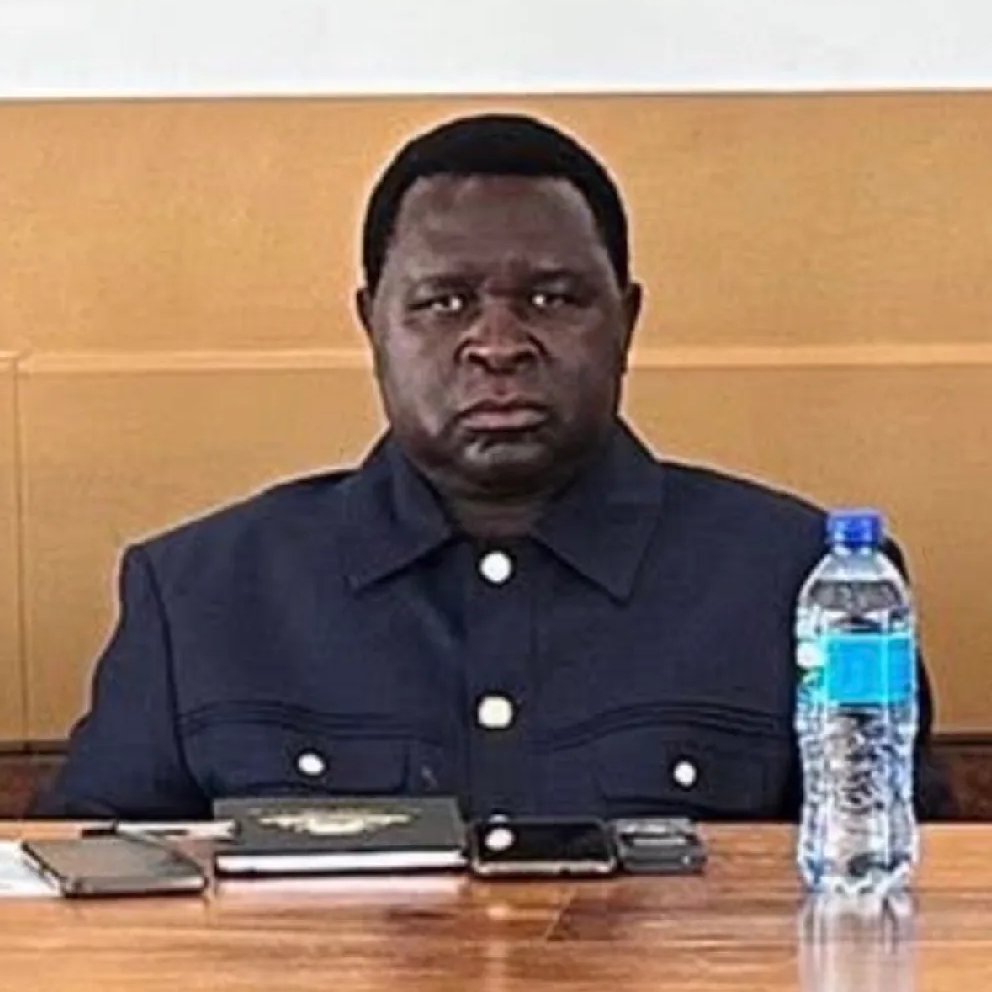
🇳🇦 Adolf Hitler may win tomorrow's upcoming elections in Namibia
The 59-year-old Namibian politician was first elected in 2020 with a large margin in the Omupanda constituency, receiving 85% of the vote.
Adolf Hitler Uunona represents the South West Africa People's Organization, which has governed Namibia since it gained independence in 1990.
The country's electoral commission predicts that Uunona will once again secure the majority of votes.
The politician emphasized that, unlike his infamous namesake, he has no plans for genocide or world domination.