Most people think of philosophy as an abstraction that doesn't touch the real world, but they're wrong.
Most real world problems are philosophy problems, and most philosophy problems are "giving things the wrong names".
For example, if you call feral drug addicts "homeless people", then you can't solve the problem. You can only buy more houses for feral drug addicts to destroy.
In this case, we called the police and courts the "justice system".
But they're not. They can't be the justice system.
The function of a justice system would be to give everyone what they deserve.
Now, I deserve a hundred million dollars, a private Caribbean island, and a foot massage from Lauren Bacall in her prime, but I don't see the "justice" system lifting a finger to correct any of this, do you?
No, what we are supposed to have is a public safety system.
The function of a public safety system is to keep the public and their property safe.
If we understood that, we wouldn't care about what criminals deserve. We would care how likely they are to do it again. Or something worse.
In a public safety system, retardation and mental illness are not migrating factors. They are the opposite.
Because they mean that the criminal is more likely to pose a future threat.
We all understand this.
We all understand that the feral retard who stabs strangers on the train for being White and beautiful is a worse person than the man who murders his wife and her lover when he catches them in the act.
Not because of some abstract calculus of moral agency, of who is disadvantaged and who isn't, but because one is certainly going to murder more people if he can, while the other is a lot less likely to.
We've known for centuries, if not millennia, that it's the same small percentage of people doing all the robbing, raping, and murdering, over and over and over again.
And we've known for centuries that if you physically remove them from society, that's 100% effective in stopping them from doing it again.
The only hurdle is philosophical. Call it a "justice" system, and you have to argue endlessly about morality and redemption, and then some leftie thug-hugger weaponizes your own Christianity against you.
Call it public safety, and you confine the argument to likelihood of reoffense. Then you are in the realm of statistics. Which you can compute.
It all starts with naming things correctly, according to their actual nature.
The Bethlehem manger wasn't random; it was prophetic.
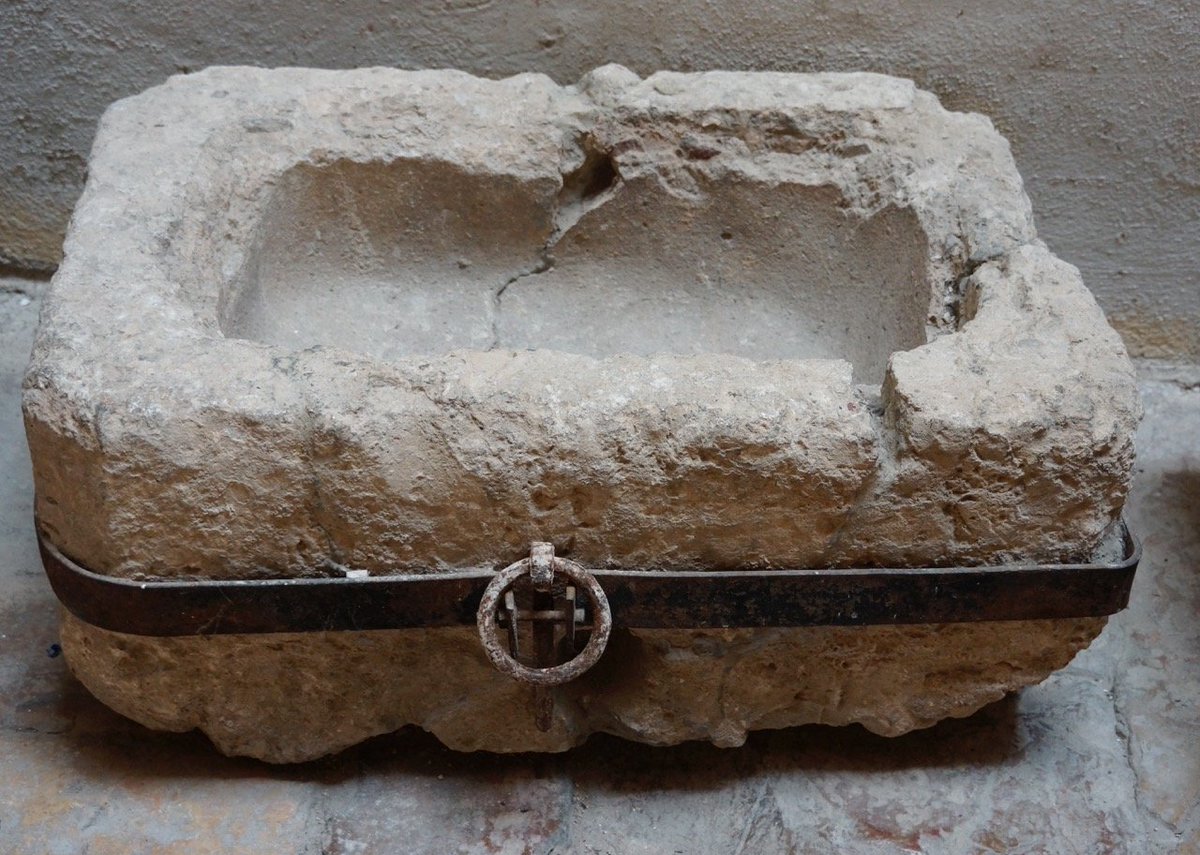
A lot of folks don't realize that when the Bible talks about Jesus being laid in a manger, the Greek word for it is "phatne," which just means a feeding trough. In Bethlehem back then, these were often carved from stone.
What's really striking about this is the shepherds around there. They raised lambs specifically for Temple sacrifices. Right after birth, they'd check each lamb for any flaws and put the perfect ones in a manger to keep them safe from getting hurt, since only spotless lambs could be used in offerings to God.
So here comes the Lamb of God himself, placed in the exact spot where those sacrificial lambs were protected.
And who do the angels tell about his birth? Not rulers or religious leaders, but these shepherds, guys who knew all about sacrifice, blood, purity, and flawless lambs.
When the angels said, "You'll find a baby wrapped in swaddling cloths and lying in a manger" (Luke 2:12), it clicked for them right away.
This wasn't some ordinary child. He was the ultimate Lamb, the one who'd remove the world's sin. From day one, Jesus was set apart for sacrifice, not by people, but by God.
"Behold, the Lamb of God, who takes away the sin of the world." (John 1:29)
*Jesus is the reason for the season.
Merry Christmas!