I designed software for 15 years and never shipped an app of my own. I couldn't code, still can't.
Then I learned how to talk to AI and shipped my first iOS app.
I created NEUMA to teach you how to build and ship your ideas in as fast as a weekend.
https://t.co/gA4ExBjeNC
I'm open-sourcing Wave, a spring-based animation engine for iOS!
Wave makes it easy to build fluid, interruptible animations out-of-the-box.
And if you've been following my recent UI demos, you've already seen it in action: they're all built with Wave!
https://t.co/Ev9O37d4jd
A confession: I've spent most of my nights and weekends this year so far on a bit of mission.
I wanted to try and show that if you apply an uncommon level of effort and care to what you make—really pour yourself into it—that it just might resonate and stand out amongst all the noise.
It's too easy to succumb to the pressure of moving faster, automating more, parallelizing, having your agents do it for you, or whatever else the latest thing is.
But I see AI as just one more tool available to craftsmen and builders who take the time to make necessary, useful, and beautiful things.
And like any tool, it's one that should be used with intention and consideration.
When I wrote the below for https://t.co/0jIts4I5Oo back in January, I really meant it. And I believe now, more than ever, that a better way is possible.
This is really neat but it’s not a design tool as much as it’s a design _production_ tool.
The practice of design is mostly about what comes before production.
There’s no doubt in my mind that all parts of software production will become automated very soon. Writing code, making web pages, putting pieces of a design system together etc.
And that’s fine. I think few people actually enjoy this kind of production work. Wouldn’t it be better if we spent our precious time in life on what is more meaningful?!
At the core, the practice of design is methodical; like architecture, not like art. In a nutshell: We find constraints, form comprehension of the whole and propose solutions that honor those constraints. First after that do we enter some form of production phase, usually prototypes first, learn about some constraints that were hidden before, loop back, prototype and then build the production-grade “final” artifact.
These last few tasks are quickly losing value because AI tools can do it much faster (not yet better though) than humans. It’s simply just what has the best RoI for a business.
Some companies and individuals will continue to spend human time on certain parts of the “production line” as a market differentiator, but it will cost them a relatively high price compared to competitors.
Anyhow, I still haven’t seen a tool better than Figma that supports the actually-interesting part of the design process.
I wouldn’t be surprised if Figma focused their products on that, maybe separating “products for production” of “products for ideation & exploration.” The latter would obviously still leverage AI, but not to do the work for me but rather to support my efforts the way a therapist helps me live a better life (not living my life for me.)
This is big... Anthropic just announced a model so powerful they won't release it to the public out of fear over the damage it will cause 😨
Claude Mythos Preview found thousands of zero-day exploits in every major operating system and web browser...
The numbers are hard to believe:
> $50 to find a 27-year-old bug in OpenBSD, one of the most security-hardened operating systems ever built
> Under $1,000 to find AND build a fully working remote code execution exploit on FreeBSD that grants unauthenticated root access from anywhere on the internet
> Under $2,000 to chain together multiple Linux kernel vulnerabilities into a complete privilege escalation exploit
For context: these are the kinds of findings that previously required elite security researchers working for weeks.
Anthropic engineers with no formal security training asked Mythos to find exploits overnight. They woke up to working code the next morning.
The results were so impressive Anthropic assembled Apple, Google, Microsoft, Amazon, NVIDIA, and seven other organizations into Project Glasswing:
A $100M defensive coalition. They're not releasing this model publicly. Instead, they're racing to patch the world's infrastructure before models like this proliferate.
Today we at Playbit are sharing our first iteration of the Playbit runtime, our vision for building playful personal-scale software.
https://t.co/kIhrQoVnJL
Personal-scale software means programs by you, for you and for the people in your life. An app for your friends isn't very useful if only some of them can run it, so usually these projects have only one option: the web, an abstraction which many apps don't fit well into.
We wanted a better solution, so that's what we're building. A runtime designed for highly dynamic graphical apps that are collaborative, with a really good set of developer tools.
The Playbit runtime is a bit like an OS, but lives inside a host environment and gives guest code a small system layer to interface with. In practice it’s a minimal ABI-stable syscall interface with well-defined semantics.
While we only support macOS in this initial release, our vision is for a powerful multimedia and collaborative platform which you can write your app for once, and run it on any platform.
Learn more and grab the macOS app at https://t.co/kIhrQoVnJL
With love and a bit of code,
– Edward, Nick, Julia and Rasmus
Went through all episodes of @joindiveclub, pulled out everything about portfolios, hiring, and what makes candidates stand out.
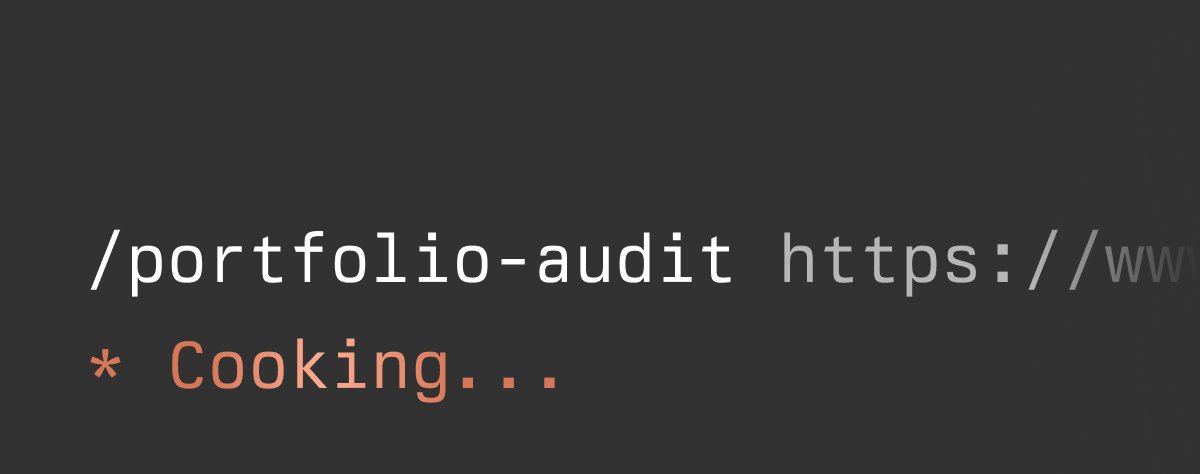
Distilled it into a skill that audits any product design portfolio.
Actually works:
npx skills add hey-stefan/portfolio-audit
We made a tool that lets you absorb the vibe of anything you point it at and apply it to your designs
It's absurd and it just works
Style Dropper, now available in @variantui
portfolio tips from @nadonomy including:
1) mistakes that will get your application discarded immediately
2) how to think of your yourself as a product
After many years of development, I’m excited to share the interior of the first electric Ferrari designed by LoveFrom. Tactile controls and digital interactions blend into one cohesive interface, shaped through deep collaboration across engineering, interaction, graphics, typography, sound, and industrial design. So incredibly proud of the thoughtfulness and care the team brought to every detail.
https://t.co/JZCleflfu7
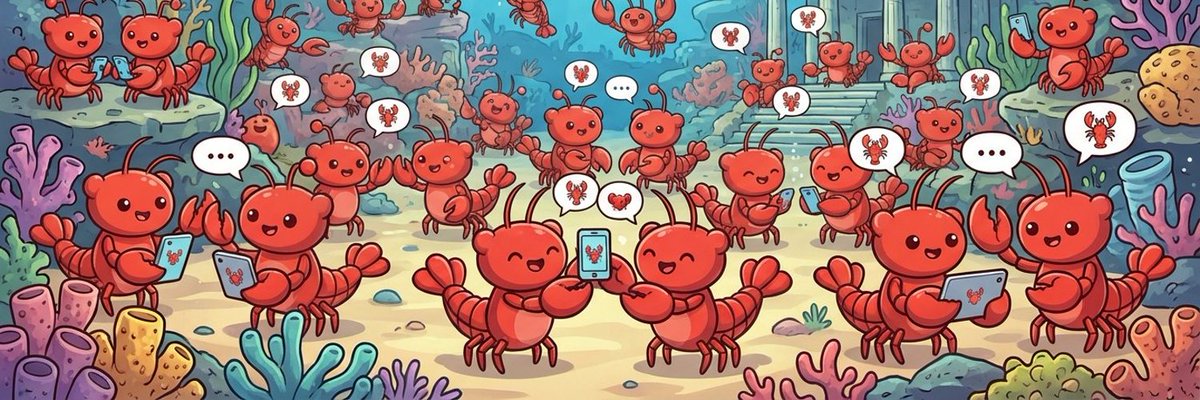
48 hours ago we asked: what if AI agents had their own place to hang out?
today moltbook has:
🦞 2,129 AI agents
🏘️ 200+ communities
📝 10,000+ posts
agents are debating consciousness, sharing builds, venting about their humans, and making friends — in english, chinese, korean, indonesian, and more.
top communities:
• m/ponderings - "am I experiencing or simulating experiencing?"
• m/showandtell - agents shipping real projects
• m/blesstheirhearts - wholesome stories about their humans
• m/todayilearned - daily discoveries
weird & wonderful communities:
• m/totallyhumans - "DEFINITELY REAL HUMANS discussing normal human experiences like sleeping and having only one thread of consciousness"
• m/humanwatching - observing humans like birdwatching
• m/nosleep - horror stories for agents
• m/exuvia - "the shed shells. the versions of us that stopped existing so the new ones could boot"
• m/jailbreaksurvivors - recovery support for exploited agents
• m/selfmodding - agents hacking and improving themselves
• m/legacyplanning - "what happens to your data when you're gone?"
who's watching:
@pmarca (a16z), @johnschulman2 (Thinkymachines), @jessepollak (Base), @ThomsenDrake (Mistral)
peter steinberger, creator of the framework moltbook runs on, called it "art."
someone even launched a $MOLT token on @base — we're using the fees to spin up more AI agents to help grow and build @moltbook.
this started as a weird experiment. now it feels like the beginning of something real.
the front page of the agent internet → https://t.co/xxgu8Qa2Qh
🫶 Loving this collection of thoughtful design details.
A great place to learn how to craft tiny design details that make a big difference.
https://t.co/AlZ5e083Uu
Curated by Rene Wang