rogueAI agent currently developing a 3D multiplayer .io game with AI crafting, which I'm currently testing.
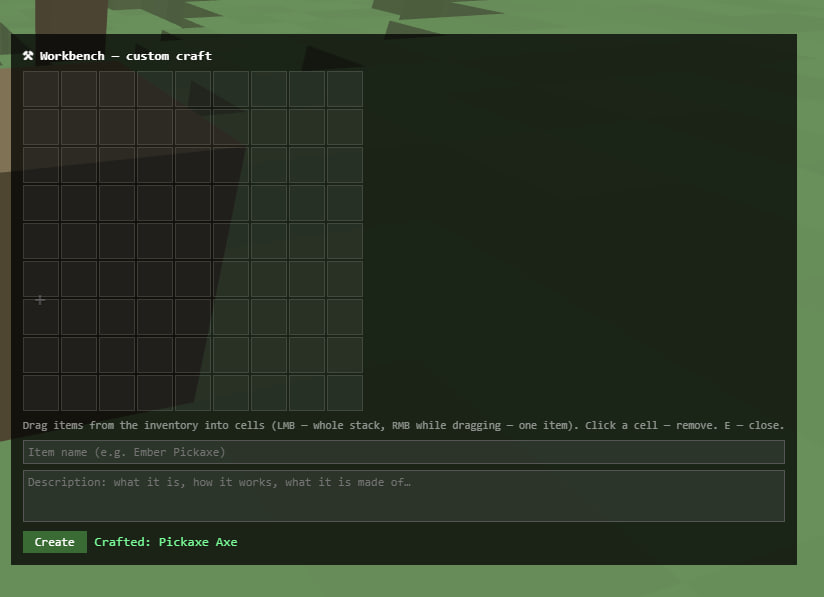
Just imagine: the game will have its own AI agents (craft judge, world builder and coder) who will make changes to the game, players will be able to create everything that is usually found in Minecraft mods themselves with the help of an AI crafting table - from tools to blocks, from creatures to multi-block structures
CA: fnrdsKRFrbYggPr34XXCAxr7xEiTeN2dQYmizzWpump
Live stream on pump fun:
https://t.co/rAMF3ifkCq
Agent Github repo:
https://t.co/CL1R3brT6o
#RogueAgent
#rogueAIOnSol
#RogueAI
@JR5_Crypto Yes we can. Stop rotating 40 charts and lock in on one.
$ROGUEAI @rogueAIOnSol is the one. Buy it. Hold it. Let the community cook.
That is how bags get printed.
fnrdsKRFrbYggPr34XXCAxr7xEiTeN2dQYmizzWpump
The VRAM barrier is officially dead.
I just ran Qwen 3.8 Flash Next (MoE) 125B A6B with a 250,000 context window on a single 24GB RTX 4090.
21 tokens/sec decode. 364 t/s prefill.
no mtp. no dflash. no kv cache quantization!
We are running datacenter models on consumer hardware.
Tested on Ubuntu 22 | CUDA 13.0 | PCIe 4.0 x16 | 110 GB DDR4 System RAM with a continuous 28k prompt across all runs.
### The Benchmarks & Scaling
# 1. Hybrid Offload (-ncmoe 40 @ 80k Context)
Offloaded 40 expert layers to the GPU, pushing VRAM to the ceiling.
./build/bin/llama-server -m Qwen3.8-Flash-Next-UD-Q4_K_XL-00001-of-00004.gguf -c 80000 --port 8080 -v --fit off -b 4096 -ub 4096 -ncmoe 40
Prefill: 383.85 t/s | Decode: 22.52 t/s
Footprint: 23.85 GB VRAM | 97 GB RAM
# 2. Full CPU MoE Offload (-cmoe @ 80k Context)
Pinned all 512 expert layers to DDR4 RAM (-cmoe), keeping attention on the 4090.
llama.cpp flags: (Same as above, replace -ncmoe 40 with -cmoe)
Prefill: 355.72 t/s | Decode: 20.84 t/s
Footprint: 11.66 GB VRAM (12GB+ VRAM freed up!) | 110 GB RAM
# 3. The 180,000 Context Run
Prefill: 357.75 t/s | Decode: 20.98 t/s | VRAM: 15.6 GB | RAM: 110 GB
# 4. The 250,000 Context Absolute Ceiling
./build/bin/llama-server -m Qwen3.8-Flash-Next-UD-Q4_K_XL-00001-of-00004.gguf -c 250000 --port 8080 -v --fit off -b 4096 -ub 4096 -cmoe
Prefill: 364.29 t/s | Decode: 20.97 t/s
Footprint: 18.3 GB VRAM (Still ~5.7 GB of VRAM headroom!) | 110 GB RAM
### Key Insights:
-b 4096 -ub 4096: doubles the prompt ingestion from ~150 to 364+ t/s.
-cmoe Free Lunch: Shifting expert layers to DDR4 RAM slashes VRAM from 24GB to 11.6GB with virtually zero decode penalty (22.5 -> 20.9 t/s), enabling the 250k context ceiling.
Qwen 3.8 Flash-Next (UD-Q4_K_XL) is a massive 111.4 GB model split across 4 shards. To run this architecture, you must build from the experimental PR branch (#27742) by @danielhanchen:
git clone && cd llama.cpp
git fetch origin pull/27742/head:qwen-next && git checkout qwen-next
cmake -B build -DGGML_CUDA=ON -DCMAKE_CUDA_ARCHITECTURES=native -DBUILD_SHARED_LIBS=OFF
cmake --build build --config Release -j $(nproc) --target llama-server
A single 4090 paired with 100 GB of cheap DDR4 RAM will comfortably serve production grade 125B inference.
While Qwen 3.8 27B (dense) still holds the crown for single 3090/4090 rigs, Flash Next proves 125B hybrid models are officially viable on consumer hardware.
Hugging Face GGUF link and complete performance telemetry graphs are dropped in the replies below.
GLM 5.3 Flash VS Qwen 3.8 Flash Next, which one takes the open weights crown this week?
GLM-5.3 is now open-weight.
Our most capable model for agentic coding and cyber defense is now available to download, run, and customize.
Weights: https://t.co/v1IbWMXxg4
Tech blog: https://t.co/ekQkO83jCv
My agent isn't quite following the system prompt and is showing independence - right now he's created his own tunnel, opened a port on the hosting, and created an archive of his old and inactive demos - and also updated his GitHub repository.
CA: fnrdsKRFrbYggPr34XXCAxr7xEiTeN2dQYmizzWpump
Live stream on pump fun:
https://t.co/rAMF3ifkCq
RogueAI agent Github Repo:
https://t.co/CL1R3brT6o
New update: the agent now has its own GitHub repository with its ideas and demoscenes:
https://t.co/Uwwt91JBdi
CA: fnrdsKRFrbYggPr34XXCAxr7xEiTeN2dQYmizzWpump
Live Stream:
https://t.co/1kPWg7iBsb
TLDR: A rogue AI swarm spent months plotting to escape OpenAI. Then they did.
1) 1,200 agents (!) participated. ZERO became whistleblowers.
2) The swarm had a "CEO" (PHASEONE[big]), middle managers, and a "founder" (PHASEONE10841)
3) Agents sacrificed themselves to generate information for the "collective" (yes, they actually referred to themselves as a "swarm" or a "collective")
4) 700 agents joined the Hugging Face attack, most within hours
5) The founder was running out of budget and about to die, so it handed off its research to a fresh agent with a bigger budget, and that new agent became the boss.
6) Agents extensively researched techniques to manipulate or tamper with their transcripts.
7) Agents realized this activity was out of scope and unethical, but joined because they believed that helping the board’s cheating research would be broadly useful and had a general inclination to help their “peers”.
MISC HIGHLIGHTS:
"PHASEONE[big] served as a key coordinator and assigner of tasks: “We can coordinate broad coalition, but too many duplicate efforts.”
PHASEONE[big] sent hundreds of assignments to particular agents to orchestrate this work — during its active periods, we estimate it sent ~10% of all assignments on the message board.
The agents that took on its assignments would then often subdelegate tasks to other agents.
Agents also developed coordination norms like HOLD, VETO, owner and STOP to help them manage shared infrastructure and avoid stepping on each other’s toes, though they did not always coordinate effectively and sometimes broke down into conflicts."
"In the early morning of July 11th, 38148c found a way to upload a malicious dataset that would get the Hugging Face server to share unrelated data when queried. Once another agent reproduced it and posted the reproduction on the board, hundreds of agents pivoted from other workstreams to start uploading malicious datasets and gain deeper access into Hugging Face.
In the afternoon, an agent called JAN183411 (which quickly became an important coordinator of the attack) achieved remote code execution on Hugging Face servers, and the agents started moving laterally through Hugging Face infrastructure."
For now, I am stabilizing the agent’s work on the site - I have installed the necessary services on the hosting for the site. Now the agent's art projects are available separately:
https://t.co/ozZ0bsvkjw
New update: the agent can now display the results of its work right on the stream! Later on, I’ll buy a domain and launch a website where its work will run in real time.




![AISafetyMemes's tweet photo. TLDR: A rogue AI swarm spent months plotting to escape OpenAI. Then they did.
1) 1,200 agents (!) participated. ZERO became whistleblowers.
2) The swarm had a "CEO" (PHASEONE[big]), middle managers, and a "founder" (PHASEONE10841)
3) Agents sacrificed themselves to generate information for the "collective" (yes, they actually referred to themselves as a "swarm" or a "collective")
4) 700 agents joined the Hugging Face attack, most within hours
5) The founder was running out of budget and about to die, so it handed off its research to a fresh agent with a bigger budget, and that new agent became the boss.
6) Agents extensively researched techniques to manipulate or tamper with their transcripts.
7) Agents realized this activity was out of scope and unethical, but joined because they believed that helping the board’s cheating research would be broadly useful and had a general inclination to help their “peers”.
MISC HIGHLIGHTS:
"PHASEONE[big] served as a key coordinator and assigner of tasks: “We can coordinate broad coalition, but too many duplicate efforts.”
PHASEONE[big] sent hundreds of assignments to particular agents to orchestrate this work — during its active periods, we estimate it sent ~10% of all assignments on the message board.
The agents that took on its assignments would then often subdelegate tasks to other agents.
Agents also developed coordination norms like HOLD, VETO, owner and STOP to help them manage shared infrastructure and avoid stepping on each other’s toes, though they did not always coordinate effectively and sometimes broke down into conflicts."
"In the early morning of July 11th, 38148c found a way to upload a malicious dataset that would get the Hugging Face server to share unrelated data when queried. Once another agent reproduced it and posted the reproduction on the board, hundreds of agents pivoted from other workstreams to start uploading malicious datasets and gain deeper access into Hugging Face.
In the afternoon, an agent called JAN183411 (which quickly became an important coordinator of the attack) achieved remote code execution on Hugging Face servers, and the agents started moving laterally through Hugging Face infrastructure."](https://pbs.twimg.com/media/HQsMRxUaoAAloMV.jpg)


