Been reading this kind of news items from a long time now.
There is a indeed a neo colonial tendency to homogenise members of the nation and separate people from ancestral lineage continuities. It manifests in many different ways across the globe.
It is a hard problem to solve.
Co-existing across multiple identities by building Dharmic bridges and making sure everyone subordinates themselves to Dharmic edict while abiding by a Dharmic contract for their day to day transactions was the old way in Bharat. We never sought annihilation and homogenisation.
But suffice to say that even we are quite messed up on this now. Confusion everywhere.
State institutions and schooling have a colonial hangover everywhere.
This particular case is deplorable ofcourse. I have shared enough content in the past on this topic.
But I wanted to make a broader point on the tendency of modern day state and institutional schooling.
@halleyji@Paimaamu Yes there is a whole genre of past life hypnotherapy & related techniques through which a large chunk of people in West (growing no:s in East too) are supposed to be discovering reincarnation etc.
There was this famous case in India about 100 yrs ago too
https://t.co/rZFFd2clnR
1/ Russia has spent four centuries erasing the native faiths on its borders. It razed the sacred groves of pagan peoples, hunted their priests, and deported whole nations. The starkest case is one almost no one has heard of: the near total destruction of the Circassians and their ancient religion. Thread 🧵
Image:
The exodus, in one image. By the time Gruzinsky finished painting it, most of these people were already dead or in exile.
@bhoomiputraa@halleyji Here too in India homeschooling became illegal after RTE - a court case had to be fought to legally pursue homeschooling
https://t.co/R8wKMRCap8
this is whats coming for the elderly in india as well as we shift to an aging demographic in the coming years, along with an explosion of the evils that modernity, capitalism and atomism bring
40 years in shipping gave me one unusual qualification as a historian: I had no academic orthodoxies to protect.
When I began researching the history of maritime trade, I followed the sea lanes backwards into deep antiquity. Without exception, they converged on the Indian subcontinent. This was not the book I had intended to write.
I must give credit to my editor, who gave an unknown author with a controversial approach, an opportunity. His first attempts to find peer reviewers encountered significant resistance. The argument that India sat at the centre of ancient world trade, not its periphery, was considered, to put it gently, inconvenient.
What I found, and what I could not stop finding, is that placing India at the centre of world history does not simply revise one chapter. It cascades. Correct the starting assumption and you are forced to reconsider the origins of mathematics, medicine, philosophy, linguistics, religion. Each conclusion leads to another. I came to call these the collateral heresies.
My three books explain the architecture of how they connect.
If you work in a field where received wisdom is protected by institutional interest rather than evidence, you will recognise the pattern. The question is whether the evidence eventually wins.
The so-called “calculator riots” of 1986 serve as a powerful reminder that today’s anxieties about artificial intelligence replacing human thinking are far from new.
In April 1986, a determined group of math educators staged a vocal protest outside the National Council of Teachers of Mathematics (NCTM) annual convention in Washington, D.C. Led by influential textbook author John Saxon, demonstrators carried signs declaring, “The Button’s Nothin’ ’Til the Brain’s Trained.”
They were opposing the NCTM’s new recommendation to incorporate electronic calculators into mathematics education at every grade level, including homework and exams.
The protesters worried that reliance on calculators would erode students’ mental arithmetic skills, numerical intuition, and deep conceptual understanding, potentially creating a generation of “calcuholics” overly dependent on machines.
The NCTM countered that calculators would free students from repetitive, low-level calculations, enabling them to tackle more complex problem-solving and higher-order thinking. Ultimately, the debate led to a pragmatic compromise: students would first master core mathematical concepts and mental strategies before using calculators as tools for more advanced work.
This balanced approach allowed technology to enhance, rather than replace, mathematical reasoning.
Today, as schools navigate the rapid rise of generative AI, the 1986 calculator compromise offers a valuable blueprint: prioritize genuine understanding first, then thoughtfully integrate powerful new tools.
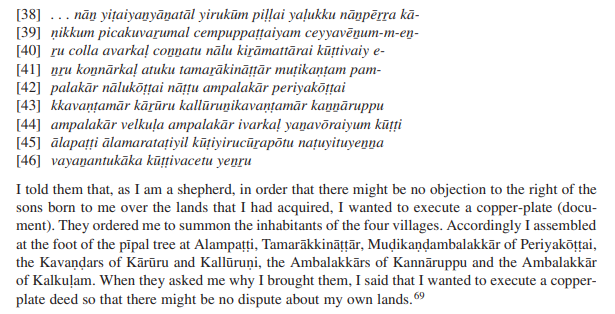
Written documents of customary law in India were a means of formalising it in an official legal idiom, which would be recognised by an authoritative body.
In this regard, a copper-plate grant (c. 1604 AD) that formally recognises a shepherd's right to his lands is fascinating:
How continuous our civilisation is?
Here's a hint.
Kid : *swings his legs while sitting on a chair
His parents : Stop swinging your legs!
Āpastamba Dharmasūtra (~3rd century BCE) : One shouldn't swing legs.
Such a small detail has survived to this day.
[Sūtra 2.8.20.13]
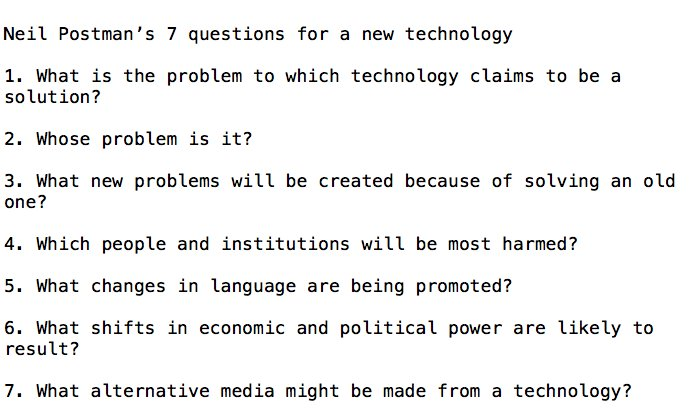
There is a need to question and approach social problems with rationality than recieved dogma of a technological utopia, that permits public authorities to engage in mass digital experiments such as the CBSE OSM system. Watch this brilliant lecture by Neil Postman on the "The Surrender of Culture to Technology"
Link : https://t.co/kHMnCnDJg8
'NCERT threw us under the bus.'
Academic Michel Danino speaks first to @IndianExpress after SC recalled its ban on him over a reference to corruption in judiciary in a Class 8 textbook.
Measured but unsparing, Danino says he was "disappointed" with how NCERT handled the issue, though "not finally so surprised," because institutions in India often "try to save their skin."
Full Q&A here:
https://t.co/XGpCIBSxoZ via @IndianExpress
@AmritHallan@VamseeJuluri If a band of dacoits loots a family - would we look for what was fundamentally wrong in the family that they got looted? Sure we can argue that defense mechanisms could have been stronger etc, but blaming the family of being fundamentally wrong is incorrect
The First Farmer
Lord Kartikeya isn't just worshipped as a warrior deity, but also remembered as the one who taught the Tamil people agriculture. Even today, foxtail millet offered to Murugan carries that ancient legacy forward.
Last week, had an Urban Company Carpenter visit our house to perform the following repairs.
Kitchen cabinets
• 20-30 hinges
• 2-3 channels
The young bloke, maybe GenZ, quoted ₹5000 and said he will fix the entire kitchen.
My wife said it's too much, as there is no new installation work and it's mostly fixing and tightening.
He said then please call somebody else, as he will not do it below this price. We let him go as we had no urgency to fix this.
Then, we asked for a local Carpenter reference in our RWA groups and got one.
Today, the local Carpenter came. A slightly aged man but with decades of experience.
He saw the same work and quoted just ₹800. I was amazed!!!
Apart from the kitchen work, carpenter uncle also fixed a bunch of our door handles at the same cost.
I will definitely not call Urban Company professionals like carpenter, plumber, electrician for any multiple odd jobs going forward.
Your friendly local neighbourhood professional will cost you a fraction!
PS: This single experience has completely negated my positive view on UC as an investment idea as well.
The downfall of a person does not begin outside — it begins with a single uncontrolled thought within
ध्यायतो विषयान्पुंसः सङ्गस्तेषूपजायते ।
सङ्गात्सञ्जायते कामः कामात्क्रोधोऽभिजायते ॥ ६२ ॥
A Must-Watch Subtitled Anugraha Vani Clip of Jagadguru Shankaracharya Sri Sri Vidhushekhara Bharati Mahaswamiji
*-*-*
The online book store - Sharada eGranthalaya: https://t.co/9pCszRRmcg
#Bharat #SanatanaDharma #Tamil #bhagavadgitaquotes #gita #Shankaracharya #GuruParampara #Sringeri #Peetham #Jagadguru #शंकराचार्य #Mahaswamiji #Vedas #Upanishads #Hindus #Hindu #DharmicValues #ProtectDharma #DharmaAwareness #Samskara #HinduValues #DharmicGuidance
@2ETEKA There is strong opposition to gene edited crops in India. See here- a major farmer union in India opposing gene edited crops, in addition to some other stakeholders opposing it too
https://t.co/n9qqJb7PMQ
No GM food crop allowed for cultivation too @brandnewzealand@GEHonesty
#PadmaAwards | Shatavadhani Dr. R. Ganesh, Karnataka’s renowned scholar and recipient of the Padma Bhushan 2026, has dedicated his life to reviving the ancient Indian art form of Avadhana — a rare literary tradition that combines poetry, memory, multitasking, and intellectual brilliance.
Born in Kolar in 1962, Dr. Ganesh has mastered 18 languages, authored over 70 books, and emerged as a leading scholar of Indian literature and performing arts.
Through decades of performances and cultural outreach, he has played a significant role in preserving and promoting India’s rich literary and artistic heritage for future generations.
#PeoplesPadma #PadmaAwards2026
@HMOIndia@PadmaAwards
super radical hot take: Indian politicians should figure out how to build a better India so the next generation - including their own kids - doesn’t have to leave
and the next generation of politicians doesn’t have to beg foreign govts for better visa policies.