@juxhindb@Cloudflare Cool, so do they use 1.1.1.1 internally for cf containers?
Also why not run your own Recursive Resolver, are there any heavy ratelimits at TLD servers level?
18 hours, 233K views and 463 replies later
the ultimate @Hetzner_Online alternative
The leaderboard per mentions:
1. @netcup — 43
2. @ContaboCom — 41
3. @OVHcloud_US — 38
4. @digitalocean — 20
5. Self-hosting — 19
6. @Hostinger — 11
7. @OracleCloud — 8
8. @ionos_help_US / @linode — 7 each
9. @awscloud / @Vultr — 6 each
But the best provider depends on the job:
→ EU + best value: Netcup
→ Maximum RAM per dollar: Contabo
→ US or dedicated servers: OVH
→ Easy, reliable production: DigitalOcean
→ Personal projects: self-host
→ Cheap and beginner-friendly: Hostinger
→ Experiments: Oracle’s free tier
Netcup users reported paying:
• €8.10/month for 8GB RAM
• €20.99/month for 24GB RAM + 10 cores
Contabo was the most polarizing: incredible specs for the money, but mixed reviews on uptime and support.
DigitalOcean wasn’t the cheapest, but people consistently praised its reliability and UX.
Speaking on GitHub Actions Security at #NullHydMeet tomorrow!
Covering pwn requests, injection risks, token permissions & hardening tips.
See you at ADP Hyderabad
@KartiPC@NTA_Exams You should also shut down all the shopping malls since there might be a theft in one of them. And close the roads because I heard someone was speeding.
India’s IT ministry banned Telegram for one week because some users shared leaked exam questions.
This punishes 150M+ ordinary Telegram users in India — not the insiders who leaked the exam materials.
And the ban hasn't stopped anything. The leaks just moved to other apps.
@Fhajad@anurag_bhatia I remember when cloudflare started the 1.1.1.1 dns there was a guy on Reddit that was like “I have 300 iPads out there with no management that I was using 1.1.1.1 as a fake dns to block web access on them since they couldn’t resolve dns. This sucks”
I had hacked CBSE's OSM (On-Screen Marking Portal) in February and had reported the vulnerabilities to CERT-In, but they were unable to patch most of them.
I've written a detailed blog post about it here: https://t.co/qyT23GkTEJ
tl;dr When you delete a Google API key, it says it’s immediately deleted. Our testing says ~23 minutes.
During that window, an attacker with a leaked key keeps access to your data and enabled APIs (including Gemini).
Deleting a Google API key doesn't revoke it immediately.
Our research found successful authentications up to 23 minutes after deletion across Google's infrastructure. During that window, attackers with a leaked key can still access enabled APIs, including Gemini.
Google closed our report as "won't fix."
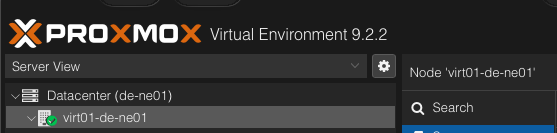
#Proxmox 9.2 is out! This release includes:
* New Dynamic Load Balancer for improved cluster resource utilization
* Expanded SDN with WireGuard as a new fabric protocol
* Fine-grained BGP/EVPN filtering with route maps and prefix lists
* Management of custom CPU models fro [...]